
Donate to Innerviews
Since 1994, Innerviews has provided uncompromising, in-depth interviews with musicians across every genre imaginable. And it does that with no trackers, cookies, clickbait, or advertising.
Your donations are welcome to help continue its mission of highlighting incredible music and artists, without any commercial considerations.
Your contributions will be instantly transformed into stories and videos, and cover hosting and web management costs. Importantly, your dollars will help ensure Innerviews remains absolutely free to all visitors, independent of their ability to financially support it.
Please consider making a donation today by using the PayPal QR code below.

Sheila Chandra
Natural Extensions
by Anil Prasad
Copyright © 2000 Anil Prasad.

Long before the dawn of the Asian Underground scene in the ‘90s, Sheila Chandra was busy bridging traditional Indian music and Western pop influences in unique and innovative ways. The pioneering vocalist was only 16 when she hit the British top-10 in 1982 with "Ever so Lonely," an effervescent single recorded with her group Monsoon. The song combined Chandra’s already evolved east-meets-west vocal approach with an underpinning that featured tabla and drone elements alongside more conventional pop instrumentation. Despite its unorthodox approach, the prodigious effort received widespread acclaim and acceptance. It also served as a catalyst for furthering Indian music’s modern possibilities.
Disillusioned with the machinery of the music business, Chandra left Monsoon shortly after its brief burst of success and forged a solo career. She went on to put out five records through the Indipop label run by Monsoon co-conspirator Steve Coe. Released between 1984 and 1990, Out On My Own, Quiet, The Struggle, Nada Brahma and Roots and Wings, represent a true journey of discovery during which she literally found her voice. The inventive discs took solo voice, vocal percussion, the intricacies of the drone and creatively merged them with a myriad of Western and Asian elements.
Chandra went on to release three records via the Real World label during the early-to-mid ‘90s. Weaving My Ancestors Voices, The Zen Kiss and Abonecronedrone found her delving deeper into solo voice and drone than ever before. The albums' beautifully naked, minimalist pieces explore Indian, Irish, Scottish and Arabic influences. And rather than highlighting the differences between the cultures, Chandra successfully depicts how similar and seamless they can be.
If the Real World trilogy was designed to extend and enhance people’s idea of the drone’s vast contribution to music, 1999’s EEP1 and EEP2, released on the resurrected Indipop label, were designed to totally turn perceptions on their head. The experimental discs, created in collaboration with Steve Coe’s Ganges Orchestra, featured a much more raw and energetic approach than Chandra had previously revealed. They draw connections and parallels between the drone and noise, embedded within turbulent, scratchy vocal mosaics. Chandra’s desire to investigate these uncharted waters was unsurprising given her resolute determination to continue pushing her artistry forward.
Describe the creative evolution that occurred over the course of the Indipop records.
When I started the albums, the scenario was that I was just 18 and had just had a top-10 hit with "Ever So Lonely" through Phonogram. It was a radical fusion that had nevertheless been totally accepted on the dance floor. In many ways, it set a standard in terms of what would become the world music genre because there was no such thing then in 1982. So, I had come off that and had creative differences with Phonogram. The band split up and I decided I wanted to be a solo artist. Well, there’s a vast difference between a band member who doesn’t write and doesn’t produce and setting out your own musical agenda as a solo artist. I felt that I wanted to take up some of the promise that Monsoon had shown, but explore that much further. So, I decided to find a very controlled setting where I could serve that kind of apprenticeship. So, what’s happening over those five albums is a very broad-based, lateral exploration of what was possible for me as an artist and learning some of the skills needed to develop as a solo artist on the writing, technical and studio sides of things. I was also developing various vocal techniques and learning to manage my own creative process, and take responsibility for the entire thing. That’s really what I had learned by the time I got to Nada Brahma and Roots and Wings.
Your vocal techniques also evolved significantly on those albums.
What happened is I realized at the time of Quiet that I was running into a kind of psychological barrier. I had unconsciously grown up with an agenda of what teenage girls sounded like. Although I might mentally set myself an agenda of being much more experimental, when it came to making those records, I was more self-conscious than I realized I would be. So, there was a whole sense of me learning to go beyond my boundaries which I think was very healthy for me as a person. It got me to think about expressing what was really inside me—inside the blank page, rather than constantly working with the expressions within the box of "Asian teenage girl" and all the expectations that come with that. So, it kind of taught me to leap out of that box, both vocally and psychologically as a writer.
I found by listening to classical recordings lots and lots of things I wanted to play with—not necessarily to learn in a very orthodox and technical way, but that I wanted to be influenced by. In that way, I found a very organized way of involving all these techniques, but based on what I wanted to do. So, I picked up on vocal percussion very early from On My Own in 1983, then with Quiet which I started to write via the exploration of layering my voice and using my voice as an instrument and really thinking about what touches people in a vocal line. What makes the intensity and emotional power in the human voice? What makes it special? Do you need a lyric? What happens if you don’t have a lyric? Can you still touch people with sound landscapes? How do people then relate to those if they have to put their own interpretations on them? That was the premise of Quiet. So, really, vocal techniques are exciting in themselves, but they’re a bit like toys unless you find a kind of unique way of using them. I’ve always been concerned to make sure I don’t use them because they’re bright, shiny and new, but rather that I use them because they have a very specific purpose within the agenda for the album I’m writing.
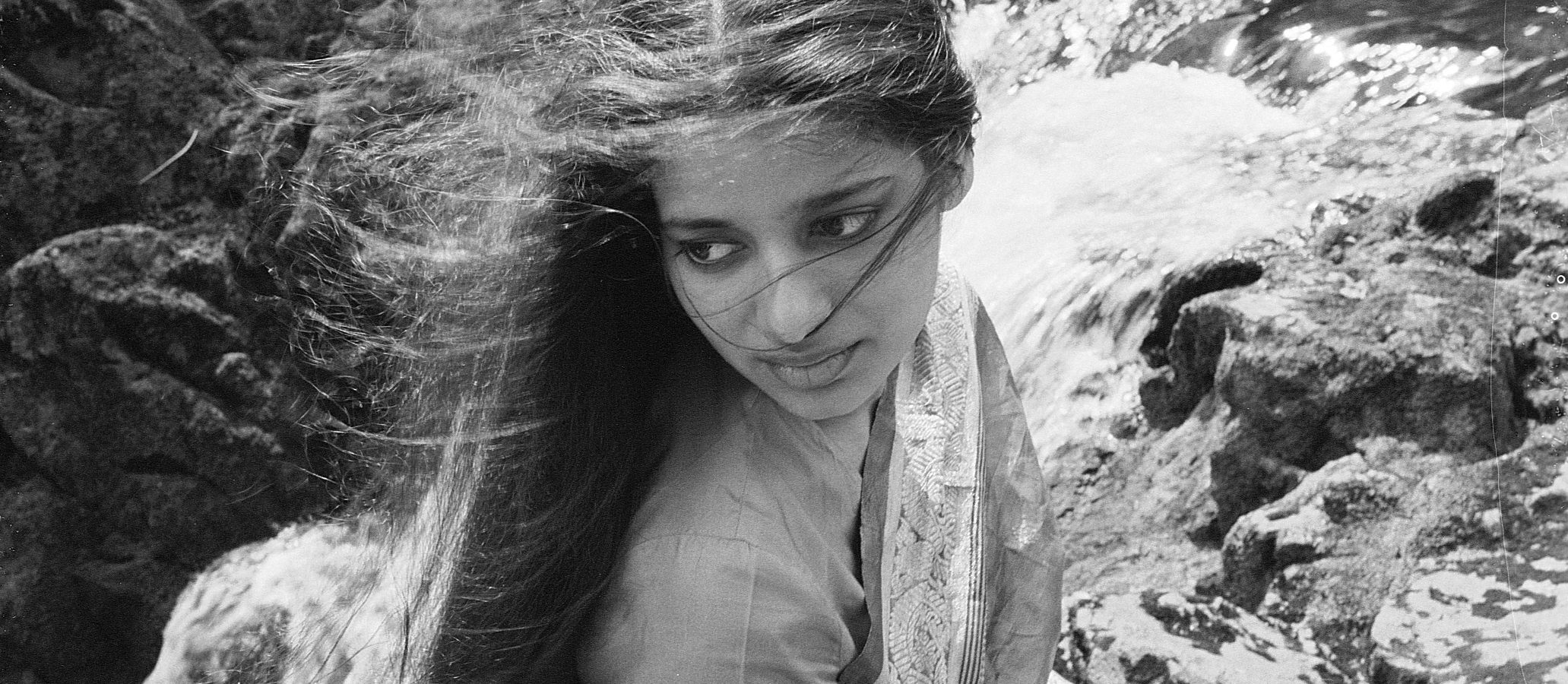
You often refer to yourself as both a creator and protector of your work.
It’s exciting for other people to support you because being a creator can be a very lonely existence. There are times when it feels very precarious. You’re going to live tomorrow on something you made today and there’s not necessarily anyone around to tell you whether it’s good, bad or indifferent. My feelings can vary greatly. One day, I’ll wake up and play a song I composed yesterday and think it’s great. The next day, I’ll play it and think it’s rubbish. That’s all to do with having the courage to face what’s inside you and say "This is my vision. You might like it. You might think it’s mad or bad or shouldn’t happen, but I’ve got to take that risk." There’s always this bravery that’s required and I think when you’re young, you haven’t got the experience. You haven’t necessarily got a lot of perspective that this is a very, very hard thing to do. That’s why I was describing those psychological barriers I was facing as a vocalist at 19. But there were other barriers of other sorts to face as well and I’m lucky. I’m someone who likes working alone and likes crafting a song or album until it starts talking back to me and telling me what should happen next. I’m also lucky because I met Steve Coe with Monsoon. He produced and wrote a lot of the material and had 21 years of experience in the music business already. He was able to make the rollercoasters of emotional experience a little easier. At least he could offer some perspective and help me learn to be a writer and made sure my efforts were much more productive than perhaps they would have been had I been doing them on my own.
Given the eclectic nature of the EEP releases, it’s obvious Indipop still lets you explore avenues you likely can’t elsewhere.
Yes, it does. It’s a nice, safe place to go home to. Doing the EEPs was a way of getting out of that voice and drone box I had been in for 10 years. It’s strange how the familiar becomes your territory, even if to other people it's strange territory. It becomes very difficult to step out of. I think most people would think that doing solo voice and drone albums with just a single vocal line is strange, adventurous and intimidating, but it becomes a safe haven given that I’ve done it for 10 years. So, I have to be brave to step out of it. Doing recordings with the Ganges Orchestra and having that other kind of anarchic input in a way means having less control because it’s collaboration, but it forces me into new territory and kind of breaks those barriers again. Recording for Indipop is a big luxury. It’s a great thing to be able to do.
From a musical perspective, what were you trying to accomplish on the EEP releases?
To make a series of sound experiments around an expanded concept of voice and drone. I think the Real World trilogy is very, very beautiful and very glossy. It certainly carries voice plus acoustic environment and treatment of voice in certain acoustic environments, not to its limit, but it’s a great way into that territory. It outlines what can be done in that field. But it is a fairly glossy sound and we haven't explored as much what would happen if we made the drones move a bit more. We started with AboneCroneDrone, but there was a little more raw energy to be discovered.
I tend to lock myself away and concentrate on what I’m creating and not listen to a wide variety of sounds. But at that point, after not having listened to anything at all, I decided I was going to listen to anything and everything. A friend of ours introduced us to Japanese noise. I got into very crunchy, grungy, aggressive sounds because I saw that as a big antidote to what I’d been creating for the past 10 years. So, I wanted a bit more of that rawness and energy, but some of the structures where it’s the same in that it’s still exploration of voice. It’s still exploration of drone-based soundscapes. It was also an opportunity to get more familiar with hard disk recording which we haven’t really done until now. We’ve kind of been fans of two-inch and half-inch analog sounds for a long tine. It served that purpose as well.
Is it accurate to say you characterize noise as a twist on the definition of a drone?
Absolutely. I think I’ve broadened my sense of what a drone is. I used to think of it very much as a musical form and that it was a constant note. But then you get into the notion of a drone as a constant sound that creates interesting harmonic dances. Any interesting sound, apart from a square tone, just does. Any sound from an organic source does. We are surrounded by drones in that sense all the time. We’ve lost touch with our own sense of drone within early music such as Gregorian Chant and folk music from 500 years ago. Now, we seem to be creating it again by surrounding ourselves by electronic drones in all the machines we use. So, I think of it as a remarkably contemporary form given how old its roots are. In a way, I think it’s just coming back to biology. We are drones. We drone. The middle ear emits a drone all the time. The blood singing in your ears is a kind of drone. You can ignore that and get all symphonic and atonal for 500 years or so and then you have to come back to the drone.
What do you make of the ubiquitous nature of the artificial, electronic drones we’re surrounded with daily?
Reaction to anything depends on what’s between your ears, how imaginative you are and how responsive you are to what’s actually there. Often what’s there, although it’s artificial, is exciting. I have this experience as a musician of hearing melodies within those harmonic dances, so I’m not a purist. I’m not for organic sounds only. I think it’s an interesting aural space in which we’ve put ourselves and I’m interested to play with it and stretch it and make people aware of it, rather than try to ignore it and say that it’s bad. I think things like that are affecting the music we make into the next century. You get the Impressionists at the beginning of the 20th century who broke people’s sense of what form is. There were all sorts of consequences for the visual arts and our thinking as well. I think if we absorb different sorts of images and learn to make connections like that, then we think in a more creative way. I think the same is true for sound. If we get more creative in the way that we view apparently random sounds, it affects the way we think and enhances the strength of our minds.
When you released AboneCroneDrone, you said that one of the goals of the album was to help listeners understand the meaning of the drone.
I just see it as sharing. I also think that what I’m sharing is what almost comes out of my biology. It’s almost as though these musical realizations exist at a cellular level and they kind of occur to me as I’m playing around with the music. That means the knowledge that I’m sharing is universal. I’m not absorbing some very clever theory and attempting to prove it musically. It's less intellectual than that. What I’m doing is sharing and making connections to things that arrive naturally for anyone that plays around with these forms long enough.
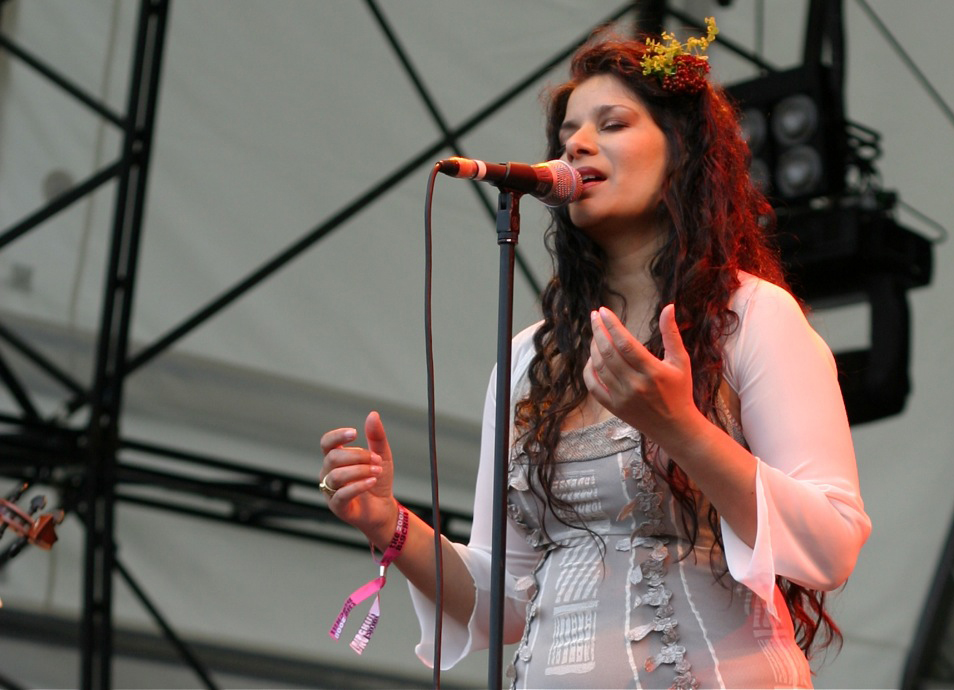
Many perceive a deep, spiritual element in your work. Is that the case?
I think singing is an action that goes very deep into people psychologically. The thing about your singing voice is that you can’t lie with it. I think that’s why singers can feel so vulnerable on stage. If you’re crying, laughing or having an off day, it will show in the tone of your voice and people can’t be as easily confused as they can be with just plain words. Therefore, I think there’s something very concretely special and truthful about singing. What happens with most singing is that it tends to get covered and obscured by the fact that there are so many other performers on the record or onstage. There are other musicians and maybe a veneer of "Who wrote this song?" and "At what period in history?" and "Actually, we’re listening to this very interesting theme in the third movement that broke all the rules." When you say there is nothing here but a singer onstage, along with a drone that does nothing, who sings alone over that and fills the space, what happens is that truthfulness becomes revealed again. Therefore, the connotation of a single voice and single voice with drone is more spiritual in the sense that it’s about the human condition.
It’s about truth because it’s an arena in which it is very hard to lie. I think it’s a connotation of voice and drone whether I had any spiritual content in my songs or not. Having said that, to engage in such an activity for 10 years has challenged me spiritually. It’s challenged me to say "Am I enough? What happens when I don’t feel I’m enough? What happens if I fail? What happens if I fail and can’t be honest about it?" There are all sorts of challenges that come back at me, not just as an artist, but also as a person. How truthful am I really willing to be and how truthful is it acceptable to be in a professional situation? And yet, if I’m not truthful, doesn’t that let people down on a personal level because it doesn’t allow them to be truthful? There are all sorts of issues there to grapple with. I’m delighted with that. That’s the kind of thing I became an artist for. To me, it’s a vocation. It’s about being challenged on all those levels, not just the intellectual and creative level.
You recently faced and overcame severe vocal problems that mainly resulted from chronic rhinitis [inflammation of the nasal membrane]. What did the experience teach you about your voice and yourself?
It taught me to value my voice. I had not exactly run it down, but I had taken it for granted. I hadn’t realized how many areas in my life have come to completely depend on it. You talked about music being potentially spiritual and for me, nothing concentrates my mind like singing—even singing scales and just floating away on a single note is like meditation for me. So, suddenly, all that time, tremendous enjoyment and sense of home had gone. I think my identity as a person has become completely bound up in my sense of self as a singer which isn’t actually a very good thing, but I’ve been singing from the point my voice broke at the age of 12. I had grown up with it as being the thing that marked me out and made me special. It’s very easy to become identified with something like that. I never had another job. I have been a singer all my life professionally.
I had to relearn how to rely on other strengths and learn other things about myself. I had to identify other things about myself that were acceptable and make me worthwhile. I had to find other ways of meditating and calming myself down to come back to a sense of home. There were lots of others things I had to deal with. I also had to notice how heavily I was leaning on my voice and expecting myself to perform. This is a syndrome faced by a lot of singers who get into performing that can be very emotionally wearing and physically draining. But once you’re into touring or making a record, a lot of people depend on you being able to do it. There’s a sense that because they don’t understand it, you can pull it out of a hat anytime and you just love it. When it’s working well, you do just love it and it’s very exhilarating and no strain at all. But if things aren’t working well, it’s not like that. I started noticing when I was comfortable with things and when I wasn’t, and how to take actions to remedy those strains much, much quicker, rather than just expecting myself to do it.
You included "A Sailor’s life" on Zen Kiss, a song associated with Fairport Convention and Sandy Denny. What led you to it?
I had been listening to a lot of folk recordings because some of them were drone based. And the first series of concerts I did at that time, I only really had Weaving My Ancestors Voice as my material. I’d written Weaving specifically to provide myself with material to do on stage, because if you look at the first five Indipop albums, obviously, they’re not possible or practical to do on stage. For instance, "One" on Roots and Wings has 22 tracks of vocals going. So, without a tape machine, I can’t do that on stage. As I started to expand out of the festival situation and into longer and longer performances, I was listening to a lot of folk stuff and found that "A Sailor’s Life" was written on roughly the same scale as "Ever So Lonely/Eyes/Ocean." So, I started singing "A Sailor’s Life" after performing "Ever So Lonely/Eyes/Ocean" onstage and making a kind of medley out of it. That's kind of how it got included on Zen Kiss. I liked the song and the way Sandy Denny did it.
Describe some of the commonalties between British Isles folk and Indian classical traditions.
If we include Ireland in that, there is an incredibly well-preserved sense of the solo performer plus drone or solo performer plus implied, unsounded drone. What that means is that the Irish still have a brilliant melodic sense. They just know a great melody when they hear it and that keeps them going forward in their folk traditions. They tend to write very strongly from a melodic perspective. Whenever I performed in Ireland, I got an immediate response back from the audience. They understand the basic principle of listening to voice and drone in that you listen to the relationship between the voice note and the drone note and the harmonies between them—that play of intervals, the moving melodic line and the drone note. So, they’re kind of a pre-educated audience. It’s the only place outside India where I think that really exists. That’s why Irish singing is still so important, charismatic and such a powerful presence. When you set up a structure like a drone, you give the singer the ultimate power. The onus is completely on them to provide the interest and emotional color in the melody. Once the singer is up to that challenge, they can’t be beaten. They are very, very powerful. That structural similarity still exists in the musical cultures of Ireland and folk music of England. In the Indian tradition, the voice is, of course, the ultimate instrument. I think that’s the major linking factor between the two. That’s why I got so interested in folk. It had been a natural extension of the Indian vocal techniques I had fastened onto in the ‘80s.
Your music has influenced many second-generation Indians. It’s served as a path back to discovering traditional Indian musics and other cultural institutions that many rebelled against in their youth. What’s your take on that?
I think there’s a difference between rebelling and being rootless. It’s fine to say "Look guys, this doesn’t work in this context at all and I’m not going to conform to it because it’s a rule you brought over from somewhere else." But that doesn’t mean we should throw the baby out with the bath water and that we shouldn’t know where we come from or what the rules are so we can break them. I’m delighted if people find something relevant or find a way back to Indian classical music if they’ve been listening to my music, because I love Indian classical music. I think for me, Indian music stands as an entity on its own that can be transferred into this century or the next, or one country to another. It is a beautiful form that will always touch people. It’s more than interesting. It’s something for us to learn from. It’s a complete system in itself. Personally, I never rebelled against that. What I rebelled against as a teenager was the injunction not to think against the rules we have set in place here. I think there’s a difference between being able to take in a musical culture and play with it and being put in a culture where with music, or otherwise, one is not being allowed to step outside of boundaries.
Contrast the traditionalist and modern Indian perceptions of your work.
The ancient history response—as in the early ‘80s—was particularly from the older generation. There was this "Oh, you can’t do that and you’re watering down our culture" and all that kind of horror story stuff. And I said "Look, this is not museum piece stuff. It’s got to be living. It’s got to be relevant to us as a second generation, otherwise it’s just going to die a death. You’ve transplanted it to another environment and it’s got to adapt and survive in that environment." Of course, they weren’t convinced. But there were remarkably few voices like that. Most people were genuinely excited by the thought of people playing around with these old forms and finding new kinds of emotional contexts for them. Now, nobody says to me "You can’t do that." I think it’s partly the rise of world music as an accepted genre. We kind of accept the premise we are going to be putting these old sounds in a contemporary setting and that it can be done in a myriad of ways structurally, musically, in terms of the instruments and so on. But it’s also that people expect me to be lateral. It’s just "That’s Sheila Chandra, what do you expect?" So, if you do it long enough, people stop bothering you.