
Donate to Innerviews
Since 1994, Innerviews has provided uncompromising, in-depth interviews with musicians across every genre imaginable. And it does that with no trackers, cookies, clickbait, or advertising.
Your donations are welcome to help continue its mission of highlighting incredible music and artists, without any commercial considerations.
Your contributions will be instantly transformed into stories and videos, and cover hosting and web management costs. Importantly, your dollars will help ensure Innerviews remains absolutely free to all visitors, independent of their ability to financially support it.
Please consider making a donation today by using the PayPal QR code below.

Dave Holland
Fundamental Truths
by Anil Prasad
Copyright © 2000 Anil Prasad.
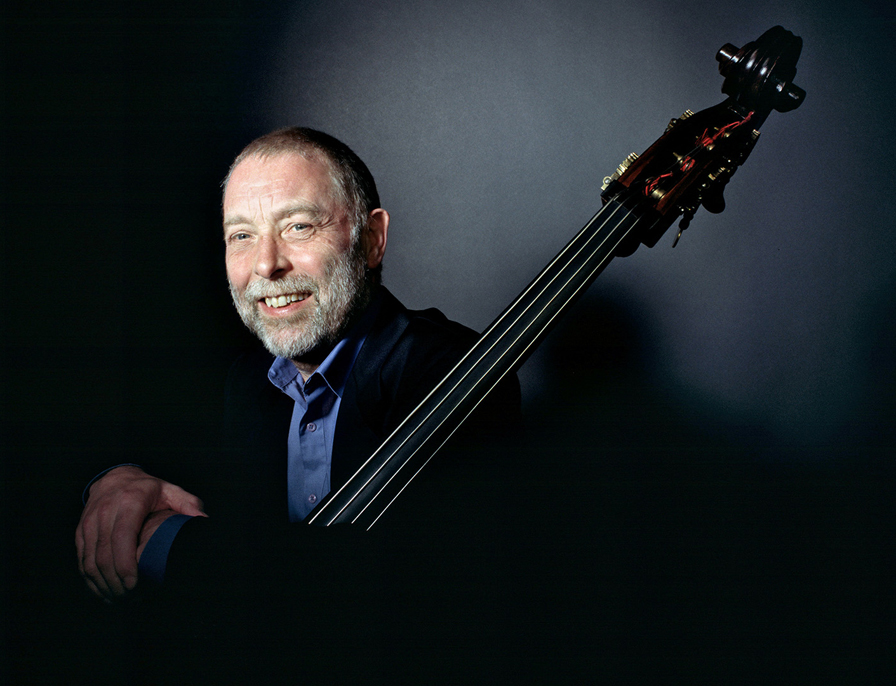
Boiling down an artistic endeavor to a single, identifiable core essence can be a challenging task. But rather than obsess over the complexities of motivation, passion and purpose, acoustic bassist Dave Holland went for the jugular when naming his 2000 quintet album Prime Directive. It refers to a one-word underpinning for his band’s creative mindset: fun.
Watching the group perform live, it’s clear it strictly adheres to the philosophy. Together, Holland, trombonist Robin Eubanks, drummer Billy Kilson, vibraphonist Steve Nelson and saxman Chris Potter hit impressive heights that are as much about verve as they are about virtuosity. It’s a balance that’s been a consistent element throughout Holland’s career.
Holland has served as one of the bassists of choice for the elite of jazz. He worked with Miles Davis on the pioneering In A Silent Way and Bitches Brew records. He was a member of Circle, an avant-garde quartet featuring Chick Corea. And he’s been a member of several Herbie Hancock-led groups. Betty Carter, John McLaughlin, Pat Metheny, Thelonious Monk, and Ben Webster are just a few of the other luminaries that have sought his services.
Perhaps more important than any of those experiences has been the commitment to quality and exploration found in his work as a leader. He’s released more than a dozen uncompromising records that feature him in solo and expansive group contexts. While the potency of his music remains consistent, the shared principles he seeks to imbue continue to evolve.
Tell me about the philosophy behind the title Prime Directive.
It started with a conversation with my wife I had when we were just putting this band together. I had been in a few situations which were not really fun, but musically good. There were problems of one sort or another. I decided at this stage in my life that I wanted to enjoy music. I have to say one of the things that really influenced me is my time recently with Herbie Hancock. I’ve worked with him on and off from ’91 to ’96 in trio and quartet formats. Herbie enjoys himself whenever he plays. He has a lot of fun and it doesn’t stop him from being creative or playing amazingly inventively. That was when a sort of release occurred and a cognition formed. Until then, I took music quite seriously and was prepared to put up with certain things in order to have certain other things happen. Then I decided if I wasn’t enjoying myself, something was wrong and it had to be changed. And then it got to simplifying that statement into "If it’s not fun, we’ve got to do something different." Then I said to my wife "That’s got to be the prime directive of this band" and that’s how the whole thing got started.
Do you agree that a lot of essential music has stemmed from tension and hostility?
I think it has. But is that necessary? I have tolerated situations in the past that have not been 100 percent positive for me and important music has come from it. There has been great music from people who aren’t saints and necessarily the nicest people. The question is: Is it possible at this point in my life to have a group playing together in which we can rejoice in each other? That’s what I’m trying to do. I want something where we all are having some enjoyment in being together. Having that dimension and joy is a part of the music I want to express. I think this band expresses it more than any other group I’ve played with as far as my own ensembles.
Describe the seeds of your current quintet.
As in all bands, the idea starts with a particular sound you’re looking for. When I decided to start a new group a few years ago, these were all players I had earmarked that I wanted to be involved with in a project. It was a combination of their playing, their concepts and the instrumentation that I was looking for. I was looking for instrumentation—as I have with all my groups—that would produce something unique sounding. That’s partly the result of the instrumentation and partly the individuality of the players themselves. So, we started off. I wrote a collection of music for the band that we could start working on. The writing of a piece of music is only the starting point. It usually takes a life of its own as we start playing it and it evolves. You try to write music that has that potential. So, all the i's aren’t dotted and the t’s aren’t crossed. You leave certain elements that can be interpreted different ways by different players. So, we started out doing a European tour and did some work in the States. Then we went into the studio and recorded 1998's Points of View. We then worked another year playing new material that I and the rest of the group had written. By the end of that year, it seemed ready to record and thought I should take the opportunity to do so, even though it was a little early to bring out a new album.
How would you characterize the unique aspects of the group?
I’d say it’s primarily about the individuals. They all have their own sound on their instrument. That’s the first thing—just sound, not even concept. They each produce something special and individual on their instrument. Secondly, the concepts they are working on and developing are unique too. They’re all very experienced in the traditional aspects of jazz music, but they’ve all been very much involved and engaged in developing a contemporary take on that tradition. The other thing I love is that these players are really good listeners. This produces an interaction and possibility of dialogue that’s on a very high level. We have some very strong individuals, but egos that are under control enough that we can create a group sound and concept together. There’s a lot of supportiveness in the group. We appreciate each other and it makes for a very nice group dynamic.
What are the challenges you face in keeping a group of this caliber together?
Naturally, all of the musicians are very much in demand in other situations, so schedules have to be juggled. At the bottom is a commitment we all have to this group and doing as much as possible with it. We are working a lot at the moment and everyone seems to have made this a number one priority over other things they’ve been involved in. So, it hasn’t been as much of a challenge as one might expect with this group of musicians. The other aspect is the challenge of having a working group in this day and age. That’s not an easy thing to do. Economically, there are problems. The business doesn’t encourage this music these days. They encourage much more all-star kinds of situations and mix-and-match groupings. But as the great Betty Carter understood, there is a need for groups and people working together to develop continuity and evolve together. That’s what moves this music forward and is an idea that needs to be preserved and continued.
Today, the industry seems much more focused on archival releases and traditional forms than it does on moving the music forward.
The idea of going into the archives is a very lucrative thing for record companies. There are no production costs involved. Many of the projects done in the past were done on a very low budget, so there is very little outlay and low royalties. Very often in those days, musicians didn’t own their own publishing. So, it’s very, very easy and lucrative for record companies to release music from their enormous back catalogs. On the other point, the retrospective approach, to me, has been a bit stifling for the music. One good thing is that it’s drawn a lot of new listeners to jazz. It’s made music that was perhaps getting a little obscure to some people a little more accessible. And that has given people inroads into exploring the great variety of music that there is. But I think it has also been stifling to the advancement of the music and certainly to some of the younger players who have been enticed into record contracts under the agreement that they will record music in a context that favors the record company.
It’s always easier to sell something that’s been accepted already than something that hasn’t been categorized and needs to be understood. So, it’s very easy for people to put together a band of young players and have them play like the Miles Davis quintet of the ‘50s or early ‘60s and then sell that record on the basis of something that people would like to hear. So, there are some downsides. I consider it to be a little like religious fundamentalism. When things get kind of chaotic and unclear, sometimes those kinds of fundamental beliefs help to align people together and get things back on track again. From there, new explorations can happen. I think this is happening now in the music. I think that realignment with tradition and the history of the music for young players has been positive in some ways. It’s created a big pool of talented, technically-proficient young players that understand the music’s history.
But is it encouraging the development of unique and innovative voices?
I think there are always new and innovative voices. The question is: Are they allowed to be explored? There’s a young alto player in New York who is a good friend of mine. He had a contract with a big label and the contract was ended. He was going around looking for another label to record him. They all want him to make hard bop records and he refused. How are we going to develop this music if the creative thinkers in this music are confined to a retrospective point of view?
What are some potential solutions the industry should consider?
First of all, I think it’s about R&D. Research the players that are doing something innovative and interesting. Put some long-term development into their careers and nurture bands. Don’t just take young players and put them with mature and already-recognized musicians who will help sell the record. Encourage young players about how to put a band together so they can develop a group that can go out and work and do things together. Obviously, it’s going to be harder to sell a record this way. I’m not naïve. I know we’re in a business here. But on the other hand, we have to think long term. If you had taken Miles Davis when he was 23 and said "No, don’t make Birth of the Cool. I want you to make a Charlie Parker bebop record like when you were playing with Bird" then we would have lost the whole historical contribution that Miles made during that period. So, we have to go back and understand that the individual and long-term development of artists is important.
That idea is well-represented in your quintet’s generational element.
Yeah, we have musicians in their 50s, 40s, 30s and 20s. I’m the oldest. I’m an equal opportunity employer. I don’t think about anything to do with gender, race or age. I’m looking for the music. I listen to the music with my ears, but at the same time, I am also conscious of the fact that it’s very important that there is intergenerational contact in the music. Older players should play with younger players and vice-versa so we have a chance to cross-pollinate our influences and backgrounds. This is how the music grows and expands.
Your quintet features vibraphone and trombone—instruments rarely represented in the mainstream these days. What makes today’s bands so reticent to go beyond sax, drums, bass, guitar, and keyboards?
It’s easier to sell something that’s familiar to people. People have come up to me and said "I saw your record and I looked at it and saw trombone and vibes. But I got it and listened to it anyway." [laughs] I’m looking for sounds and players who are bringing something unique to the music. I want the band to have an identifiable sound, not a generic sound. I’ve tried to explore that in all the bands I’ve had since 1980.
How does your accumulated knowledge as a bandleader benefit you when you’re a sideman these days?
It gives you an appreciation of what it means to put a project together and develop it. In my group right now, everybody in the band has taken responsibility for projects and done recording of their own. That brings a sensitivity to the problems that are involved and a tolerance. Perhaps somebody who is not trying to take that responsibility is less able to understand. The other thing is you understand more what process is and how it affects the final results. So, you try to create and nurture a process that is going to be more creative and productive in the studio or circumstances one is involved in.
You’ve been with ECM for your whole career as a leader. Your entire back catalog remains in print. These are luxuries in today’s business climate.
They are. They don’t come at a cheap price either because obviously some of the larger labels have much more leverage in the industry in terms of being able to generate publicity. You now have these mega-companies who are in fact multimedia companies. The record company will record the album, the magazine will feature it and the cable television channel will do a piece on it. So, you’ve got this incredible machinery that goes into work when things are produced. But on the other side, there’s a price to be paid for that. And it’s a price I haven’t been prepared to pay in return for what I’d get. It’s more important for me to be able to look back over the last 30 years and see a true representation and documentation of the things that I’ve done and that it’s still there and that some executive in an office hasn’t decided that it’s okay to delete now because people don’t need to hear it because it hasn’t sold as many as it did during the first two or three years of release. So, that consistency and commitment from ECM has been invaluable to me. On top of that, the business integrity they bring to the table and the fact that they know all aspects of the business and have quality ethics is unique. I have a lot of trust in the company and they’ve given me absolute support in documenting everything I’ve wanted to document. This has really been an ideal situation for me in that respect.
The inner workings of ECM are a mystery to many. Describe how you go about pitching an idea to the label.
Manfred Eicher is the head, central figure of the company. He has a staff in Munich and local offices in various markets. We’ve had a long, 30-year relationship with a high degree of trust built up. What happens is, I say to Manfred "At this point, I’m ready to do a record and this is what I’d like to do." I basically get the okay from him and that’s it. The process is basically just a phone call to ask if it’s okay if I book the studio for September and we go in and do it. It’s a fairly straightforward conversation. There’s very little else that has to be done. For the last three albums, he’s also given me the opportunity to be the producer as well. There was a stage in my life where I felt I needed to take that responsibility for not only the music, but also the production side. Manfred very graciously allowed me to do that and I’ve been very happy about it. All of the projects I’ve done have been documenting working bands, so I tend to save my ECM recording opportunities for the projects I’m actively involved in.
McCoy Tyner told me "I want the audience the understand what I’m doing as opposed to trying to baffle them. I want them to see what this music is about." In some ways, he sees his role as part educator and part entertainer. What’s your take on that?
I think that’s an admirable position to take. My take on the relationship with the audience is that you don’t want to underestimate their ability to hear the music. You want to be as clear as possible in your musical statement and not be obscure in terms of what it is you’re doing. At the same time, you don’t want to compromise on your creative ambitions because that’s the driving force that’s going to develop the music and keep it relevant for me. Outside of the audience, there’s the aspect of me needing to be interested in what I’m doing and be stimulated by it in a challenging situation which is going to continue to allow me to grow as a player and composer. So, there’s a balance there between all those things. What I’ve attempted to do is use Duke Ellington as a role model. He could present the most complex ideas but give them a setting so that very powerful elements like rhythm and melody would be carrying factors that would allow people an entry into the more complex aspects of his music.
So, for me, rhythm is one of the primary things that communicates with people. Even if you can’t hear a pitch, you can feel a rhythm, movement and dance—everything that is fundamental to the human condition. I think the use of rhythm and direct melodies—things that strike a direct emotional feeling—are very powerful and will carry any manner of complex meters and harmonies. So, I’m trying to create music that exists on multiple levels, such as simpler elements along with more complex elements. To me, a lot of great art, whether it’s visual, musical or written, has an ability to do those things—to offer some fundamental truths that echo in people, yet at the same time, introduce them to a new way of looking at those fundamentals that gives them a little different perspective. That’s the key to it. I’m trying to understand more and more how to make that happen.
What are some of those fundamental truths?
It’s the human condition: joy, loneliness, love, companionship, communion, and hope. The things by which we live. The fundamentals that make us what we are as humans. They cross over gender, race and everything. The more I travel, the more I understand that fundamentally, everyone is the same. We went to China last year. As different as that culture is and as extraordinary as it is, people are just the same in a sense. Their cultural orientation is different, but the fundamental truths they function under are still the same. It’s about their family, their love, their nurturing, their wanting to belong, and their wanting to have hope.
When discussing the Bitches Brew sessions, Joe Zawinul told me that he said to Miles "I didn’t like what we did and what is being done." What do you recall about the sessions?
When somebody would bring in a piece of music, Miles would look it over and often rewrite it to some extent or decide which elements he wanted to use and which ones he didn’t. Very often, the finished product was nothing like what was presented to him. I know Joe resented that at the time. It was something odd. It was his baby and he didn’t like it being messed with, although the end result was much more relevant to what Miles wanted to do.
My take on the sessions is a little different. I was in the working band and had my own reservations. I enjoyed the sessions and thought they were extraordinary events and new and special. My only feeling about it is that we weren’t documenting what the band was doing live and that was a big disappointment to me at the time because I always viewed the recording sessions as a documenting of what we were developing in the real world. Miles saw those recording sessions as something being explored within the studio context—a tool you can take advantage of. Now, from my more enlightened position, I understand what he was trying to do. He had done the live documentation. At that point, he was interested in doing something using that way of working with music.
But as a young, 21-year-old player, I’d be out on the road playing like crazy. Then we’d go into the studio and have this more controlled type of situation with a lot of other folks coming in being a part of it. So, I was thinking "Man, I wish we could just document the stuff we were playing." Fortunately, there was some live recording done by Columbia which is going to come out.
There are tremendous amounts of other stuff that’s been documented. There’s the quartet at Newport when Wayne missed his plane to get to the festival in ’69. We ended up playing the set as a quartet with Miles, Chick Corea, Jack DeJohnette, and myself. Miles just plays extraordinarily on it. He plays more than he would usually play because he’s the only horn. That’s on tape. I knew it was being recorded. For years, I’d ask Teo Macero what happened to that tape and he kept telling me it wasn’t recorded. But I knew it was. Finally, Bob Belden, who has been doing a lot research into releasing these things, found it in the archive. It’ll eventually be released. There are also a lot of radio things done on our European tours that are archived. You can expects things to be released for years to come.
You occasionally step into the world of electric bass. Describe your relationship with the instrument.
I like playing electric bass. It’s not that I don’t enjoy it. I have a lot of fun playing it, but there are so many great players on the electric bass that have spent a lifetime developing the instrument uniquely like Marcus Miller and Jaco Pastorius. I prefer to let them have that and I’ll stick with what I do. It’s also to do with the nature of the acoustic bass and character of it. It’s very much a part of the music I’m hearing. The electric bass is still part of my vocabulary, but I don't feel as much of a distinctive voice on the bass guitar compared to my much more personal connection to the acoustic bass. I feel that’s my strongest position to take musically, so why not take that?
Describe how you continue to evolve as a player and composer.
I’m trying to be more succinct, direct and cut out the fat in order to leave more of the essence of what’s there. In purely musical terms, the way I’m evolving as a player is by creating interesting and challenging forms and settings for myself and the group. And by playing with interesting people, I have a chance to grow. I use the example of Coltrane when he wrote "Giant Steps." That was a direct result of the practice things he was doing—the things he was working on as a player. He created the setting of "Giant Steps" as a vehicle to further develop those ideas he was practicing. My idea of a composition and playing represents a symbiotic relationship that nurtures each. It’s a kind of leapfrogging effect that happens. The compositions are created in order to nurture a particular approach to playing that develops and hopefully gives birth to some new ideas in form and composition that will take you to the next step.