
Donate to Innerviews
Since 1994, Innerviews has provided uncompromising, in-depth interviews with musicians across every genre imaginable. And it does that with no trackers, cookies, clickbait, or advertising.
Your donations are welcome to help continue its mission of highlighting incredible music and artists, without any commercial considerations.
Your contributions will be instantly transformed into stories and videos, and cover hosting and web management costs. Importantly, your dollars will help ensure Innerviews remains absolutely free to all visitors, independent of their ability to financially support it.
Please consider making a donation today by using the PayPal QR code below.

Art Bergmann
Between Two Worlds
by Anil Prasad
Copyright © 2026 Anil Prasad.
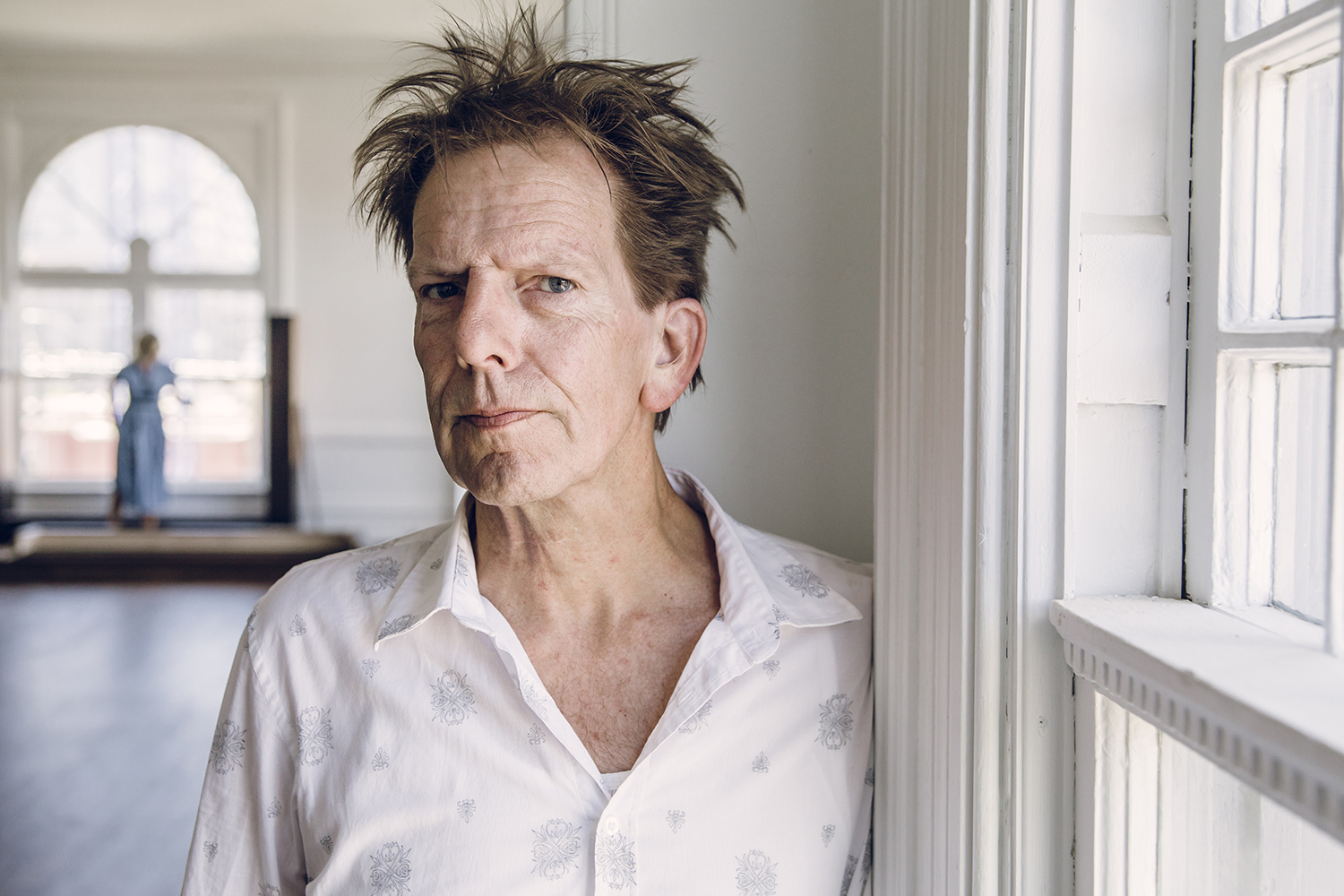 Photo: Lisa MacintoshArt Bergmann has long stood apart in Canadian music—too raw for the mainstream, too literate for easy categorization, and too principled to ever dilute his voice. Emerging from the punk underground, Bergmann became known for combining aggression with introspection, writing songs that felt as much like personal reckoning as cultural critique. Over the decades, he has built a body of work that is uncompromising, emotionally direct, and deeply reflective of the political and psychological tensions of his time. While never a conventional star, his influence runs quietly but deeply through generations of Canadian artists who saw in him a model for artistic integrity.
That legacy was formally recognized when Bergmann was appointed to the Order of Canada in 2020, one of the country’s highest civilian honors. The distinction is not handed out lightly. It acknowledges individuals who have made extraordinary contributions to Canadian culture and society. In Bergmann’s case, it affirms something his listeners have always understood—that his work represents a vital strand of Canada’s artistic identity. The award places him in a lineage of cultural figures whose impact transcends sales or chart positions, and confirms his status as a national voice.
In recent years, Bergmann has experienced a late-career resurgence, releasing a trilogy of albums on (weewerk) records that stand among his most incisive. Beginning with 2016’s The Apostate, he reintroduced himself with a record steeped in disillusionment and spiritual unease. That was followed by 2021’s Late Stage Empire Dementia, a blistering critique of modern political decay, delivered with a sense of urgency. Most recently, 2023’s ShadowWalk pushed even further inward, exploring mortality, memory, and the subconscious with stark, poetic intensity.
Prior to those records, Bergmann had already carved out a formidable solo catalog that made him a defining figure in Canadian alternative music. Albums like Crawl with Me, Sexual Roulette, and What Fresh Hell Is This? captured a restless intelligence and emotional volatility that resonated with listeners seeking something more challenging than mainstream rock. His songs often blurred the line between confession and commentary, addressing addiction, alienation, and societal breakdown without romanticizing any of it.
Bergmann’s roots trace back to the late-‘70s Vancouver punk scene, where he fronted Young Canadians, and by the early-‘80s, Poisoned. With Young Canadians, he delivered a more melodic, emotionally nuanced strain of punk that diverged from the genre’s more nihilistic tendencies. Poisoned, in contrast, leaned into a darker, heavier sound, foreshadowing the thematic weight that would characterize his later work.
Beyond music, Bergmann has consistently aligned himself with social and political causes, often using his platform to speak on issues ranging from mental health to economic inequality to the crisis in Gaza. His work has never shied away from critiquing power structures or examining the human cost of systemic failure.
In an era saturated with disposable content, Bergmann offers something rarer: a lifetime of songs that confront, unsettle, and endure.
Innerviews spoke to Bergmann via Zoom from his home in Vancouver.
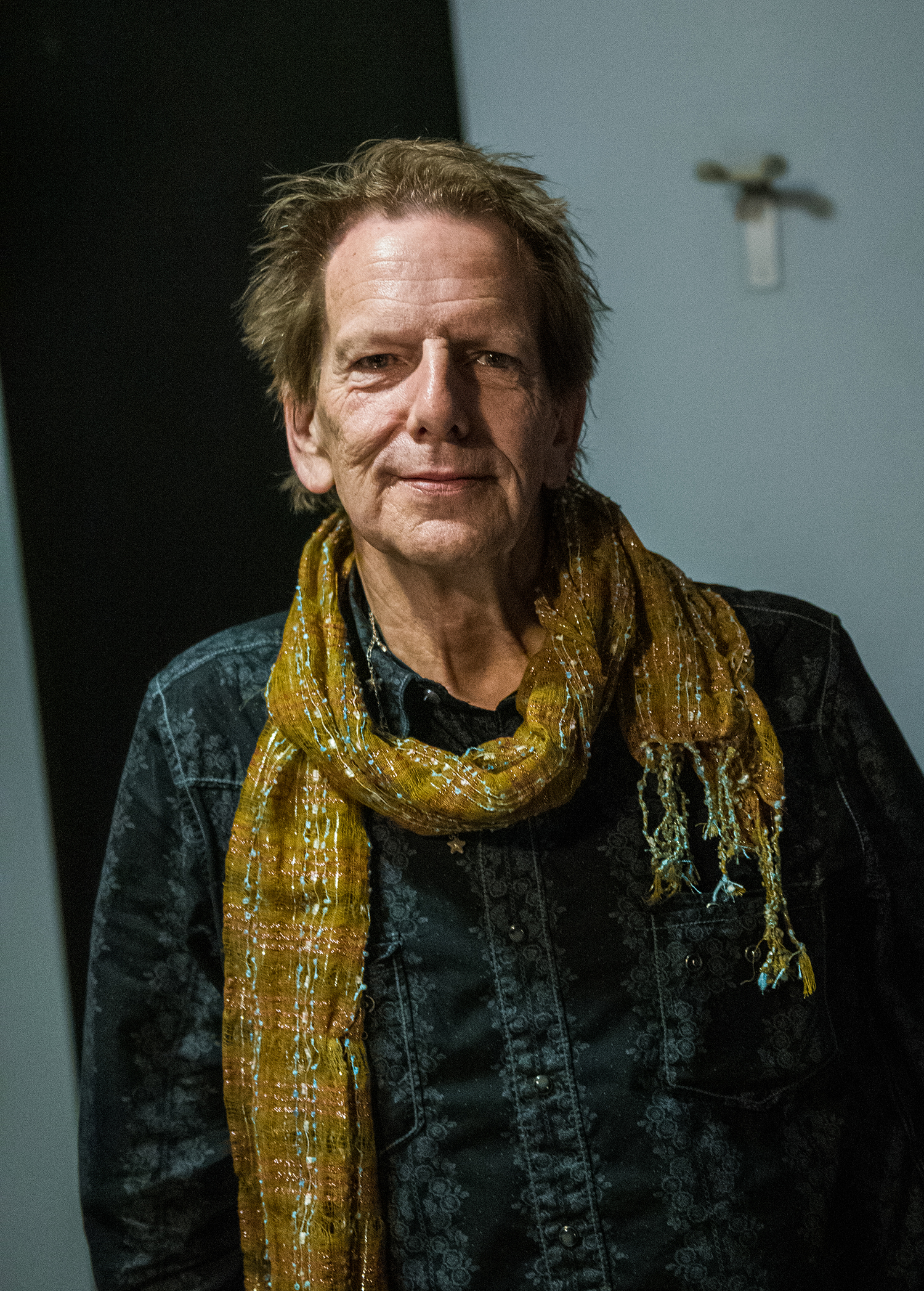 Photo: Sharon Steele
What’s your perspective on the value of arts and culture during this perilous and terrifying period of human history?
I try to not to listen to news, but you can't help it. It's everywhere. I try not to go online. It's just overwhelming. And the right-wing activism and encouraging of fascist maneuvers is bizarre to me. Where is the underground in America? Where are The Weathermen when you need them?
It seems like a lot of your music is a response to what's going on.
Yeah, I sit and think, and it takes me months to write a song, mostly. But I work really hard on them. I'm trying to get every word right, but it doesn't seem to do much to change things, so I'm not sure of the value of it. They say you could change one person's mind to change the world, but I don't know. It's a lot of work.
You’ve said you believe every single person should be rebelling. How well do you think we're doing as a civilization at that?
The continuous noise of this consuming society is not encouraging. Everyone's out for their own good or rear car seat for the kids or something.
You’ve retained your sense of a punk ethos into your seventies, when most people in your age category have settled into being bystanders. What motivates you to keep saying what you think so forcefully and loudly?
Well, what else can I do? My deal is struck with music, so I have to do it. I think, “Surely, I have some more to say.” But haven't I said everything? It's difficult to craft words anew. I guess that's been my trick, but it gets harder.
What’s the deal you’ve made?
It’s the old Robert Johnson myth. I sold my soul to the devil to make beautiful shit.
Do you feel like you sold your soul or have you perhaps enhanced your soul through music?
Music is always good. It keeps me alive. Basically, it's my soul. I don't even know if people have a soul. I'm stuck on that one. I think we're animals and we're going to die and rot in the ground like every other animal.
You released a single called “Gazacide” in 2024. Discuss what you’re communicating on it.
I wish more artists would speak up. I had to say something. It’s obvious that mass murder is going on and the world can’t stop it. I don’t think a song can do too much to bring attention to the issue. I got hate mail and everything, and that was wonderful. I’m on the side of Jewish people who protest against this monstrosity.
How do you handle the hate mail?
You have to ignore it and send love emojis back. I try to keep a sense of humor, always.
Is that a different approach from the Art Bergmann of youth, who was often in people’s faces?
Rock and roll bravado. Yeah, but usually the small crowds were quite adoring.
I rail from the microphone. It's my protection. I only got attacked once walking through downtown Vancouver in 1979. Two cars pulled up when me and Buck Cherry from The Modernettes were walking to a party somewhere. They came out and smashed our heads in. Buck got away, but I got a broken jaw out of the deal. That was fun. It was because of how we looked. Crazy. It used to be called queer bashing.
You’re working on a new album called Mythos. What will it explore and sound like?
It's just a bunch of new songs. It’s about the myth of the saving power of love for each other and for our new lovers. “Gazacide” will be on it.
I wanted to make something more ethereal in contrast to all the shrieking in the world. I’m taking the other route, with soft, subliminal jibes.
The album is in demo world right now. I’ve done four or five songs with the drum machine. It’s pretty raw. I’m thinking about releasing it as is, but it’s very incomplete at the moment.
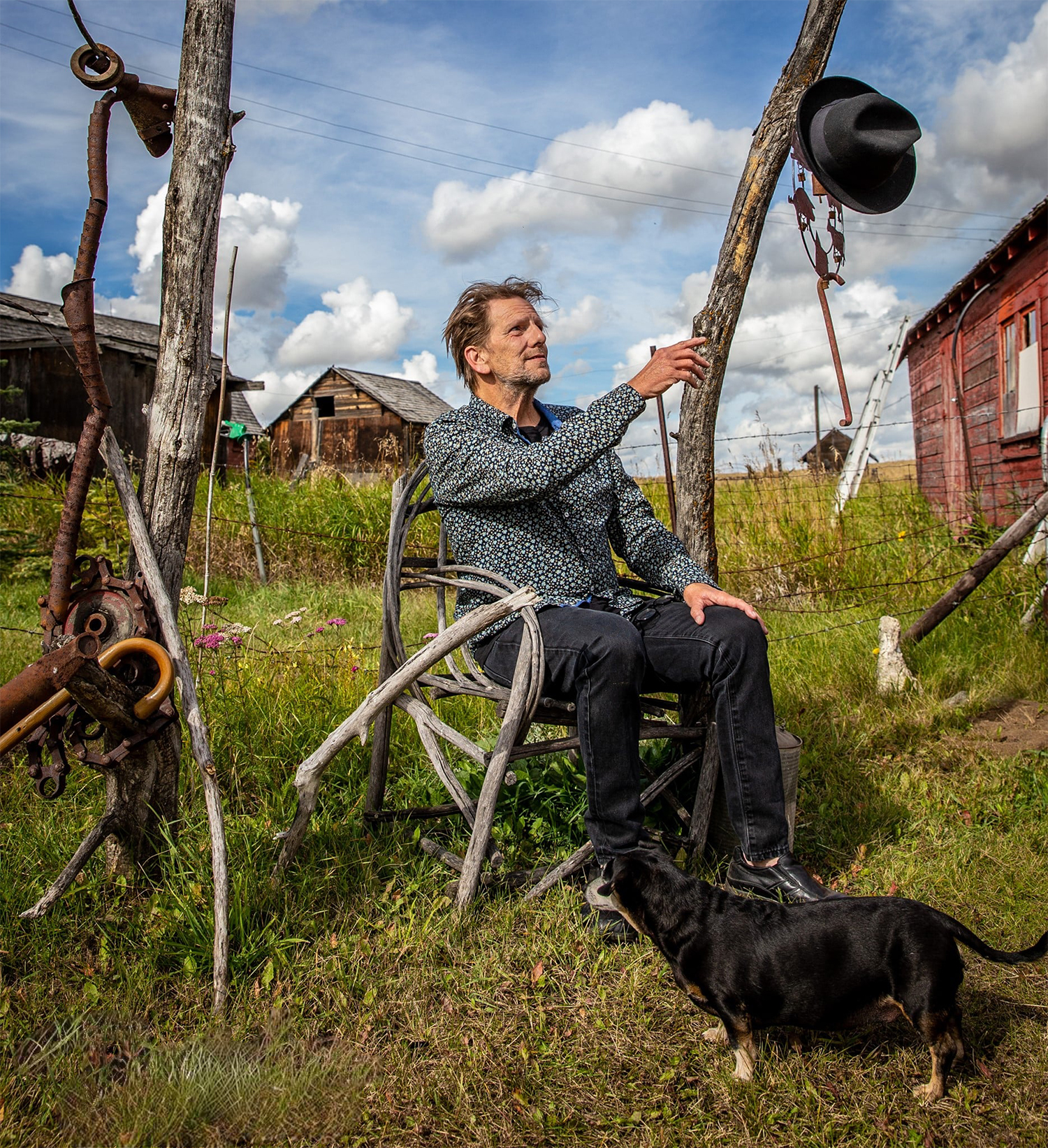 Photo: David Kotsibie
When might it theoretically come out?
Can I tell you I don't care? Sometimes, I think I have to die first before I can sell any records.
Why do your thoughts go there?
Well, my body doesn't want to do what my mind wants it to do, so what's the point? I don't want to end up in a hospital with no life support. It's just a continual problem with pain.
I used to use a pain patch, but I got talked out of that by my doctor. He said it would hurt my longevity, but I’m craving to be back on it. But does it matter anymore?
Well, I think you matter and the music you make matters.
Good to know.
For those unaware, what physical issues are you dealing with?
I have osteoarthritis and major spinal issues. A friend of mine had his whole spine rebuilt. You can do that now, but he still suffers from excruciating pain, so it was pointless. I don’t think that would do much for me.
I’ve yet to use my walker, though. I use a cane.
You frequently say, “What’s the point?” But could the fact that you remain so creatively vital be the point?
That is the point, yes. Thank you. Once I’m doing the music, I love it. That’s the end game.
I look for the epiphany in music. I’ve made something out of nothing. That’s great. It’s a beautiful thing.
I want to explore your three most recent, extraordinary albums, starting with ShadowWalk. The album was inspired by the devastating loss of your wife Sherri in 2022. Tell me about the process of channeling your grief into a piece of art.
It was astounding. The whole album just flowed out of me over four or five months after she died. It’s quite contradictory how tragedy can inspire. I feel like a traitor for using this stuff. How can I talk about that? I’m supposed to clam up and hide away grieving. Her death inspired a whole record.
It was a crazy feeling. It saved me from self-destruction. It was all there. Words and words and words. It was quite beautiful, but harrowing. There was amazing contradiction in my emotions with extreme despair mixed with the idea of “Well, do it over here.” I was between two worlds. It was the ongoing battle of the conscience.
My new partner, the poet Patricia Kay, came up with the title ShadowWalk. She also co-wrote many songs with me, including "Westerly Caress" and "Love3." In addition, she wrote the spoken word pieces "Jagged/One," "Impotence," "WinterFire," "Raw Naked Monday," and "Candlelight."
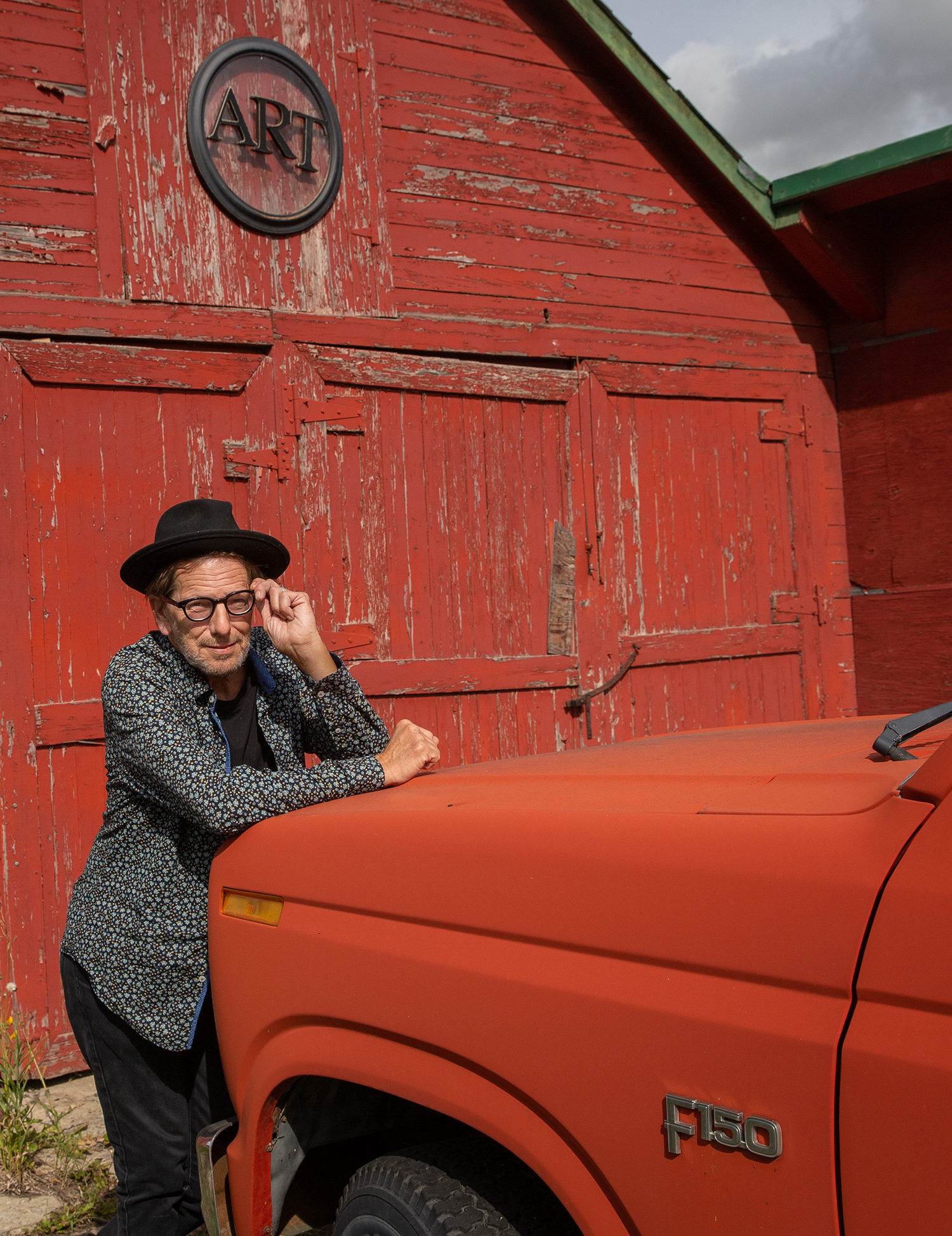 Photo: David Kotsibie
Tell me about “Cut N Paste” from ShadowWalk, and how you worked with the tabla player Sunny Matharu on it. Did he play his parts in real-time while you sang or were they a response to the vocals after they were recorded?
He played on the tracks after. Most of the songs started with me and an acoustic guitar, in Russell Broom’s studio in Calgary. My dear friend Donna Kerbel wrote it. She has a great band called luXury bob. She’s a really great lyricist. I sped up the end of the track to make it feel more panicky in the desperate throes of the actor’s addiction in the song.
You came out of the punk universe, but your solo career has seen you explore many styles, approaches, and genres. Talk about your interest in pushing into new areas across your work.
I love great songs. I love great music. I don't care what genre they came from. So, I try to use all of it in my writing.
To be honest, I'm sick of all the horrendous noise out there. I listen to some music today and think, “What is that syrup?” It’s made using all these machines and AutoTune. So, I’m trying to dumb music down to the essentials. And what’s more essential than tabla, sitar, or slide guitar?
Let’s move on to your Late Stage Empire Dementia album from 2021. Tell me from a big picture perspective what you’re exploring on it.
That was about Trump’s first four years. He’s openly insane. The title track is a litany on the list of American imperialist endeavors across 100 years. It was quite ambitious.
Viva Che!
The title track closes with the line “The first law of empire is entertainment!” Explore that idea.
I think of Apocalypse Now, when they brought in the dancing girls in the cowgirl outfits that dance around as the missiles are pouring in.
They’re assaulting the population with their media all the time. I don’t watch any television. I can’t stand the influx of continuous crap. I call for guerilla action in response to it.
There’s a song called “Children of Kali” on ShadowWalk. It says “Get off and outta line. Take back your mind.”
Talk about the song “Christo-Fascists” and how its themes and perspectives seem to amplify with every passing day.
It’s a little history lesson that goes through all the times people stood up and then were shot down. It also talks about what America hasn’t dealt with, like slavery reparations and stolen land from the Natives.
America is now a police state. There are all these police shootings now caught on cell phones. I think it finally woke a lot of people up to the racism affecting their country.
That track features Wayne Kramer. How did he get involved, and what did his presence on it mean to you?
A friend of mine in Los Angeles said he could get Wayne to play on it because he owed him a favor. So, Wayne did it.
It was a bit of work putting it together because Wayne made a whole warehouse full of noise that we had to fit into the song. It was done just before he died.
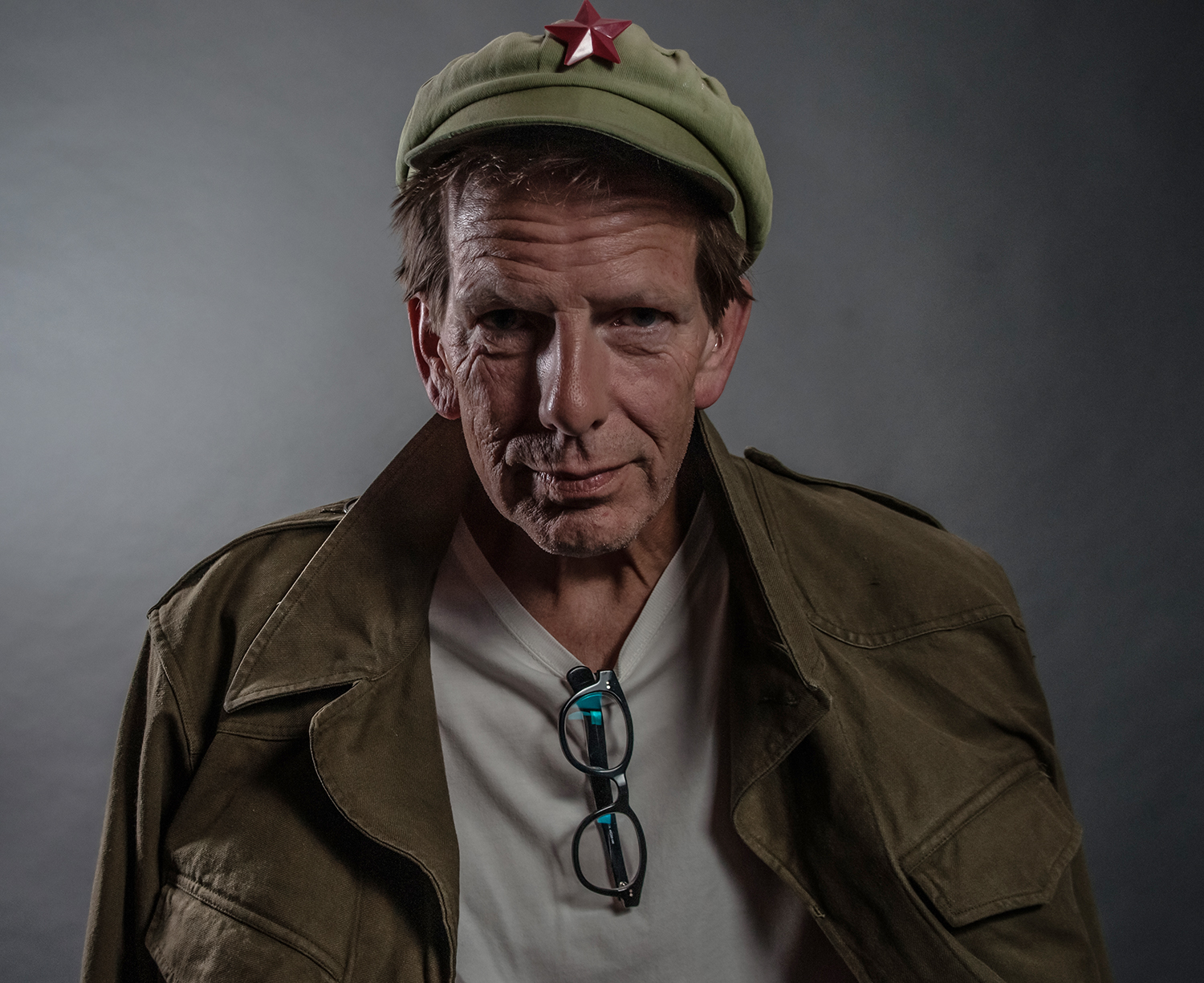 Photo: Kenneth Locke
Are you a MC5 fan?
I’m not a huge fan anymore, but what’s not to like? Those early videos of them playing in Chicago outdoors were crazy.
That brings us to 2016’s The Apostate, which is an incredibly thought-provoking and sometimes meditative record. Let’s start with the album title and cover. What are they communicating?
I really hate the lettering. It looks like a Ford logo. The artist did a painting of me based on a photo of me wearing a dress someone brought from India. I wanted to look like a false guru that’s implying “Follow me. Apostasy lies over here. Come and see.”
An apostate is someone who disagrees with the going religion. You don’t believe in it, so you’ll be crucified. At the end of late stage empire dementia, we believe in the overarching glory of the United States of America.
Discuss the influences that informed “Mirage.”
I was entranced by Tuareg music from North Africa. I’m just astounded by it, so I ripped it off. I asked the guitar player Paul Rigby, “Can you play like those guys?” He said, “No.” I said, “Try.” And he pulled it off and it’s quite amazing. The weird jangly guitar sound is so beautiful to me.
I’m an old Paul Bowles fan, so I wanted to evoke the desert and the cruelty of it. Bowles’ work is so fucking bleak. You came here. You’re going to live. You’re going to die. What are you going to do?
Another highlight from The Apostate is “Atheist Prayer,” which explores how religion is holding back the species.
What am I praying for? Evolution. Evolving away from being the murderous species we are.
The song goes, “Somewhere in your past, you learned how to burn.” That’s about the discovery of fire. That was the beginning of the end. That's the whole idea.
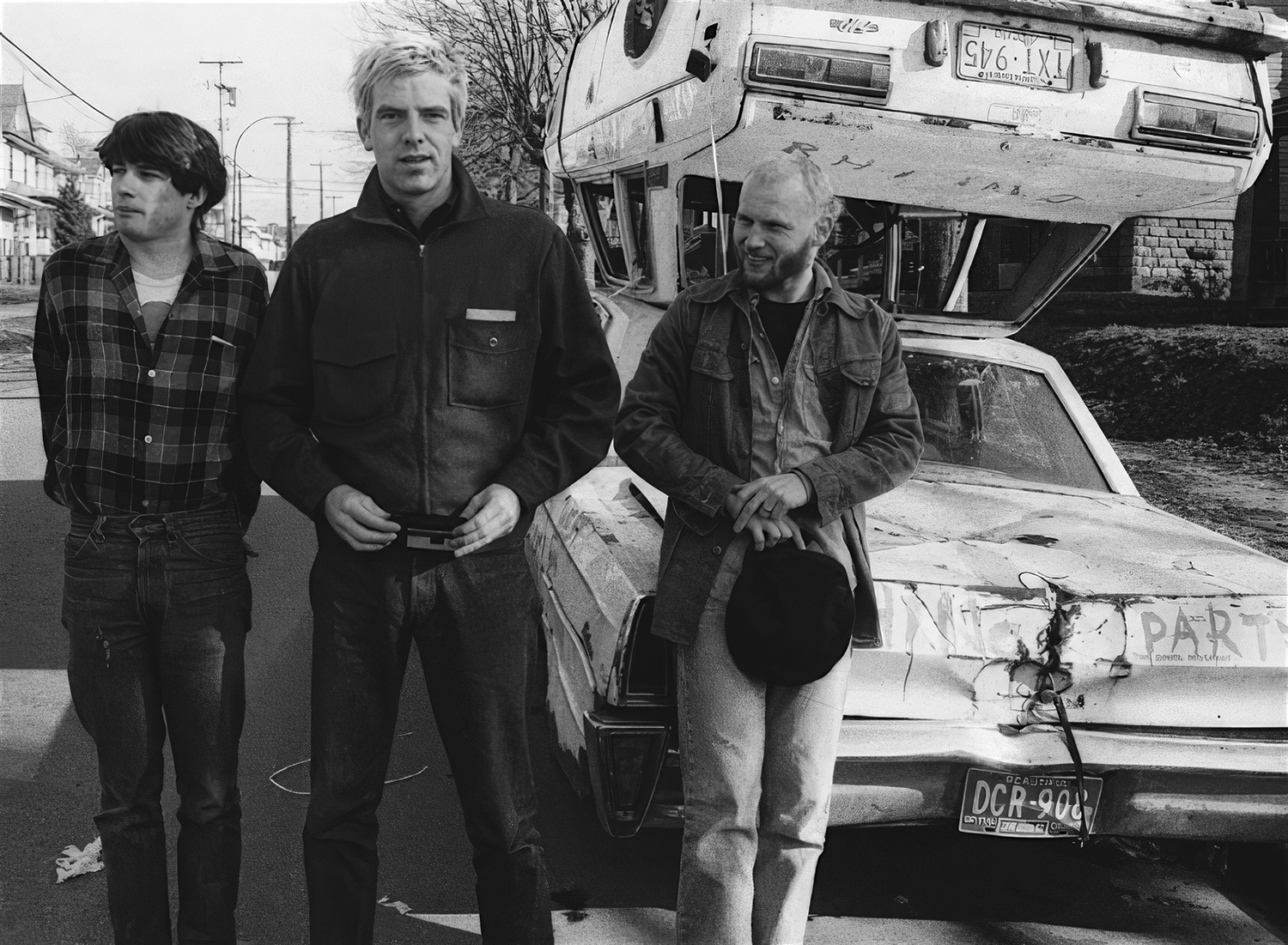 Young Canadians, 1979: Jim Bescott, Art Bergmann, and Barry Taylor | Photo: Bev Davies
I’m based in San Francisco. You’ve had some serious adventures here, going back to 1980 when Young Canadians played Mabuhay Gardens which was eventually released as the Joyride On The Western Front album. What are some of your memories of that visit?
We were young. We got in a van, and we got to go play at The Mabuhay. Dirk Dirksen ran the venue and had a lot of history there. The Modernettes also played that venue. You could call up Dirk and get a gig. He was very helpful, as were Jello Biafra and The Dead Kennedys.
It was a one-off gig, and I remember Robert Fripp danced in front of us, and that was a big thrill. He was doing his little hippity-hop dance in front of this wild, very loud, fast music. That was crazy. That’s my claim to shame. Robert’s doing great, today.
Young Canadians opened for The Boomtown Rats during a 1980 Canadian arena tour. In your book The Longest Suicide, you discuss how poorly they treated you, and how you took revenge on them at the Edmonton Northlands Coliseum show. Recount the tale.
Bob Geldof was so full of himself. His guitar players were rockhead, antisocial beasts. So, I had to do something to clear the air.
Well, we were young and fancy free. After our set, the pressure was over. So, I climbed the rafters right at the top of the stage and started pissing on the stage as they were playing. It was probably a foolish thing to do, but who knew?
How did The Boomtown Rats react?
[laughs] By the time it reached the stage, it was a fine, gentle spray. They were probably relieved.
That's rock and roll. The headlining band used to always be total dicks. But apparently that attitude has changed in the last couple of decades.
You revisited some of your earlier recordings with the band Poisoned on The Lost Art Bergmann release from 2009. The record captures music that ended up on your 1988 solo debut album Crawl With Me as it was originally intended. Tell me about putting it together.
Ray Fulber had the original tapes. He had to bake them to make them work again and he put it out. They were great demos. “My Empty House” came from that session.
We were going for broke. We turned everything up until the limiters broke off. We were wild and in our best shape.
I don’t know why the music got strangled on Crawl With Me, the first Duke Street Records release. John Cale, who produced it, ripped the ferocity from me. Emasculator. He wouldn’t let me play the guitars I wanted to. It was crazy. He let The Stooges play. Why couldn’t he let me play? But it’s an old complaint.
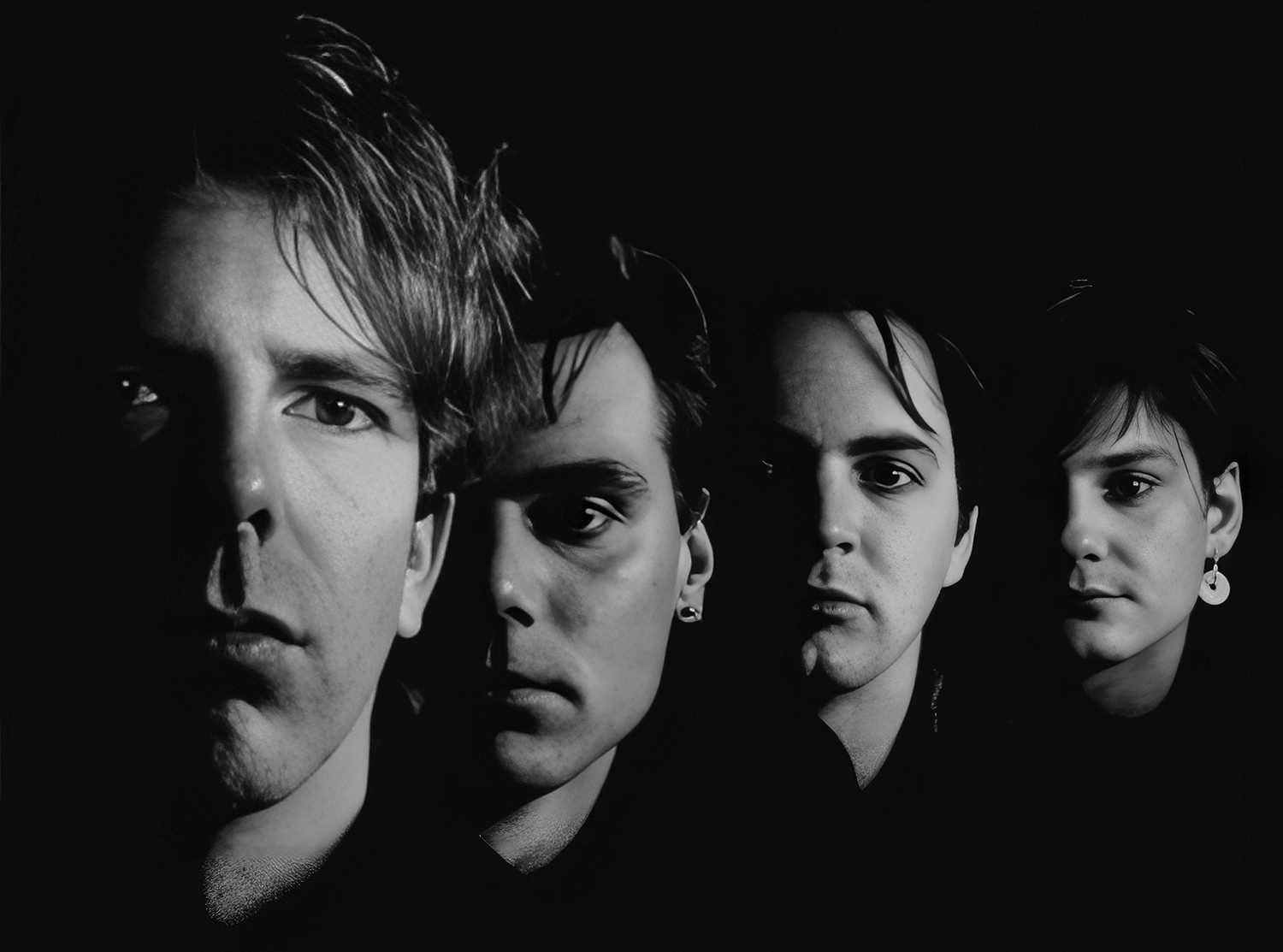 Poisoned, 1985: Art Bergmann, Tom Upex, Murray Andrishak, and Taylor Nelson Little | Photo: Alex Waterhouse-Hayward
And yet Crawl With Me sold 30,000 copies in Canada, so people did appreciate the songs in those forms.
Well, the initial hype machine made people buy it. And then I think they were disappointed with the ferocity when the next record Sexual Roulette came out. Terrible career move, Art.
You’ve had what could be described as a love-love relationship with recreational substances. How have your explorations in that realm influenced your songwriting?
Definitely helpful. Hangovers are helpful. I used to do my best writing after alcohol binges in the old days.
LSD is another big one. Everyone should try LSD at least once. It opens your mind to weird word combinations.
Cocaine is a horrible drug. People start lying the moment they take it.
Heroin is a love drug, but you can’t get off. You can’t get it anymore.
I used to grow opium poppies in my backyard in Alberta. Smoking opium is pretty cool.
With the opioid epidemic, things aren’t nearly as innocent as they used to be when it comes to that sort of experimentation. What’s your view on the current situation?
My God. We have 1,800 drug deaths a year here in British Columbia. That’s from Fentanyl, mainly. It’s a horror show. I don’t know what to do about it.
Give the people what they want?
Legalize drugs? Give out clinical drugs, safely?
But hounding people for their addiction is not a good idea.
You were appointed as a Member of the Order of Canada for your contributions to Canadian music. What are your thoughts about receiving that honor and how did it impact you?
It was an honor, because our Governor General, Mary Simon, is Indigenous. So, getting it from her was okay. But you still have people saying, “Oh, it’s still colonial action. Canada is still a monarchy, and this is an official monarchy thing, so you should not receive it and deny it.” But my friend Tom Wilson also got one, and he discovered he’s a Mohawk. So, I think it’s okay.
The award hasn’t helped record sales much, but I guess it helps get the name out there.
What keeps your creative spirit burning so brightly and eloquently, despite all the issues you’re dealing with?
The striving for eloquence. Everything weighs on me, and thoughts and memories come and go.
I was actually going to ask for help with suicide, but the music keeps me going. I’m still learning. I’m learning the DADGAD tuning, and slide guitar stuff. I love that shit.
I write lyrics every day. I gotta write them down. Sometimes, I’ve had brainstorms or a dream, and I didn’t write down my thoughts. Those are lost treasures and it’s very depressing when you don’t capture them.
Do you have untold amounts of notebooks around your home full of lyrics?
Yes.
Have you considered putting together a book of your lyrics?
It has been suggested to me by my various advisors to do a book of lyrics, but to me, it doesn’t make sense without music. I write words and music at the same time. I love the printed word, but with my writing, it’s not that important without the music.
Watch the video podcast version of the interview: