
Donate to Innerviews
Since 1994, Innerviews has provided uncompromising, in-depth interviews with musicians across every genre imaginable. And it does that with no trackers, cookies, clickbait, or advertising.
Your donations are welcome to help continue its mission of highlighting incredible music and artists, without any commercial considerations.
Your contributions will be instantly transformed into stories and videos, and cover hosting and web management costs. Importantly, your dollars will help ensure Innerviews remains absolutely free to all visitors, independent of their ability to financially support it.
Please consider making a donation today by using the PayPal QR code below.

David Van Tieghem
Fearless Rhythms
by Anil Prasad
Copyright © 2026 Anil Prasad.
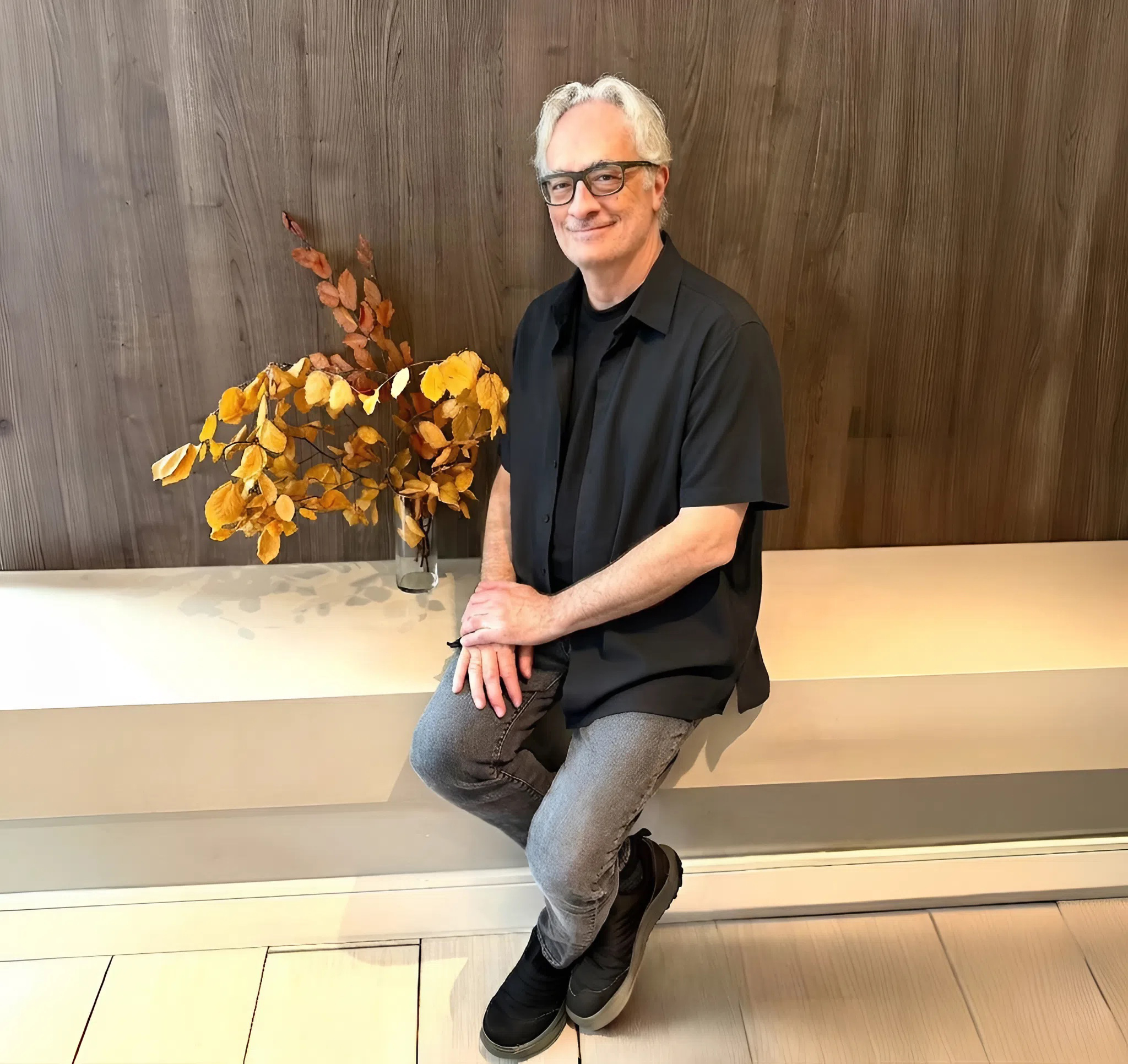 Photo: Anil PrasadDavid Van Tieghem considers rhythm critical for building emotional resonance and shaping unfolding narratives. The composer, musician, producer, and sound designer helped redefine the possibilities of percussion, using it to create atmospheres and structures far beyond conventional underpinning. Van Tieghem’s expansive body of solo and collaborative work cascades across experimental music, theater, film, and performance art, with him consistently questioning and reimagining how sound functions within those worlds.
Early on, his seeking perspective put him in Steve Reich’s orbit. He was part of seminal Reich works as a percussionist, including 1978’s Music for 18 Musicians and 1980’s Octet/Music for a Large Ensemble/Violin Phase. With Laurie Anderson, he was a member of the creative circle for highly-influential recording and performance projects, such as 1982’s Big Science, 1984’s Mister Heartbreak, and 1986’s Home of the Brave. He also worked with Robert Ashley on the celebrated 1981 “opera for television” Perfect Lives, serving as a core voice within the story.
In addition, Van Tieghem was a significant contributor to 1981’s My Life in the Bush of Ghosts, the classic Brian Eno and David Byrne album that combined sampled vocals, found sounds, African and Middle Eastern rhythms, and electronic music. The experience was inspirational and pivotal for Van Tieghem, who used it as a springboard to pursue large-scale conceptual ideas within his own music.
One of Van Tieghem’s most forward-thinking projects was 1982’s Ear to the Ground, a performance art fllm that focused on immersive and site-specific sound experimentation. It found Van Tieghem using myriad elements of Manhattan’s cityscape as percussive sound possibilities, including sidewalks, phones, buildings, street posts, and signs. The idea of mining everyday urban spaces to create musical intrigue proved highly impactful, resulting in countless musicians worldwide implementing similar ideas in their work.
As a solo artist, Van Tieghem has released four albums which showcase a clear evolution borne of intention and serendipity. His new compilation, Even As We Speak, pulls together material from across his career, including his 1984 major label debut on Warner Bros., These Things Happen, his two late-‘80s LPs on Private Music, Safety in Numbers and Strange Cargo, and his 2009 independent release Thrown for a Loop. Even As We Speak is a fascinating long-form self-portrait that showcases his early explorations of atmospheres and minimalism, and how they gradually evolved into more melodic, cinematic territory.
Innerviews met up with Van Tieghem in Berkeley, CA ahead of the launch of performances of The Hills of California, a play written by Jez Butterworth and directed by Loretta Greco. Van Tieghem provides sound design and music to it. At a hotel near The Berkeley Rep theater where it was staged, Van Tieghem offered candid thoughts on key experiences from his incredibly diverse journey delivered in a soft-spoken, highly thought-out manner.
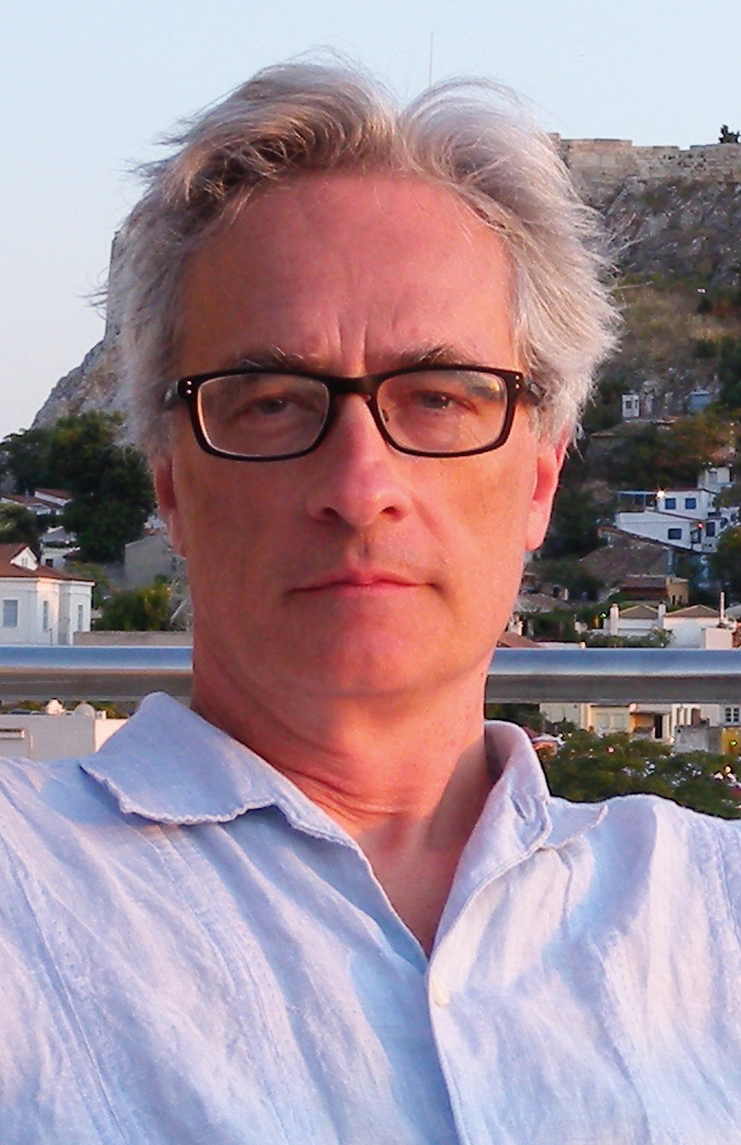 Photo: David Van Tieghem Collection
We’re living in a complex and unstable phase of Western civilization. What are your thoughts on how that relates to your life as an artist?
My wife Cate Woodruff is a visual artist. We both have to remember that what we try to do is open other people’s minds, ears, and eyes, and give them some joy. If you look at the news, it’s insane. I try to support the people and causes that matter to me. And if there are ways I’m supporting this horrible system, I try to change them.
I’ve worked hard to get to a point in which life is a little bit calmer and less desperate and I’m trying to hold on to that. I want to focus on really seeing what’s in front of me and being present. I feel like I’ve missed a lot of things in life because I was so concerned about the next thing or getting to the next stage in my career.
Now, I think “We’ve been working on these societal problems for like 60 years, since the Vietnam War and Nixon. It was supposed to keep getting better. There was supposed to be a revolution.” It’s fascinating the lack of education people have in terms of understanding history.
When I teach sound design at The New School in New York City, I’m drawing on some of my own history with people like Steve Reich and Laurie Anderson. I’ll say, “Look, all these amazing things happened 40-50 years ago.” And they’ll know nothing about any of it. Take Charlotte Moorman for example. Perhaps a couple of students had heard of her before.
A lot of things have really had a big influence on me and stuck with me. So, I point those out and the effects they’ve had. I don’t get very political in my class, though I doubt there are many MAGA students there.
I span the technological arc from vinyl to now, from physically cutting videotape to all of these things we can do in the digital era that we used to dream about. But it took a long time to get here, and they don’t necessarily understand that, either.
You’re here in Berkeley to contribute sound design to the play The Hills of California. Explore your contribution to it.
For the last 30 years, I’ve been doing a lot of sound design for theater, both on Broadway and off-Broadway. This play was done on Broadway earlier in 2025. It was a British production that came over to the States. The first American production was done at The Huntington Theater in Boston. And now it’s a co-production with Berkeley Rep.
I wrote some original music for it and did sound design for this really beautiful play. The director, Loretta Greco, has extensive experience. We’ve done a lot of shows together.
The Hills of California is about a mother and her daughters. It takes place in two different times in the ‘70s and ‘50s. There’s a younger cast of daughters and a cast of the adult daughters. They’re in a singing group kind of modeled after The Andrews Sisters. So, there’s also some singing in the show.
We used some existing songs for the show, but other parts needed melodies, so I wrote some. It was really interesting to work on, because it’s a current play about people in the ‘70s reminiscing and dealing with stuff that happened in the ‘50s. There are some really interesting perspectives on the different time periods involved.
Discuss your journey as a sound designer and what you focus on during these projects.
When I started doing theater, it was mostly doing music. I first worked on some plays by Mac Wellman. I’ve also always been interested in film scores. So, I would approach the plays as underscoring under monologues, under scenes, and during transitions.
I also like mixing music specifically for the space the play is performed in. I like creating an audio environment similar to the way lighting people do. They’ll change colors and lighting approaches, sometimes subliminally. They’ll put in a tone you might not notice right away. That’s what I’m trying to do with sound as well.
Sometimes, if we’re just trying things, I might put in a tone and not initially tell the director and see if people go “Oh, what’s that?” or “Oh, that’s great.” I like the collaborative approach and the idea of surprising people. It’s really fun working together with people from different disciplines.
Also, being a percussionist that’s worked with time and rhythm so much, I’m always aware there’s almost a kind of macro rhythm to a play. There’s an arc and a right time to hit a specific sound cue after a line. There’s also a wrong time to do it. If a play is well-written, I’ll hear the lines as a kind of music.
I’m often in rehearsals for a couple of weeks for these productions. So, I’ll hear the words over and over again. I’ll become so familiar with the dialog, that I know when to wait for certain words or phrases to appear that I can support with the right sounds.
I’m also very interested in determining what’s a musical sound and what’s a sound effect, and how you can blur the lines between them. One of the things I like about plays is that each one is so different and that you can be impressionistic with your approach when it’s appropriate.
You recently released the compilation Even As We Speak, largely drawn from your ‘80s albums. Tell me about the decision to revisit this music.
It was the idea of the label Phantom Limb. I’ve made those tracks available online on places like Bandcamp, but I’ve never done vinyl for any of them since the mid-‘80s. So, I said, “Hey, great. Put out whatever you want.” They proposed the tracks they wanted and I agreed.
I’m thinking about doing some remixes of this material in the future as a new way of revisiting them further. I don’t have access to any of the multitracks. And even if I did, I don’t know where the machines to play them would be anymore. So, I’m using digital tools to take the tracks apart and play around with them.
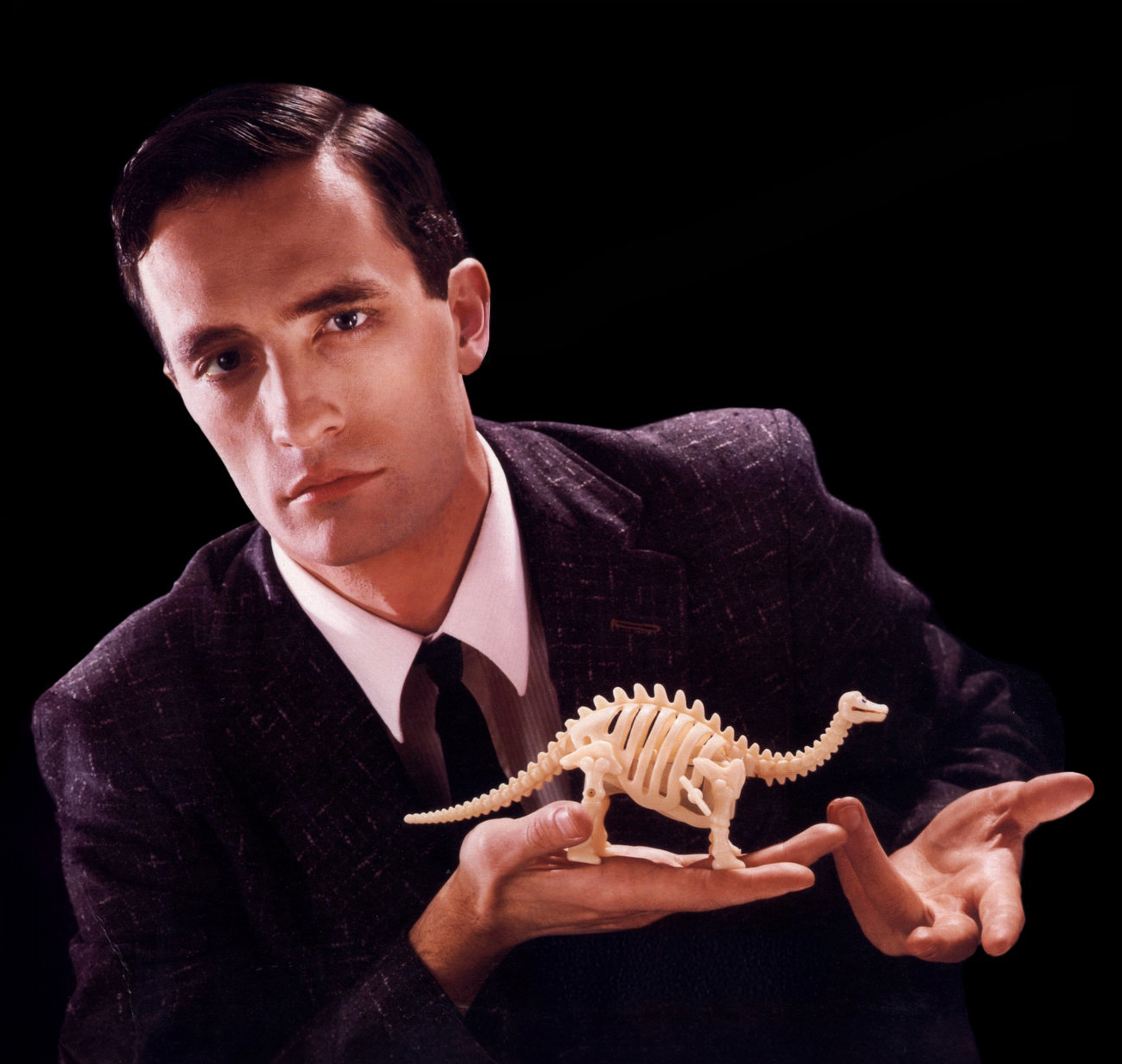 David Van Tieghem, 1983 | Photo: Deborah Feingold
Let’s discuss the albums the compilation draws from. Tell me about making your 1983 debut LP These Things Happen.
I had played with a lot of people by 1983 and I thought, “I should probably try to put out my own album, somehow.” And then I got a call out of the blue from Twyla Tharp. She said she was working on a new dance piece called Fait Accompli and that I might be the right person to create music for it.
I went to rehearsals and saw what she had already started choreographing, using temporary music. There was some Philip Glass, Paul Simon, Peter Gordon, and John Giorno stuff on there. I had played drums on the Giorno piece, so I thought it was funny that she didn’t know that.
One of my first jobs on the project was to understand what she liked about those different tracks so I could give her something within the right tempo and instrumentation.
I was still pretty young being in my late twenties, so it was a little intimidating. I put stuff together on a four-track cassette deck in my bedroom using some drum machines and an Eventide harmonizer. I’d bounce overdubs back and forth. So, that’s how the basic tracks started for that album.
When I played them for Twyla, she said “Okay, let’s do it.” It was a full-evening piece, so there was a lot of music to put together.
I had a manager at the time named Tim Carr, who eventually ended up doing A&R for Warner and Capitol. He signed Megadeth. But at the time, he was working with downtown artists like Eric Bogosian and me. After I recorded all the music for Twyla and it was successfully performed at Sadler’s Wells Theatre in London, Brooklyn Academy of Music, and then on Broadway, Tim sent the tracks to Warner. Karin Berg, who did A&R for Warner at the time, heard them and she was interested. They were having success with Laurie Anderson’s stuff, so decided to do it.
It wasn’t entirely done on my four-track cassette setup. At a certain point, we went into Right Track Recording Studios in New York City to work on the album. We brought a bunch of musicians together for it, including Peter Gordon, Randy Gun, Rik Albani, and Rebecca Armstrong. I also did some percussion overdubs there.
There was also a lot of sampling on the record. There’s a ton of uncleared snippets from movies on it that I would never be able to get away with now. But back then, she wanted a very dark atmosphere, so I threw in some of those things so it could have that feel.
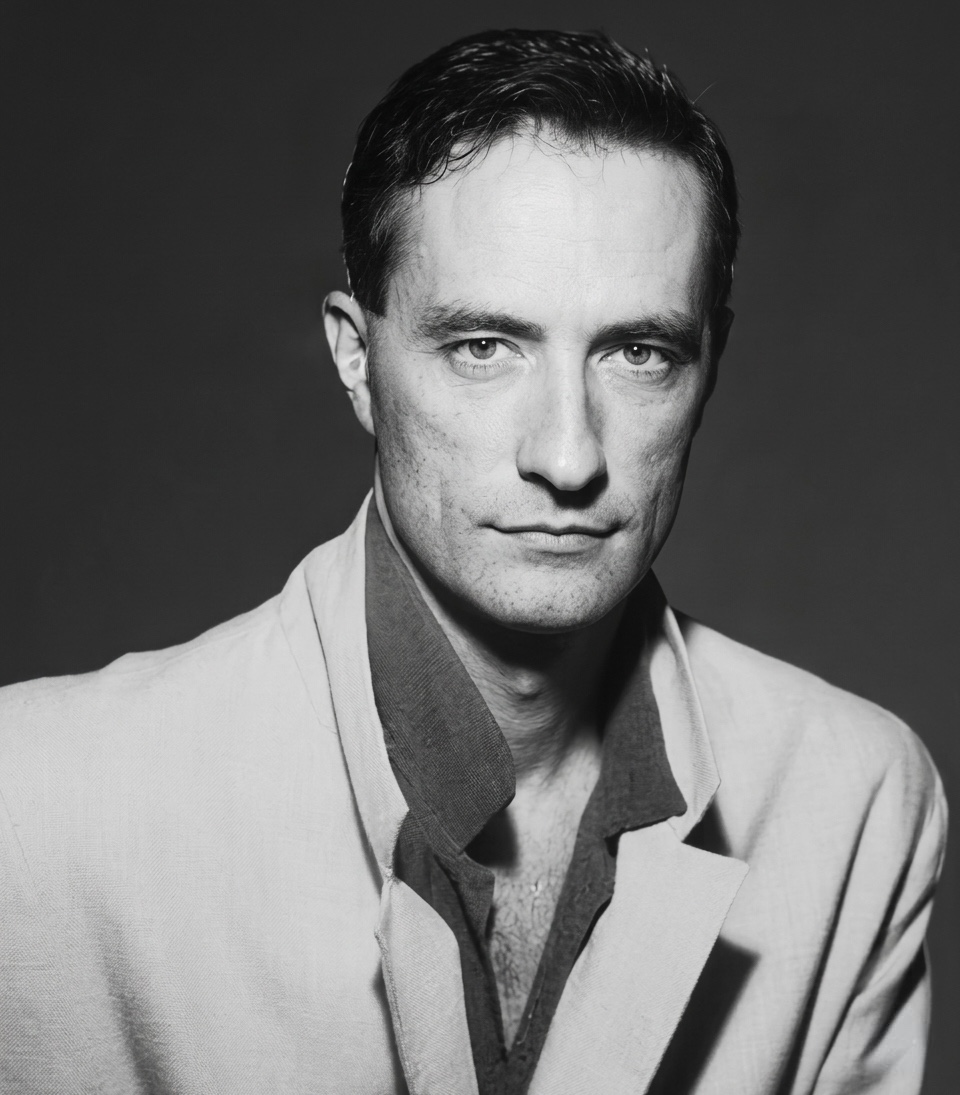 David Van Tieghem, 1987 | Photo: Deborah Feingold
From there, you went on to do two albums for Private Music in the late ‘80s, Safety in Numbers and Strange Cargo. Explore putting those together.
I was happy to have another label interested. Doreen D’Agostino at Private Music brought me in to do them. I said, “I don’t want to become a new age artist.” I wasn’t all that into the other stuff they were putting out. I didn’t change anything I did to sound like I was on the label.
The main thing that was different when working with them is their focus on digital recording. Their albums used to have the DDD SPARS code on them which meant all the records were recorded, mixed, and mastered digitally. That was their thing.
Safety in Numbers was released on LP, cassette, and CD. Strange Cargo was only on cassette and CD. There’s a certain sound to those albums that’s cleaner and more digital. There’s a lot of Fairlight on them, which is full of 8-bit samples. So, it was funny to say, “It’s a digital album, but the samples making up the music came from some old cassettes I recorded a drum on.” None of it makes any sense. But that was okay, because the two albums were pretty good.
There was a little bit of tension about the direction of my material, particularly with Strange Cargo, which involved Roma Baran, who produced the early Laurie Anderson records. Private Music wanted someone else to co-produce it.
I actually did a third album for Private Music, which straddled the world of working in big studios and using these racks of gear you could have at home by that point. The mix wasn’t quite right, and they didn’t give me enough money to do it properly. I wasn’t incredibly happy with how it wound up and neither was the label. So, that record never came out. There are some tracks intended for it that I might go back to and revisit. But once again, I don’t have any multitracks, just DAT tapes to work from.
It took you 20 years to release another solo LP with Thrown for a Loop in 2009. Describe the origins of those pieces and the distance traveled.
That one originally came from some stuff I did for a theater project. After the Private Music albums, I had my own studio, a big mixing console, and racks of samplers and stuff. I was able to do a lot of things without having to go to a studio. So, I made some tracks.
By then, I was doing a lot of work with dancers, other musicians, and theater things. I was freelancing where I could. I’d still perform shows, but I didn’t have the drive to put out something for a long time. Eventually, I felt I had to release new music, but I wasn’t sure what to do.
I was creating a lot of music with MIDI, sampling, synths, and virtual instruments. I made some demos in which I got into trying to write lyrics and sing a little bit. But I didn’t use any of those vocals. “Thrown For a Loop,” “Strata,” and “Summer of Smoke and Bamboo” originally had lyrics and my vocals, but they didn’t seem right that way. My wife and I do sing on “Summer of Smoke and Bamboo,” but without words.
There was a brief moment when Epic Records seemed interested in the album, but when they saw I didn’t have a band that was going to go out and do some big tour support, they weren’t interested. I just wasn’t set up for that kind of life.
In 2009 we had services like MP3.com in which you could put out your music yourself. I had some things on there, including this album. The world was changing with the emergence of Napster. No-one knew what constituted putting out an album anymore. You no longer had people obligated to listen to tracks in the order you wanted them to. So, I used MP3.com and Amazon to put out digital and CD versions of this record.
I worked on Broadway a lot at that point. I was very busy doing theater stuff and raising a family, so the truth is, I wasn’t thinking about record company priorities much.
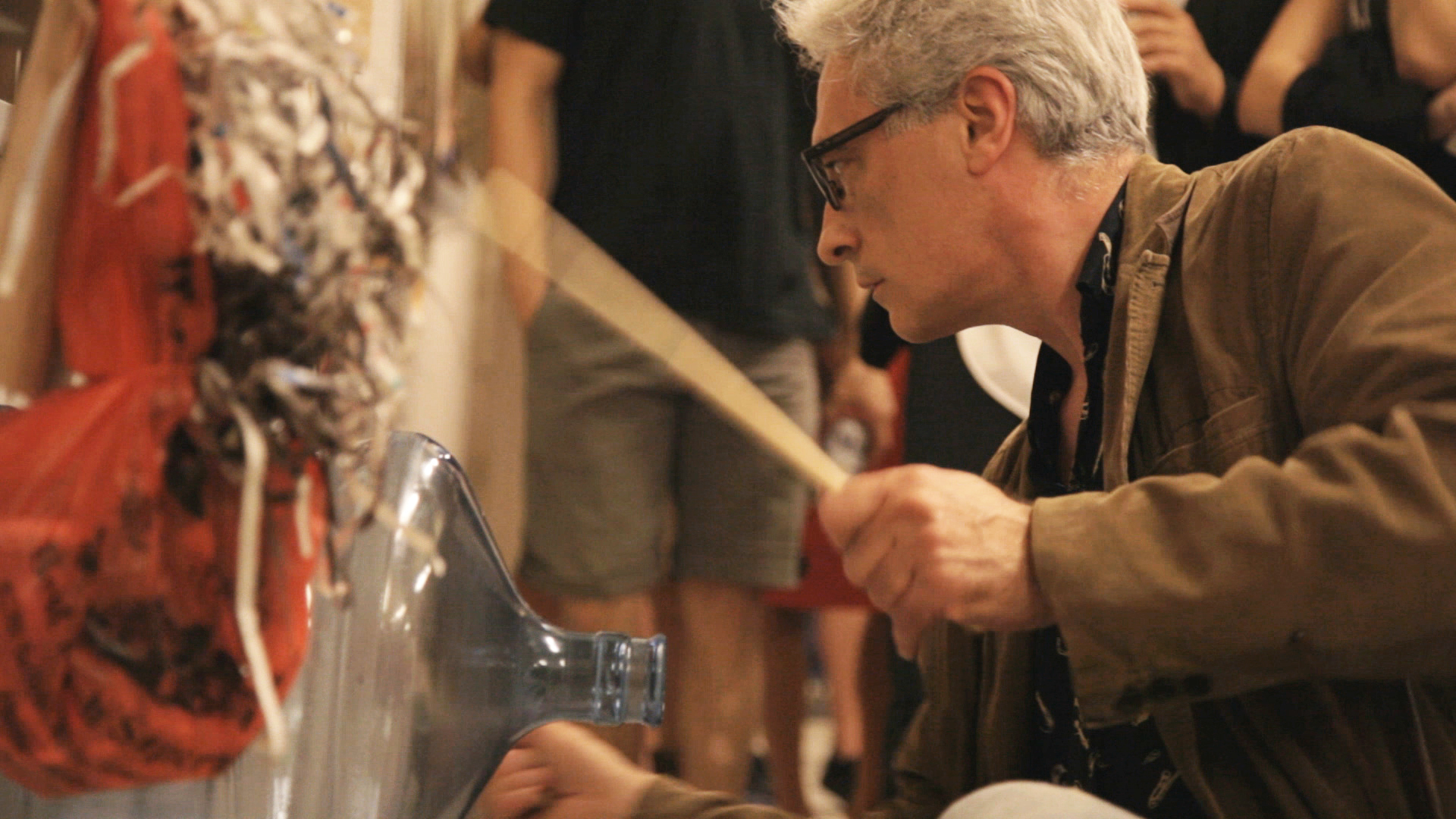 David Van Tieghem performs during the FRKWYS series, New York City, 2013 | Photo: Jordan Kinley
In 2013, you released Fits & Starts, a collaborative, experimental, and abstract album with 10 young New York City-based artists. Explore the process that informed it.
The RVNG Intl. team invited me to be part of the FRKWYS series. This particular project was connected to an exhibit called Bulletin Boards, held at the Venus Over Manhattan gallery.
Everybody in the show was given a bulletin board to do something with. The idea was all of these artists would contribute objects that might make sound that can go on a bulletin board collage. In other words, instead of business cards on the bulletin board, there would be things like broken toasters, firecrackers, 2x4s, thunder drums, and customized electronics.
And then I would play on them and send the recorded results back to the people who contributed the percussive object to do something with them. Next, they’d send them back to me and I’d put it all together into an album. And that’s what you hear on the record. It was a very interesting project.
You’re well known for your ability to create percussive intrigue from virtually any object. Everyone from Stomp to Blue Man Group to countless avant-garde musicians were inspired by your work. What are your thoughts on the waves you created across the world?
I don’t think about it too much, but it’s nice to know that people remember some of the things I did. Just on Instagram, I’ll see cool percussion things people are doing now and it’s incredibly nice when they tell me I was a big inspiration for them. When I started doing this, I couldn’t have imagined that would be the case.
I feel with the time I have left, I have to get a lot more stuff out. I’m also thinking about writing a memoir. I’ve had four different careers. The first is working with musicians I play with like Peter Gordon and The Love of Life Orchestra. Then there’s the theater world, and all the directors and actors involved. And then you have the stuff I’ve done for the dance world, and all the choreographers and dancers I’ve got to collaborate with. And then there are my own shows and recordings. So, there’s an interesting story to tell.
It’s also interesting that people in one realm of my career may not know anything about the other things I’ve done. I don’t show up and play percussion when I’m doing theater and dance work. But if they look at my bio, they might figure out what I’ve done previously, especially when they see me linked to someone like David Byrne.
I think it would be interesting to document those worlds in a book so people can understand the bigger picture of what I’ve been involved in.
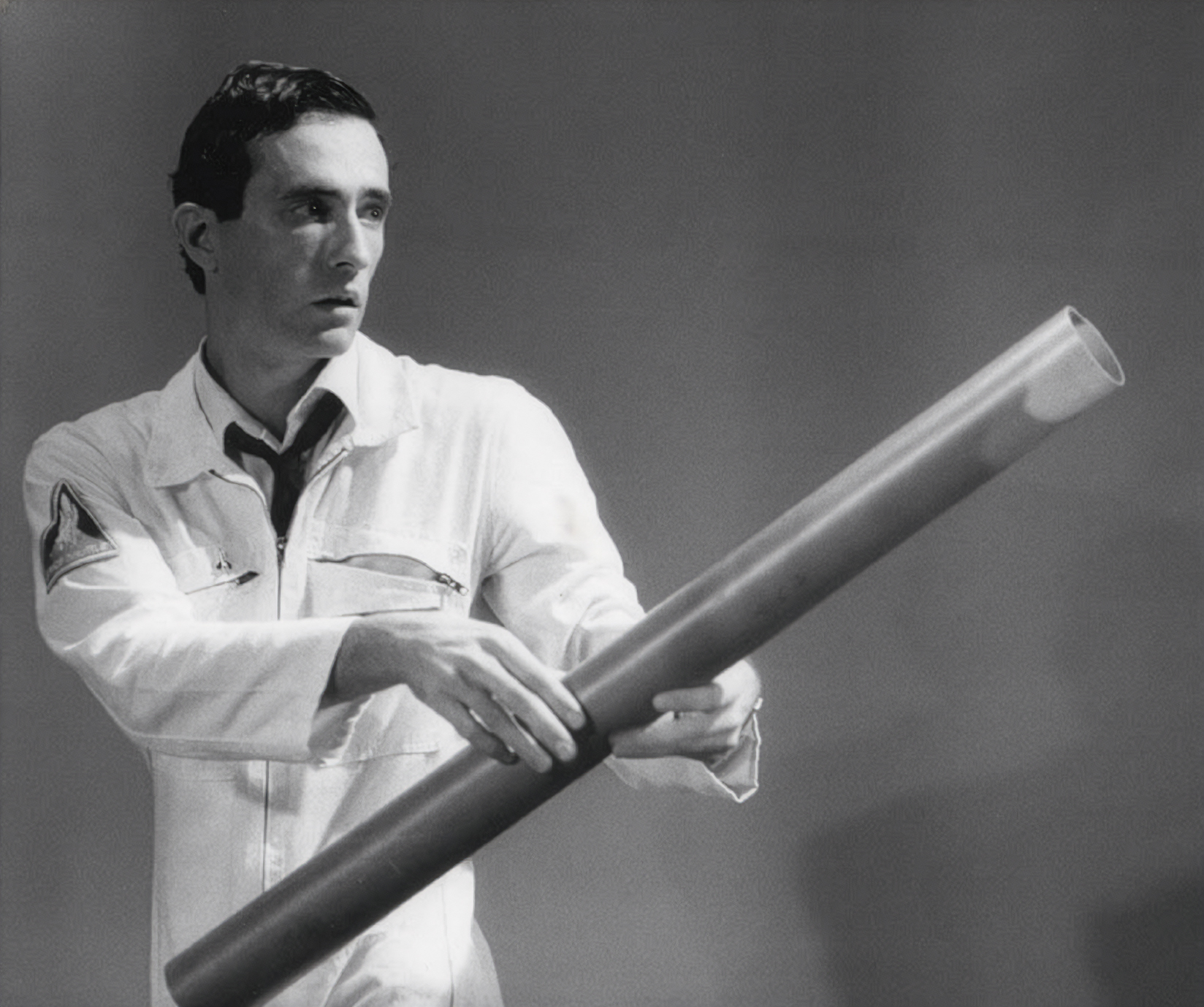 David Van Tieghem in concert at The Guggenheim, NYC, 1985 | Photo: David Van Tieghem Collection
The Simpsons paid tribute to you in 2006 during a Bart Simpson percussion sequence as part of the episode Jazzy & The Pussycats. What was it like for you to see that and have it underline the long-term cultural impact you’ve had?
I only recently found out about that. He’s even dressing like me. No-one told me about it back when it first aired. But it was cool and funny to see. It was also interesting in how it was so much about jazz. It contained a lot of references to a lot of people, but it was very nice to be included.
During the early ‘80s you were everywhere, including Late Night With David Letterman; MTV; Levi’s, Sony, and Audi ads; and countless other appearances. Describe the electricity in the air for you during that period of your career.
It was a little awkward. When I’m on stage, I’m very comfortable. There’s pressure, but it’s the normal pressure of having to play well. That’s my world. But when I’m not doing that, I’m a pretty low-key person. But I think I generally look and sound pretty good when I go back to some of those things. But some of the things I wore I wasn’t incredibly comfortable in.
The film Ear to the Ground had a lot of impact. But I wasn’t sure how I felt making commercials based on it. The money was good, so that made a difference.
At the time, I was living in the East Village in New York City. A lot of interesting artists were living in the same area. So, everything was very relaxed. But it was surprising to be recognized on the street when I was in Japan, during the early ‘80s when I was opening for Ippu-Do with Masami Tsuchiya. Every night, I was performing for thousands of teenage girls. After the show, it was like The Beatles on tour with people running after our cars. So, that was fun.
You were part of one of Steve Reich’s most important albums: Music for 18 Musicians. How do you look back at that collaboration?
I first heard Steve’s music during a performance of “Drumming” he did at New York University when I was in high school. I couldn’t believe it and I wanted to be part of the group.
When I was attending The Manhattan School of Music in 1975, one of the people in his group, Jim Preiss, was a teacher there. And then there was another student my age, Gary Schall, who said, “Hey, I just joined Steve Reich’s group.” I’m like, “What? I didn’t know Steve was working with musicians in our age category.” I asked Gary for Steve’s number, called him up, and said, “Do you need anyone else?” And it turns out he did, because he was about to start putting together Music for 18 Musicians.
So, I came out to an audition, we played together, and that was it. It was so exciting to be part of the composition process for Music for 18 Musicians. Each week, Steve would come in and give us a new section until it was all built. I had been a huge fan for years before I joined, so I couldn’t believe I got to play with Steve and all these other amazing percussionists.
I was with Steve between ages 20-25. Gary was my age, but everyone else was older. So, it was an education to see how they lived their lives and what their professional practice was.
I knew I was involved in something special and that it was really unlike anything anyone else was doing. Also, it wasn’t something a lot of other people could do. The other percussion ensembles of the era would try to do similar things, but they just didn’t have the groove. They didn’t click in the same way.
Most of the shows we did were in Europe, because at that time, not many people in the US were interested in booking Steve.
I knew Music for 18 Musicians was really incredible. We recorded it in Paris, and it was supposed to come out on a new record label that never got out of the gate. I remember Steve asking me, “I can release it on Deutsche Grammophon or ECM. What should I use?” I replied, “ECM, definitely, because it will reach a different group of people.” So, that was his first album on ECM.
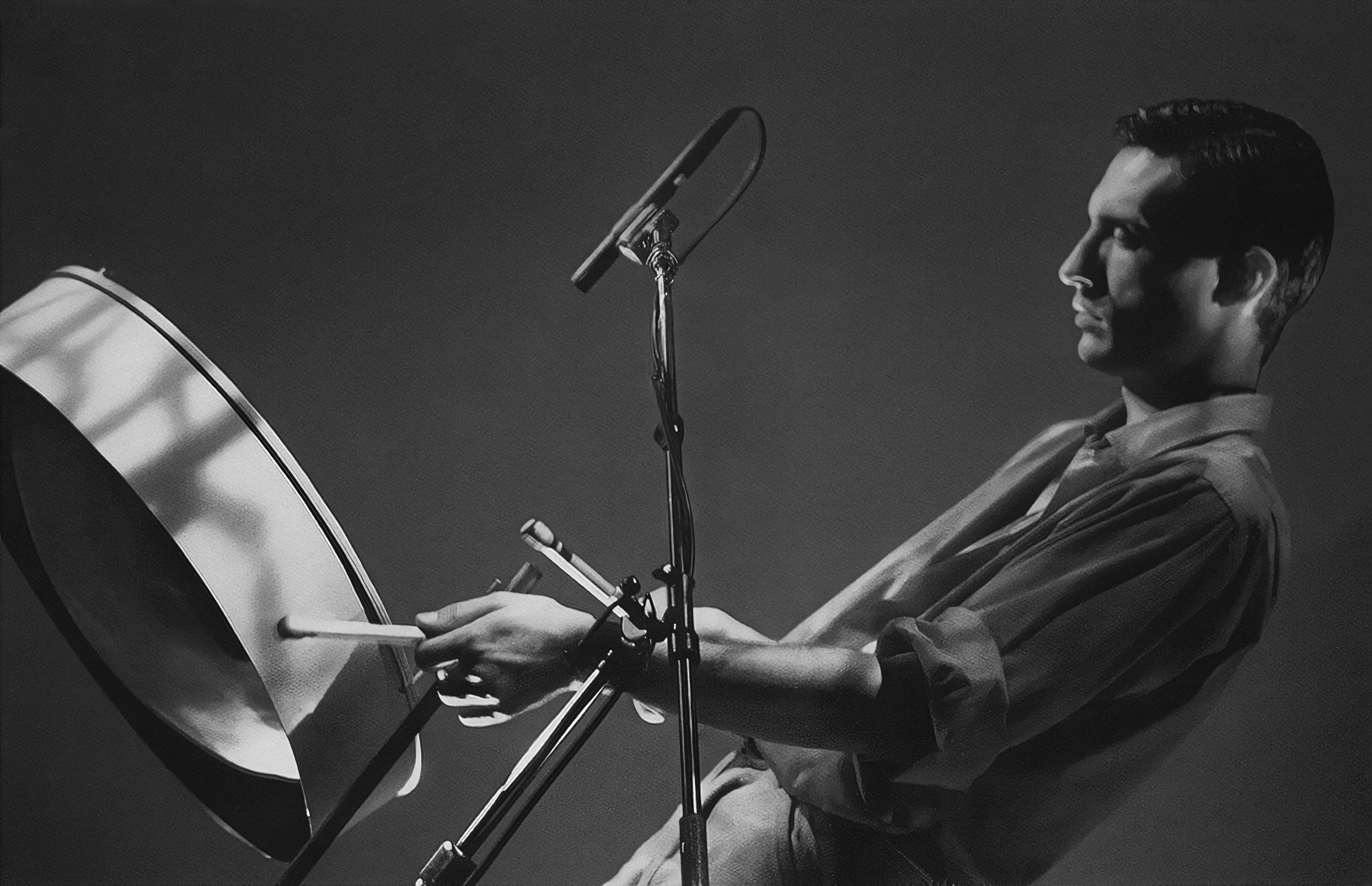 David Van Tieghem, 1986 | Photo: Sharon Alouf
Robert Ashley’s Perfect Lives from 1983 was another seminal moment you were involved in. What can you tell me about working on it?
It was so nice to be around Bob and work with him. I loved the vocal pieces he had done before. Initially, I came in to play percussion on a lot of the tracks for Perfect Lives, but then the project changed and I became one of the readers of the text instead.
At first, I thought to myself, “I don’t know what I’m doing. He’s not giving me any direction. I don’t know if this is right.” And then somebody said, “He’s not giving you any direction because you are doing it right.”
It morphed into a big video project with crazy costumes and makeup. I just went along with it, and it was different from anything else I’d done. It was a lot of fun.
Similar to Steve Reich’s Music for 18 Musicians, I didn’t realize this project was a historic moment that was going to be remembered decades down the line. But looking back, I was really fortunate to be at the right place at the right time to do this project.
Brian Eno invited you to be part of the 1979 My Life in the Bush of Ghosts sessions. What was it like to be in the midst of his experimental world?
It was great. I remember being at Max’s Kansas City to see a band, which I usually didn’t do because I was always doing my own shows. I was in the back area and Brian came up and said, “I’d like you to play on some things I’m working on.”
Brian had seen me play a solo in 1979 at The Kitchen as part of New Music New York, which later on became New Music America. I didn’t know he had been there.
I went to a couple of different studios with Brian to work with him. It was fascinating that he recorded everything. There was always a tape running, no matter what was happening. And unlike most of the studio things I did where we only had limited time, we were able to spend as much time as we wanted trying things out.
Brian would say a word like “bovine” and ask us to react to it however we wanted to. We’d all start playing and Brian would tell us not to change our ideas based on what we heard everyone else doing. When we did the “America Is Waiting” track, the idea was for everyone to play but not hear what anyone else was doing. So, I came up with that 5/4 drumbeat on the spot and that was it. It was great to be able to experiment that way.
David Byrne was also there, and Robert Fripp came by at one point. I couldn’t believe I was standing in the control room next to him.
I spent three days with Brian on the project. It taught me to take experimentation further than I had thought about it before.
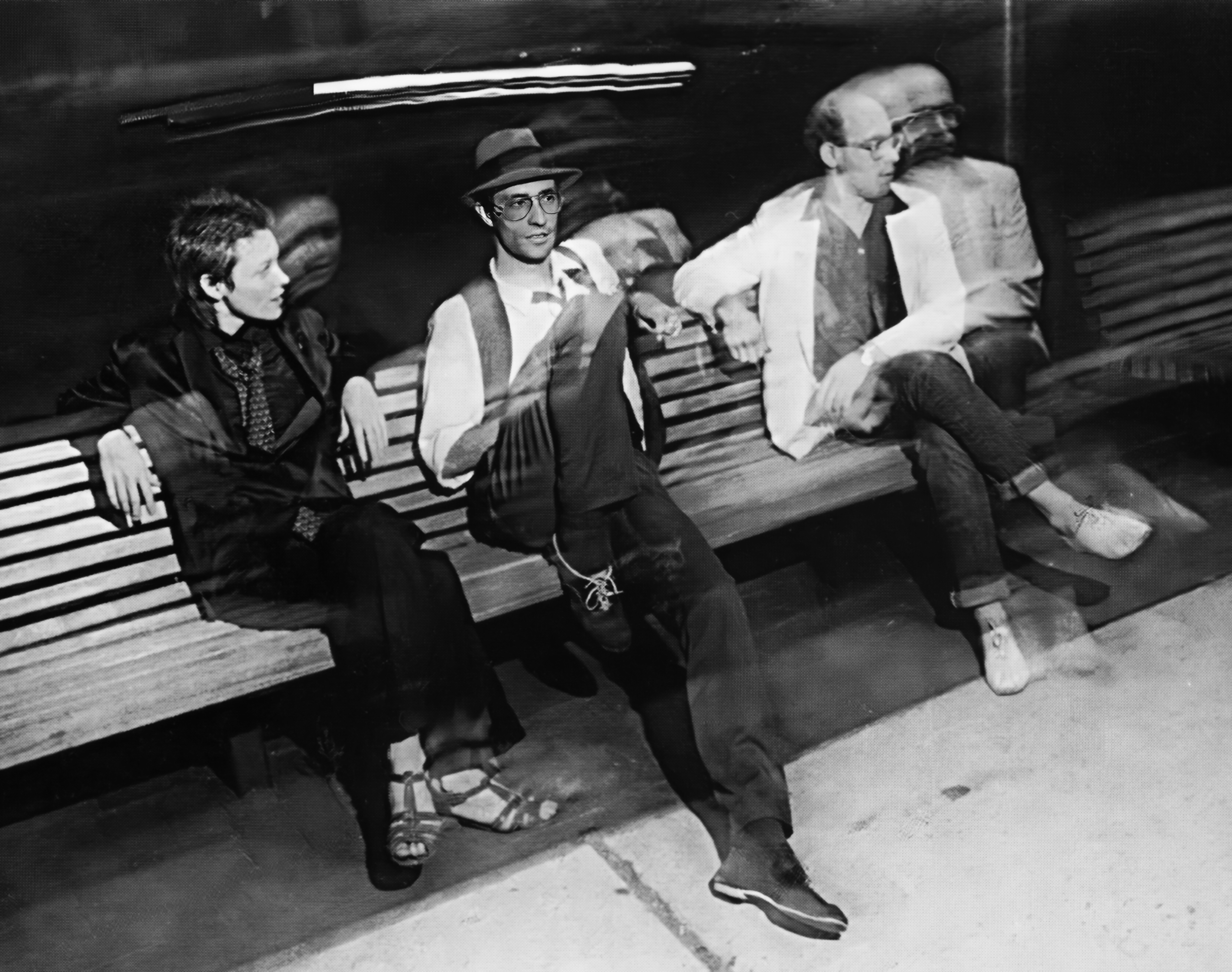 The Blue Horn File, 1979: Laurie Anderson, David Van Tieghem, and Peter Gordon
You’re featured on Laurie Anderson’s most well-known works. Discuss collaborating with her and what some of the key highlights are for you.
Laurie was very inspirational to me. I was a fan before she had any records out. I’d go see her shows and think, “Oh my god, that’s exactly the kind of approach I want to take with percussion.”
Laurie had such a conceptual idea for everything she did. And you never quite understood what was happening. Was she bowing her violin or was it a tape loop? You didn’t necessarily know.
One of the first things I did with her was a trio called The Blue Horn File with Peter Gordon. We only did one show at The Mudd Club in 1979, which you can now buy on Bandcamp.
When Laurie got the deal with Warner Bros., I was asked to participate. Laurie and Roma Baran had a console set up in Laurie’s loft. I brought my drums to her loft, and we recorded right there for what became the Big Science album. I went on to do live shows with her, including performances of United States, during which I played percussion, and a little synth at the end of “O Superman.”
I also played on tracks for Mister Heartbreak, including “Gravity’s Angel” and “Blue Lagoon.” There’s a version of “Excellent Birds” with Peter Gabriel on Mister Heartbreak, but I didn’t play on it. What’s interesting is that I once met Peter after a Laurie show in London. He complimented my drumming and asked me to work on his own version of “Excellent Birds” for his So album. I recorded parts for it, but he chose not to use them for the final version.
I went on tour with Laurie to support Mister Heartbreak. We played across Japan, the US, and Europe. And then we made the Home of the Brave film right after that, which I think was the core introduction to Laurie for a lot of people.
Making Home of the Brave was a little stressful. Doing a film involves a lot of waiting around. The talent just sits there forever until everything is ready. The funny thing about it is we recorded everything in advance. We were basically lip-syncing when we shot the film. So, I had to remember exactly what I played in the studio and pretend to do it again. Adrian Belew was also brought in to play in it. He didn’t do the tour, but did the Mister Heartbreak record previously.
I think Home of the Brave holds up well, even if there’s something a little ‘80s about it. I don’t think any of us would create a project quite the same way again, but it was definitely incredible in the moment to create and to be a part of her process.
You contributed to Ryuichi Sakamoto’s 1987 Neo Geo album and went on tour with him. Provide some insight into collaborating with him.
I had played on a previous album Ryuichi did called Ongaku Zukan in 1984. I did that record after I toured with Ippu-Do in Japan. I met Ryuichi while I was in Japan and we worked together. I then did a tour with Ryuichi in 1986 that was really incredible to be a part of.
Next, he held sessions in 1987 for what was to become Neo Geo at The Power Station in New York City. He was so great to work with. He was very quiet and gentle and could communicate through a certain smile or a little smirk. I was always in awe of what he was able to do throughout his career and to have the courage to approach so many different areas, including acting and singing.
I wish there had been more work with Ryuichi after that. We kept in touch, but somehow there weren’t many more projects involving percussion.
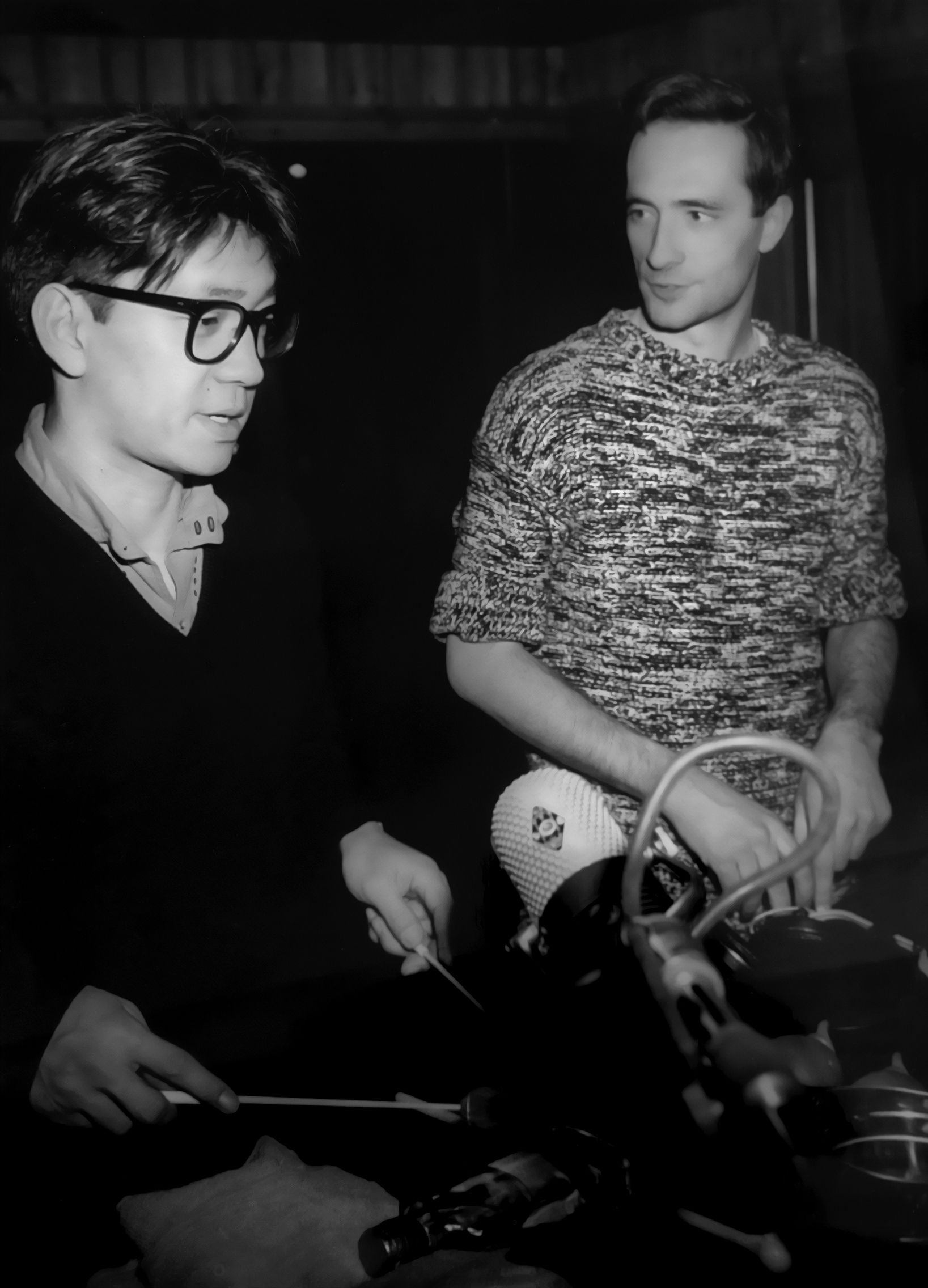 Ryuichi Sakamoto and David Van Tieghem, NYC, 1987 | Photo: David Van Tieghem Collection
Tony Williams was part of the Neo Geo sessions. Did you get to work with him?
We didn’t work on Neo Geo at the same time. But I did do something with Tony earlier, which was another amazing career moment. The composer and sax player Dickie Landry, from The Philip Glass Ensemble, was doing a show at Brooklyn Academy of Music and chose to have me and Tony set up to do a back-and-forth drum battle.
We had completely different styles of playing and I was a little nervous. There was no way I was going to intimidate or beat Tony. [laughs] So, I just did my thing. I don’t know what he made of how I played, but he was very friendly to me.
Your association with Peter Gordon goes back to the ‘70s. Tell me about his importance as a collaborator and creative presence in your life.
When I first started attending The Manhattan School of Music, I was interested in everything that was happening in the downtown scene. I met Arthur Russell at school, and he introduced me to Jon Gibson and Peter Gordon, along with pretty much everyone else downtown during those early days.
The first things I did with Peter were in 1977 when he started The Love of Life Orchestra. He was so inspiring to me in how he made so many amazing things happen. He liked my playing, so I was involved in a lot of different incarnations of this group, during which so many people came in and out.
I learned a lot about record production from Peter. I also brought him in to co-produce These Things Happen, because he knew so much about the process and I knew the project would be safe in his hands.
Peter and I still play live to this day. It’s still really fun to work with him. I also get to play drums with him, which I don’t do a lot because I’m not in a band. So, it’s great to be able to rock out with him on the kit.
Peter has been doing a lot of revisiting and reissuing of the old work, and it’s great to see that people still like it a lot.
He's such a warm, funny, and gentle person. Lots of times, he sees angles that nobody else sees. He’s always full of insight and is very collaborative.
You recorded with Mike Oldfield and Pink Floyd in the late ‘70s, but neither of your contributions ever publicly emerged. What can you tell me about those sessions?
I recorded with Mike around the time Kurt Munkacsi was doing Philip Glass’ North Star record. Kurt was also working with Mike at the time in 1977 on his Incantations album. Kurt produced those sessions. I played some drums on a track, possibly intended for Incantations. There was some crossover between the two projects going on. I only have the sketchiest of memories of that session.
In the case of Pink Floyd, they were looking for a bunch of drummers for The Wall. So, they got 12 drummers from New York City to come in to try and play this military cadence for “Bring the Boys Back Home.” Michael Kamen was there as the arranger. I don’t know how they got my name, but they did.
They had everyone bring their snare, and we lined up to play the section. But none of the other drummers could play it without rushing and speeding up. I was thinking “Oh my god, where did they find these people?” It was as if none of the drummers had ever played with anyone else and they couldn’t work with how it was being conducted, even with a click track. Nobody could stay in time. So, they never used the performances.
It would have been nice to have the Pink Floyd credit, but I was just a musician for hire in both of these contexts. There’s no guarantee anything will happen with what you do.
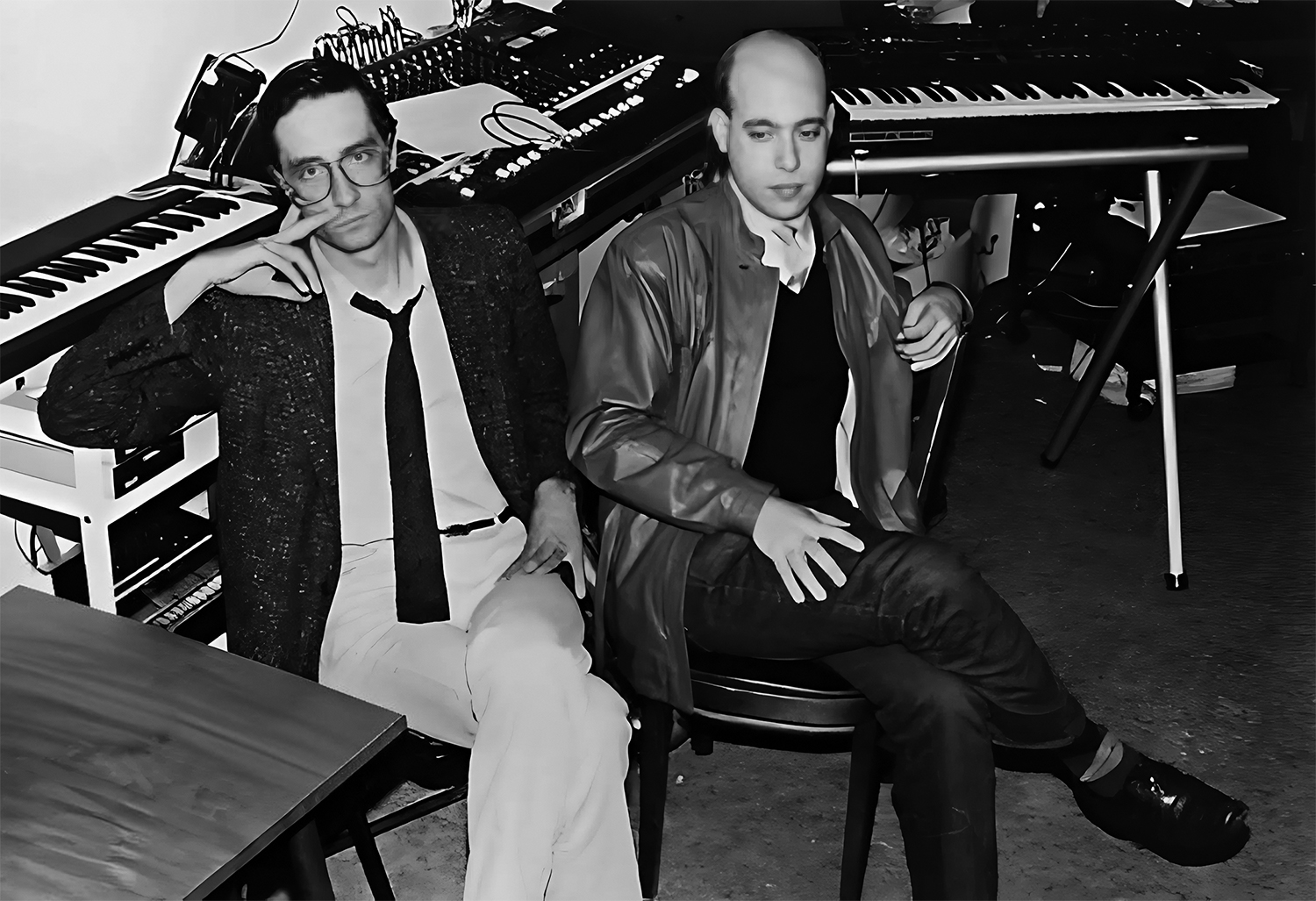 David Van Tieghem and Peter Gordon, 1980 | Photo: David Van Tieghem Collection
What are your thoughts about the progression of technology and how it can both enhance and impede creativity?
So many sounds are so easy to access now through virtual instruments, including found percussion. I love that stuff. I collect a lot of it and have a ton of virtual instruments, including four different orchestras, and many percussion collections. I love working with those and using them to help do the thing only I can do, though I’m not always clear what that is. [laughs]
But in some ways, I don’t know what to make of what’s happening now. There’s a glut of stuff out there. And now everyone can be a musician, an artist of some kind, or an influencer. I have a slice of this crazy morass, but it feels like today, a lot of people are just jumping on bandwagons, as opposed to trying to do something that’s more unique.
And then we have the AI discussion. I don’t know what’s going to happen with that. On one hand, I like the idea of having AI assistance with some things, but there’s also something really bizarre about the stuff it spits out. I’ve played with AI tools to see what kind of avant-garde or new music it might be capable of generating, but what AI thinks is weird is just garbage. It’s just random chaos without real invention or imagination. It’s spitting out clichés based on what it has been fed. I definitely have concerns about this history-free society we’re in with AI gobbling up everything and churning out slop.
You have a Patreon page infused with a lot of fascinating history. Talk about what people can find there.
I’m using it to bridge all of my different careers. You’ll find things like dance music I did that was never released or a video hardly anyone has ever seen of an old performance. Sometimes things get documented and just shown once and you never see it again. So, the Patreon account is a place for that stuff.
You’ll also hear pieces of music that I wouldn’t put on an album, but that I’d still like people to hear. Some of them are sketches and I’m happy for people to hear them. You’ll also find me posting unreleased music from the past, as well as old photos and posters.
It seems to be working. Patreon takes a tiny cut of the proceeds. It’s great to have people pay a little bit to support your work. Hopefully, they’re enjoying the things I post to it that maybe they never knew about previously. It’s a very varied collection of stuff.
What keeps you motivated as a creative entity to keep moving forward?
I’m confident about where I’ve landed and my place in things. And I still think there’s something really special about people coming together to create something that would never exist without them doing that. I love being part of theater projects when I’m working with the lighting and costume designers, and we’re all doing our thing to make the vision of the play happen. It’s really special. So, there’s something energizing about collaborating towards realizing a common goal.
The same thing is true with bands. When they’re in sync it’s great. I love working off of someone else’s ideas and responding to them, whether it’s doing an overdub or during a performance.
I sometimes collaborate with my wife on her photographic work. Together, we’ll experiment on different ways of how sound and notes work together to support light, colors, textures, and shapes at her exhibitions. I’m also working with my daughter, Zoë Van Tieghem, who is a singer, songwriter, actor, and dancer, to produce her new music.
So, there’s never a dull moment. Every project is very different and that’s a positive. You never know in the freelance world when a project is going to emerge and the survival element can be nerve-wracking, but it really is great to get to approach new worlds of expression all the time.