
Donate to Innerviews
Since 1994, Innerviews has provided uncompromising, in-depth interviews with musicians across every genre imaginable. And it does that with no trackers, cookies, clickbait, or advertising.
Your donations are welcome to help continue its mission of highlighting incredible music and artists, without any commercial considerations.
Your contributions will be instantly transformed into stories and videos, and cover hosting and web management costs. Importantly, your dollars will help ensure Innerviews remains absolutely free to all visitors, independent of their ability to financially support it.
Please consider making a donation today by using the PayPal QR code below.

Derek Shulman
The Art of Reinvention
by Anil Prasad
Copyright © 2025 Anil Prasad.
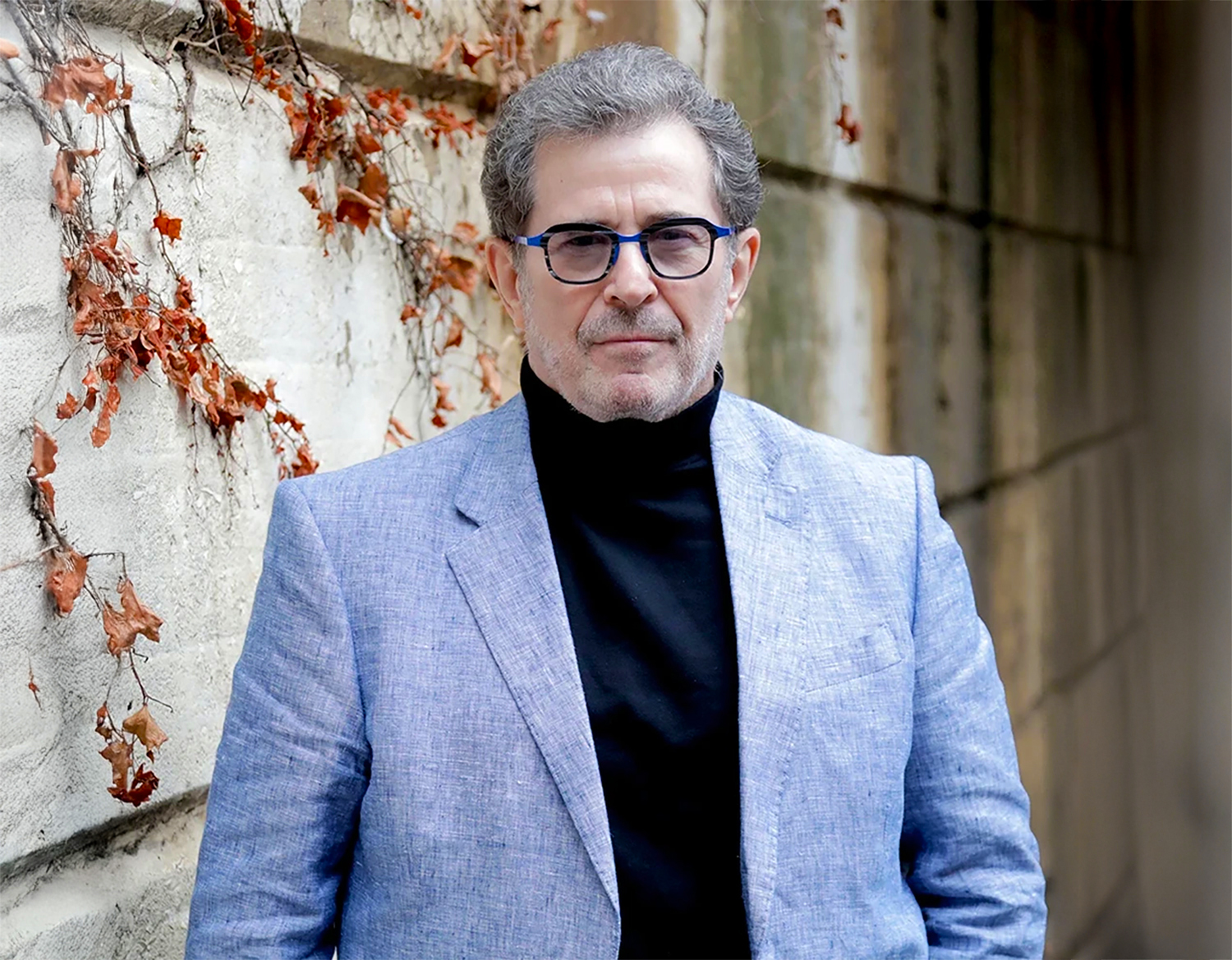 Photo: Derek Shulman CollectionSome careers in rock history unfold in straight lines, but Derek Shulman’s moved across bold, unexpected arcs. Born in Glasgow in 1947, he first made his mark as a musician, rising to prominence as lead vocalist and multi-instrumentalist for Gentle Giant, one of the most daring and musically sophisticated bands of the 1970s. Shulman’s distinctive voice, commanding presence, and stylistic versatility combined into one of the keys to the band’s singular identity. While commercial success rarely troubled Gentle Giant, the group earned deep respect from a fiercely loyal audience that endures to this day. His story is also unique in that his influence didn’t end when the band broke up in 1980, but expanded dramatically when he carried his creative intuition into the music business itself.
Before Gentle Giant, Shulman cut his teeth on the pop and soul scene of the 1960s as a member of Simon Dupree and the Big Sound, a band he formed with his multi-instrumentalist brothers Phil and Ray Shulman. Derek fronted the group as it hit impressive heights, including achieving a UK top-10 hit with the single “Kites.” That experience gave him early exposure to the reality of the music industry and the challenging regiment involved with life on the road. Ultimately, the brothers chafed under the weight and superficial nature of the pop universe. All three, together with Simon Dupree drummer Martin Smith, and multi-instrumentalist Kerry Minnear, went on to form the first Gentle Giant lineup in 1970.
After Gentle Giant dissolved, Derek Shulman embarked on what became an equally impactful career as a record company executive. Beginning at PolyGram Records in the early 1980s, he quickly established himself as a talent-spotter and developer, rising to senior A&R roles and eventually leading major labels including Atco and Roadrunner. His business acumen and artist instincts helped transform the careers of countless acts and brought many rock and metal artists to broader audiences. Shulman’s shift from stage to boardroom illustrated a deep understanding of both the visionary and commercial sides of the music world, a duality few of his peers achieved.
In his executive years, Shulman played a pivotal role in the careers of several major acts. Early at PolyGram, he signed Bon Jovi, recognizing the potential in their breakout single and helping shepherd their early development. At Atco, he signed the progressive metal innovators Dream Theater and his oversight helped AC/DC regain commercial traction after a significant fallow period.
Shulman has captured this extraordinary dual-track career in his new autobiography Giant Steps: My Improbable Journey From Stage Lights to Executive Heights, co-written with Jon Wiederhorn. The memoir recounts his evolution from a young musician in the 1960s to progressive rock frontman and then to influential music business professional. The book delves into the practical and creative challenges he faced at each stage, offering detailed accounts of recording sessions, touring experiences, and the strategic decisions behind signing and developing artists. Shulman also reflects on the intersections of artistry and commerce, showing how lessons from his performing days informed his later work in talent development and label management.