
Donate to Innerviews
Since 1994, Innerviews has provided uncompromising, in-depth interviews with musicians across every genre imaginable. And it does that with no trackers, cookies, clickbait, or advertising.
Your donations are welcome to help continue its mission of highlighting incredible music and artists, without any commercial considerations.
Your contributions will be instantly transformed into stories and videos, and cover hosting and web management costs. Importantly, your dollars will help ensure Innerviews remains absolutely free to all visitors, independent of their ability to financially support it.
Please consider making a donation today by using the PayPal QR code below.

Mike Tittel
Salvation and Sanity
by Anil Prasad
Copyright © 2026 Anil Prasad.
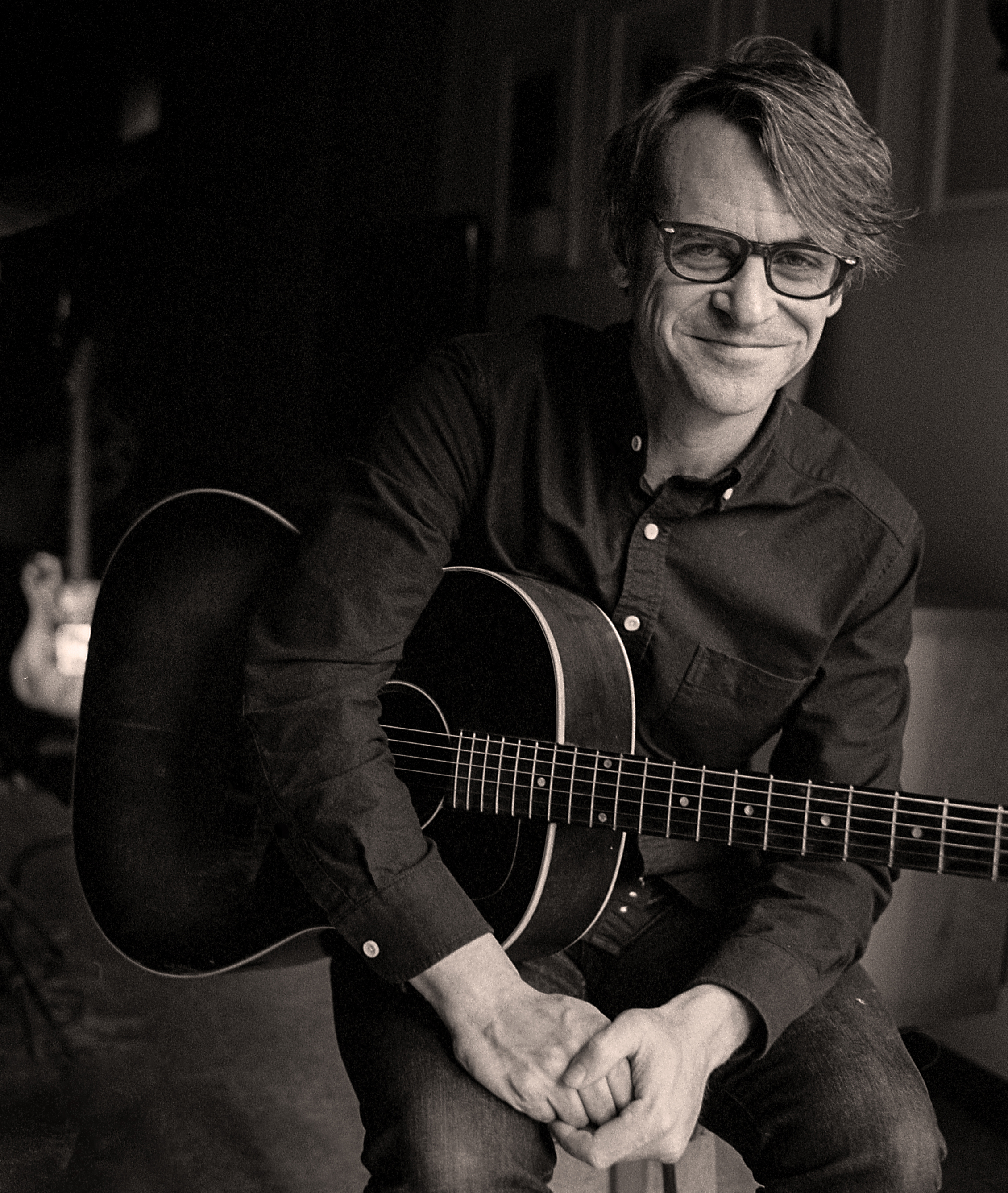 Photo: Michael WilsonFor Mike Tittel, creativity has never been confined to a single discipline. The Cincinnati drummer and multi-instrumentalist has spent decades moving between music, photography, and advertising and design, building a career that reflects the interconnected nature of the city's arts community and his expansive network. Though his work spans multiple fields, music remains a core focus.
As a drummer, Tittel has earned a reputation for combining technical precision with an instinctive feel for dynamics and ensemble interplay. Beyond percussion, he works as a singer-songwriter, arranger, and producer, with a perspective that enables him to move comfortably between genres and collaborative settings.
Much of that work has emerged through adventurous rock and pop bands such as New Sincerity Works, Pretty Birds, and Pidgin. New Sincerity Works, in particular, is a key vehicle for Tittel's songwriting. It brings together veteran Cincinnati musicians including guitarists Roger Klug and Mike Landis, bassist Bob Nyswonger, and for gigs, drummer Greg Tudor. Together, they create material that pairs melodic immediacy with highly-personal lyricism. New Sincerity Works and Pretty Birds also feature Tittel’s wife Lauren Bray on vocals and keyboards.
Tittel is equally at home working in solo mode. His 2020 acoustic-oriented LP Sleeping In captures him playing virtually every instrument, including guitar, drums, keyboards, bass, and an occasional harmonica. The record explores the ideas of evolving and being open to life’s possibilities while helping others transcend difficulties.
Another important chapter in Tittel's musical journey is his long-running work with The Roger Klug Power Trio (RKPT). The group highlights his versatility as a drummer that thrives on the spontaneity and telepathy that has developed across nearly three decades with the band. Whether anchoring a groove or responding to the mercurial twists of live performance, Tittel's instant adaptability has long been one of his defining strengths.
Tittel’s other creative disciplines converged with music for The Bends, his feature-length 2024 documentary about the beloved Cincinnati band The Raisins. Drawing on his diverse multimedia skills, he crafted a film that captures the band's rich story, as well as the relationships and community that have helped sustain the region’s music scene.
Innerviews met Tittel at Southerby’s Pub in Cincinnati, a 1920s-inspired environment replete with large fireplaces, overstuffed sofas, and oversized chairs, with moose and deer taxidermy peering upon the low-key bustle of its patrons. He revealed an approachable and easygoing, yet composed demeanor as he communicated about his engaging and eclectic journey.
You’re involved in a wide spectrum of the arts. What’s your perspective on the value of culture during this period of societal unrest and upheaval?
I think the arts are critical. I see arts and culture as moving adjacent to progress. You can’t have one without the other. They’re a barometer of the growth or decline of cultures. For creative people, it’s essential to reflect in our work what’s happening in the world. I also think it’s important for people who experience the arts. Arts and culture are antidotes for depression, narrow thinking, and bad things. And they become more important when personal freedoms are encroached upon.
Do you find that working in one medium shapes or informs what you create in others?
I think creativity is a way to affirm a sense of value or originality when it comes to our existence. I don’t value mastery of any one thing, specifically. Rather, I value the pursuit of expression itself. So, I have different endeavors and as the cliché says, I’m a “jack of all trades and a master of nothing.”
But I actually hate that cliché, because it implies that mastery is the only achievement, and I don’t think that’s true. The original expression of the participant is the achievement. And certainly mastery can facilitate an artist’s execution, but mastery alone doesn’t guarantee meaning in the work. I love the idea that I can toggle between creative pursuits, though I have to somewhat turn one off to do another.
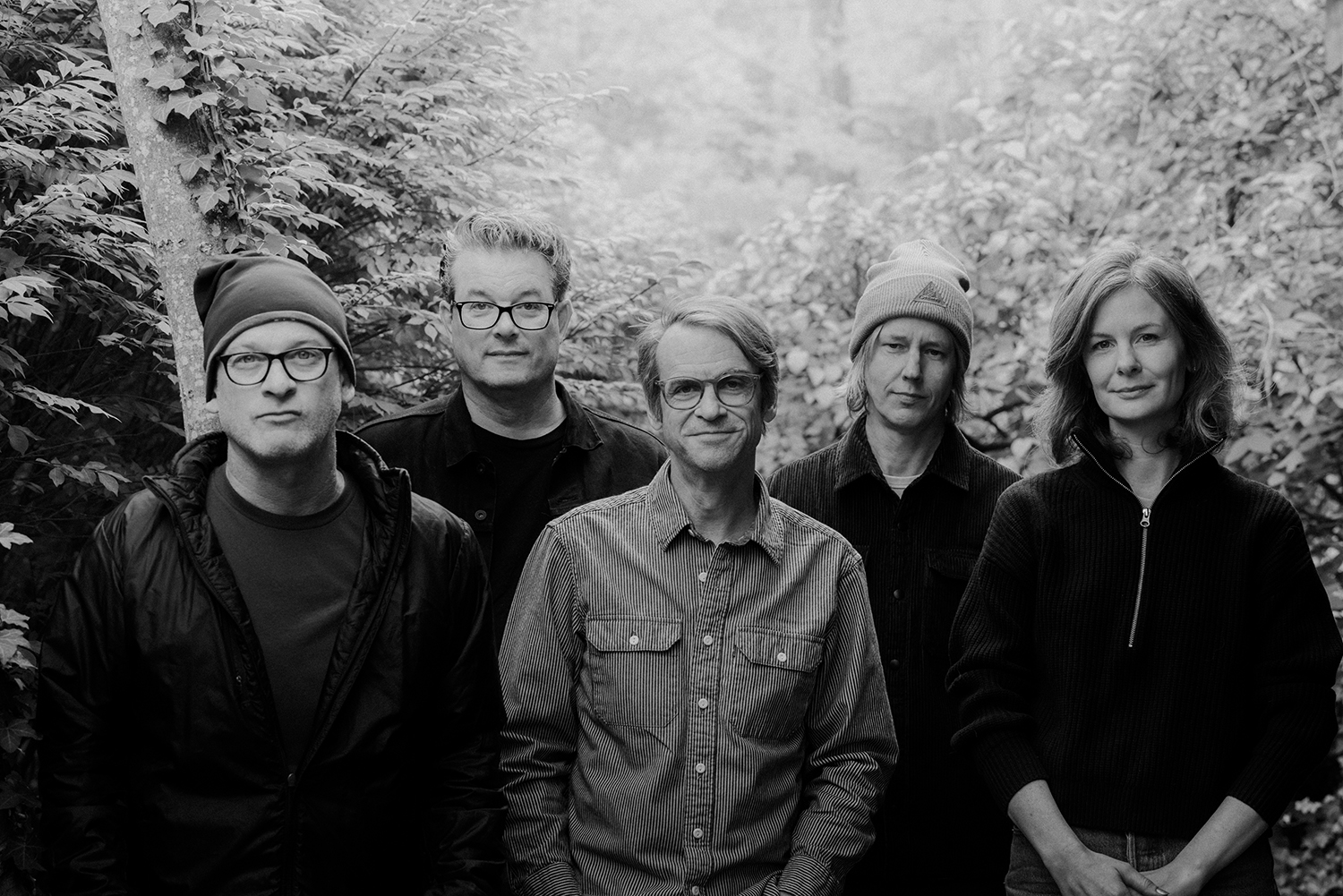 Pretty Birds: Greg Tudor, Chris Glen, Mike TIttel, Mike Landis, and Lauren Bray | Photo: Evelyn Tittel
Tell me how Pretty Birds emerged and what we can expect from its forthcoming studio album.
Pretty Birds was a response to the six-person juggernaut of New Sincerity Works. With that band, I try to put on big shows on big stages involving lots of people. I love that, but I also wanted to do something easier and nimbler. Something a little less grand, perhaps.
My wife Lauren Bray and I have been together for 11 years. During our first year of being partners, I was putting together New Sincerity Works’ Wonder Lust album. She was around while I was working on it and she loves music. She has an incredible memory for lyrics and melody, and likes really unusual artists. And her voice is just gorgeous.
She’d sing in the background while I was working on material. So, at the tail end of that record, I said, “You should sing on a couple of songs.” And she did and it began this fun journey of the two of us sitting around the house playing and singing. That formed the basis of Pretty Birds.
Our buddy Mike Landis is an engineer who was working in my studio at the time as well. When he was around, the three of us would do three-part harmonies at the kitchen table. It was a blast. It was just fun and transformed into a band with the three of us at the core, playing acoustically.
Pretty Birds had a bit of a trajectory, doing a show in New York City in the East Village, and local shows until the COVID-19 pandemic hit. Two weeks before it began, we had played four shows and really felt like this was a cool thing. But when the pandemic emerged, Pretty Birds stopped.
In 2025, it reemerged, after Lauren and I did a few gigs as a duo. And now it’s back up to being a five-person unwieldy juggernaut. [laughs] So, I didn’t really deliver on the “easy” part of this band, but I’m really excited about it. We added Greg Tudor on pedal steel, Mike Landis on bass, and Chris Glen on a small drum kit. Lauren plays keyboards and sings. We’ve got a great dynamic going among us. I’ve added a 12-string Rickenbacker to the tool kit, so we're definitely heading in a lush indie folk direction.
How would you describe the group's mission?
Probably over-delivering on dynamics and creating original music with interesting singing reflecting everyone’s individual sonic abilities. We’re all excited about playing together and feel like we can go somewhere really unique. We’re inventing as we go.
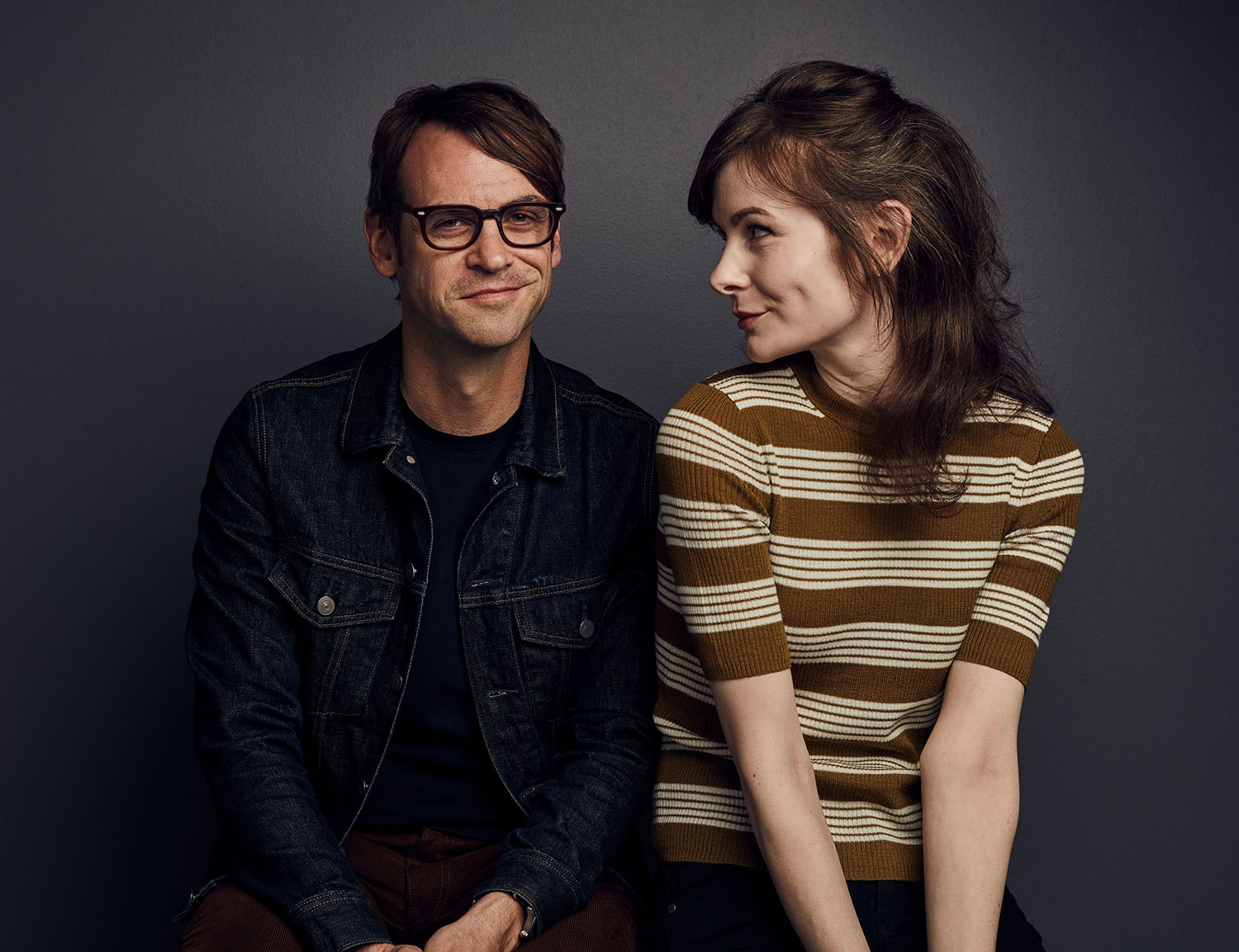 Mike Tittel and Lauren Bray | Photo: Aaron Conway
Let’s explore your 2020 solo album Sleeping In. It has a laid back, almost late-‘60s/early-‘70s West Coast folk-rock sensibility.
That record was also a response to how long some of the New Sincerity Works took to make. [laughs] I love the New Sincerity Works albums, but despite all of those records really starting as solo efforts, they involved a lot of organization and working with very busy people and their complex schedules as I sought to upgrade some of my tracks with Roger Klug and Bob Nyswonger at the helm. The post-production and mixing process is painful for me to wade through as I am sort of impatient. Mike Landis does a great job mixing, but good things take time. For me it's more about the urgency of creating and less about perfecting the work. That may be a character flaw.
The solo record reflects the liberation of quickly sketching out songs in solo mode. I had a backlog of material and thought maybe I could engineer and mix it all myself. I’m a multi-instrumentalist with a recording studio. I’ve also got some great vintage acoustic guitars. Even though I’m known as a drummer, I’m a total guitar junkie. I wanted to make an acoustic-leaning, stripped-down record. And that’s what I did. However, Bob plays on it. You can’t keep Bob away from a project. [laughs] He’s the best person to have around as far as enthusiasm goes. So, he’s on a couple of tracks. Lauren is on a couple of songs, too. And Greg also plays on bass on two tracks. Eric Bates from Turnsole did a beautiful violin part on the last song. But by and large, it's all me.
I mixed every one of those songs in about half a day. I’d spend four hours on it, burn it to a CD, stick it in my car, drive around the neighborhood, and check the mix that way. Then I’d tweak it and it was done. It's perhaps not as clear and focused of a sound as I wanted, but for my limited patience and audience it seemed good enough to release.
You’ve said its overall bent is “introspection with positivity.” Expand on that.
The albums we’ve been talking about have a melancholic feeling that is very personal. It’s the sort of thing I connect so well with when it comes to musicians I listen to. I tapped into that for the first time in a big way on all of these records. I feel they’re authentic efforts and reflect who I am. I always want people to feel something and usually I'd like that something to be inward or reflective, and maybe not joy or enthusiasm. Again, this might be a limitation of my approach.
One aspect of Sleeping In was me reconciling the idea of “How do I write music when I’m happy?” I realize this will sound strange, but that’s a real struggle for me as a writer. I’ve had none of the mythology of hard times per se. I’ve had a great life. I grew up upper-middle class. So, what do I focus on as a songwriter?
What I realized more recently is I can write songs about what’s in front of me. It’s a bit of taking some nods from my photography work. I can talk about things that aren’t overtly heartbreaking. Songs can explore the universal themes of taking stock of your life and reflection. These themes can be things everyone experiences and understands, whether it’s parenting, the need for planting roots, or trying to make something beautiful at 3 a.m. in the morning.
I think the first New Sincerity Works record, 44, was probably hard for a lot of people to listen to in comparison. It’s even hard for me to listen to which is why I don’t. It’s raw. Sleeping In doesn’t have the bloody razor’s edge vibe to it that 44 did. I made 44 in 2014 during a stage of complete, utter sadness.That record was witness to me coming back to creativity to get out of it. Creativity became my salvation and a distraction that got me through it.
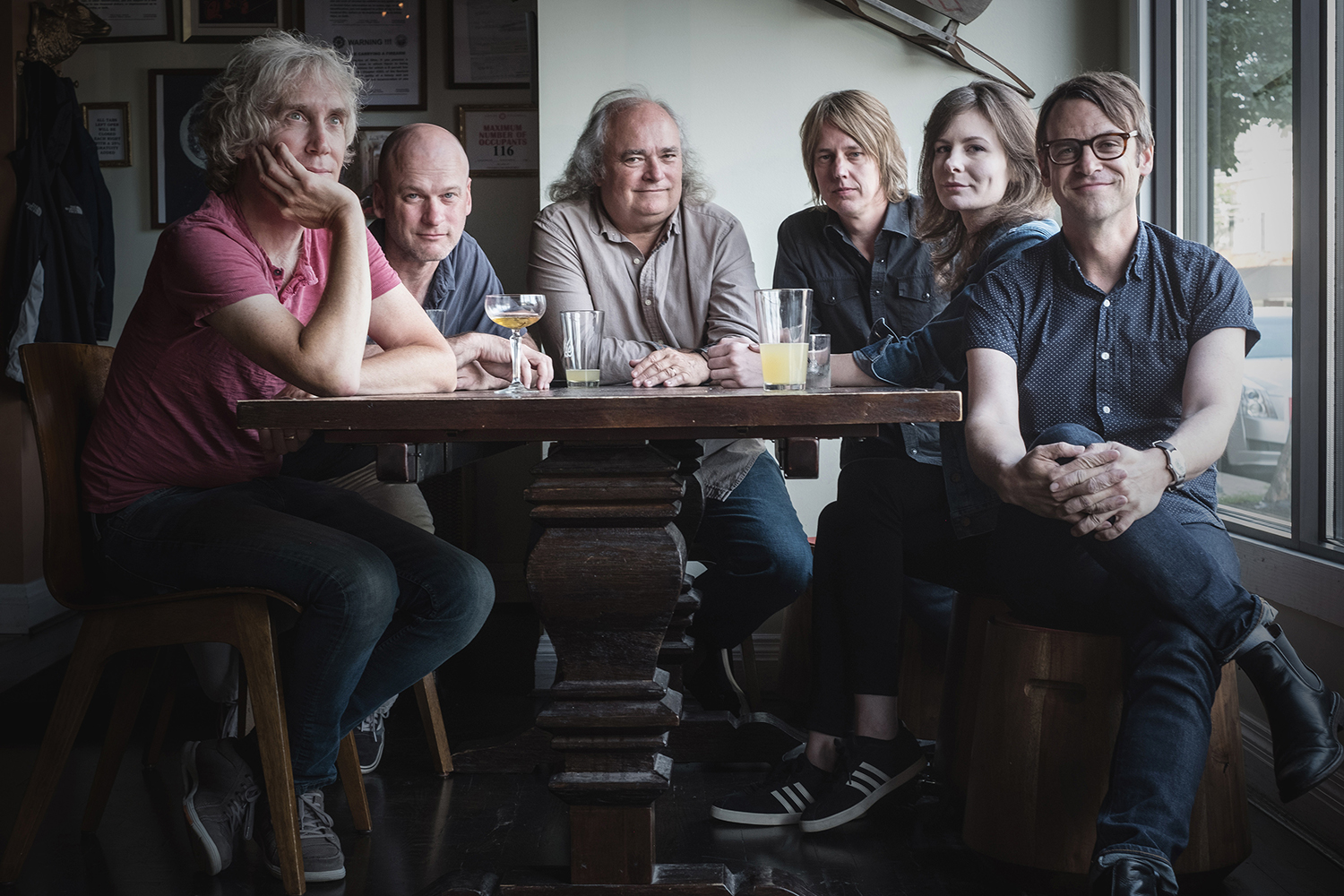 New Sincerity Works: Roger Klug, Greg Tudor, Bob Nyswonger, Mike Landis, Lauren Bray, and Mike Tittel | Photo: Michael Wilson
The first three New Sincerity Works records feel like they’re documenting a journey from emotional imprisonment to big picture emancipation.
The question of “Is there too much of my journal in the writing?” was on my mind while making them, but I opted to go with it and ask forgiveness later. How you described them is correct. There’s an arc across the records. I felt the first three records were a trilogy that mapped a bit to my personal situation.
The upheaval began with my first marriage ending and then a subsequent relationship concluding. It was all at a time when I was at the height of my career in advertising and travelling almost weekly. Between living a really busy life and raising two kids, it was a lot. I’m not used to failing, but I felt there was the shadow of failure looming over me. And there was a lot of disillusionment that went with that. I didn't have a big support network. It was certainly a life crisis. But when I play it all back here, it almost sounds trivial. They weren’t trivial events, especially for someone that hadn’t had big major life upheavals before. I made it to age 44 before I had my breakdown, I guess. So, I wasn’t trying to hide what was going on in those records. If there’s one thing I believe in, it's a certain dependence of creative authenticity in my work for better or worse. It's really all I can offer. That kernel of an idea is where the appropriation of the New Sincerity moniker comes from.
Bob Nyswonger said your songwriting sometimes has a positive therapeutic element to it. What do you make of that perspective?
First off, I count my decades-long friendship and collaboration with Bob as one of my great relationships. His playing is beyond incredible and he’s been a great friend, as has his wife Laura. Regarding his comment, I think at my core I am a naive dreamer, perhaps to a fault. The glass is not only half-full, but I very much believe the glass will never break. I think the music I made got me through those situations and also allowed me to grow and learn. Those learnings show up in my work.
I believe that my thoughts are worth putting out there. So yeah, I think some of the songs aren’t dead ends because I'm not a pessimist. They go somewhere. Yet, I kind of can’t believe I bared as much as I did. There is definitely some internal therapy going on in them. I feel like I balanced things okay on most of them. At best I hope people can relate or get some hopeful feeling from what I do.
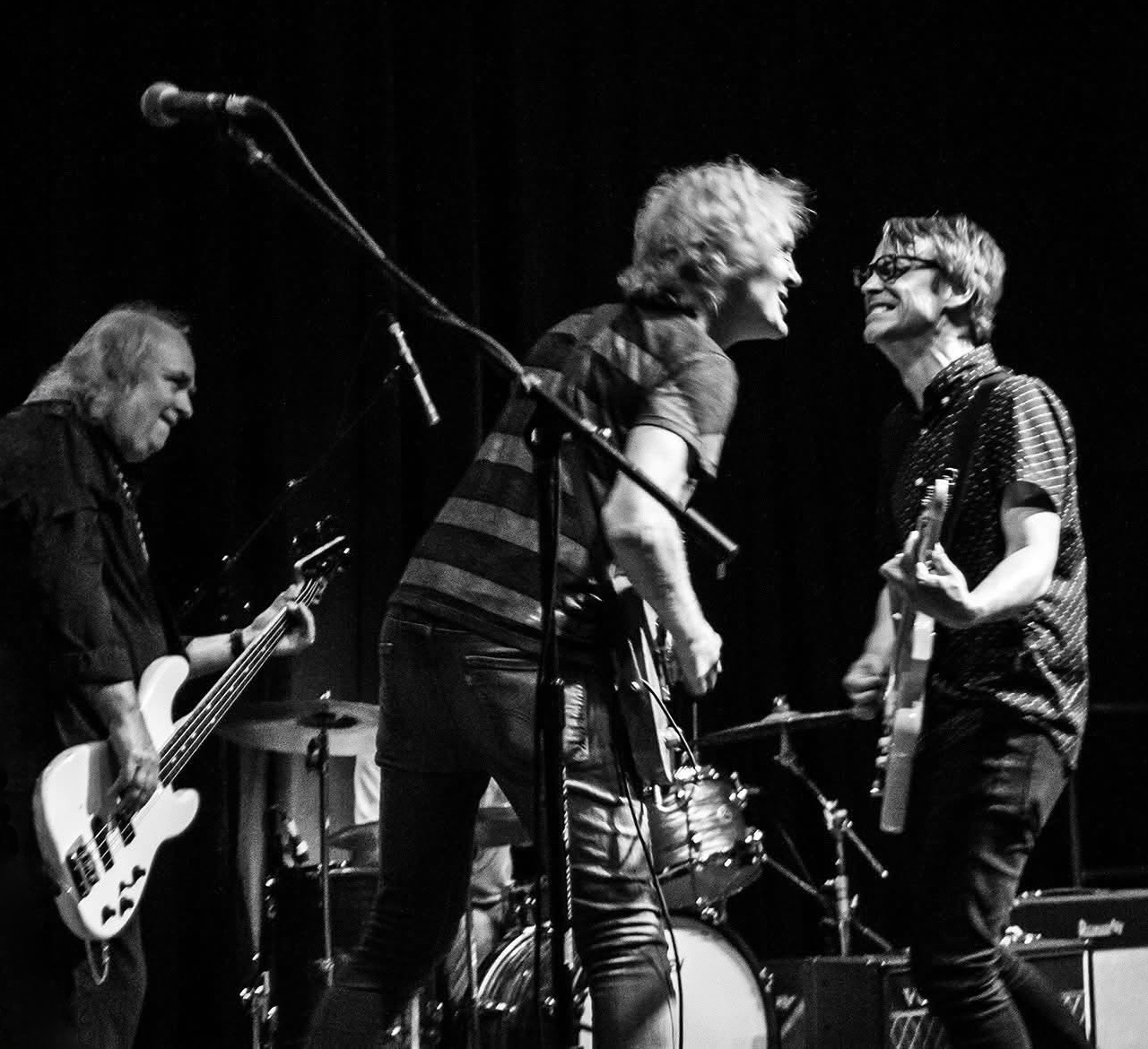 New Sincerity Works live in Cincinnati, OH, 2016 | Photo: Brandon Wheeler
Describe the beginnings of New Sincerity Works and how it evolved over the years.
It goes back to the 44 album which was largely a solo record. I had not thought of making it into a band effort. I cut that record largely in one week, during a spring break when I had the house to myself. But after I put it out, I started to want to perform it with a band. My sister really encouraged me to go for it. She loved that record. At the time, I was only drumming as part of the Roger Klug Power Trio and we weren't too active. I’ve always enjoyed drumming. It’s like riding a bike. But I needed to be out front singing the songs and playing guitar. So, I put a band together with Greg Tudor on drums, and my friends Tom and Jen on bass and guitar. Jenny couldn’t do the gigs once they were booked, so I got Mike Landis to play bass. Roger Klug also played with us at the first gig. A month later, Mike couldn’t do the gig, so we had Bob Nyswonger play. It was interesting that Bob and Roger hadn’t played together prior to New Sincerity Works because the whole collection of people ended up being an obvious group of talented people to work with.
It was a ton of fun for all of us. And that’s how both Roger and Bob came to be ongoing members of the band. I really didn’t want to have the world’s greatest musicians beside me as I sort of wanted the group to be a bit more lo-fi, but that’s what happened. I’m not complaining. I think art is what you make from what’s in front of you and the chemistry of the band is solid. Everyone respects each other. What they add to the recordings is at times head-turning.
Working with Bob and Roger was a really positive experience and that led to the second record Nowadays in 2015. I upgraded my studio gear and the whole situation made me feel more confident about the band and its future.
The process for the band involves me tracking and shaping the songs and then bringing in Bob, Lauren, and Roger to add their parts. It’s a pretty quick thing. They’ll blast out three or four songs a session. Sometimes they take things in a new direction, and that’s exciting. We’ve now done four albums this way. Mike Landis has mixed every record and will do some vocals and guitar here and there.
I’m thinking the fifth album might involve me, Bob, and Roger tracking live, together with Lauren on vocals. We’ll see. Doing the one-man band studio work with a click track gets really old for me, even though it’s the way music is made today.
What does New Sincerity Works' most recent album, 2021’s Heirloom Qualities, communicate?
That was released during the pandemic and went nowhere. We never played live for that record. It’s a really good album. It takes a heart-on-your-sleeve, melancholic pop approach like they all do. Without any hint of melancholy, I think music becomes only entertainment and that’s not something I'm good at providing. Those songs were written when I was really happy with my life again, so you’ll hear songs about people I love, and also how to help people you care about get out of bad patterns they’re falling into. So, I’m broadening the scope beyond my own personal concerns.
I think you’ll hear more universal themes about salvation and sanity on it, but with that touch of melancholic introspection I think makes music meaningful. Mike Landis co-produced it with me so it perhaps has more refined playing and parts as he would make me redo things that I normally would just let ride.
It also has next-level sonic production. I bought a lot of new gear and upgraded my studio to make it. I think it sounds really good. Our playing there is rich and to the point.
I think in my catalog, 2017’s Wonder Lust is perhaps the one I'm most proud of. It was mastered by Greg Calbi so it has an incredible sonic range. I think Bob’s best bass playing on that record. He did every song on that record. The songs are cohesive and meaningful, and it marks the first time Lauren and I are singing together. It’s a great combo of my slightly awkward voice and her rich beautiful tone. It’s also an exactly 10-song record clocking in at 44 minutes or so, since we pressed LPs. So, I like that. It feels like it doesn’t overstay its welcome too much.
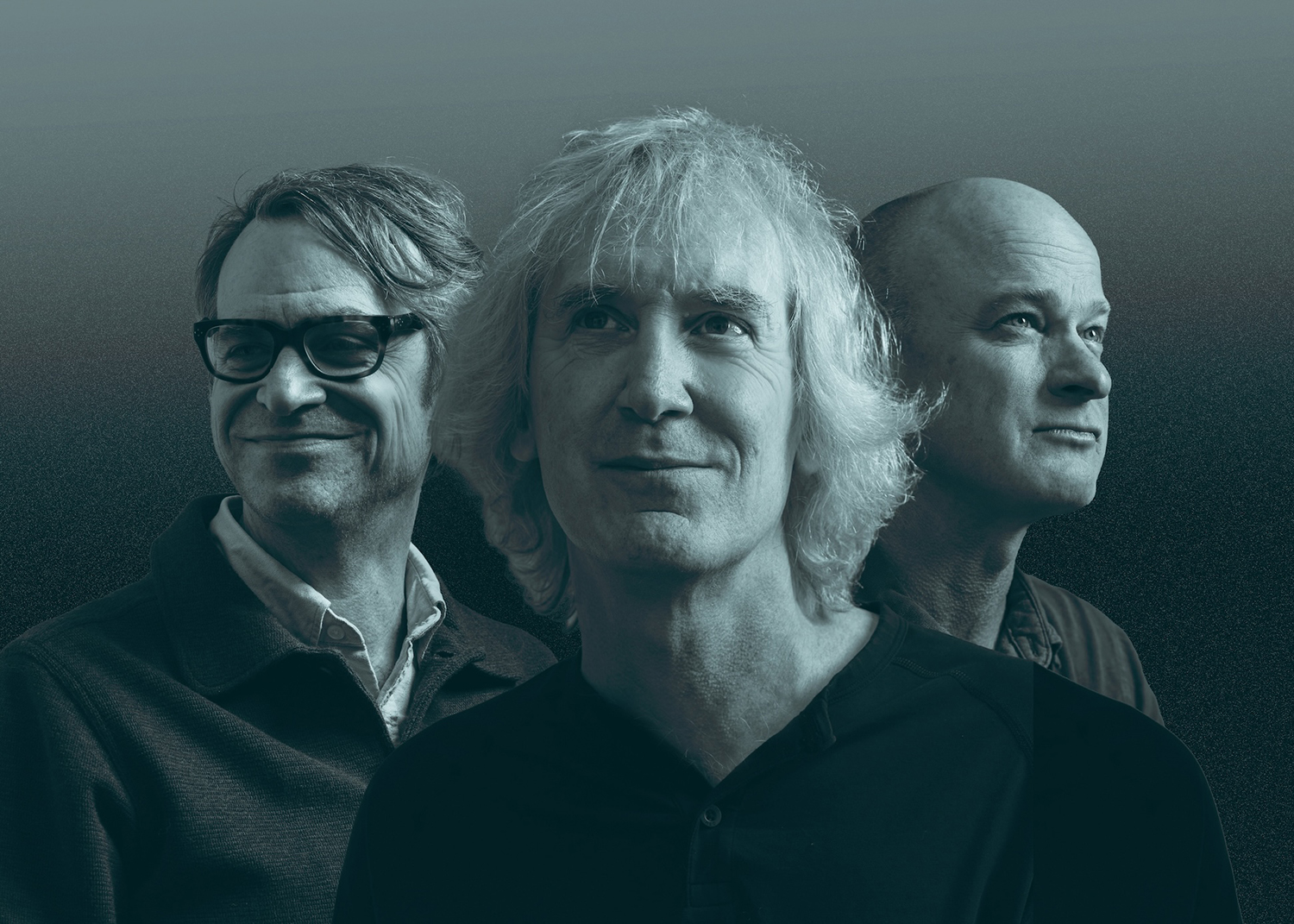 The Roger Klug Power Trio: Mike Tittel, Roger Klug, and Greg Tudor | Photo: Mike Tittel
The Roger Klug Power Trio recently reemerged after a 10-year absence. Describe what playing with that band means to you.
It means more to me now than perhaps it did when we stopped playing, but it's always been my dream gig, really. Roger is flat out one of my favorite artists of all time. The first Willies record checked all of my boxes when I first heard it. Talk about balancing introspection and melancholy. The trio we have is unreal in some ways. You can throw virtuosos together and it can sound impressive, but often they aren’t very interesting or maybe it’s expected that they should perform a certain way. I think the music we make is interesting because there’s some quirkiness, chemistry, and originality that no other group can replicate.
Greg and I have been in a rhythm section since 1989 or so when we started in the band Beer. We're rhythm brothers. We actually snore in sync. This has been documented. [laughs] I was really hoping the group would return after such a long hiatus following the COVID-19 pandemic. During that period, Roger was focusing on chamber orchestra work and commissioned compositions. Roger and I spent a fall as a duo jamming weekly not really saying we’d play out again but more to see how everything felt. This got me back into the idea of being a drummer as well.
I think the band is a whole bundle of things from the ‘60s to the ‘90s wrapped up in a combo with totally unique points of view, lyrically. The songs are written by Roger, whose barometer of success is not pop perfection, but rather “How unhinged, unique and memorable can this performance get?” I feel some of that agenda spills over into how he composes his songs. And I do mean composes. He’s next level.
When I first started playing with Roger in 1998, I assumed pop perfection was the goal. I was concerned about how perfectly I could sing the harmonies or how on tempo I could be. It took a while to realize that’s not all that he’s looking for. He’s like Miles Davis. He’s digging for chemistry that leads to a visceral quality in the music. He really invites you to dig in. It’s never the same song or set list twice. There are always curveballs. He’s always making real time decisions when we play. But he doesn’t verbalize much of anything. He communicates with head nods and eye twitches. The level of ESP between the three of us is uncanny. Greg and I can ride the wave well. Greg and I once played a Beer gig where we improvised the whole show, making songs up on the fly. I still can’t believe that happened. But it did.
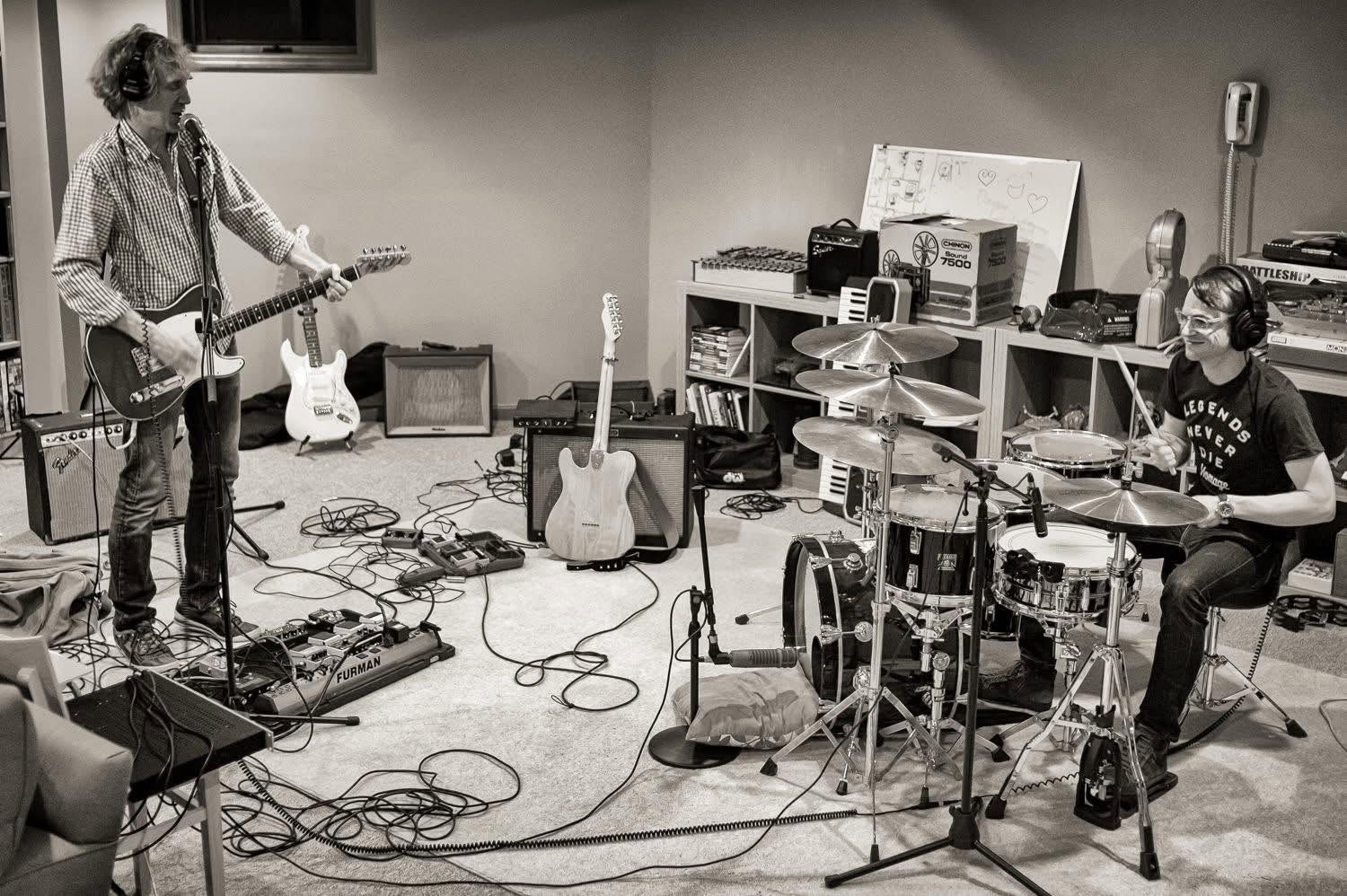 Roger Klug and MIke Tittel rehearsing at Fruit Hill Music Company Studio, Fruit Hill, OH | Photo: Mike Tittel CollectionRoger likes to challenge the expectations of music and we enjoy that. His musicianship is without comparison, as is his ability to articulate things. He’s also an incredible drummer himself. There are many parts I have to play of his that I need lessons for in terms of how to pull them off. I learn a ton.
Lastly, we’ve become really good friends and collaborators. But I don’t write music with Roger. There’s no need to do that. He always has great tunes. I was first and foremost a fan before we started playing together. I love all his records and some of them have my favorite songs, ever. It’s such a great gig. I get to literally play like Keith Moon all night long. And Greg and I are just so good together. I am lucky.
The group just released the Live! Off the Board double CD. What was it about this gig from a decade ago that made it so special?
I didn’t even know it was recorded. A couple of years ago, Roger said he found the tracks and that he was blown away by them. Usually, Roger doesn’t even want to watch fan-made YouTube videos of us playing. So, for him to say this is actually worth releasing was surprising.
It’s a great recording full of unhinged, nutty stuff. We all agreed after hearing it that it was a good synopsis of what it was like when we do two sets a night. It also became a catalyst for us to get back together and perform again. We didn’t even remember half the songs when we heard them on the recording. We all went, “Wow. Listen to what we were doing. We should do this again.” So, I’m grateful for the recording emerging.
The fact that it was already mixed and couldn't really be tweaked pushed the timeline forward. And we all loved the idea of putting something real and raw out in a time when everyone spends hours pruning and polishing stuff on a computer. We already sound way better than we did back then at our recent shows. I hope people continue to come out and see us. It's been a glorious fun return.
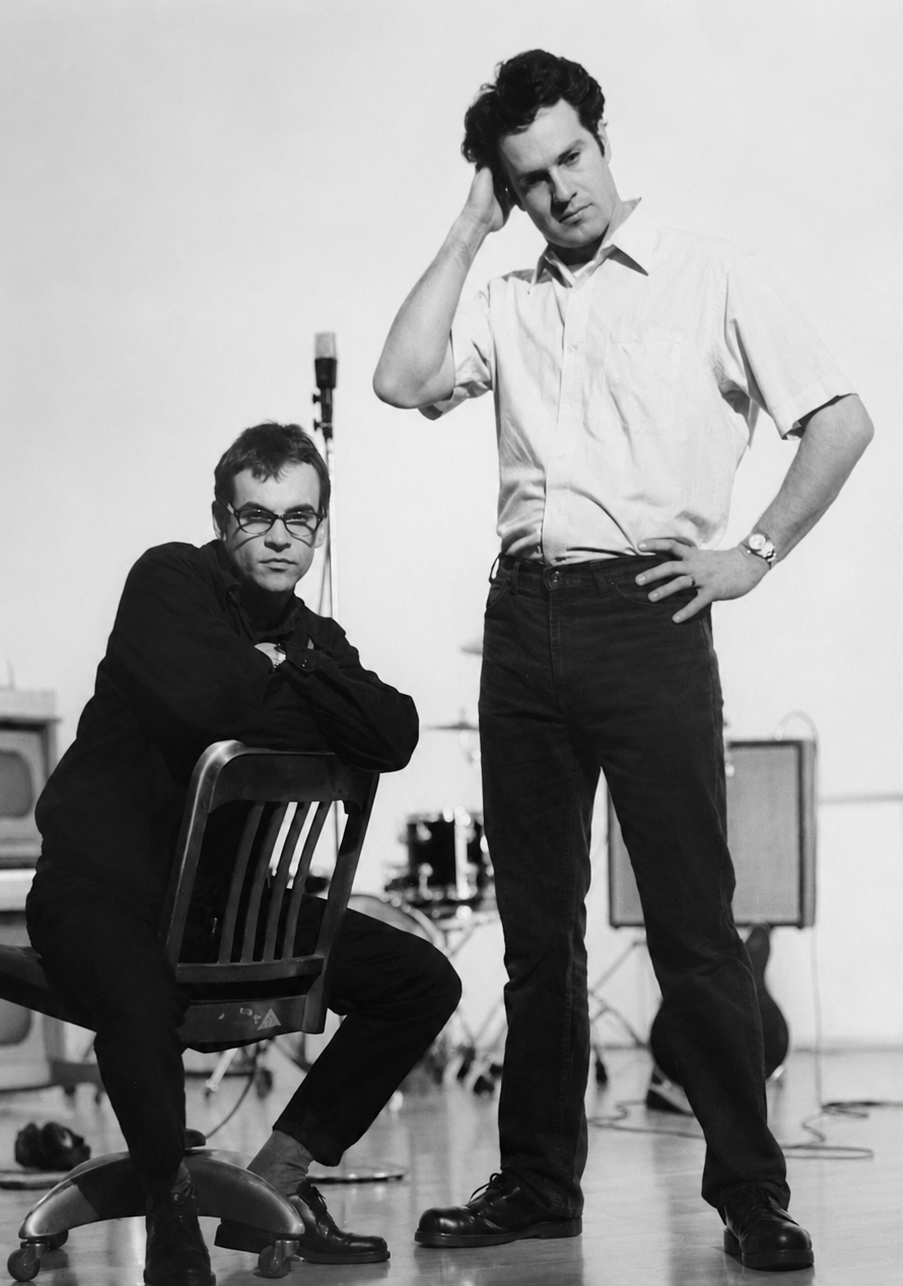 Pidgin, 1997: Mike Tittel and Pat O'Callaghan | Photo: Oliver Bewsey
Tell me about the making of Pidgin’s ambitious Let There Be Work album from 1997, and how you look back at it.
I can't talk about any of that material or the previous incarnations Beer, and Good People without talking about Pat O'Callaghan who is a brilliant musical mastermind.
In the ‘80s, my trajectory as a drummer was very craft-based. I loved Stewart Copeland and Bill Bruford and aspired to learn their techniques. I was even heading towards being a jazz guy at one point, considering Berklee for an education. I first met Pat in high school, and he taught me about the importance of songwriting and lyrics, which I hadn’t thought much about, honestly. He flooded me with CDs, tapes, and listening sessions of so much music I had never heard. His excitement about music was really contagious. So, when Pat and I started a band, I had a love of music, but I was working with a guy hell bent on doing something original, which certainly aligns with my value system. My quest for originality in art is maybe only trumped by Pat’s.
The journey with Pat involved me learning how to write songs. It was initially painful, because the songs I was writing were far behind what he was doing. I had to catch up, which I never really did, but I learned a lot trying to write in a way that could be performed live and co-exist within our body of work together. And I don’t mean to say it was any sort of competition. His vocabulary is so unique, as is the way he plays guitar. He’s also informed by a crazy collection of influences from Johnny Marr to Van Dyke Parks to Sparks. It's always a deep education working with him and writing parts.
The idea for Pidgin was to avoid clichés and anything that sounded referential. I’m not saying we achieved it, but we were trying to push things beyond normalcy at a time when it would have been way easier to be like Pearl Jam. We wanted to be disruptive in terms of lyrics, and melodic and rhythmic sensibilities.
Pidgin came out of the college band I had with Pat called Beer, which I mentioned earlier. Beer also featured Greg Tudor. It was a crazy, unique group. At the first show we did, our last song was a 13-minute rock opera during which Pat rode a bike offstage and down a set of stairs to the street. These bands had all three of us in common and a sense of humor was shaped from growing up together.
After Pat and I graduated from college, we decided to take the money we were making from our day jobs and invest in an analog recording studio in downtown Cincinnati. Pidgin was our moniker for the work we did during those years. We recorded other bands, as well as our stuff there. Our pal Jon Roket tracked there once and brought Dane Zanes of The Del Fuegos by one day to do backing tracks.
With Pidgin, we put together a ton of songs. We felt we had to record them simply because they needed to exist on tape. There was no discussion of how many records we’d make. So, for a couple of years, all week long, we’d record on 16-track, two-inch analog tape. What you hear on the Let There Be Work CD is a curation of the best of that material. But there's much more that has never been released.
Bob Nyswonger got involved in those tracks because Greg Tudor moved on during that period. We’d been seeing The Bears and The Raisins Trio, which became Psychodots, for many years before that. We were all rabid fans of those guys. I mean maybe we saw them 100 times or more. We’d travel back from Ohio University for the weekend just to see their two weekend shows. One day after a Psychodots show we attended, I said to Pat. “Do you want Bob to record with us?” Pat said, “That would be amazing.” So, I just went up to Bob and asked him, and he said yes. Not only did we all do music together but we all became great friends still to this day.
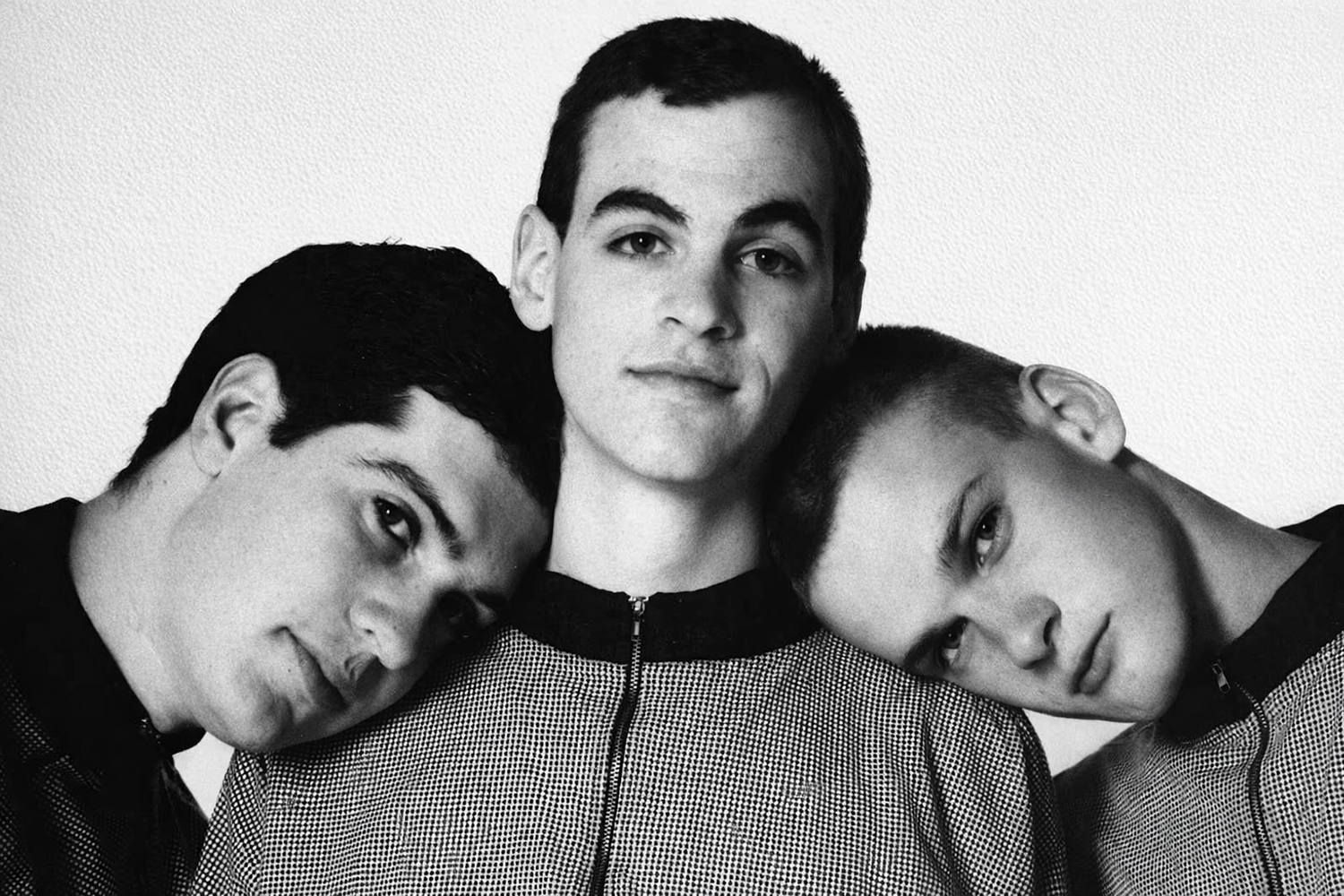 Beer, 1990: Pat O'Callaghan, Mike Tittel, and Greg Tudor | Photo: Mike TIttel Collection
You’re in the process of reforming Beer for some shows. Expand on its journey and why you’ve chosen to revisit it.
Back then, in 1990, our model of live regional success was The Raisins model in that you’d install yourself at a bar and play three sets a night. Our sound was The Smiths meets The Who meets XTC meets throw in any other random band. We were frantically on a path to having five sets of material with some covers sprinkled in. The songs were really difficult and often hard to listen to I think.
We’d realize people wanted to dance and they’d quickly understand that they couldn’t dance to much of our music. [laughs] So, it was hard to translate our creative journey into the live scenario, but we did it anyway. We played live all the time. A scene was invented. We definitely laughed a lot working together. It was almost like an art project.
We’ve decided to reform the band because it’s a significant part of our past and the connections run deep. Pat, Greg, and I remain great friends. They’re absolutely brilliant musicians. I also learned so much from Pat and feel like I’ve matured enough to be able to better appreciate his talents and maybe even collaborate better. There are many people who remember the band. We gathered to play four songs at my wedding to Lauren. In our short regrouping, we certainly sounded really good. We’re all hoping to do some proper shows because there's definitely nothing that sounds like the three of us. This theme sounds familiar.
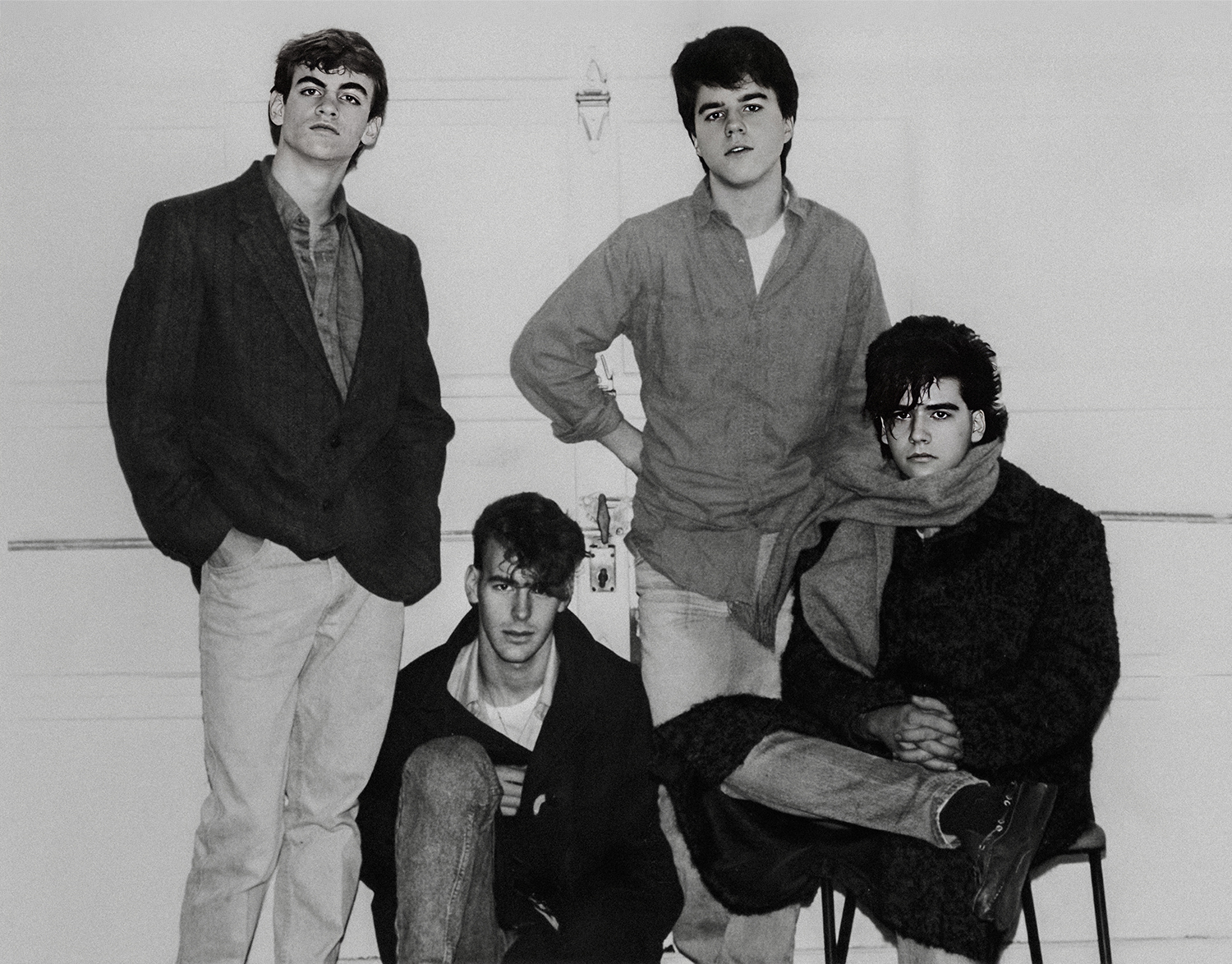 True Azure, 1985: Mike Tittel, Brian Mungan, Paul Ziller, and Mike Michel | Photo: Mike Tittel Collection
Back in the mid-to-late ‘80s you had a band called True Azure that released two cassettes. What can you tell me about it?
I haven’t thought about True Azure for a long time, but there are some similarities to Beer and New Sincerity Works. The idea was to emphasize original cutting edge work. It was an impressive band in that we were pretty young, yet we were making music inspired by ‘80s King Crimson, The Police, Big Country, The Cult, and other guitar-driven luminaries.
True Azure came out of me meeting a really creative guy named Brian Mungan who went to an adjacent middle school. After a few bands together, we really started to sketch things out as a duo in his basement. This became the framework for True Azure.
Eventually, Mike Michels joined on guitar and Paul Ziller on vocals. Paul was a marimba player in the school’s marching band that had taken years of voice lessons. So, it was an eclectic combo, but it was organic and real. It was a real basement experimental thing. Mike really gave us a distinct sonic footprint as he was super exploratory on guitar. Mike lived about three miles from me. So, weeknights after dinner he’d show up in his VW bug with a hole in the floor board and we’d jam out in the basement. He’d often have a new pedal or would have learned some Andy Summers or Adrian Belew trick. He’s still making amazing music with solo projects and his band The Orange Goodness. He’s a dear friend and one of the great musicians of our generation, seriously.
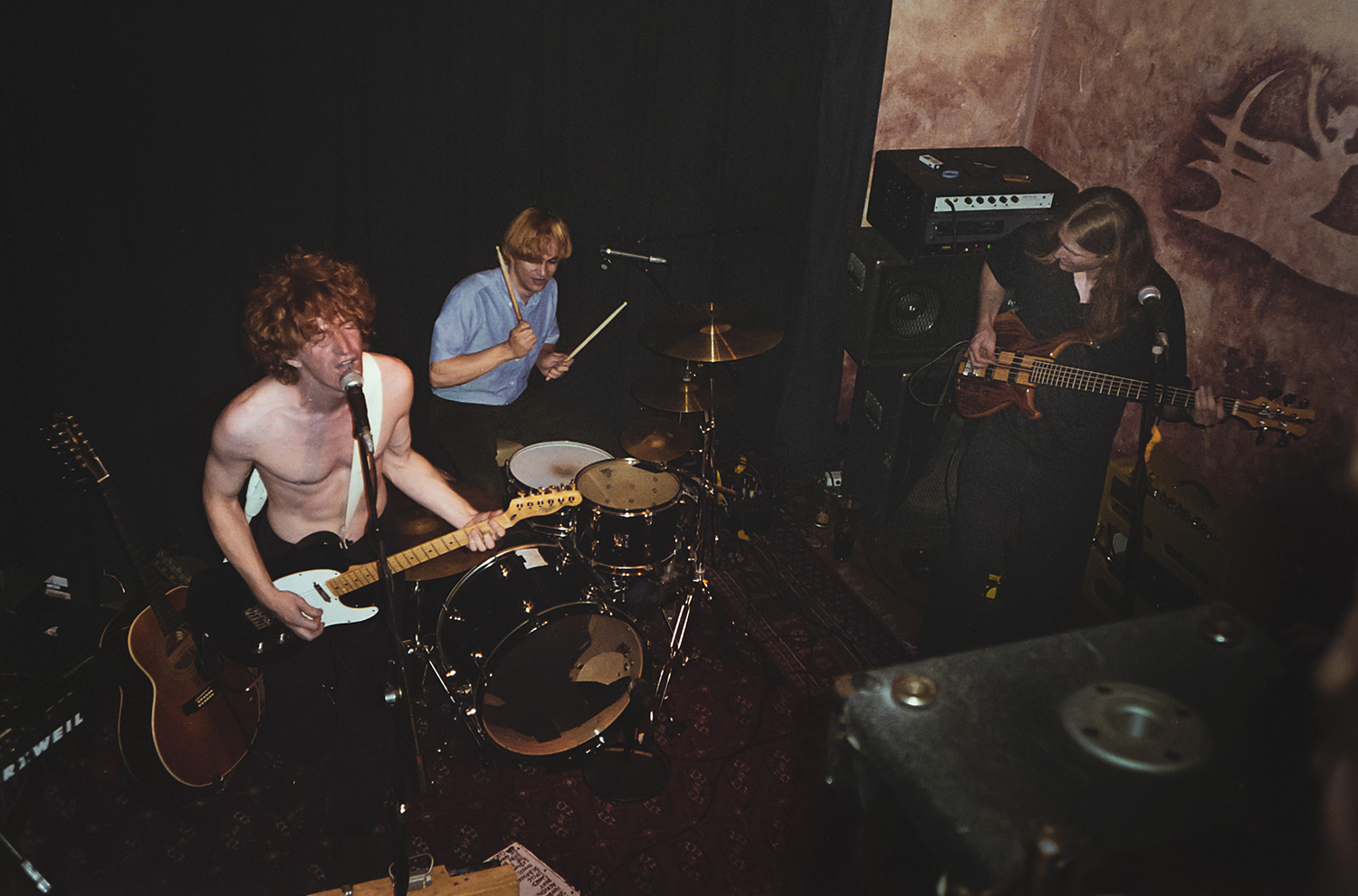 The Loud Family performs at Hotel Utah, San Francisco, CA, 1996: Scott Miller, Mike TIttel, and Kenny Kessel | Photo: Mike TIttel Collection
You were a member of The Loud Family in 1996. Reflect on your time with the group.
The Loud Family were my favorite band except for The Beatles. I was actually a member of their fan club. One day, I got a Xeroxed fan newsletter in the mail that I thought would include tour dates for their new record. Instead, it was a cancellation notice for the tour because their drummer Dawn Richardson of 4 Non Blondes fame had quit. I happened to be visiting San Francisco a couple of weeks after this. I used the AOL address on the notice and sent the person that ran their fan club an email. I didn’t have email at the time, so I sent it from the work account at a photo studio I worked at.
I knew their whole discography, but I had actually never played any of their songs. My rehearsal was done on the plane by myself with headphones and tapping on my knees. I kind of smoked the audition and got the gig. It was like butter. I was so hell bent on getting the gig. I came home and had to decide if I was going to do it. I ended up going for it, quitting my commercial photography job, and headed to San Francisco.
What ended up happening is the tour was rigorous and stressful. They were signed to a small label called Alias in Burbank. So, there wasn’t a ton of money. Our per diems were really low. I was also being paid as a hired hand. And yet, that meant I was making more than anybody else, so that was weird for me. This was on top of us sounding really good, of course. And we had some killer shows. I met some incredibly famous people on the road.
It was a classic tour in which we played all the major US cities. They had a rabid, huge fan base in those places, so the gigs were epic at times. But the towns in between the major cities were often brutal. There was a lot sleeping on fans’ floors and sofas. I was already over that kind of life even at age 26. I felt too old to be doing it, especially just feeling a bit like a hired drummer.
When the tour was over, there were some tensions in the band that had nothing to do with me, but I was in the middle of them. Scott Miller asked me to move to San Francisco and become their full-time drummer. But I decided I couldn’t do it. So, I just did that one tour.
It was great to be in the presence of Scott. He was such a smart, inspired guy. I lived with him for a few weeks and we had a lot of fun. He shared his record collection with me and we’d stay up nights listening to odd cuts. He was a totally unique musician who stayed true to his instincts. I think he's certainly one of the greatest American songwriters of all time. Nobody writes or sounds like him.
I ended up appearing on one record called From Ritual To Romance: The Loud Family Live, which was released in 2002. I’m on half of it. The late, great Gil Ray played on the other half. For me to be loosely related to the band was like a dream come true. I was beaming. It was like being at a great summer camp. But there was also a certain let down about all of it too. I think it cemented the idea for me that I needed more than just the drums in my life.
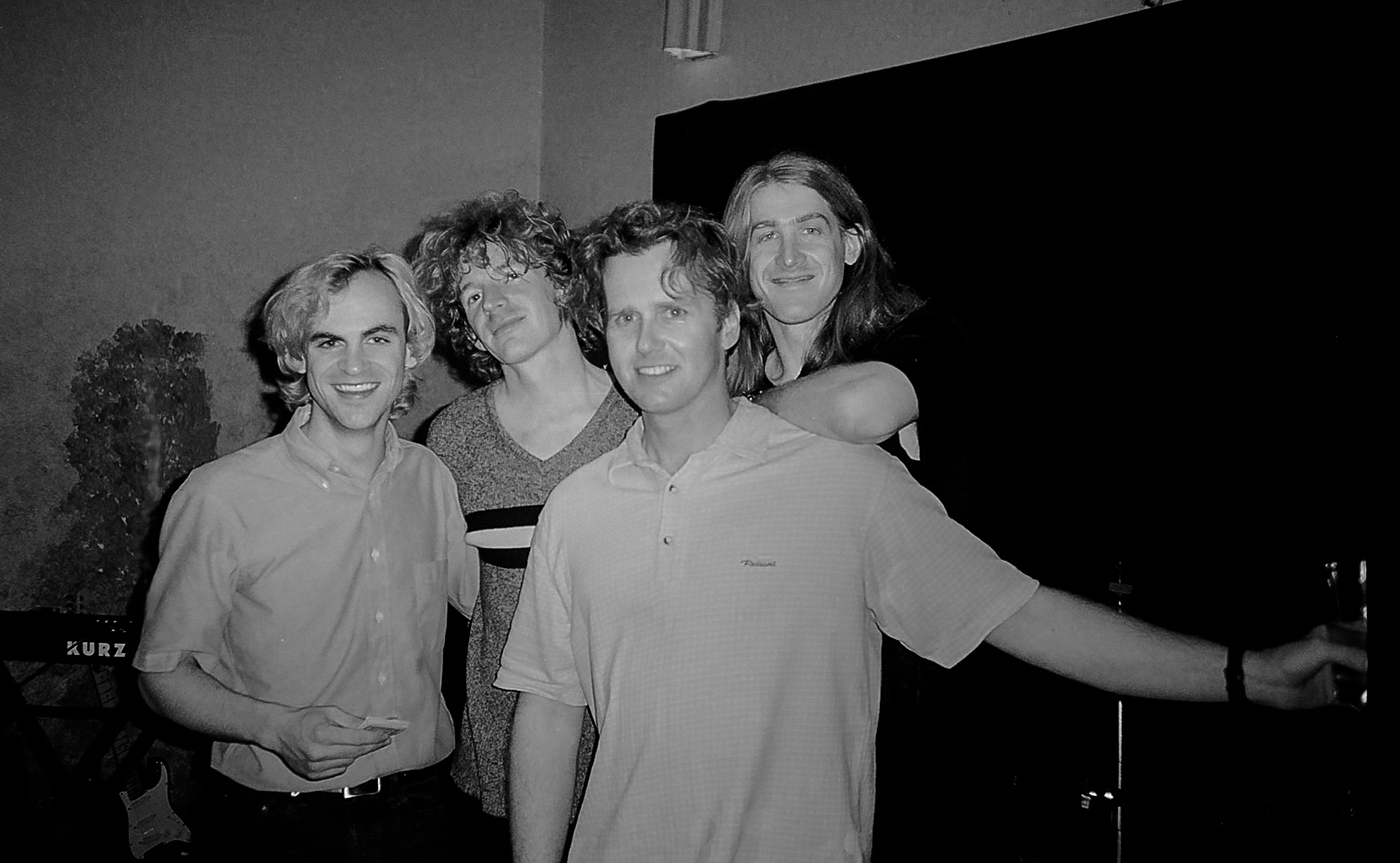 The Loud Family, San Francisco, CA, 1996 | Mike TIttel, Scott Miller, Paul Wieneke, and Kenny Kessel | Photo: Mike TIttel Collection
How do you look back at the process of making The Raisins’ The Bends documentary?
When The Raisins decided to reunite in 2024, I got really excited. I had never seen the original lineup except for one short reunion in 2013. Growing up I saw The Bears, The Raisins Trio, The Graveblankets, and Psychodots a lot. Rob Fetters, Chris Arduser, and Bob Nyswonger were heroes of mine and so many other musicians. And I had become friends with Rob and Bob over time. I was even slated to be in The Graveblankets at one point when Chris asked me if I'd be sort of a substitute drummer. And I had conversations hanging out with Bam Powell at Tickled Pink gigs. The musicianship of all of them aside, there were moments watching The Raisins trio where there was no other place in the world I’d wanted to have been. When Rob is in that mode where he writes songs with his heart on his sleeve, it's powerful. He’s definitely been a big influence on how I think about art, work ethic, and success.
I was such a big fan of that whole ensemble that I felt I had a real sense of duty to honor them and that I could make a documentary and do it in a way that wouldn’t piss anyone off. It sounded like a fun idea at the time. I texted Bob and he said I needed to talk to Rob. I wrote up the idea like a good ad man would and emailed it to him. I said, “I’m not going to do a conventional history of the band. I want to do something that gets at the emotional energy that surrounds it and what it means to you all.” The idea was to do a 20-minute piece they could use for promo. A couple of weeks later, Rob called me letting me know the band wanted to do it, which you hear at the start of the film.
The 20-minute idea turned out to be a full-length feature. I think it’s successful. I know some people felt it could have had more about the band's history, but from the start, that wasn’t the intention. I didn’t want to write the history of The Raisins or be an archivist. But I do feel like I constructed a narrative arc that fulfills some of that story, including things even longtime fans didn’t know. I tried to represent their personal musical achievements as colleagues and friends. The lore, the epic shows, and musicianship is stuff that goes without saying as most every one of their fans experienced them. I was more interested in trying to pull out what making music meant to them.
All of us in the region got so much from what The Raisins and their related projects did. This was a way of me saying thank you, perhaps from me and all my pals that relished it. I will say it was a lot more work and more difficult than I thought it was going to be, not because of the guys, but just because filmmaking isn’t easy.
It took 96 different cuts of the film to arrive at something you were happy with. Why was the process so complex?
There were many edited versions that I worked from, not that the band reviewed them all. Most of that is maybe on me sorting through the mess so to speak. The thing is, I had no agenda for this film. And when I heard four different people tell me four different versions of the story, it meant I had to fuse them together cohesively. The story may seem obvious when you watch it, but I was surprised at the four very different, incomplete narratives that emerged. It was murky in a way and needed clarity. What I arrived at is a raw and honest perspective, I think. The final film is a lot broader than where it started. But we contained the story to The Raisins as opposed to going into The Bears or talking to managers, fans, and other people from the circle. I basically did the whole thing by myself. And it’s a hard medium to work on without a team.
Rob was very helpful along the way to get to something final. He encouraged me to keep editing and making it tighter, but he did so with really broad strokes. As a creative director, I don’t know if I’d have been able to be as hands off as he was. Same with the rest of the guys. They were just appreciative. I think it ended up in a good place and I'm proud of it. I’d love to find a home for it where it can be viewed, but also monetized slightly. It stands as a quality archive piece for them I think.
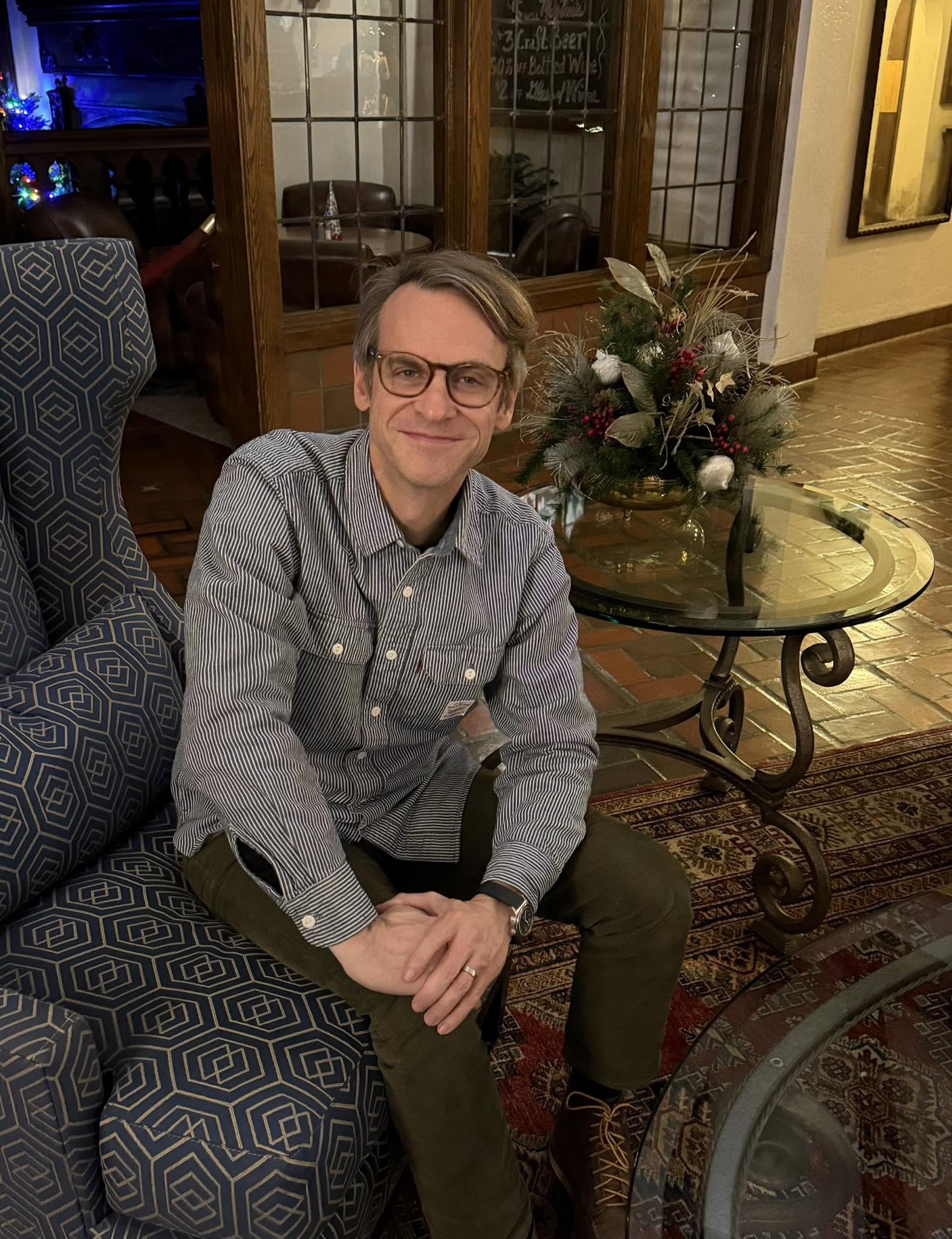 Mike Tittel at Southerby's Pub, Cincinnati, OH | Photo: Anil Prasad
You’re displeased with how rapidly AI is influencing creative industries. Explore your perspective on the situation.
Creativity is magic harnessed by people willing to devote their lives and souls to trying to find it. And when you do it as a practitioner, you realize the point of making art is the journey, not the making of the thing itself. It’s the process. It’s the discoveries along the way that shape our decisions and intellect. AI is mostly an antidote to being creative because it seeks to provide the answer without the journey. Contrary to popular belief, art isn't about what the answer is, it's about the decisions and responses in real time while you find the answer. The magic is in the making. So, if you have a sort of black and white mindset—good or bad, art not art, answer not answer—it’s logical to expect there are solutions that should be easy to attain with a computer. That’s some binary thinking right there. And art will never be binary.
Those that seem most excited about AI are businesspeople on LinkedIn. That tells me everything I need to know. AI is a few years old and it’s already boring. Who will value it going forward is the real question and maybe how its impact will be determined.
Businesspeople are excited because AI means they can make their organizations more efficient because they don’t need creative people to run a tedious and costly creative process. Of course, this is a fallacy and is going to end badly for everyone. There will be a reckoning when people realize everything is becoming homogenized because AI is in charge. AI takes people’s ideas and repackages them. I despise the dumbing down of the quest for originality, but probably moreso, it makes me realize the majority of the world doesn't understand why creativity is a life force we need.
I read poetry because a human being wrote it. Not because I have to or because I think I could write it myself. I read it to discover something about the poet and myself. I don’t need AI to write poetry or to summarize it or put it into context for me. I have a brain for that. We need AI to cure diseases. I need it to figure out how I can afford healthcare. I don’t need it to create a photograph, because what is wonderful about the photograph is what it says about the person who made it. So many people going down the AI rabbit hole never took the time to understand any of this. And it shows in their understanding and worship of the tool. I’m not impressed.
I don't believe everyone was meant to be a writer or visual artist. Just like I wasn’t meant to know how to build a house or helm a corporate plumbing project. We’re not all gurus on every topic. I hope AI eventually just becomes another tool revolution and we can get back to serious creatives making serious work. I think most artists are just staying the course. Perhaps AI makes real work more valuable.
What are your thoughts on why the Cincinnati music scene is so incredibly diverse and robust?
Most of my musician friends are around the same age. We all came up on the back end of this wave of ‘70s rock that manifested itself on the radio and then locally. The Raisins were the premier flagship of that movement for Cincinnati for many of us.
I feel like the rigor of learning an instrument, forming a band, and playing as often as you can is just in the DNA of this place. Maybe it’s because it’s the Midwest and kids don’t have as many things to do. There was also the local music store chain called Buddy Rogers. Everyone would get music lessons there. Roger Klug even taught there. We’d always know who the teachers were and what bands they were in, and that encouraged us to form our own groups. I actually think Buddy Rogers might have been the secret to all of this.
And I can’t understate the impact of the WEBN Album Project LPs either. They put out a series of local compilations for many years. Roger’s band and The Raisins appear on them. It was always something to admire and aspire to. It was a real scene. And a lot of folks that could play really well were featured.
Importantly, there were always places to play which also encouraged a high level of musicianship here. And so many people went on to make it their life’s work, like Mike Michel, Roger Klug, Brian Lovely, Bob Nyswonger, Rob Fetters, Scott Covrett, Bam Powell, and Brian Malone. On and on. These guys often play multiple nights a week in so many different genres. And then you sprinkle in such a great constellation of songwriters who need support from other musicians and you’ve got a community. That means we’ve got a great studio scene here, as well. That’s changed as people got into home recording, but people still collaborate within every type of environment imaginable.
What keeps you motivated as a creative entity?
The first thing is that I’ve realized the things I make try to honor the ordinary or speak to how all things have a certain beauty that art can reveal. That’s a real thread of mine. I’ve realized I get pretty depressed if I’m not making things. It’s an awareness I have about life.
The second thing is I have an uncanny knack of being in proximity of really brilliant people. The Loud Family is a great example. That came through me connecting through a fan club. Suddenly, I was in this band I was such a big admirer of. I put myself out there constantly. I think working with Scott Miller in The Loud Family also helped encourage me to pursue originality without being worried about commercial success or critical acclaim. Here was a top-notch band being reviewed in Rolling Stone that wasn’t seeing major financial success. I think it all gave me permission to think of music a bit differently.
In the long run, I’m interested in creating a body of work that’s original and meaningful. It’s about being yourself. And if I can find a few people who appreciate what I make, that’s a real win.