
Donate to Innerviews
Since 1994, Innerviews has provided uncompromising, in-depth interviews with musicians across every genre imaginable. And it does that with no trackers, cookies, clickbait, or advertising.
Your donations are welcome to help continue its mission of highlighting incredible music and artists, without any commercial considerations.
Your contributions will be instantly transformed into stories and videos, and cover hosting and web management costs. Importantly, your dollars will help ensure Innerviews remains absolutely free to all visitors, independent of their ability to financially support it.
Please consider making a donation today by using the PayPal QR code below.

Percy Jones
Beyond the Frame
by Anil Prasad
Copyright © 2026 Anil Prasad.
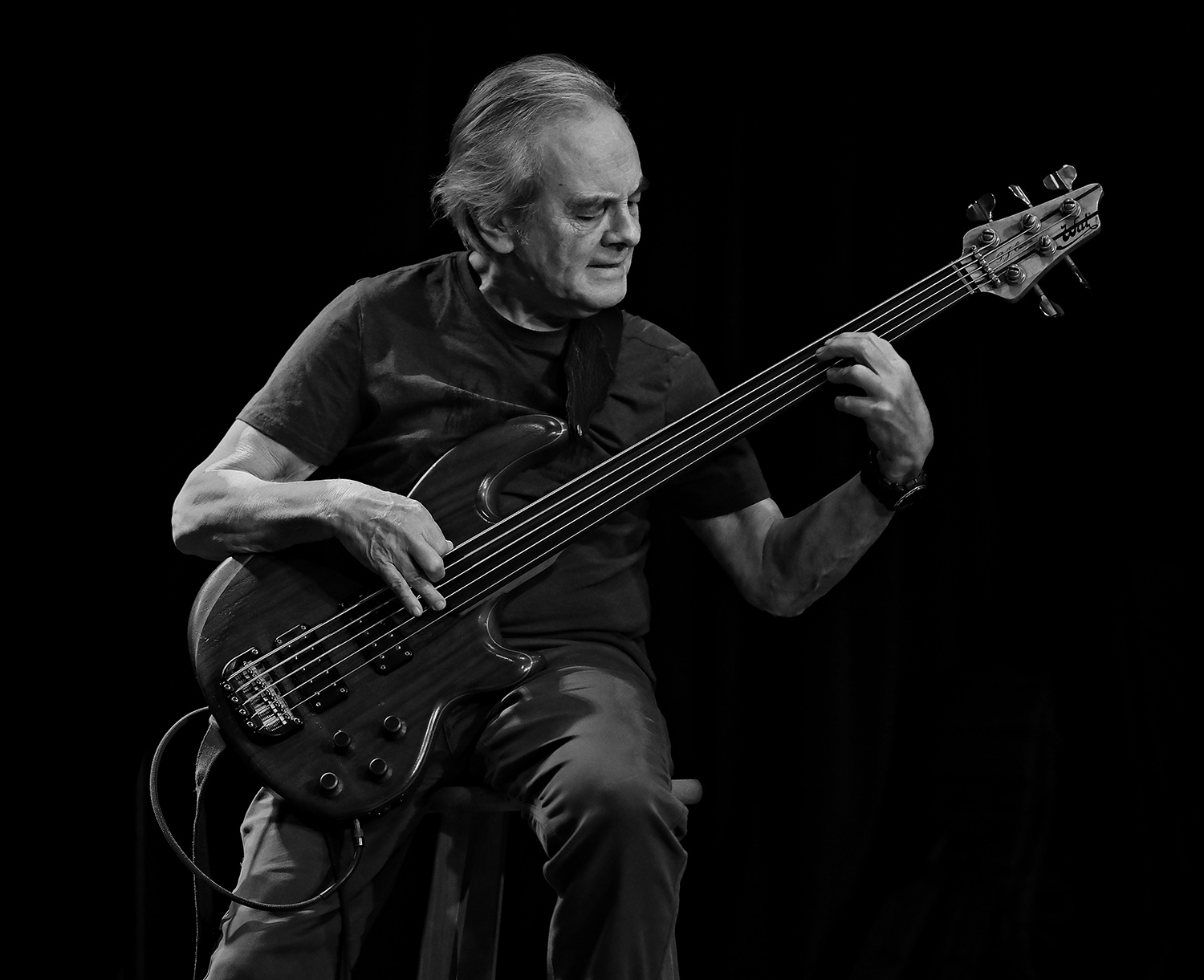 Photo: Avraham BankPercy Jones' fretless bass approach has always challenged conventional musical architectures. With Jones, the bass isn't necessarily underneath the guitar, inside the rhythm, or beneath the melody. It can move across all three, sometimes simultaneously. That quality made him a defining presence in jazz-rock luminaries Brand X and continues to inform his work today, where the vocabulary has expanded but core instinct remains consistent: keeping the music moving before it becomes comfortable. For a musician whose career has encompassed progressive rock, jazz, improvisation, and electronic experimentation, the connective tissue has never been a particular genre so much as an insistence on treating the bass as an instrument with far more possibilities than its traditional role suggests.
That philosophy made Brand X one of the most distinctive bands to emerge from the intersection of progressive rock and jazz during the 1970s. With its classic lineup formed in London around Jones, guitarist John Goodsall, and keyboardist Robin Lumley, the group created music in which intricate rhythmic structures, improvisational freedom, and instrumental virtuosity could coexist without settling into predictable fusion formulas. Phil Collins' presence inevitably became part of the Brand X mythology, but the band's identity extended well beyond its most famous drummer.
Nearly five decades later, Theory of Nothing unveils another historical perspective. The newly-released recording documents a 1977 Brand X performance featuring Jones, Goodsall, Lumley, Morris Pert, and Kenwood Dennard. It showcases the band at a point when its music was evolving from performance to performance.
Brand X’s timeline is considerably more complex than its records might indicate. Behind the music was a continuing struggle to maintain the band's creative identity amid the expectations and pressures of insensitive record labels, publishers, and management. Personnel changes, competing interests, and difficult working relationships also periodically altered the band's trajectory, contributing to the unusual circumstances surrounding some of its recordings and eventually to its dissolution.
Brand X would re-emerge in various forms over the decades, including an ill-fated final reunion between 2016-2020. The experiences left Jones with a particularly clear-eyed view of the machinery that can surround creative work. Theory of Nothing therefore arrives with an intriguing resonance. It’s more than simply an archival document from a celebrated period. It's a recording that allows the music to be heard apart from many of the complications that surrounded its original existence. And notably, it’s the first recording Brand X owns outright, free of contractual entanglements.
The group's story is also being revisited from a unique vantage point in Brand X: The Desert Years, a feature-length documentary being written and directed by Sylvain Despretz. The film follows Jones, Goodsall, Lumley, and others connected to the band's orbit through the long aftermath of Brand X's original run and its later attempts to return to the stage. Despretz has described the project as a portrait of the band's journey through its “wilderness” years, and the film draws on interviews that explore what happened after the mythology had faded and the musicians were left to navigate changing musical landscapes and the realities of getting older. With the documentary still taking shape, it offers another way of considering Brand X—not simply as a celebrated artifact of the 1970s, but as a long-term story whose consequences followed its members for decades.
Brand X officially disbanded in 2020, but Jones remains involved in several highly-creative groups. With guitarist Tim Motzer and drummer Kenny Grohowski, he’s part of PKT, a trio that grew from the larger PAKT ensemble, whose lineup also includes guitarist Alex Skolnick. PAKT's ambitious improvisational approach created a setting in which four musicians could respond to one another without predetermined stylistic boundaries. PKT pares that configuration down to three members, offering Jones a different kind of conversational space. Its debut album NYC reflects that chemistry, with Motzer's immersive, processed guitar work and Grohowski's inventive drumming enveloping Jones’ bass that can function as melody, rhythm, punctuation, or intentionally destabilizing force.
Jones is also a member of MJ12, another outlet for his interest in improvisation and spontaneous interaction. The group emerged from New York performances involving Jones and drummer Stephen Moses before developing into a quartet with guitarist David Phelps and saxophonist Chris Bacas. Once again, Jones occupies a role that doesn't fit neatly into the conventional bass player template. Composed passages provide points of departure, but the music leaves room for the musicians to alter the shape of what follows. Taken together, MJ12, PKT, and the broader PAKT lineage demonstrate how little interest Jones has in simply recreating the circumstances that made his name. The history remains present, but it functions as material to build upon rather than territory to revisit.
Innerviews spoke with Jones from his home studio in New York City for this candid and detailed conversation. He reflects on the curious trajectory of Brand X, the circumstances surrounding Theory of Nothing, the realities of dealing with the music industry, and the musical relationships that have carried his work into the present through PAKT, PKT, and MJ12.
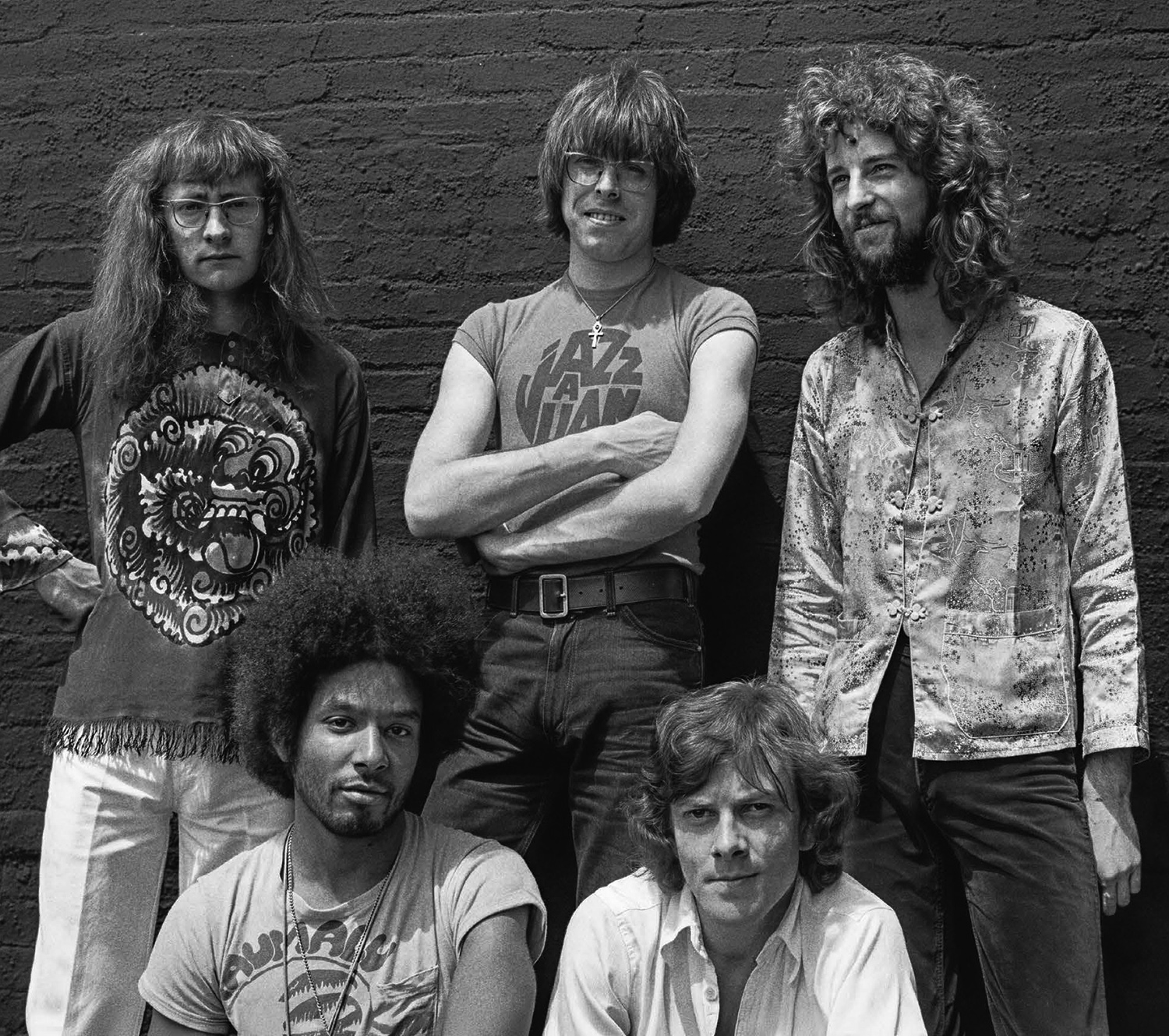 Brand X, 1977: Morris Pert, Kenwood Dennard, Robin Lumley, Percy Jones, and John Goodsall | Photo: Susan Alexander
Tell me how and why the Theory of Nothing recording emerged.
Sylvain Despretz, who lives in Paris, and is working on a Brand X documentary called The Desert Years, went to visit Robin Lumley in England not long before he passed away. Robin was throwing out a lot of stuff that he felt he didn’t need. Sylvain was helping him. He came across a box with a half-inch tape that was labeled Brand X. Sylvian asked Rob, “What’s this?” And Rob didn’t remember.
Sylvain asked if he could borrow it and took the tape back to Paris. He went into a studio and played it. He emailed me and said, “You know, this sounds quite good. It’s a live recording from 1977.”
We’re not sure where it’s from. There was no information on the box. It might include recordings from more than one venue such as Chicago and Rochester. It was a good performance and the fidelity wasn’t bad. Sylvian said it sounded way better than all of the bootlegs floating about.
So, Sylvain digitized it, sent it to me, and I worked on it from there. I cleaned it up a little bit. There’s only so much you can do with a two-track recording, but I was able to spruce it up.
We decided to release it on CD, and it really is sort of a big deal. It’s now the one record that Brand X owns, between me, and the estates of John Goodsall and Robin Lumley. We never got paid for any of the previous recordings. It’s nice to actually own one of those Brand X albums.
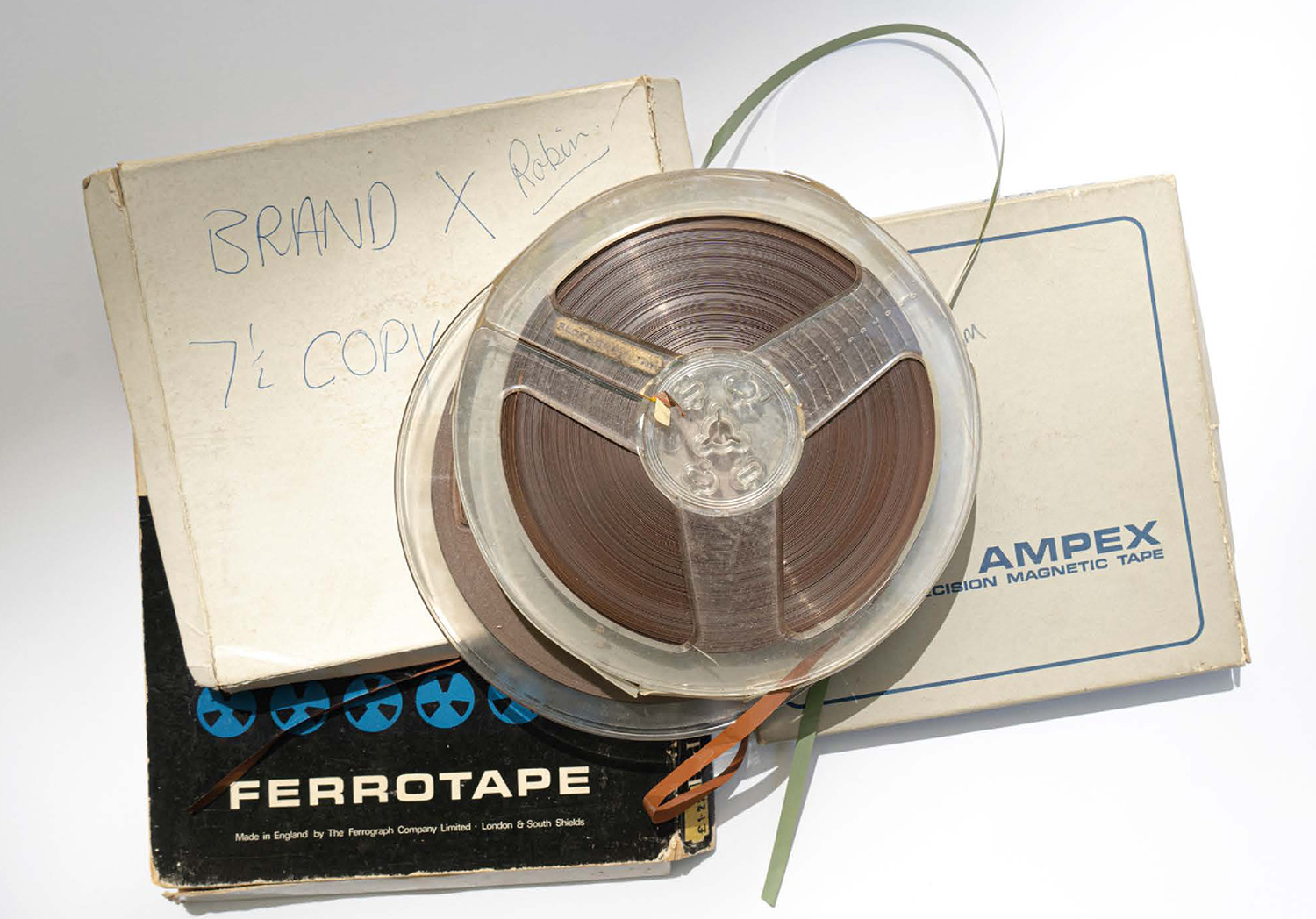 Theory of Nothing master tape | Photo: Sylvain Despretz
For those unaware, give me a snapshot of the business issues the band experienced.
A common thread across the years is lack of accounting. We could never find out what the sales were or how much money was being earned or lost.
In the early days, we’d get an advance and it would be spent on the studio recordings, and that would be it. We’d never see anything else afterwards. The record company would talk about the expenses of this and that, but there was never any documentation.
In the early days, our publishing was signed to Tony Smith, who also managed Genesis. He then sold the publishing to EMI, who I think then sold it to Universal. I’m not really sure who has it now. So, there was always a lot of confusion and there still is.
In 2016, after being inactive for quite some time, Scott Weinberger approached John Goodsall and I to put the band back together. Obviously, we needed a little cash to get it back together because I was in New York and John was in Minnesota. Scott said he would help reunite the band on the condition that he played percussion in it.
So, we started rehearsing and went on the road. It was going okay at first. But then I started realizing I wasn’t again getting any accounting from management. I gave them so many opportunities to correct it and do something, and they never did. So, it got to 2020 and I said, “I’m not working with you guys anymore.”
After I left, they hired Jeff Berlin to play bass and started a company called Brand X Live, LLC. To me, it felt like they were trying to replace the original band with a tribute-type project. They also began posting things on Facebook regarding my history with the band that I found deeply insulting, such as minimizing my role by labeling me as just one of their many bass players and claiming John Giblin played bass on most of the studio tracks.
And then I had a stroke of really good luck. I found a lawyer who drew up a new contract, and got the former management to sign it.
And then the COVID-19 pandemic happened. John passed away from complications related to COVID, so the former management couldn’t do anything any longer. I then got together with Robin Lumley, not long before he died, and we officially retired the band. We actually have a contract that states the band has been dissolved. So, the former management has no right to be doing any business using the name Brand X.
John’s body was dumped in a morgue. We organized a GoFundMe for John to claim his body, which was at Mayo Clinic in Minnesota. Sylvain Despretz actually flew from Paris to Minnesota to take care of the cremation and took John’s ashes to Los Angeles.
I was doing a gig at The Baked Potato at the time, so we used the money to rent a boat, go out to the Pacific Ocean and scatter John’s ashes.
How is it possible no-one claimed Goodsall’s remains?
The fact of John being left in the morgue was very strange. I don’t know what happened there. I got wind he passed away and called his ex-wife. She had no idea that he was even sick. So, it was very, very messy.
Luckily, we had Sylvain helping us out and he took care of things. We did John right in the end, but there was some dark humor, too. There were about 10-12 of us on this little boat, two miles out on the Pacific. We scattered John’s remains, and everybody was silent. And then this powerboat comes heading towards us. The skipper of our boat was on the bridge, trying to wave the guy off, but then the powerboat just ploughed straight through John’s remains at 60 miles an hour.
At first, everyone was like, “Oh no.” And then everybody started laughing, because Goodsall’s life was always chaotic, so everybody saw the humor of that moment. Anyway, we gave him a good send off.
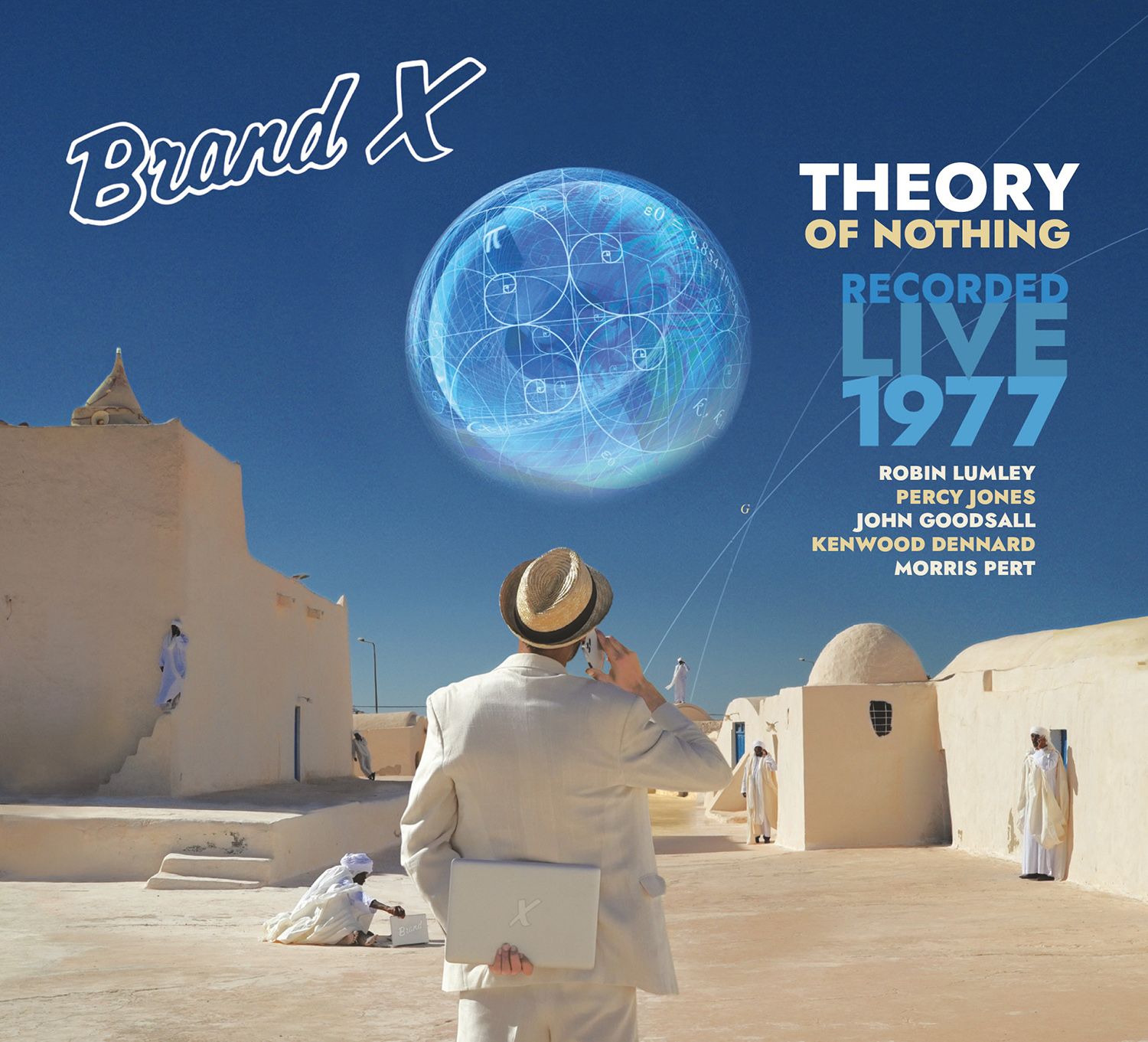 Photo: Sonia Challal / Artwork: Sylvian Despretz
Tell me about the title Theory of Nothing.
Well, you’ve got the theory of everything, string theory, pilot-wave theory, the multi-worlds theory, and quantum mechanics. So, on the spur of the moment, I thought, “theory of nothing.” I was on the phone with Sylvain when I came up with it. We were talking about a title. I said Theory of Nothing, and he said “okay,” and we went with it.
The album art is an homage to Hipgnosis, the English design group that designed many covers. Back in the ‘70s, we had a meeting with Storm Thorgerson about the Moroccan Roll cover. I suggested to him we include some universal ratios like pi and the Golden Mean on it. He was like, “Yeah, okay.” He went away and came up with a cover, and it was great.
Sylvain suggested we do an homage to the Moroccan Roll cover for Theory of Nothing. So, he traveled to Tunisia to visit the same mosque that was used on the cover. It came out great. It has the same imam on the cover from the original. When he looked at the original Moroccan Roll cover, the imam told Sylvain he remembered the guys who were in it.
The new album also has a sphere in the sky with Fibonacci curves on it, which was my idea. You also have everyone on MacBooks and iPhones. I thought that was kind of funny. I’m very happy with the cover.
How did you connect with Kenwood Dennard and Morris Pert for the 1977 lineup?
The way I hooked up with Kenwood was related to problems with Phil Collins. He was busy all the time with Genesis, so we were missing out on opportunities to play. At one point, Phil said to me, “If you guys can wait a couple of years, I might leave Genesis and play with Brand X full-time,” I said, “You can’t expect four guys to wait two years.”
We couldn’t find anyone in England, so I called Alphonso Johnson in Los Angeles, who was playing with Weather Report. I asked him. “Do you know any drummers over there who would be good? We have a US tour coming up.” Alphonso said, “There’s this guy in New York called Kenwood Dennard.” I came over and spent a couple of weeks with Kenwood, trying to show him the material as best I could to get prepared.
The rest of the band came over, we did some more rehearsals, and went out on the road, and it was great.
Robin Lumley recommended Morris, because he was doing a lot of session work in London. Robin was also working as a producer outside of Brand X and had used Morris on some sessions. Robin suggested we should try Morris out for Brand X. He came and played and we liked what he was doing, so we included him on the tour. Morris also played keyboards and wrote music. He was a classically-trained musician. He was outrageously good.
Those first US tours were a happy time. It was before the problems kicked in.
“Access to Data” and “Earth Dance” appear on Theory of Nothing, prior to the studio recordings that emerged on Masques in 1978. How did pieces change ahead of making the album?
On Theory of Nothing, “Earth Dance” is actually too slow. At first, I was a little bit reticent about including it. I thought it sounded a little bit pedestrian. When we got to doing Masques, the tempo was more upbeat, and it was definitely tighter. But Sylvain Despretz said, “No, keep it. It’s okay and the punters will enjoy listening to it.”
“Access to Data” sounded pretty complete, but I think it was more together for Masques as well. When you start playing new material, there’s always a period where there are mistakes, or arrangements or tempos that aren’t right. And the best way to rectify all of that stuff is to keep playing it live and get a sense of how the audience is reacting to it. It gives you a sense of when you need to fix something.
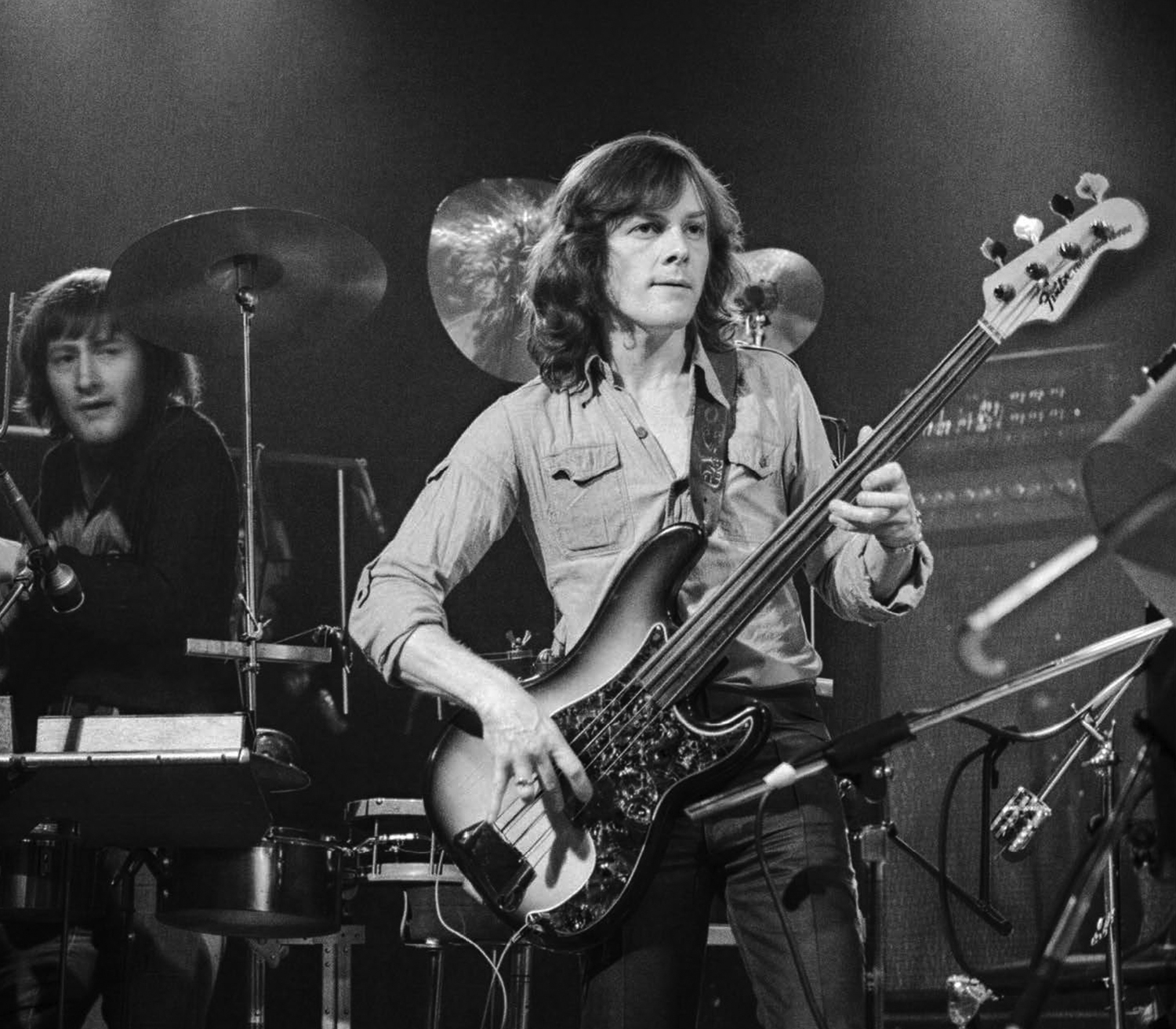 Morris Pert and Percy Jones live with Brand X, 1977 | Photo: Murray Silver
By the time we got to Masques, Chuck Burgi replaced Dennard on drums. Why did that occur and how did that change the studio realizations of the tracks?
Chuck was playing with Al Di Meola, prior to playing with us. Chuck had more of a rock element to what he did than Kenwood. Kenwood was playing a lot of jazz. Chuck was more straight-ahead rock, but he could play in odd time signatures.
John, for some reason, was not happy with Kenwood’s playing. I never understood that. I was fine with Kenwood. But John had a big say in what we were doing. He didn’t want to continue with Kenwood, so we didn’t.
When it came to the Livestock album from 1977, I wanted to use recordings with Kenwood across the whole record, because Kenwood had done all the touring with us. But Phil Collins was adamant that he wanted to be on it as well. I thought that was unfair, because Phil had hardly toured with us. Certainly not in the US, but we ended up with both of them on it.
Collins seemed to have a strange relationship with Brand X. He felt a level of ownership of the group, yet didn't seem to want to ever fully commit to it.
Well, it was a little strange. At that time, he was somewhat well known, but we weren’t. Nobody knew who Brand X was. So, Phil was playing with Genesis, and Brand X would sometimes be put out by the press as “Phil’s new band” or “Phil’s hobby band.”
That was inaccurate because the original Brand X involved Pete Bonas on guitar, John Dillon on drums, and Phil Spinelli on percussion and vocals. We made a record for Island which had vocals. Some of us didn’t like it. We asked Chris Blackwell to do another record that was instrumental.
John Dillon’s playing was very good. He was a good groove player and was right in the pocket. But for what we wanted to do, he wasn’t appropriate. So, we started looking for another drummer.
Bill Bruford came down and we offered him the gig. He turned it down. And then Danny Wilding, who was an A&R man at Island said, “You should try Phil Collins.” I wasn’t familiar with Genesis back then, though I’d heard of them.
So, Phil comes down and plays, and we liked what he did and he joined the band. Phil then suggested we move to Charisma, which was Genesis’ label, and hook up with Tony Smith, who was Genesis’ manager. We did, and Unorthodox Behaviour came out on Charisma.
So, the idea that Brand X was “Phil’s hobby band” or “Phil’s new band” was untrue. But there was that vibe of ownership from Phil, despite him becoming increasingly unavailable as we got more offers to play live.
Interestingly, I recently found out Phil wasn’t legally signed up to the band. He was a sideman. When we got to 1980 and the management company hit us with a very big debt, it was on me and Goodsall. Phil just walked away from it. So that pissed me off a little bit. It’s a complicated history.
You mentioned Bill Bruford turned the band down. What else can you tell me about his brief engagement with the group?
That first occurred when we were still with Island in 1975. We were rehearsing at Island’s rehearsal studios and Bill came down and played. He said, “I don’t want to spread myself too thin” and turned us down. I think he had also been playing with Gong at the time.
He may have just been polite and thought the music sucked. But later on, he came back and played percussion with us on a few gigs, because he and Phil were friends. They played together in Genesis. I remember a show we did at The London School of Economics that Bill took part in. There were a couple of others. We didn’t make any recordings of Bill performing with the band. I haven’t even come across a bootleg.
We also offered Simon Phillips the gig at one point. He came to Farmyard Studios to play with us. It was very good, but he also turned the band down. It maybe was more of a financial thing, because we didn’t have a load of money.
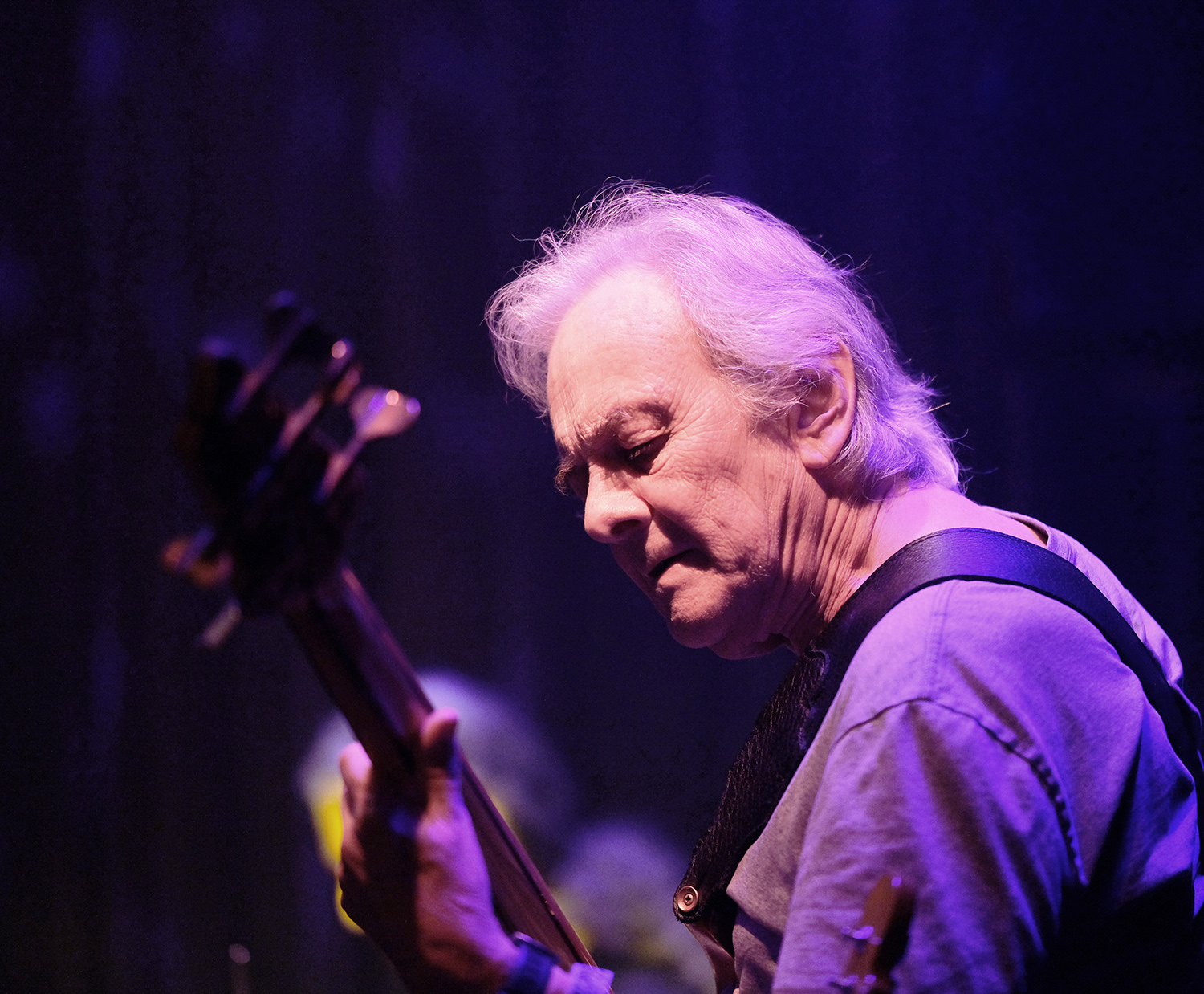 Photo: Avraham Bank
The Island demo recordings from 1975 were unearthed in recent times. Could they eventually be released?
The problem is that there’s not much material. Phil Spinelli had a cassette, but the quality is so bad you can’t clean it up. There are also reel-to-reel recordings in better shape. Those are possible candidates. But we don’t want to put out anything that doesn’t sound good.
After the band stopped playing in 1980, the record companies started releasing compilations without our authorization. For instance, the Is There Anything About? album. I saw something in the press about a new Brand X album. Nobody told me about it. So, I went to Tower Records and bought it. I took it home and played it and was completely disappointed. There was one track, which I think was a jam, which sounded pretty good. Anyway, I gave it to the kids next door. They probably didn’t like it either.
There’s also the Live at The Roxy album, which is atrocious. The bass sounds like it was recorded in a car parked down the street.
The CDs of the studio albums are also mastered so badly. With the original vinyl, we took a lot of care. We were there for the mixing and cutting sessions. We’d listen to the acetates and ensure everything sounded good right to the end of the process. But for the CD transfers, they didn’t even use the full 16-bit dynamic range that was available.
What other potential archival Brand X releases are you considering releasing?
There’s definitely one that I think might come out. There might be more, too. A lot of it is down to how good the performances were, as well as fidelity. We don’t want to put out anything that doesn’t sound good. Theory of Nothing isn’t perfect, but it’s a magnitude better than the bootlegs I’ve heard.
I think the next thing might be from the Mike Clark era of the band, between 1978-1980.
A lot of my attention is focused on what I’m doing now. I don’t want to get too distracted with the old Brand X stuff. I’m proud of what we did, but the other half of me wants to keep doing new stuff.
How do you look back at the ‘90s version of Brand X that yielded the X-Communication and Manifest Destiny albums?
We were really working against the clock when we made X-Communication in 1992. We also had a really limited budget at an inexpensive studio in Brooklyn. It was pretty stressful to get done.
Initially, it wasn’t meant to be a Brand X album. It was going to be a new solo album from me. Before I asked John to take part, I was considering Bill Connors on guitar. But he turned down the project. Somebody said, “Well, what about Goodsall? What’s he doing?” So, I called him and he was into it.
At that point, Mike Clark had introduced me to the drummer Frank Katz. Mike said he was really good, so I went and jammed with him at the Drummer’s Collective in New York City. I think Frank was teaching there. I thought he was a really good drummer, so we got him into Tunnels, which is another band I had.
I spoke to John and recommended we use Frank for the album and he agreed.
We got the record done and the label Ozone wanted to call it Brand X. I said, “No, I don’t want to call it that.” But they bent my ear for an hour and said we had to do it, because it would sell more records. I caved in.
I was pretty happy with the record, but it didn’t sell very well.
We also went out as a trio during that period. I have some pretty good memories of that time, but it was tough going. We organized some short tours, mostly on the West Coast. They were good for me psychologically. I felt like we were being productive.
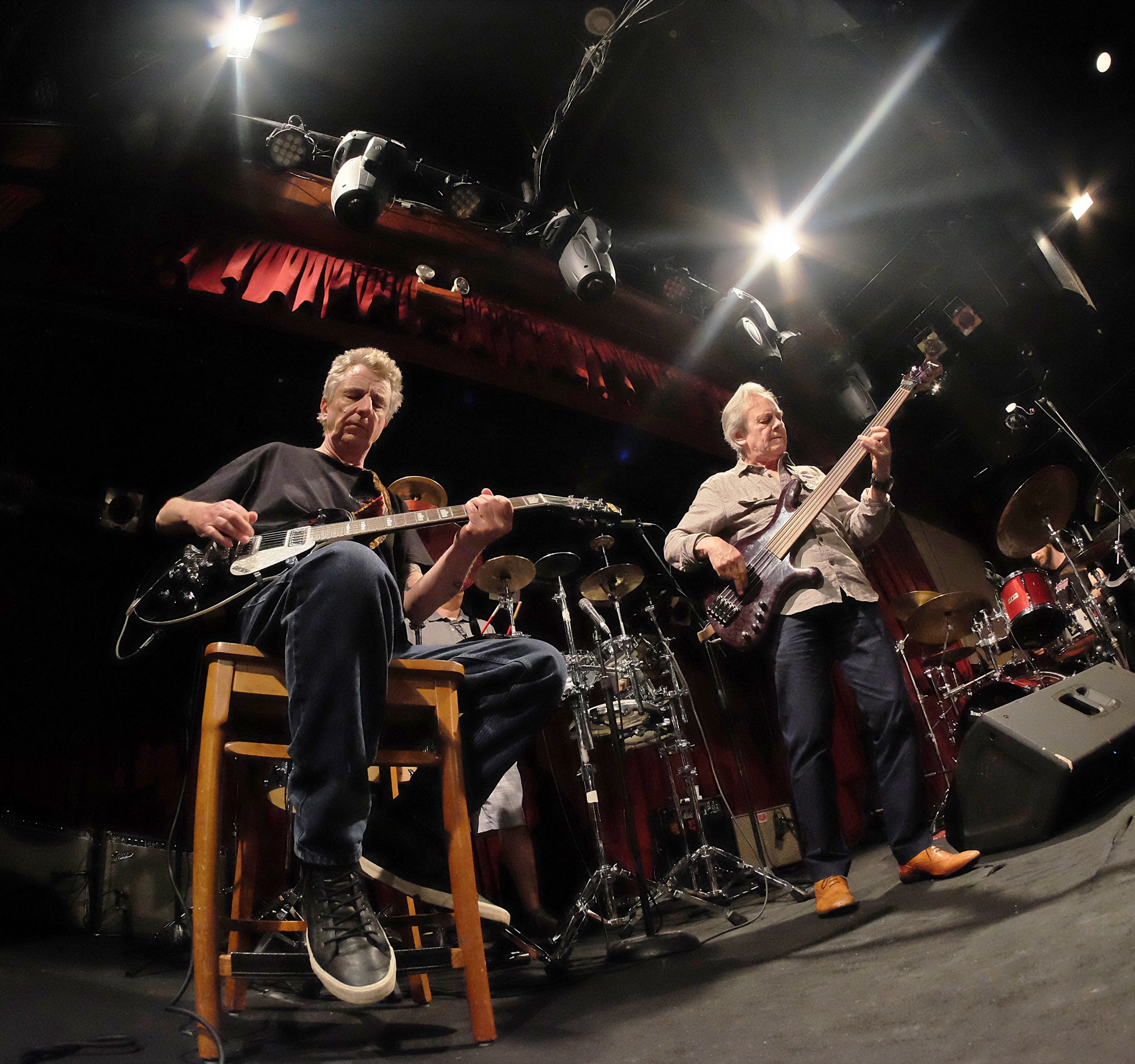 John Goodsall and Percy Jones perform with Brand X, 2017 | Photo: Avraham Bank
What are your thoughts in retrospect on Brand X’s 2016-2020 final lineup, purely from a musical perspective?
I’ve got mixed feelings. As we discussed, the circumstances of putting it together involved Scott Weinberger agreeing to finance the band if he could play percussion in it. It became obvious very early on that he wasn’t a percussionist, but a drummer. That caused musical problems.
When the Brand X reunion started, I thought of having Keith Carlock as the drummer, but he had moved to Nashville and wasn’t available. Then Ronnie Ballin, a friend of mine, told me there was a really cool drummer named Kenny Grohowski playing at The Zinc Bar in New York City one night. We went down and I saw him perform with Felix Pastorius. I was impressed with Kenny right away. We talked and he agreed to join.
Chris Clark had been recommended by Scott. I didn’t have any input into hiring Chris. It was already sort of pre-determined.
One thing I found odd about the Brand X tours during that period is your manager was writing the setlists. Why was that the case?
That was a problem. It’s part of what I consider management taking control of the band. When we started with this lineup, we were only playing material from the first three albums. I wanted to move on and start writing new material.
I actually did write two new tunes, but the manager said, “It doesn’t have a melody I can hang my hat on.” That’s exactly what he said. But there was a melody. It wasn’t “Jingle Bells,” but there was a melody. So, he was knocking down material. We didn’t do any new material during that lineup. It was just old stuff for five years. I felt we were performing as a tribute band to ourselves.
Why didn’t you and Goodsall both put your foot down?
We should have done that. John was drinking heavily at that point and was distracted by it. I really felt like I was on my own.
Eventually, I put my foot down and stopped working with them. And then they hired another bass player. John and Chris Clark didn’t object to the situation. They just went with it. I felt like an employee. And you shouldn’t feel like an employee in your own band.
The situation was dodgy and very disrespectful to the band.
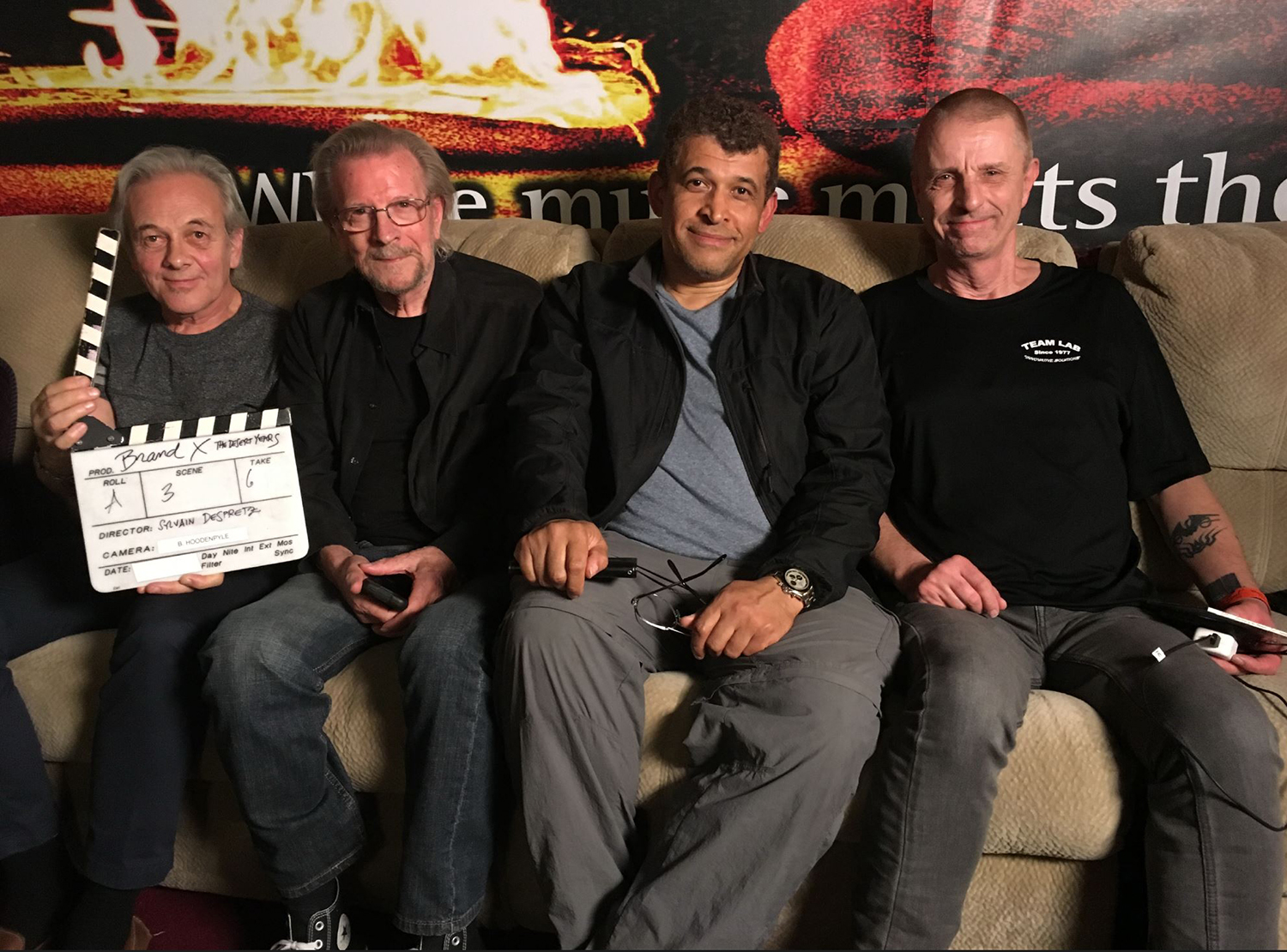 Percy Jones, Jack Lancaster, Sylvain Despretz, and John Goodsall on set for the Brand X: The Desert Years documentary | Photo: Brian Hoodenpyle
Explore the film Brand X: The Desert Years and the progress made on it to date.
I met Sylvain Despretz in 2016. He has an impressive history and is a killer artist. He worked with Ridley Scott and did the storyboard for Gladiator.
Sylvain’s been working on the film for quite a while and financing it himself. He doesn’t have a backer. So, he works on the film for a while and then has to stop, generate more funds, and then work on it some more. He’s been working on it for several years, and he’s pretty much got all the footage he needs. Now, he’s editing it. I’m not sure when it’ll be finished.
Sylvain came up with the title The Desert Years. It refers to the period between 1980 and 2016 when we were occasionally doing stuff as Brand X but were inactive most of the time. It was like everybody was lost. We were geographically scattered and struggling a bit.
Despretz has played a major role in helping you protect the Brand X legacy. What can you tell me about that?
In 2020, when the stuff hit the fan, big time, he was really helpful to me. I felt I was completely on my own. Sylvain found the lawyer who got us a new contract. That was really important. I have to give him credit for that.
I still feel like I’m part of Brand X. That might not have been the case if I hadn’t had that help from Sylvain. Without him, things would have been much worse.
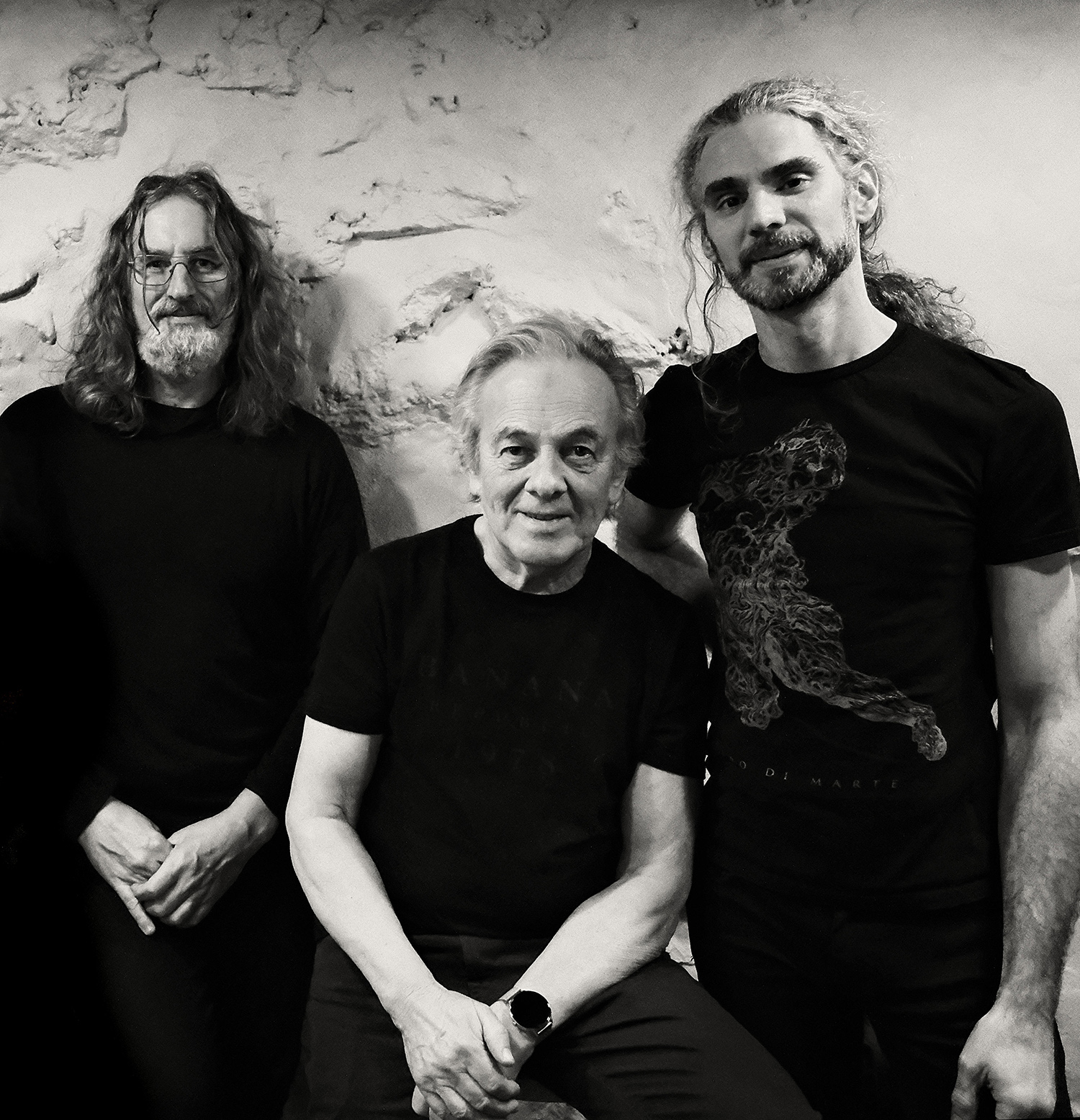 PKT: Tim Motzer, Percy Jones, and Kenny Grohowski | Photo: Avraham Bank
You have another new recording out with PKT featuring Kenny Grohowski and Tim Motzer. Tell me how this trio emerged and what its debut album NYC captures.
PAKT came out of a suggestion by Leonardo Pavkovic of MoonJune Records. He suggested putting Kenny, Tim, and Alex Skolnick together as a band. He hooked up a gig for us in Brooklyn. It was like a mini-rehearsal, and it was interesting music. So, Leonardo hooked up more gigs. We got a little busier and started to put records out, which were improv-based.
Alex also plays with Testament and has his own jazz band. He’s really busy, so there’s a lot of time when he isn’t available. PAKT is ongoing and will return when Alex is available. But as of late, we’ve been playing as a trio, which we named PKT. We’re starting to focus more on constructed material, with recognizable, melodic elements that stay with the audience. But there’s still lots of room to improvise within that.
How does your role change in the band as a trio?
There’s a lot more space, which makes it easier to move around and turn corners. I'm quite comfortable in a trio format. We’re listening to each other constantly. I can support and augment what Tim Motzer is doing. There’s good communication going on between me, Tim, and Kenny.
You have a couple of other bands and projects with MJ12 and Box of Noise. What’s going on with them?
MJ12 is still together, but in the current music business environment, it’s very hard to find places to play. The band includes Stephen Moses on drums, Chris Bacas on sax, and David Phelps on guitar. We still do shows around New York City, but we’ve never managed to perform beyond that.
I really enjoy playing with them. It’s quite different from PAKT. It’s more structured but also has improv elements.
We put out a self-titled record in 2016 and we’re overdue to do another one. It’s down to me to write some material. I have to get on that.
Box of Noise was me, Kenny Grohowski, and Alex Machacek. We did a couple of nights at The Baked Potato in Los Angeles in 2022, but for me, it didn’t work.
I haven’t abandoned the idea of Box of Noise. It was a name I came up with for doing my own stuff. It’s on the back burner. When I get around to it, I’m still going to use the name to do my own record in which I pick the guys who play on it, and I write and arrange all the stuff.
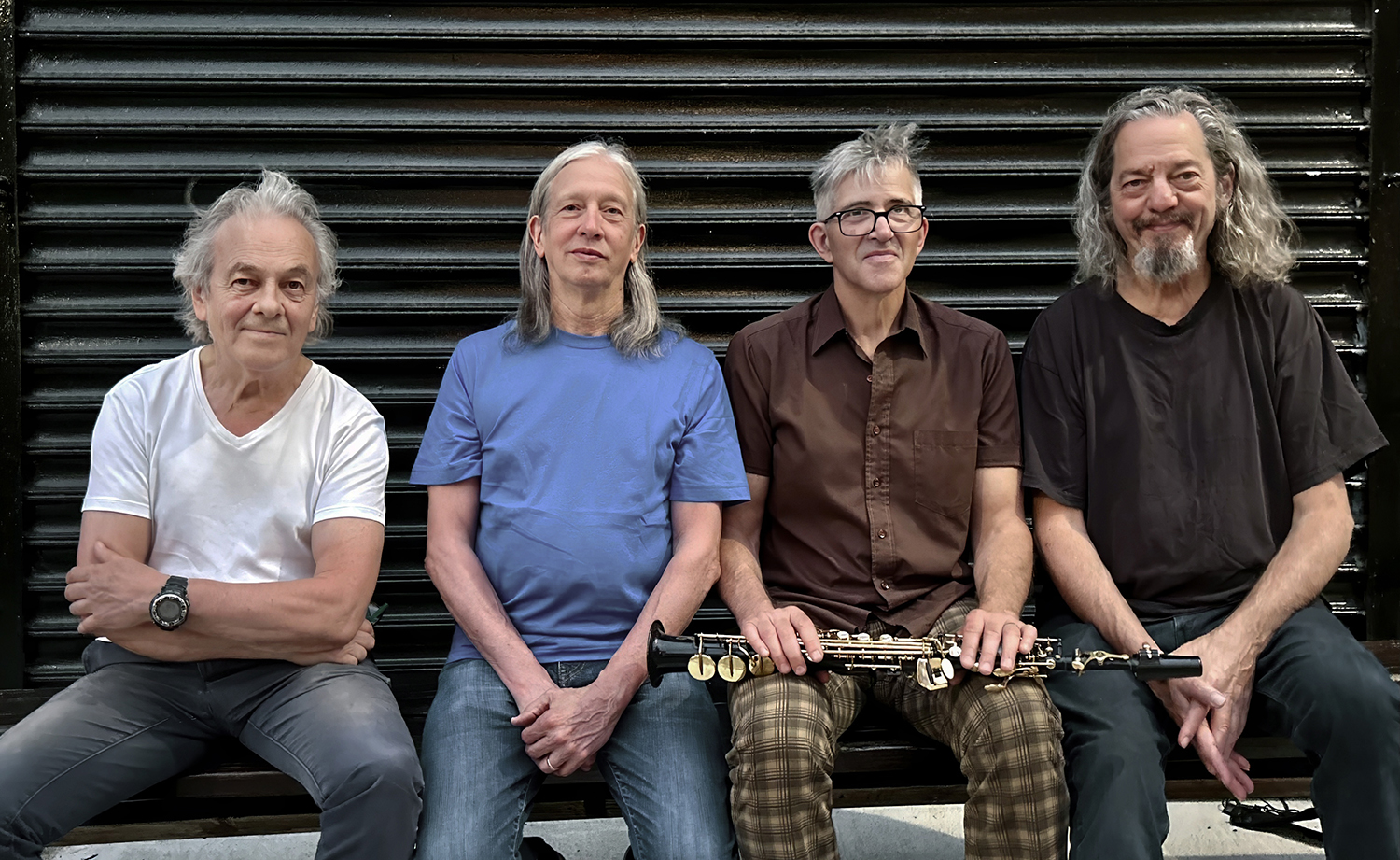 MJ12: Percy Jones, Stephen Moses, Chris Bacas, and David Phelps | Photo: Richard Reiter
Let’s rattle off some albums you’ve been involved with and have you tell me whatever comes to mind, starting with Big Jim Sullivan’s Test of Time from 1977.
Jim was a veteran British guitar player who had played on hundreds of records and sessions. He also had a band called Tiger.
They recruited me and Simon Phillips to be the rhythm section. I thought it sounded very good. I was very happy with it. The record was done for EMI, but for some reason, they didn’t put it out. It eventually came out as a limited vinyl pressing in 1983 on the Street Tunes label.
When Brand X made X-Communication in the early '90s for Ozone Records, the label chose to license and reissue Test of Time.
The Eddie Howell Gramophone Record (1975).
That was one of the first sessions I did at Trident Studios, a studio I came to love. It was my all-time favorite.
Eddie Howell was an up-and-coming singer-songwriter. They essentially hired Brand X to play on the record. The music was fairly straight-ahead pop.
I recall Eddie doing vocal overdubs using steel plate reverb. This was long before digital reverbs. I remember in the middle of an overdub saying “Edddddddie” out loud into the plates, so it reverberated in his headphones, which I think freaked him out a little bit. [laughs] So, there were some shenanigans going on.
Nova’s Vimana (1976).
That was a talented band. There was an issue with the rhythm section, and they needed one for the album. So, they called me and Narada Michael Walden to play on it. We recorded it again at Trident Studios.
Narada was quite well known by then and had a reputation as a very good drummer. He was a bit of a star, so it was a thrill to play with him.
Nova had very strong compositions and nice colors. We spent three weeks recording it and it was a good experience, and the record was fairly well received.
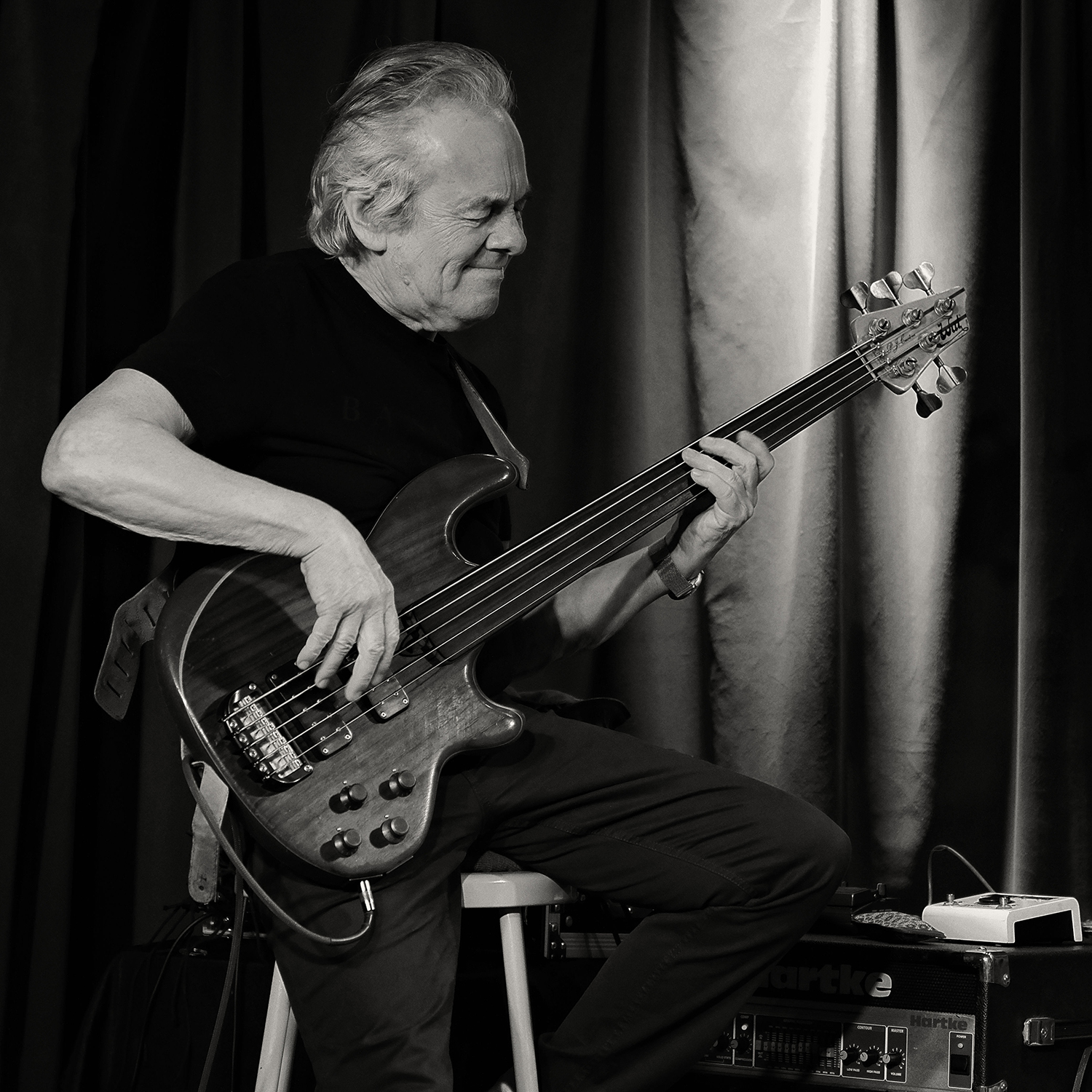 Photo: Avraham Bank
David Sylvian’s Words With The Shaman (1986).
That was a tough one. I felt like I failed on that one.
I was sitting here one afternoon and a lady called from Virgin Records in London. She said they wanted me to play on some David Sylvian stuff. I agreed. She said, “Can you leave tonight?” So, I flew out that night and arrived at the airport. A guy was there to pick me up. I thought he was going to take me to a hotel so I could sleep, because I can’t sleep on planes. But he didn’t. He took me straight to the studio. So, I had no sleep and it was boom, I started working.
I played, but I was really tired. I was having trouble focusing and I thought I was doing a really bad job.
I don’t think I ever heard the record. I had no interest, because I felt my contributions were hopeless. But people who’ve heard the record said they liked my bass playing.
Suzanne Vega’s Days of Open Hand (1990).
That was a mixed bag as well. I went down and played on some tracks, but I think they used very little of what I did on one song called “Predictions.” So, I was a little disappointed.
The opportunity came up because Anton Sanko, the keyboardist I used on my Propeller Music album, also worked with Suzanne at that point as her producer. He talked her into calling me.
The impression I got was my style probably didn’t fit too well. But of course, it was nice to get to play on a Suzanne Vega record.
Fovea Hex’s Allure (2007).
Clodagh Simonds was friends with Brian Eno. She’s a very interesting singer. I think she had heard me on some of Eno’s records and thought I’d be good on the Fovea Hex stuff.
I recorded that stuff here in my home studio. I don’t know how successful it was, musically, but it was definitely interesting. It was quite different from anything else I had done.
Richard Barbieri’s Hauntings (2026).
I’ve known Richard for quite a long time.
In 1982, I went to Japan to play with Dougie Bowne, who’s a New York drummer. I played there with his band The Plastics, which was a new wave group. We did some gigs in Tokyo and spent Christmas there.
Masami Tsuchiya was doing a record at the time with Ippu-Do in Tokyo and asked me to go into the studio to do some bass parts. Ippu-Do had a big hit with a song we worked on called “September Love.”
So, he called me back in 1983 to do an Ippu-Do tour. The band included Richard and Steve Jansen, both from the band Japan. We did a three-month tour together and performed across Japan.
That’s when I first met Richard. He told me he and Mick Karn used to come to The Marquee to see Brand X play live.
Later, Richard called me to play on some tracks for his albums Things Buried from 2004 and Under a Spell from 2021.
For Hauntings, Richard asked me to contribute to two tracks. I added some embellishments and high notes. I always like working on his stuff. It’s enjoyable to play on.
What motivates you to keep exploring new musical avenues and possibilities in your late seventies?
My biggest motivation is I get bored with hearing, to some extent, what’s gone before. I hate to sound negative, but I hear so many bands that essentially sound the same. Conceptually, it’s similar. I’m always desperately trying to get away from that and do something different.
A good example is how when rock music started in Liverpool, where I once lived, the bass players all syncopated with a kick drum. It got to the point where if you didn’t do that, you were out. So, I was rebelling even against that. I wouldn’t just hit notes in tandem with a kick drum. I would break the rules and play in a minor third or a major chord, just using my ears to play what would work.
Today, I’m still trying to do something different and see it work. And when it doesn't work, you have to keep trying. I get a lot of happiness out of the process.
Watch the video podcast version of the interview: