
Donate to Innerviews
Since 1994, Innerviews has provided uncompromising, in-depth interviews with musicians across every genre imaginable. And it does that with no trackers, cookies, clickbait, or advertising.
Your donations are welcome to help continue its mission of highlighting incredible music and artists, without any commercial considerations.
Your contributions will be instantly transformed into stories and videos, and cover hosting and web management costs. Importantly, your dollars will help ensure Innerviews remains absolutely free to all visitors, independent of their ability to financially support it.
Please consider making a donation today by using the PayPal QR code below.

Richard Barbieri
Spectral Frequencies
by Anil Prasad
Copyright © 2026 Anil Prasad.
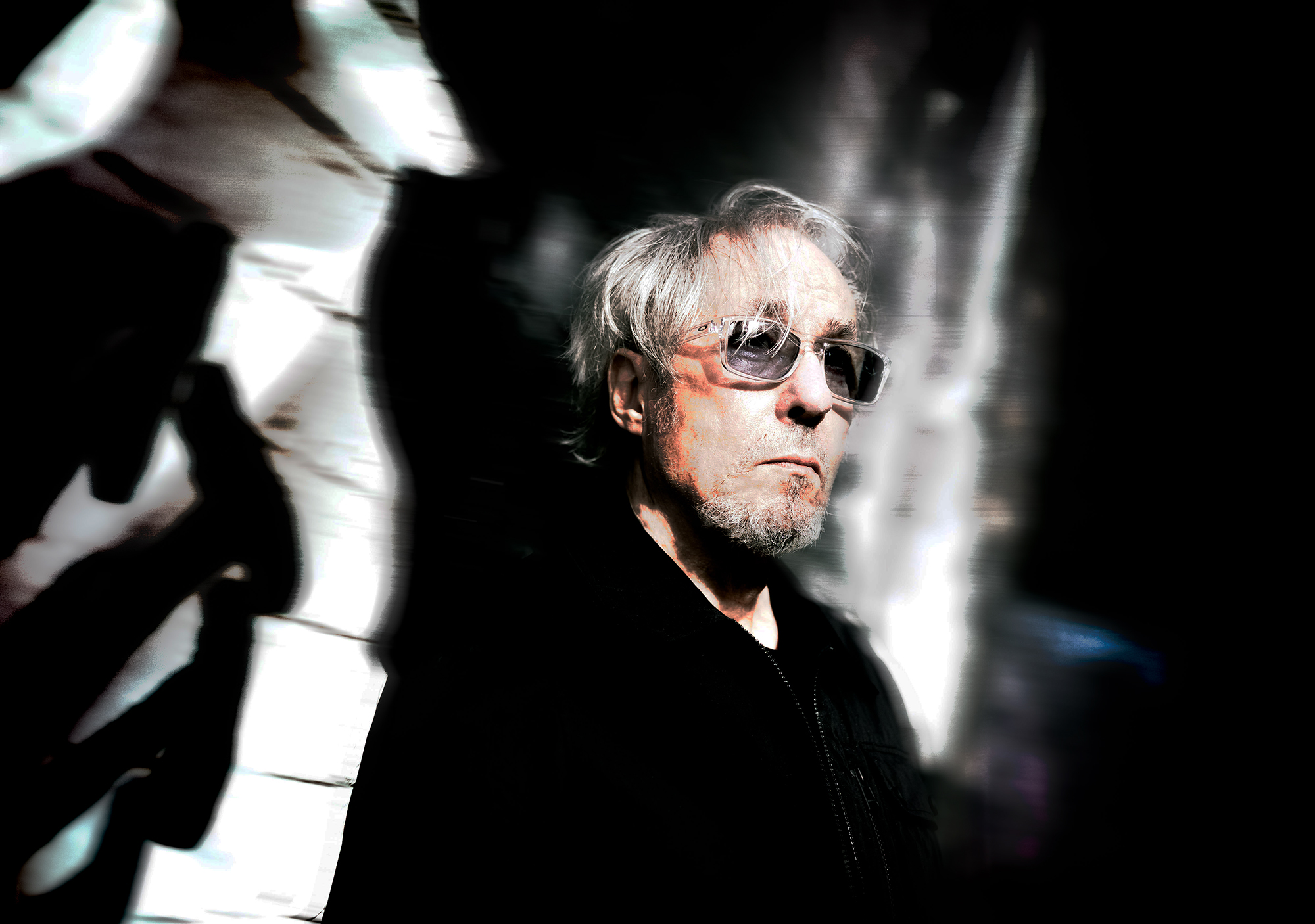 Photo: Martin BostockRichard Barbieri has spent nearly five decades redefining the role of keyboardist by transforming synthesizers into vehicles for drama, color, and cinematic depth. The British musician emerged in the late 1970s free of the era’s virtuoso proclivities and intent on shaping sound itself. Rather than treating keyboards as vehicles for solos, Barbieri built expansive sonic environments, including layers of tone and suggestion that could subtly shift the emotional weight of a song. Across the years, his work has threaded through post-punk, progressive music, and experimental pop, expanding the role of electronics within each setting.
Barbieri first gained international attention as a founding member of the influential British group Japan. Alongside guitarist Robert Dean, drummer Steve Jansen, bassist Mick Karn, and vocalist David Sylvian, he helped shift the band from glam-tinged beginnings toward a more adventurous and atmospheric sound. By the time of albums like Gentlemen Take Polaroids and Tin Drum, Japan had become one of the most distinctive acts of the early 1980s, blending synthesizers with elegant songwriting and global influences. Barbieri’s approach played a crucial role in shaping the band’s identity and influencing the era’s more exploratory pop music.
After Japan dissolved in 1982, Barbieri continued pursuing experimental collaborations with Jansen, Karn, and other forward-looking musicians. A major new chapter began in 1993 when he joined the progressive rock group Porcupine Tree. Over the next three decades, Barbieri became one of the defining voices of the band, adding immersive keyboard landscapes to albums such as In Absentia, Deadwing, Fear of a Blank Planet, and Closure/Continuation. His spectral electronics and finely-placed details contributed significantly to Porcupine Tree’s imagistic depth.
Barbieri has also built a distinctive solo catalog focused on space, nuance, and narrative. Releases such as Things Buried, Stranger Inside, and Planets + Persona reveal a composer fascinated with the possibilities of sound design. These recordings unfold like aural journeys rather than traditional song cycles, drawing on ambient, experimental electronics, and progressive composition while maintaining a strong sense of imagery.
That sensibility continues on his latest album, Hauntings. It pushes deeper into the panoramic instrumental language he’s been refining in recent years. Barbieri moves between memory and speculation, conjuring scenes that drift from lamp-lit Victorian London to faded glimpses of Belle Époque Paris while also glancing toward uneasy visions of an AI-driven future. It features guest performances from drummer Morgan Ågren, bassist Percy Jones, trumpet player Luca Calabrese, and vocalists Suzanne Barbieri, Lisen Rylander Löve, and Sophie Worthen. The result is an engaging meditation on memory, technology, and imagination.
Innerviews spoke to Barbieri via Zoom from his home studio in London.
Tell me where your head is at with the state of the world and how that influences the music you’re making these days.
It makes you feel guilty sometimes when you indulge in your own areas of interest, such as pursuing art. It’s also the kind of thing people say when they’re happy, and yeah, I’m very happy. But if you’re semi-intelligent and aware of what’s going on in the world, then you can’t really be happy, can you? So, it’s a contradiction.
On the other hand, this is what I do. I have to work outside of the state of the world and separate from it. So, I get involved in my own things that interest me and it’s selfish. However, I’m very aware you can’t really be happy with the way life is when you know everything else that’s going on.
Do you consider art and culture survival mechanisms?
They're good ones, absolutely. I think they're probably what people turn to. Even when society breaks down, I think art and culture remain communal things. They bring people together and you can go back centuries for proof. It’s how people communicate with each other. At its basest form, it’s something we can all tap into.
Hauntings emerged after a long journey of seeking, contemplating, and refining. Discuss the process of ideation and realization involved with it.
I’m always searching for that little spark that lights the flame and leads the way. Since the COVID-19 pandemic, I’ve been a lot more introspective and thinking about things. Also, this has to do with my age and the kind of career I’ve had. I look back a lot and try to make sense of things, and I do tend to internalize.
I realized I was quite obsessed with this nostalgic feeling I had for things, and not just for things that happened, but for things that didn’t happen. They would get into my dreams as recurring events, places, and characters. It got me thinking about reality and how much of it is real.
Also, in 20 years, if we’re all going to put on headsets and live our lives in a different, virtual world, is that also a kind of reality? So, the idea of a nostalgic look at things interested me and formed a little bit of the concept for the album.
There are certain tracks that are very much sound design-based and are representations of sound worlds of where I go in these dreams. They’re about things I relate to very strongly, even if I’m not aware that I actually ever experienced them. They also involve real memories and even a warped look into the future.
And it’s these experiences you refer to as hauntings?
Yes. Haunt is a great word that can be used in many different ways. Hauntings are like these thoughts that obsessively occupy my mind. They’re also places you go and visit, which was the case with some of my dreams that have very strong visual imagery. So, it’s not always meant in the basic sense of, “Oh, you’re being haunted by something.”
However, there is one track called “Victorian Wraith” which is a direct memory of when I used to see apparitions when I was a child. I’d see Victorian figures in my room. Of course, my parents would say “Well, you had a fever” or something. But I think children see quite a lot when they’re young when their brains aren’t fully developed to be told what’s real and what’s not, and how to act and how not to act.
The track is co-written with my wife Suzanne Barbieri, as well as Lisen Rylander Löve, and Sophie Worthen. I used three completely different vocal parts from them all and brought them together. They were recorded at different times and places. One was recorded in a church, another at home, and another outside. I processed them quite a lot, but like magic they all came together and formed chords and shapes. I didn’t really have to do much in terms of moving them around. They all combined into this thing I was after.
You faced many creative challenges along the way when making Hauntings. Explore the issues and how you overcame them.
I never worry about deadlines or making a career move when working on music. I don’t think, “I need to get an album out for my profile.” I’ve gone much longer without making albums than this, as many artists do. Music is something that can’t be forced.
So, I would keep writing and trying ideas along the way, but it wasn’t something I was panicking about. If I was never going to make another album again, it wouldn’t particularly worry me. I could accept that.
It’s hard to describe when things don’t work. You’re doing things for the wrong reasons in a way. You can get too conscious of the process and too knowing about what you’re doing. Sometimes, you end up with a very musical theory-based thing. Your mind gets focused on these stupid thoughts and in the end, you realize your mind is just too occupied.
When music really comes to you is when you empty your mind. I know that’s what so many people say. I wouldn’t dare to compare myself to Bob Dylan or Paul McCartney, but they say the same thing. They ask “Where did that come from? I don’t know. It’s a magic thing that came from somewhere and it came through me.” And it’s the same for me.
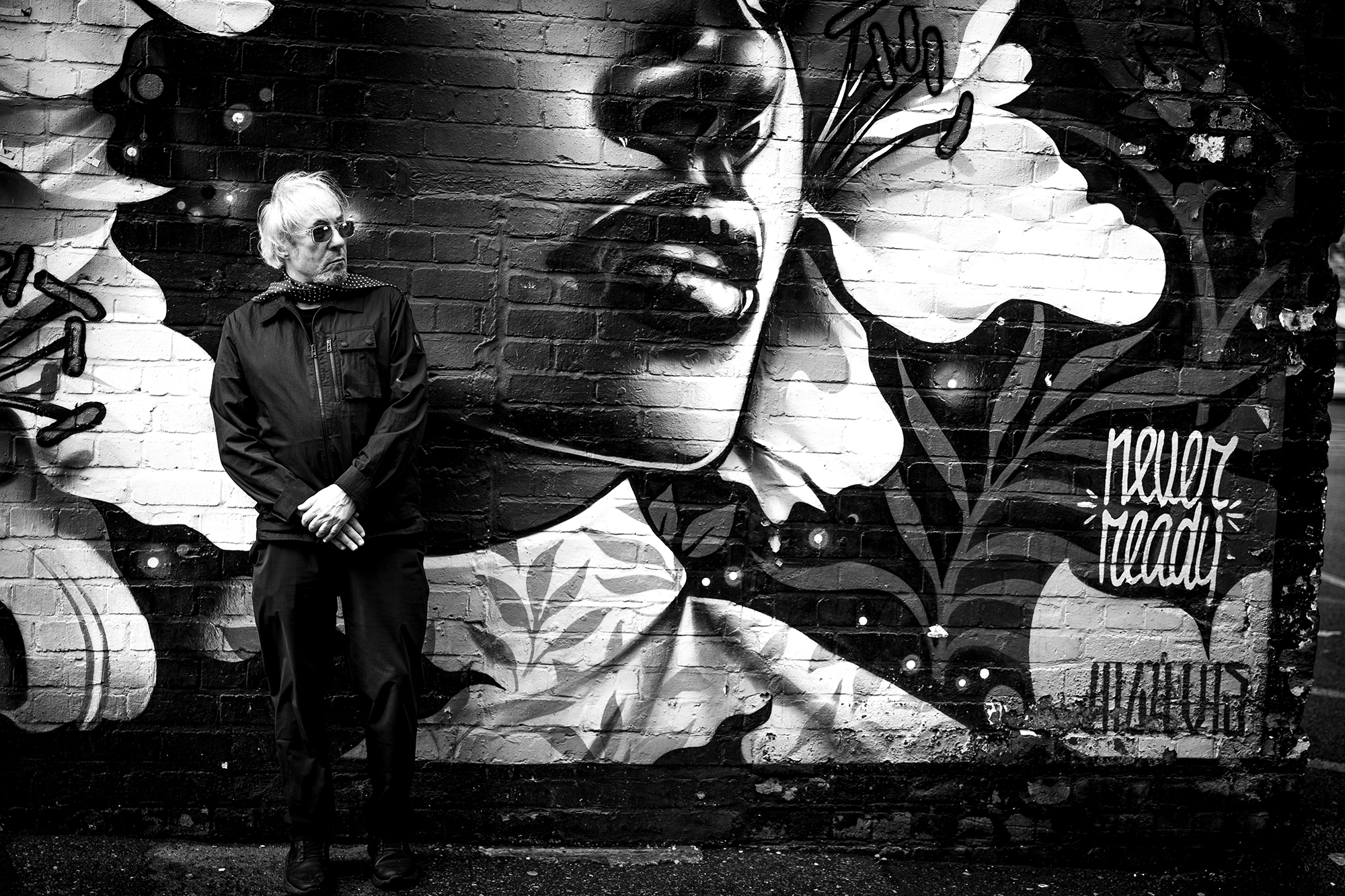 Photo: Martin Bostock
How do you get past writer’s block or self-doubt?
Sometimes it can be something quite physical or simple, like having a new piece of equipment. It can be a challenge to figure out how it works. I did a lot of that with this album. There are some new instruments on the record that I hadn’t previously done much with. They all work in different ways compared to what I’m used to.
Historically, I’ve worked with what’s called subtractive synthesis. There are certain synthesizers that follow that signal path, but there are many other ways of doing things with new technology. That sounds cold and calculating, but it does bring new sounds into your world and makes you work slightly differently.
Emptying your mind as I mentioned is also important. Sometimes, you’re in a daydream and not too conscious of what’s going on. And then you’ve forgotten what’s going on in the world and what you’re supposed to do later on in the day. So, you just start doodling around and something happens.
It’s knowing when you’ve reached that combination of sounds that gets you where you wanted to go. Somehow, you’ve musically interpreted the visuals that are in your mind. It’s usually one or two sounds or a combination of them.
There’s a track on the new album called “1890” and the start of it was the inspiration I got from an original recording of the chimes of Big Ben in London from 1890. It was first recorded on wax cylinders. I combined those sounds with old radio broadcasts and the recording of a thunderstorm I had. Suddenly, the piece started to take shape, and it was starting to feel like the Victorian London I go back to in my dreams. I added some sound design elements, and it evolved.
So, that’s how things start. A couple of sounds. A couple of ideas. And some samples that just hit the nail on the head.
Tell me about some of the new instruments you find exciting.
I have a Solar 42 Ambient Machine Drone synthesizer. It’s like a living, breathing thing in that it has pickups. So, you can actually play the machine, and it picks up the ambient sound, which you then synthesize. It’s also light sensitive, so any changes in room lighting or natural lighting from outside affects the way the synthesizer works. You have four drone sections, which each have five oscillators, so you’ve got 20 voices. You can imagine the clustered chords you can put together. You can also play these via buttons or use them as drones in the background. In addition, it has an unconventional touch keyboard which can be scaled however you want. You can create your own or go through the Lydian and Dorian scales.
The Solar 42 has an effect system that’s run from little cards you insert. You can import sound into it as well. You have two kinds of effectors on either side which create very odd frequency modulation effects. You also have a five-step sequencer, and the keyboard lets you arpeggiate. You can have another sequencer run within it as well.
With a five-step sequencer, you can create quite interesting polyrhythms. You can be playing a melody, have an arpeggiator going, have two sequencers running, and have drones going, all while you’re also recording the environment. It’s quite a thing.
Another one is the Nonlinear Labs C15 polysynthesizer. Nonlinear Labs is a German company in Berlin. The synthesizer works from just two sine waves. That’s the only source. But it produces variations in sound that you can build from textures that I haven’t really heard before. It’s quite interesting. It also has a feedback section in which you can bring back everything you’ve done through filters and then have it come out again. I’m still getting my head around it.
I’m a bit of a nerd. I like to keep up to date on things. There are some people I trust and like their recommendations. So, I always look out for how they review new gear. It’s like the old days when people used to look for what journalists say about an album, and then you think, “All right, I might listen to that, then.”
I’ve stopped doing sponsorships and endorsements. They’re a pain. It’s easier to pay for the thing and then not have to have any dealings with the manufacturer or write sounds for them and do this and that. It always ends up being an unequal partnership.
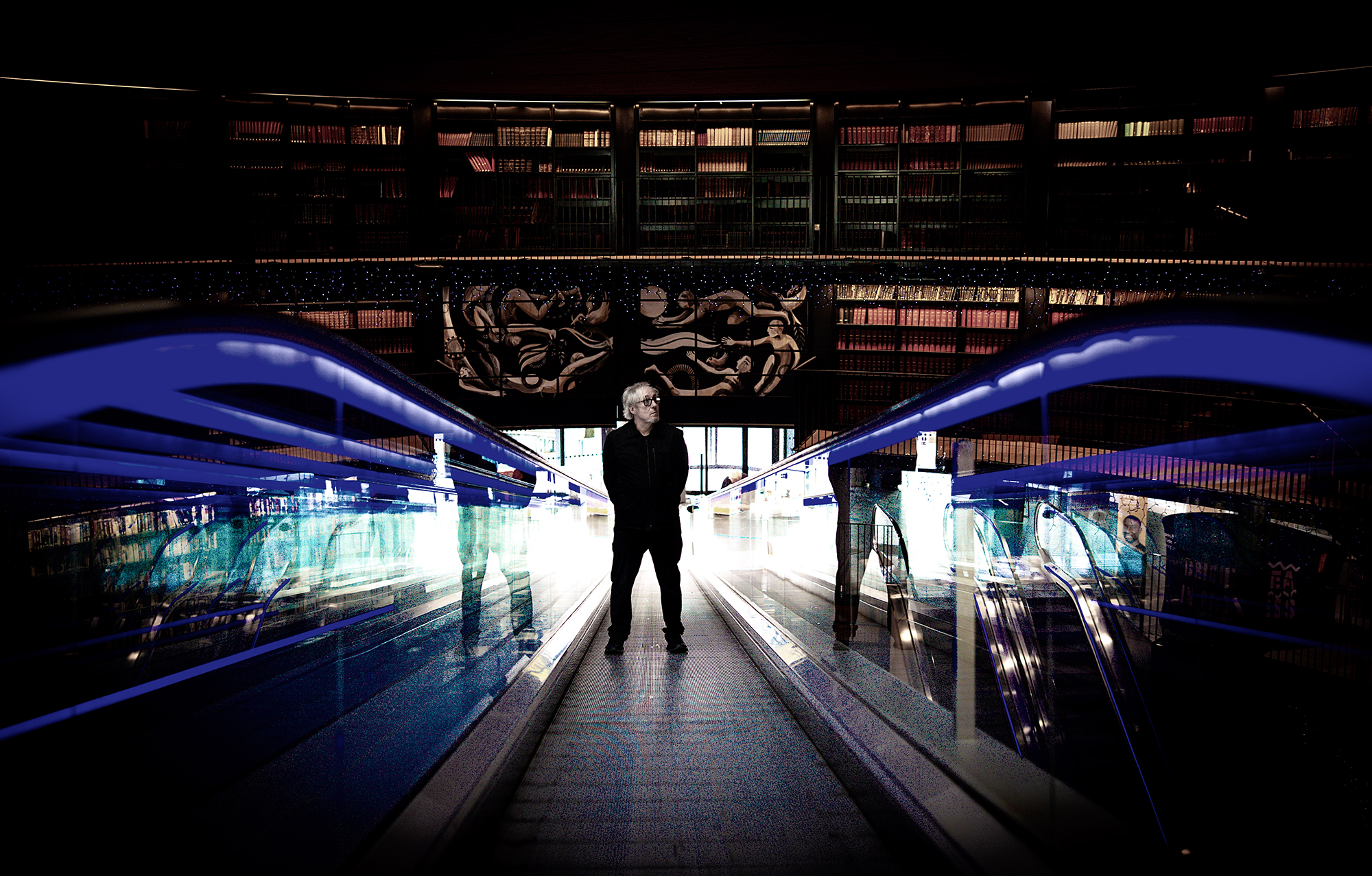 Photo: Martin Bostock
Let’s go through a few more key tracks from the album and get your thoughts on them. “Snakes & Ladders” is a mercurial journey, with Percy Jones’ bass up front. Discuss putting that together.
That didn’t come from any particular concept but was just a very musical thing. I liked the idea that it had an opening theme feel with a filmic quality. Percy enhanced it so much with harmonics, chords, and melodies. He follows my melodies at certain points. As the track was developing, there were a lot of crescendos, and rises and falls. Something would build up, build up, and then there would be a crash. At that point, Percy would hit this huge harmonic, and everything would tumble down and fall.
The image I had was of a snakes and ladders board in which you climb ladders and then fall down the snake. So, it was very much a visual thing. It also has the idea of time slips and time travel thrown in, in which you get these big changes and you’re suddenly somewhere else. Those followed the musicality of the track.
The title “Anemoia” refers to the idea of bittersweet nostalgia for a time, place, or era you never experienced. Tell me what you’re communicating on that track and how the music reflects it.
There’s this fantastic book called The Dictionary of Obscure Sorrows by John Koenig. He started inventing words for things that didn’t have words associated with them. Anemoia is an example of one of the words he created. And now it’s accepted as a definition.
What started the track is I had a sample of a woman laughing within these children’s voices. I had a chord progression that I put behind it, and it brought back this idea I have of nostalgia for a sunny ‘80s day being in the park with the sun shining. It’s almost like there’s a family there. I think, in a way, it’s maybe the family and children I never had that I’m in part feeling nostalgic about.
I feel nostalgic when I listen to “Penny Lane” by The Beatles. I don’t know anything about Penny Lane. It means nothing to me. But for some reason, it makes me feel nostalgic in the same way that watching an old Hollywood film does. We just feel that was a time that meant something and you don’t know where that feeling comes from.
The combination of chords, voices, and a mild drum and bass part I programmed, contribute to that. But I wanted real drums on it. Morgan Ågren was someone who was on my radar for a long time. He has more of a jazz background, but I liked the way he experimented with electronic music. So, I thought his sensibility would be really good for this track. And it was a nice combination.
“1890” and “Paris Sketch” are among the most experimental pieces on the record. Describe the territories they explore, and the ideas manifested within them.
As we discussed earlier, “1890” was trying to create a sound world to replicate the feeling of where I go in one of my recurring dreams. It’s not scary, but very dark and grainy, and I know that I’m near the River Thames and the Houses of Parliament are there. In addition to the chimes of Big Ben and the radio recordings from the turn of the century, you’ll hear musical boxes and trinkets. I don't think there's anything actually musical within it as such. It just places you somewhere and that for me worked really well.
“Paris Sketch” captures my impressions of when I first went to Paris. It was a really big deal for me. I used to read a lot of the classics by Émile Zola and Honoré de Balzac. I loved that 19th Century Parisian thing. But I love the French films and art of the ‘60s and ‘70s as well. So, this track represents a longing to visit Paris. It’s almost like a travelogue of flying through streets and different times, going from the ‘70s back the 1900s and then back the ‘60s, with a Super 8 film feeling. That’s what was going through my mind. I was trying to write a film score to what I was thinking about.
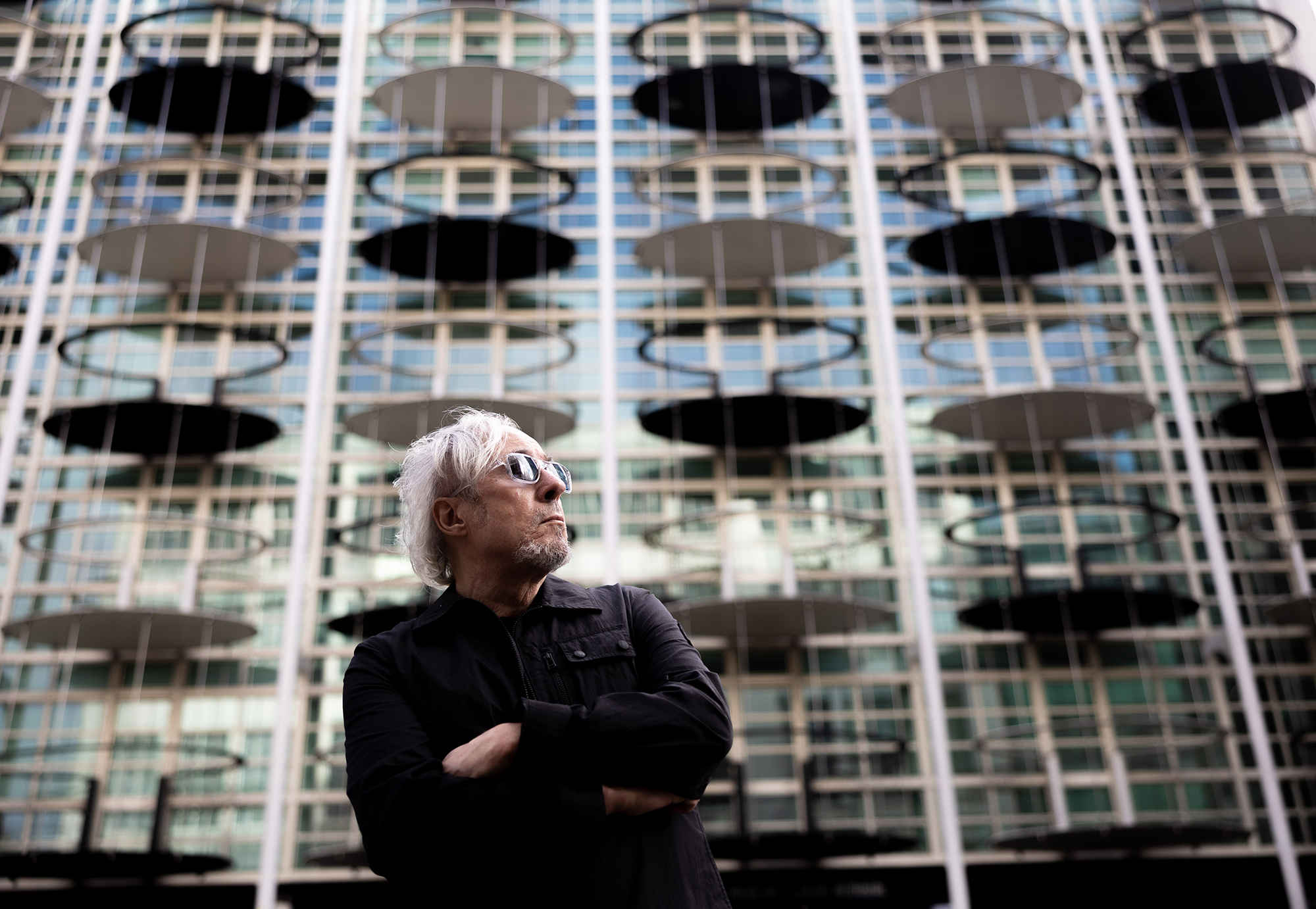 Photo: Martin Bostock
“Artificial Obsession” involves an intriguing narrative and vocal approach. Tell me about that one.
There’s a website I go to called Freesound where you can listen to samples people have made. I’ve always been interested in spoken word. On Freesound, I came across a girl who made little poems and I used her voice on a few things. There was something about having a voice on it that cut through really nicely. Previously, I tended to use sampled voices in quite a sympathetic way, but for this, I distorted it to be quite dark and sinister. In fact, it’s for a very twee, naïve love poem. But when I started to slow down the voice, it had this Twin Peaks sound. I started to process it, and it sounded like a very clingy, obsessive AI girlfriend.
I’m imagining this in the future in 2060, where there’s an AI robot that was made in 2030 that’s just wandering around a derelict house, because it’s defunct. She’s obsolete. The world’s moved on. She’s just wandering around reciting these love platitudes. It just took on an eerie feeling, which I liked. It’s a dystopian future thing.
Does “A New Simulation” thematically connect to that track?
Yes. I think it’s worth exploring whether or not we live in a simulation. Using AI, there will be worlds that we can create. We’ll be able to create our own day without going outside from 9am until 9pm and you’ll be able to say, “This is my life.” You could be anywhere you want and see anything you want.
Obviously, it's a simulation, but you’re living in that world. And the more you live there and less in the real world, you can ask yourself whether one is more valid than the other. It’s a bit like The Matrix, but it’s a universal theme that I think a lot of people are focusing on these days. Everything we see is just particles. It’s not really what we’re seeing. We’re seeing what we believe we’re seeing. But if you break everything down, everything is just atoms and particles.
“Traveler” is emblematic of the rhythm feel that’s prevalent on a lot of your solo music. Reflect on the making of that piece and how it showcases the unique kinetic feel you like to bring to some of your pieces.
I think this has a lot of the traits that I have and a lot of the processes I’ve used on past albums. It’s very groove-oriented and has quite unusual bass lines. It has slightly Afro-like sections. I’m very influenced by what Talking Heads did on Remain in Light and with Brian Eno in terms of Afro rhythms that come and go. And it also takes you into a little bit of an Arabic scale in the middle and then goes somewhere else.
The idea was that it was like H. G. Wells’ The Time Machine. In the original ‘50s movie, they’re spinning through time and it keeps dropping them in places. Then they move the machine and they’ve gone somewhere else. So, this track has the sort of thing where you’re suddenly in another section and it feels very different. One part is kind of Eastern, one has a quiet Afro groove, and then it goes very electronic. It’s shifting or falling into all of these little time slips.
There’s an Arabic influence running through your work from Japan through Jansen Barbieri Karn and into your solo work. Where did that interest originate?
It goes back to Japan’s Quiet Life. We were very influenced by world music, especially Mick Karn, Steve Jansen, and I. You can hear it in our music. Mick growing up in Cyprus meant he heard a lot of world music-influenced pop songs, a lot of Turkish music, and Arabic scales. They always fascinated me, too and it has always stayed with me.
It’s also inherent in a lot of artists who I like. I already mentioned Brian Eno and Talking Heads. Joe Zawinul was one of my favorite keyboard players because of the way he played the sounds. It was always very appropriate for the sounds he chose. Great stuff. There’s a lot of world music influence in his work.
 Photo: Martin Bostock
Expand on how you use samples from Freesound under Creative Commons licenses in your work.
You can go to Freesound and search for anything. You might be after a musical box, sleigh bells, orchestral drones, or spoken voice. Occasionally, I pick out samples that I think have an essence I’m interested in. I love using samples and putting them in a new context.
The procedure is that you might credit the people they come from, even when they don’t ask for payment. If the sample becomes important to the track, that becomes a co-write as far as I’m concerned. For instance, like when I used Sophie Worthen’s voice. I just put the money in her account. If it’s just a little note or something I sample, I’ll provide a reference to where you can find that sample.
The album was mixed in binaural and Atmos formats. Describe the processes involved in creating them.
The binaural mix isn’t part of the initial release but may be available at a later point. It was made for me by the mixing engineer so I could initially get an idea of what he was going to do for surround. It’s very different from stereo, because you’re hearing things above and below your head. I think binaural is the best listening experience you can have with this album.
The Atmos mix is also great. I felt nine out of its 11 tracks completely translated into surround. Two of them didn’t because they only worked as stereo. Taking them apart slightly weakens what was there originally. But having said that, considering I didn’t make it with surround in mind to start with, that’s a pretty good success rate.
You used Bill Smith for the album art, as you’ve done on many of your releases over the decades. What is it about his approach that appeals to you?
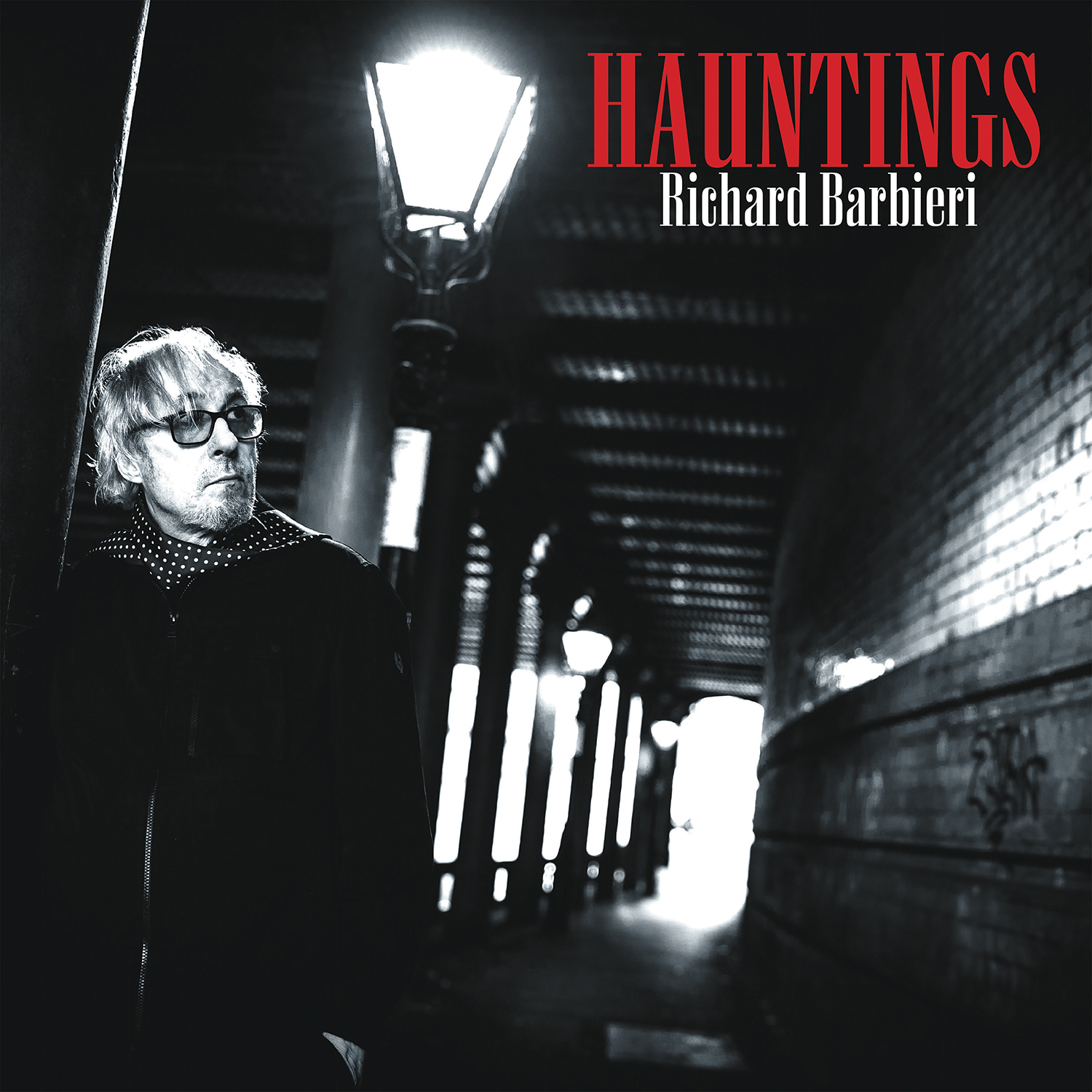
He’s quite old school and is used to working with vinyl. His strength is coming up with a bigger picture. He puts everything together in a way I really like. The way Bill places things, how he sizes them, and the scope, all came together very well. He turned the package into a film noir thing. The cover feels like a movie poster. I also wanted a bit of a feel of Blue Note jazz in the album look as well, with the in-your-face title thing. But it also has more of a moody vibe.
It’s the first time I’ve put myself on the cover. Since it’s a very introspective and personal album, I thought it was a good idea.
Martin Bostock, who did the photos, also did a great job. I enjoy doing sessions with him. We found some good locations to shoot in.
You’re highly critical of the current incarnation of the music industry. What are your thoughts on the environment you’re releasing this album into?
I had the same conversation as before with the record label about streaming. I always say, “Let Spotify have three tracks. Make it a little EP and give it a title similar to the album.” So, it’s called Haunted for Spotify, who are crooks.
Having said that, there are companies like Tidal and Apple Music where I can get $0.01 per stream, which I’m quite happy with. Spotify is more like $0.003. I can’t give my album to those sorts of people. When you get $0.01 or above for a stream, you can be rewarded well enough if people are listening to your music on a constant basis.
My label Kscope said, “We hear you loud and clear.” My arrangement with them is that I license them my albums. They are theirs to exploit for seven years. After that, the rights come back to me. So, the ownership is always mine and they have to ask me about certain things.
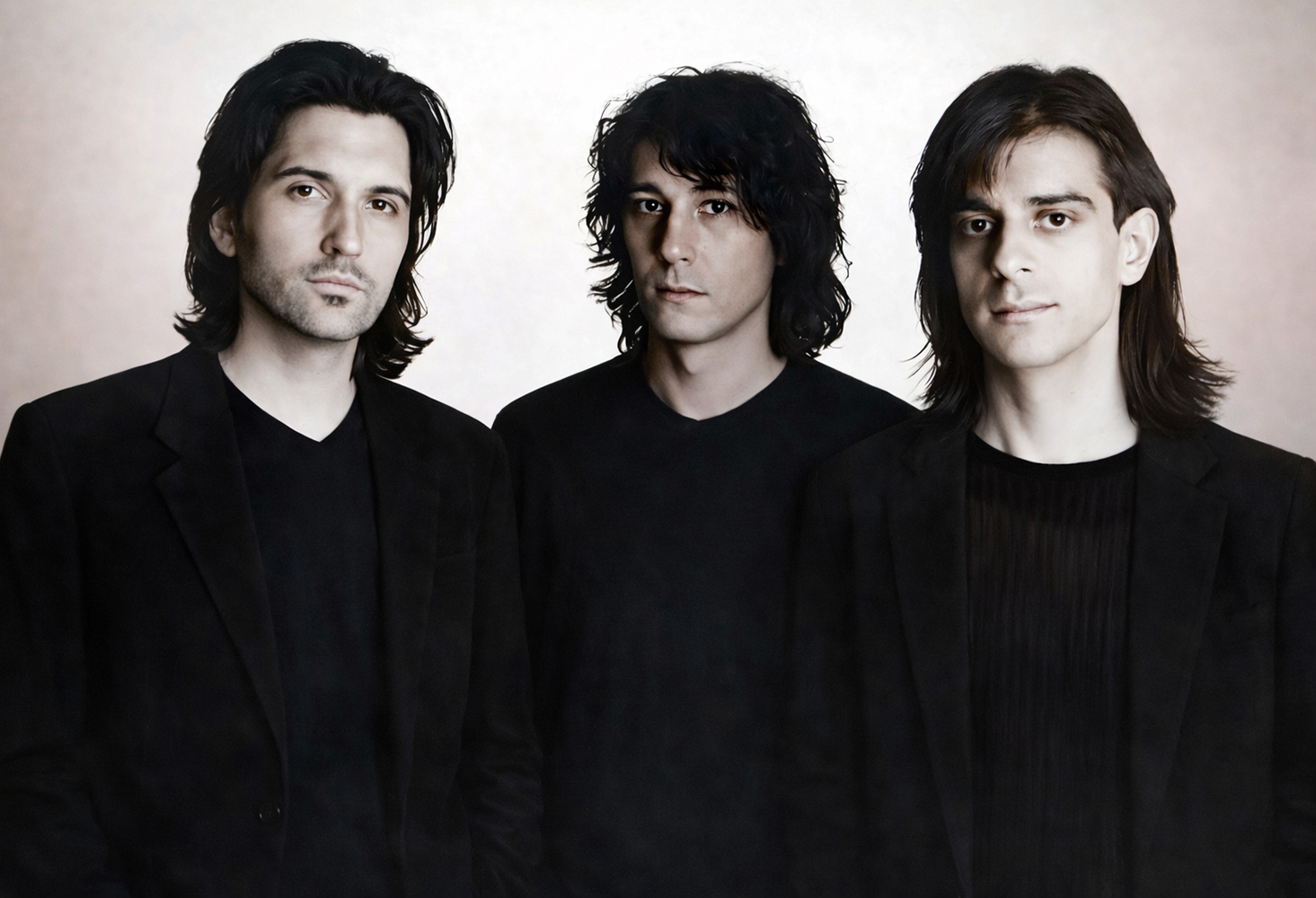 Jansen Barbieri Karn, 1999 | Photo: Medium Productions
In 2022, you released a previously-unheard Jansen Barbieri Karn track called “Others Don’t Exist.” Tell me about that track and if there are any other archival surprises you’re considering.
That was one of the tracks that didn't make it onto the 1999 Ism album that we did. We've all got tracks in certain states of completion from the very beginning, including demos. Every so often, we review what we've got and listen to things. I hadn’t heard that for ages and felt maybe it could work well. It was one of those things that both Steve Jansen and I thought would be good.
There isn't that much else to be honest, but we are quite interested in trying to go back and reissue things that were never released on vinyl. It involves other record labels, so it's a bit of a pain. And also, where multitracks can be located, it will be really nice to do some surround releases as well.
Is there anything in particular that you're considering for surround treatment?
There’s the first Jansen/Barbieri ambient album from 1985 called Worlds In A Small Room that we’re interested in. We’ve approached the record label about this, and we believe they have the multitracks. We recorded it all in Tokyo and I think JVC would have kept them in good condition, unlike the master tapes owned by Virgin in the UK.
If the multitracks are available for Japan’s Quiet Life or Gentlemen Take Polaroids, I’d love to do those as well. They’re quite textural and dense in a way. It would be lovely to hear those things separated out, but that would involve a lot more band politics, so it may not be feasible.
What happened to the master tapes Virgin had in the UK?
Supposedly, Japan’s Tin Drum tapes don’t exist anymore. Virgin stored all their tapes under a canal in a basement. As you would presume, at some point Virgin had a flood and a lot of the tapes were damaged. So, we can’t really do anything about that. Who knows whether they have all the Gentlemen Take Polaroids tapes? I don’t.
But I think you’ve got to keep pushing for quality releases. I like the idea of what Steven Wilson is doing with his Headphone Dust store, where you can buy high-quality recordings and Dolby Atmos mixes. Now, people have amazing gear and are into hearing music that way and I think that’s great. I think it’s the way to go.
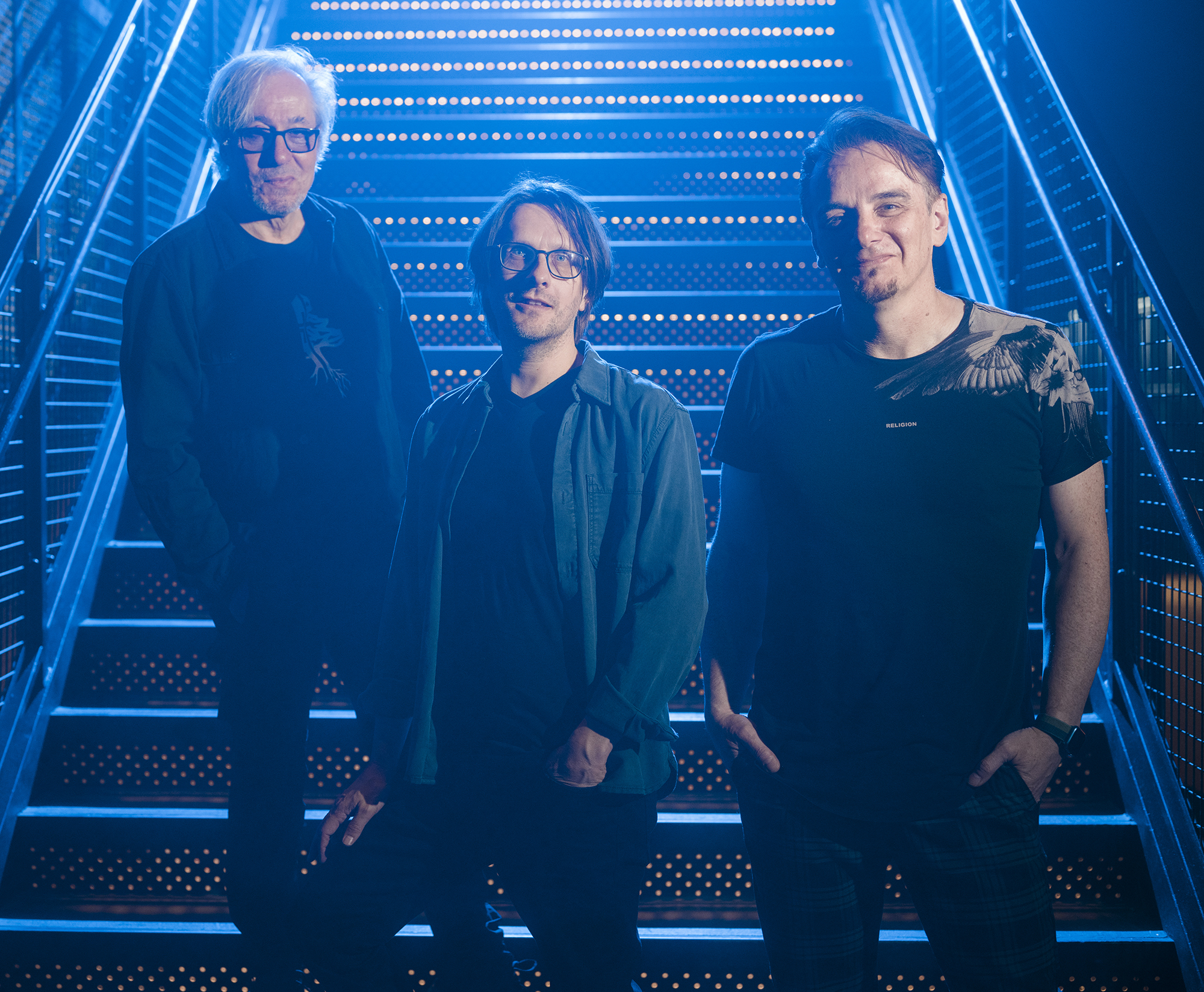 Porcupine Tree, 2022: Richard Barbieri, Steven Wilson, and Gavin Harrison | Photo: Joe del Tufo
How do you look back at the 2022 Porcupine Tree Closure/Continuation album and tour cycle?
I absolutely loved it. It was probably the best time I’ve had in the music industry. That and the recording of the Quiet Life album are probably my two happiest times.
We didn't see that much of each other on the tour, but when we did, it was because we wanted to and it was just so nice. It was so comfortable.
The moment we did the first show in Toronto, we had a standing ovation before we even played a note. And that set the whole tone for the tour. There was such enthusiasm for the group.
I was also happy that we made a really good album, compared to like The Incident, which was hanging around as the last album that Porcupine Tree had made. So, I was really glad that we got that out there and that it was different.
I'm also happy about the way Steven now sees the band because his solo career is so developed and so far along the line now that when he comes back to Porcupine Tree, he just says, “Let's write it together. Let's make all the decisions together.” And that’s because he's finally reached a point of satisfaction with his own solo career, which is great. He can finally find the dividing line there. So, it's just way more pleasant.
In addition, I'm a more pleasant person than I was on those last tours with the band. I've managed to gain the confidence back from Gavin Harrison and Steven in me as a friend. That's a really nice feeling. So, it worked on so many levels. In the end, we got to do the tour in complete luxury, and we got to make a lot of money as well. Fantastic.
What does the future hold for the band?
In terms of recording, we've had three or four sessions together where we've all brought ideas in and they've gone well. We're trying to find a different sound. We're trying to make something that is very different. It's quite interesting. We've all come away from those sessions thinking, “I like what we did today.” We also say, “How far can we push the limits of the band while still retaining something of the DNA of what it is?”
There's something that happens when we get together. And it's very short and it's very intense. But it seems to be working. It’s very sporadic at the moment because we've all been busy with other things. But I think we'd all like to make another album. I don't know about touring. We'd have to see.
We’ve got quite a long way ahead with the album. And then Steven decided to make another solo album. And now I've done mine. Promotion will take another few months. So, given that you've got to think a year ahead at least for an album like this, we’re thinking 2027 might be a possibility. We’ll see how it goes, assuming I’m still alive.
Does the tide of mortality hit you frequently?
Well, I’m very aware I’m in the home stretch. Sometimes, I don’t realize how close I am to the end. I’ll think, “In six years, I think I’ll do this.” But I can’t really think that far ahead. I’m turning 69 this year. It’s not something that occupies my thoughts a lot or anything I’m particularly bothered about. I think the main thing is we leave the world in a nice enough condition for Keith Richards. [laughs]
What other future projects are you thinking about?
I’d like to do another Variants-style project. It was enjoyable because there were no timelines or deadlines. It just progressed along. I liked the format of five tracks per EP. The idea this time is that every track will be a collaboration and there will be 25 of them in the set. They will be different types of collaborations across different genres. It will also get me back to working with other people, which is always enjoyable. So, that’s what I’m looking at for some time in the future and it’s something that can run parallel alongside other things.
What motivates you as a creative entity to keep moving forward?
As I described, it doesn’t happen often, but when suddenly things align and you feel inspired, you feel you need to do this. It would be wrong not to do it. It’s never taken for granted and it may never happen again. I’ve had a long enough career that I know there are times when a spark will happen and ideas will come. And then I’ll suddenly really enjoy what I’m doing and make something.
When I’ve made that thing, it goes out in the world, people all over the planet get to hear it, and they come back with comments. The music means different things to different people. Some people will tell me they listen to it all the time. Others say it got them through a time when they lost their partner. Another person might say “We go down to the beach at night and play it.” You realize that it’s the afterlife of what you leave behind, surely. Your music is part of people’s hearts and minds, and it carries on. For how long, we don’t know. But somehow, you’ve left your mark and that to me is the motivation.
Watch the video podcast version of the interview: