
Donate to Innerviews
Since 1994, Innerviews has provided uncompromising, in-depth interviews with musicians across every genre imaginable. And it does that with no trackers, cookies, clickbait, or advertising.
Your donations are welcome to help continue its mission of highlighting incredible music and artists, without any commercial considerations.
Your contributions will be instantly transformed into stories and videos, and cover hosting and web management costs. Importantly, your dollars will help ensure Innerviews remains absolutely free to all visitors, independent of their ability to financially support it.
Please consider making a donation today by using the PayPal QR code below.

Roger Klug
Bolts From the Blue
by Anil Prasad
Copyright © 2026 Anil Prasad.
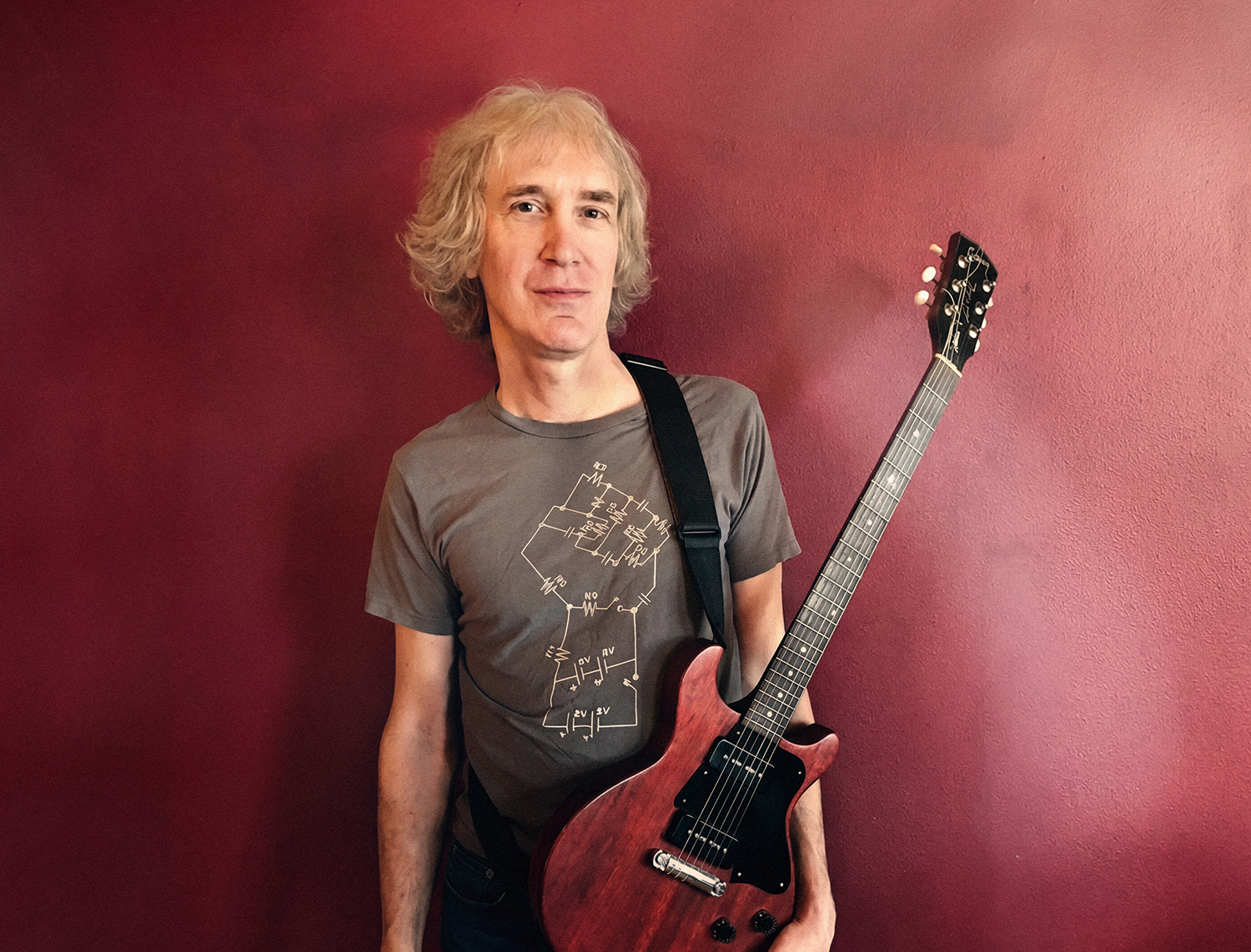 Photo: Roger Klug CollectionRoger Klug is a singular presence in Cincinnati’s musical landscape, whose sharp pop craftsmanship combines with a restless, shape-shifting creative instinct. He’s a multi-instrumentalist, songwriter, and producer with a flair for the unexpected, and has built a body of work that morphs seamlessly between tightly-structured melodies, mercurial rock territory, and playful, sometimes conceptual experimentation.
Klug is best known for his work in The Roger Klug Power Trio, a group that distills his songwriting into its most immediate and kinetic form. The band, which features drummer Mike Tittel and bassist Greg Tudor, emphasizes interplay and spontaneity, often propelling songs far beyond their recorded counterparts. The band’s new Live! Off the Board album captures that ethos. As the title implies, it’s an unvarnished performance that showcases the band’s deep chemistry and intuition, raucous energy, and ability to turn on a dime.
Klug’s studio recordings chart a trajectory of constant evolution. His 1995 debut, Mama, Mama, Ich bin in dem La La Land, introduced a distinctive voice grounded in addictive pop structures infused with raw energy and engaging production flourishes. His next release, 1997’s Toxic and 15 Other Love Songs, expanded the scale and ambition of his songwriting and production prowess in its exploration of the complexity of modern relationships.
His third effort, 1999’s Where Has the Music Gone? The Lost Recordings of Clem Comstock, ventured into concept territory, framing its material as a recovered ‘60s archive from a fictional producer. And 2009’s More Help For Your Nerves offers humorous, hard-hitting songs that reflect both personal and societal strife and progression.
Prior to those discs, Klug was in a rock duo called The Willies, which established a foothold in the 1990s with stripped-down, high-energy shows and recordings.
He’s also developed an entertaining body of comedic work on YouTube. Of particular note is a fictional documentary titled The Amazing Story of Roger Von Shredder, about a guitarist who wakes up from a 25-year-long coma and has to face the reality of a world that’s left his sensibilities behind. My Recording Session With Queen documents another imagined scenario in which Klug is trying to produce Queen’s “Bohemian Rhapsody” with increasingly intriguing results. They’re playful, self-aware, and often shriekingly hilarious.
Another notable chapter in Klug’s career is his collaboration with singer and actress Mia Gentile on The Stanley Steemer Variations. The project transformed the ubiquitous advertising jingle into a rapid-fire sequence of multi-genre explorations, including punk, cabaret, heavy metal, and new wave. The video went viral and resulted in global media coverage.
Alongside his creative output, Klug serves as a professor at the University of Cincinnati’s College‑Conservatory of Music (CCM), where he mentors the next generation of musicians. In that capacity, he brings his wide‑ranging experience—from songwriting and recording to performance and production—into the classroom, helping students build compositional and technical skills while encouraging inventive thinking.
Innerviews met Klug at Cincinnati’s Red Tree Art Gallery for this in-depth conversation. Surrounded by colorful, abstract works by local visual artists, Klug explored his story and perspectives with effervescent youthful energy.
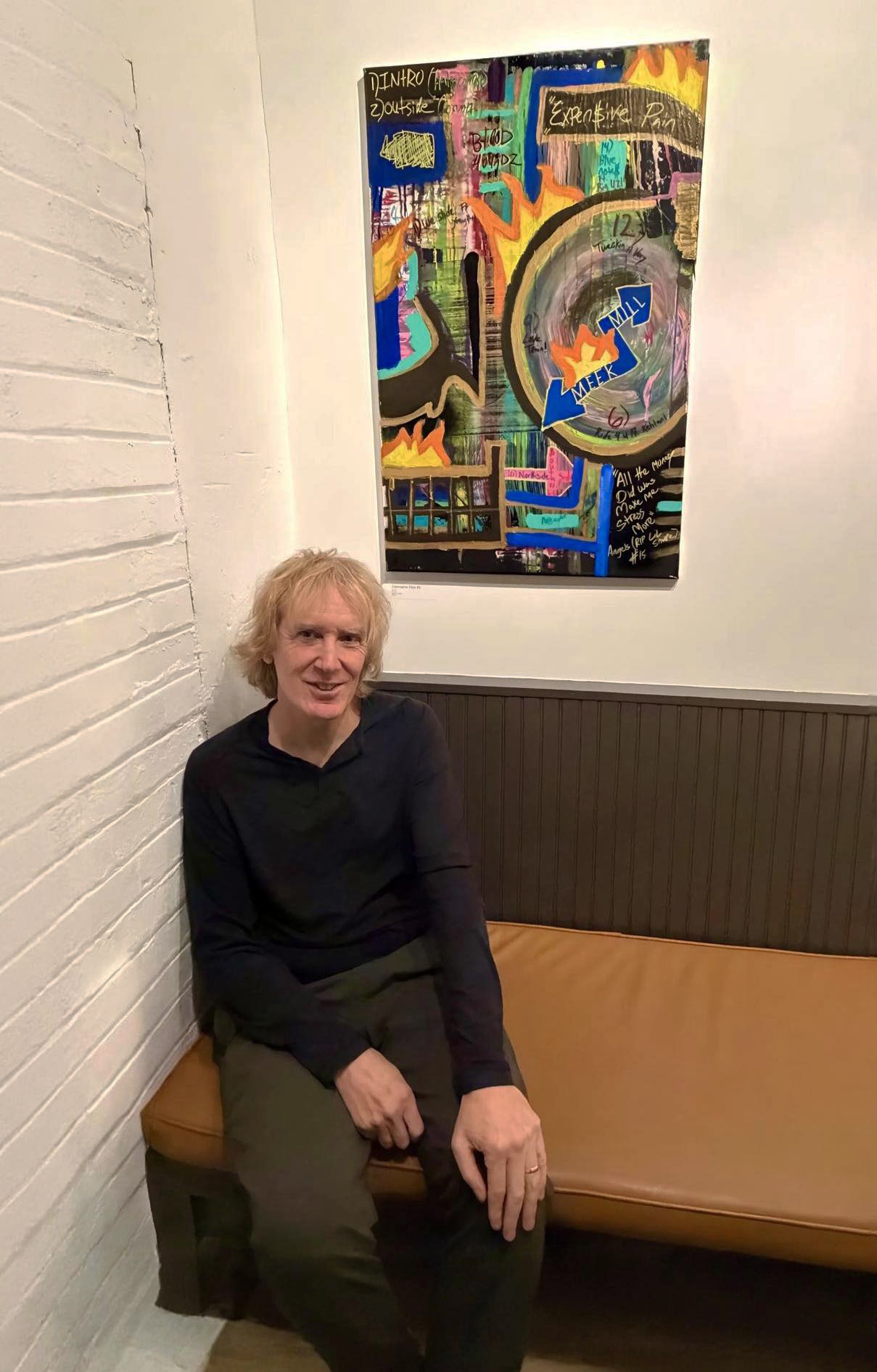 Roger Klug at Red Tree Art Gallery, Cincinnati, OH | Photo: Anil Prasad
What’s your perspective on the value of music and the arts during this period of societal unrest and upheaval?
Well, I’m still driven to make music and that speaks volumes. There are plenty of reasons to not feel that way, and AI is one of them. I was down in the dumps about AI for a while, but now I’m weirdly optimistic again about being creative and having right-brained ideas to stay ahead of the AI curve. I want to keep things messy and unpredictable.
One of my students once said, “All AI can do is take ideas humans already had and rearrange them.” I responded, “Yeah, like human beings do, right?” [laughs]
When I think about musicians, we’re really a mix of our influences, but there’s something added to that equation which you can’t put your finger on, which is our personality or essence. I feel that’s where the humanistic element comes from. So, I think music and art are what will keep us human and help us hold onto our humanity.
In terms of music playing a role in politics, it’s very much a “show me, don’t tell me" situation. The fact that we’re playing music on a stage and gathered together is a statement in and of itself. My lyrics aren’t overtly political, but they can be ironically political.
I think if you’re delivering goodness or artistry, you don’t necessarily have to get in the weeds with politics. I’m not trying to skirt the question, because I believe if something’s wrong, that you should call it out.
The Roger Klug Power Trio has reemerged after a long absence. Discuss the hiatus and the decision to return to the live performance fold.
None of it was planned. It was either about falling down the stairs or bumping into things.
The power trio has always had a branding problem. It began as a way to play my music live. So, we never had a record released under the name. It was always a case of, “Here, I made this record. Let’s learn these songs.”
Mike Tittel and I have known each other for donkey’s years and somehow have the same weird interests and sensibilities. That extends to when we play live, whether it’s in an acoustic or electric context. There would always be a question of, “How do we advertise this show?” For the electric shows, it became the Roger Klug Power Trio.
We did five years of really great live shows, playing clubs and festivals across the Midwest. And then we felt we had to make an album together. The idea was “Let’s get together at Mike’s house and record some jams like The Who used to do, instead of me doing my one-man band thing.” And that turned out to be an abysmal failure, because we’re not a jam band. We did a couple of weekends of those jams but only got one song out of them.
In the meantime, I was making all these funny videos using my Rant to Save Yourself post-modern post-power-pop, post-band alter ego on YouTube. And Rant to Save Yourself is actually the Roger Klug Power Trio, but it’s not. [laughs] It’s the same three guys. So, there’s another branding problem.
And then the COVID-19 pandemic hit. That became an excuse to not do the band for a while and we all missed it. But sometimes when you really miss something, you can be in denial about it. I was doing some long-distance collaborations with other people, Mike was doing New Sincerity Works, and people would ask “What’s happening with the trio? When are you playing?”
Eventually, we did a charity concert at Mike’s Music, a music store in Cincinnati, in January 2025. We also performed three Bob Dylan songs as a benefit for Cincinnati Children's Hospital. We got an amazing ovation afterwards and felt, “Wow, we’ve still got it, boys.” And that’s when we decided to become active again, except, of course, we sat on our asses for another six months before it actually happened. [laughs]
During those six months, I stumbled upon a live off-the-board recording of the power trio I had discarded 10 years ago. I was somehow compelled to listen to it again, and I was surprised to hear that it was a really great artifact. It was a real gift. It really showed how we can turn on a dime and expand the framework of a pop song. It was also the sound of a band really making things happen live, not within the context of the music industry, in which everyone’s got the same plugins and are working on the same platform. We just put that out as Live! Off the Board.
So, we’ve come full circle and we’re back. I’m sitting on a lot of material that hasn’t been released in official form yet. Mike plays drums on some of it. The songs were either conceived for the Roger Klug Power Trio or Rant to Save Yourself. But I think we’re going to fix the branding problem and sometime this year or next, consider releasing two records under the band name.
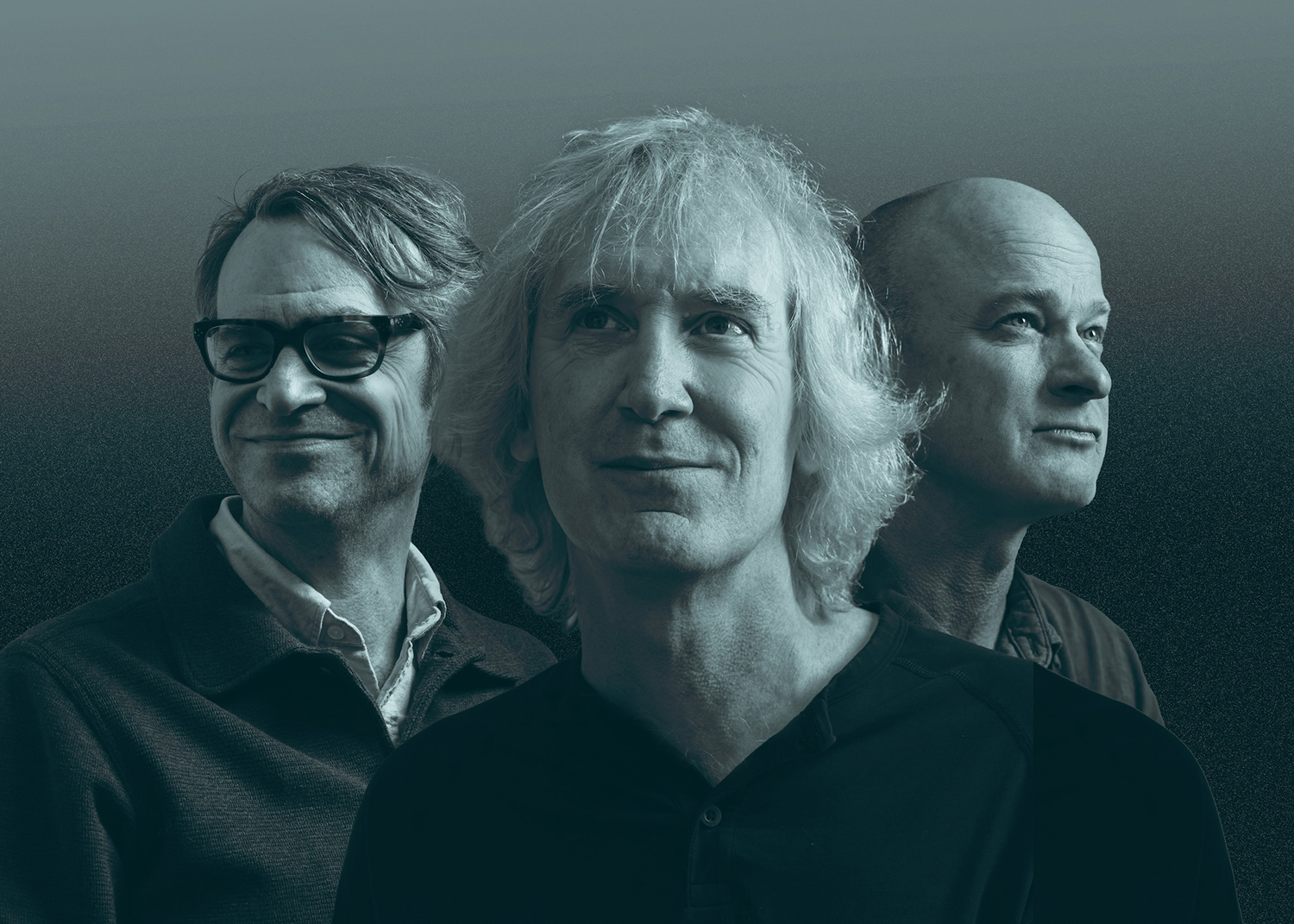 The Roger Klug Power Trio: Mike Tittel, Roger Klug, and Greg Tudor | Photo: Mike Tittel
There’s an existential thread running through your songs couched in dark humor. Tell me about that proclivity.
I think humor is a defense mechanism against the sludge. I’ve always been into writers and filmmakers who are both serious and humorous. David Lynch comes to mind, in a big way. The Beatles had a lot of humor, as well as serious ideas happening. Monty Python is a huge influence as well. Most comedians are pretty dark. When you separate the wheat from the chaff, I think comedy and tragedy go hand in hand.
Your studio albums are literally solo efforts in that you play virtually all of the instruments, in addition to producing and engineering everything. What appeals to you about that approach?
Being an egomaniac? [laughs] I think it’s classical composer syndrome. I like being able to control all the elements.
When I write a song, it’s like I hear the record playing in my head. To me, the song and the recording of the song are intertwined. My thought is, “If I’m hearing it in my head, then I’m best equipped to bring it out of the ether into this world.”
When I made Mama, Mama, Ich bin in dem La La Land, I wasn’t actually trying to make an album. I decided I was going to get a degree in accounting and focus on other things with my adult life. But in my spare time, I’d jot down these songs. Yes, accounting. I’m not joking. It’s true.
At the time, I didn’t have a drumkit. I’d go over to a friend’s house and record on his drums as the song played in my head. Then I’d go home and put guitar and bass on it. I would never question the process. I would just get the music done this way. Those were happy days. Eventually, I added a drumkit, which used to belong to Ricky Nye. It was a sweet Ringo Ludwig kit that Ricky loaned me for 15 years until he repossessed it.
How did you become a multi-instrumentalist?
I’ve always been “Mr. Many Hands” to my benefit or detriment. I listened to music for a really long time before I actually played an instrument. I began playing drums in junior high school in a marching band.
I started on guitar at age 11, learning from John Covach, who’s now a professor at Eastman School of Music. He was a Steve Howe disciple back then. I bought my Les Paul off his keyboard player back in the day.
I was also always banging on our family’s piano. I would look at sheet music and go, “That’s F minor 7.” I already knew how to play it on guitar, and I figured out how to play it on piano. We also had a Magnus Organ that had two octaves of keys and chord buttons. When you pressed them together, you could make amazing, dense chords that buzzed really well. So, I ended up playing drums, guitar, and keyboards.
I also live for playing bass. It’s the secret weapon. Putting on a good bass line that works, grooves, and doesn’t distract is one of my favorite things about recording.
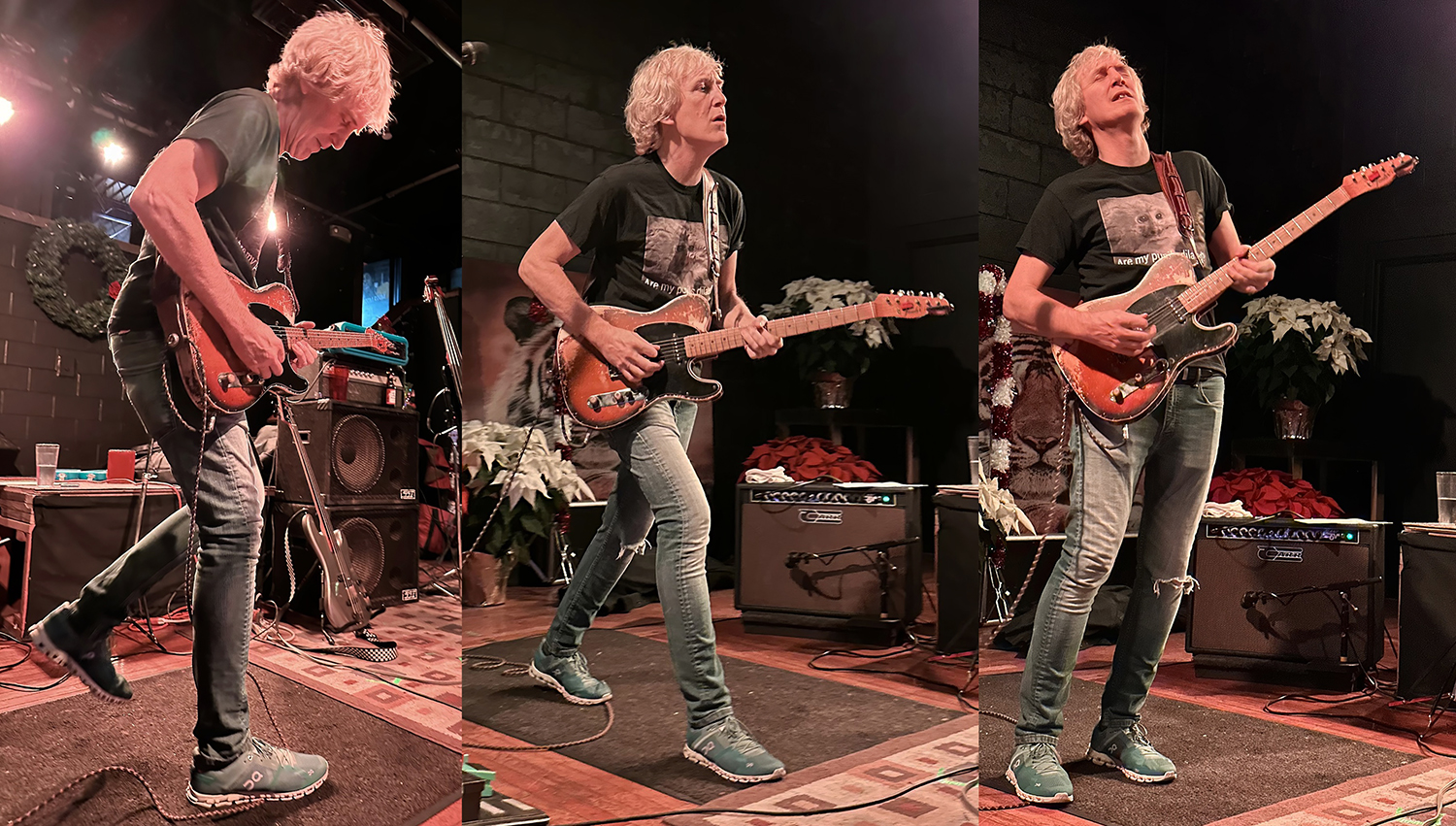 Photos: James D. Campbell
You’re particularly celebrated for your guitar skills. Expand on how you evolved on that instrument.
It’s something that just happened. I’m originally from Cincinnati, and moved to Detroit when I was three years old. I grew up in Livonia and then moved back to Cincinnati for high school in the ‘80s. And at that point it was Eddie Van Halen and Randy Rhoads time.
One of the ways I put myself through college was teaching guitar at Buddy Rogers’ Music in Cincinnati. I’d have all these kids coming in with cassettes asking me to explain to them what Van Halen was doing on his latest album. I understood the tapping stuff, but Van Halen would keep introducing new tricks every album. I got really good at hearing what he was up to and getting inspired from it.
So, I became very guitaristic, but I never liked clichés. If I ever play a single blues cliché, it’s because I’m doing it ironically. It’s not how I roll.
The guitarists that taught me how to play guitar include Jimmy Page, Jeff Beck, Jan Akkerman, and John McLaughlin. I really liked the European elements they brought to the music.
What can you tell me about the process of capturing inspiration for your songs?
They sometimes begin with non-verbal cues or something visceral. When you asked that question, the first thing that came to my mind is a song called “Girl After My Own Heart” from my More Help For Your Nerves album.
The way that got written is I was driving down a road, thinking about a G-sharp minor chord on the guitar and how beautiful it is. I then drove over a railroad track and to my left, there was a warehouse with a garage door open, and I saw a girl with long blonde hair on a forklift. So, I started humming “She drives a forklift…” and I didn’t know where it was going to go from there. And that spun out into a whole story about who I imagined her to be.
I wish I could be one of those writers that can just sit down and write a song, but I can’t. I don’t have that sort of building mentality like Randy Newman. I’m more about the “bolts from the blue” model. What I’ve realized is the older I get, those happen less. So, when they happen you need to listen and follow what they tell you.
Let’s explore your studio albums in reverse chronological order starting with More Help For Your Nerves from 2009. How do you look back at that super-diverse effort?
With fondness. For some reason, I keep thinking 17 is a nice, even number for the number of songs on a record. And that one is a really nice collection of 17 songs. I think it could have been better if I had let someone else handle the mixing and mastering, but I’m very happy with it.
I did that during a phase where I was into one-take guitar solos. With The Willies records, I had composed and planned out solos. I had an arc for where they were going and I followed it. But on this record, I decided, “I can’t be bothered to do more than one take of this solo.” The solo on “Artist in the Field” turned out well and had a cool angular feel to it. But on some of the other solos, I wish I had done a second take.
I chose to take a sort of Pet Sounds approach to the record, like when Brian Wilson would leave in studio chatter and studio imperfections.
As far as the lyrics go, I like them. They don’t have the personal pronoun “I” in there as much as on The Willies. I like how “Dump Me Hard,” which was the single off the record, was self-deprecating and self-effacing. It offered a really funny twist to that subject matter. The idea was if you’re going to leave me, just be cold-blooded and don’t string me along. I’m always looking for new takes on old subjects, and I feel I succeeded with that one.
“Artist in the Field” is in that vein, too. It’s being very ironic about the usual story that goes “Woe is me, I’m a bleeding heart that’s decided to do this for my livelihood, but it’s not always financially or emotionally rewarding.” Rather, I’m saying, “I’m addicted to doing this and I can’t seem to get away from it.”
“Worried About Time” started with an anxiety attack. “Girl After My Own Heart” started as a euphoria attack. “Dreams Dry Up” was written post-9/11 when I was in a weird headspace about what was going on. It's all harsh baked desert landscape imagery. And for that one, having a really ridiculous guitar solo fit in perfectly. In fact, it’s perfect because it’s not perfect.
There isn’t a concept running through the lyrics, although the title More Help For Your Nerves sounds kind of positive, right?
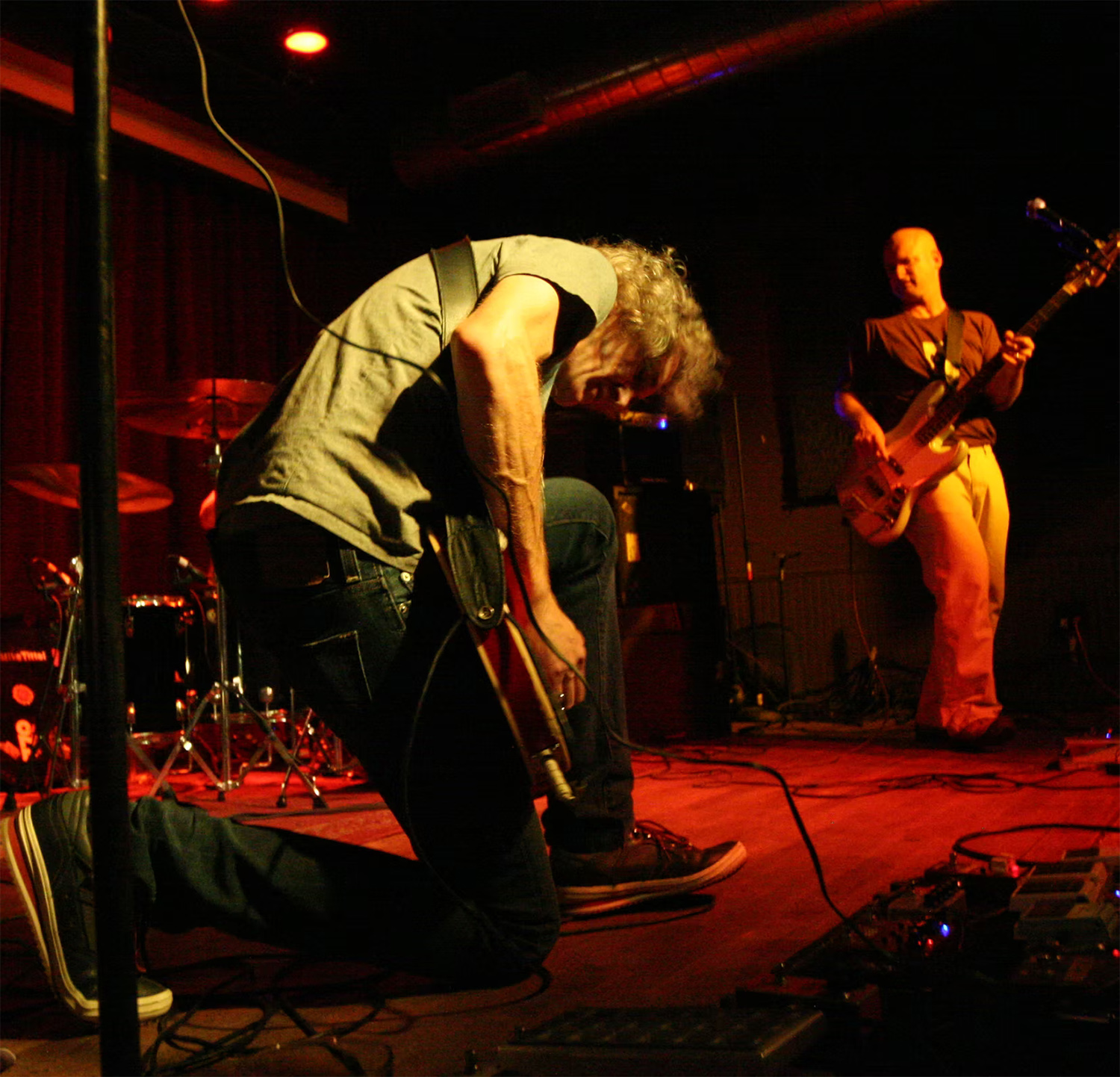 Photo: John Lucas
Next up is the ambitious Where Has The Music Gone? The Lost Recordings of Clem Comstock from 1999.
It’s a hoax album. It’s a compilation of artists from the 1960s that don’t exist. It was a huge kick to make. And talk about alienating your fan base and the marketers. I had a British manager at the time. To his credit, he didn’t run screaming out the door when I played him songs that would end up on that album.
We have a station in Cincinnati called WGRR that used to play oldies. When this album came out, they were playing the likes of Gary Lewis, son of Jerry Lewis, and Jan and Dean. It was all early-‘60s American pop which, being a total Anglophile and raised on British Invasion, was new and ironically foreign to me. Not to mention some of it has not aged very well. [laughs]
The Clem Comstock songs are very much celebrating, yet lampooning American artists of that time who were stuck in their pre-British-Invasion ways or trying to compete with the Brits on their turf and failing miserably.
And it was a liberating process to goof around and not be thinking about the follow-up to the Toxic record. I made up artist names like Gary Cilantro, Billy Action, and Jerry Cacciatore, and band names like the United Federation of Brotherhood and Sisterhood. [laughs] The album goes through different eras from 1962 to 1967.
The premise was there was this guy here in Cincinnati named Clem Comstock who was recording all this stuff in a knitting factory and chinchilla ranch on Gilbert Avenue, just a stone’s throw from King Records, I might add.
I’ve never had more fun making a record. I played most of the stuff on it, but I also brought in people to play trumpet, flute, and violin, and to sing on it. I was really happy with it.
“Where Has The Music Gone?” is the last song on it and the only one I credited to myself. It has a three-minute fade out. I remember getting goosebumps listening back to it, thinking “This is exactly what I wanted to do.” It’s rare I feel like I nailed it.
When it came time to promote the record, I never deviated from the narrative, which was I discovered these three-track tapes from the 1960s by this obscure producer. I pretended it was totally legitimate. It was funny, live on the air we would never break character, whereas the print articles would usually add, “Of course, in reality this is all just a madcap invention of Roger's."
The project thoroughly confused everyone. Again, it created another branding problem. Is it a Roger Klug album or not? I was told I did a lot of damage to the fan base with it by my British manager.
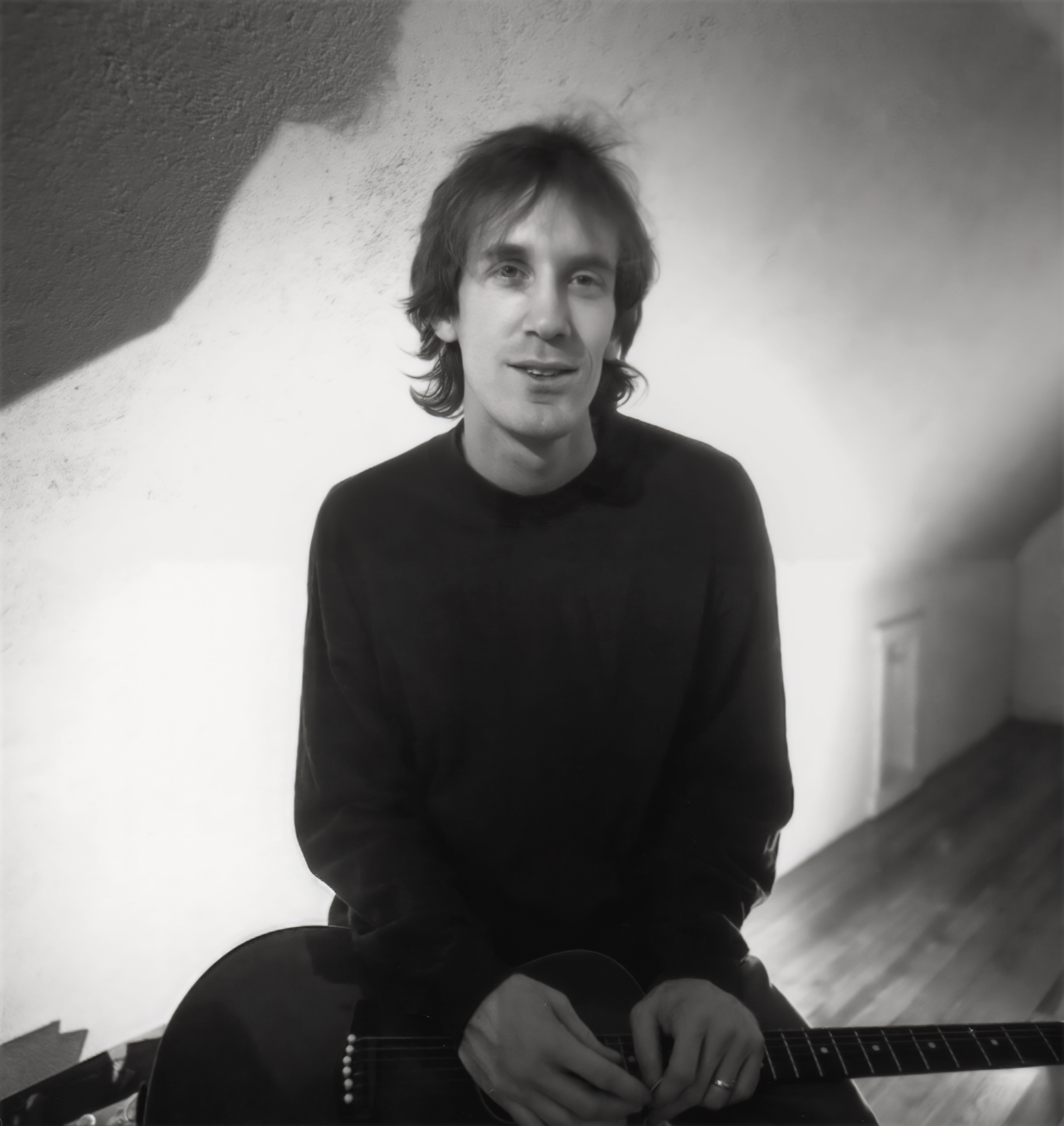 Roger Klug, 1996 | Photo: Mike Tittel
That brings us to Toxic and 15 Other Love Songs from 1997, which has a conceptual overlay.
The album was largely inspired by my then girlfriend. I was in a new relationship with someone who happened to be a pianist. So, suddenly I’ve got all of these new songs that were written and performed on piano. It was my little love cloud.
That’s not to say there aren’t songs on the album that aren’t so lovey-dovey. For instance, “Trust” was about me flying home from New York City while my girlfriend stayed there in a hotel room with another guy. I was like, “Okay, what’s going on here?” As it turns out, he was a really close friend of hers who was gay. I didn’t know that at the time. So, the story had a happy ending.
The album was mostly recorded in our house at the time, with drums in the dining room, which lent them a really interesting sound.
The concept was essentially “love in all its forms.” It was a rumination on that. “Nothing Better” and “On the Way to His Wedding” speak to that. The melodies and chords for the songs arrived simultaneously. There’s nothing better than love to make that happen.
I didn’t have the usual, “Oh, I like this chord. What can I put to this?” thing happening. Rather, phrases arrived married to a melody. The worst thing is when you have a verse and you’re writing toward the hook line. That usually means you’re painting yourself into a corner. It’s better to have a phrase and have the song spin out from there.
You’ve referred to your first solo album, Mama, Mama, Ich bin in dem La La Land from 1995, as a garage rock opus. What are your thoughts on it?
As I mentioned earlier, I wasn’t trying to make a record at the time. And then all of a sudden, I had 22 songs that were done. It snuck up on me.
The Breeders were just breaking that year with Last Splash. That album was huge for me and in my brain when I was doing this record. It’s reflected in the raw, eight-track analog approach of this record. You don’t have a lot of room to get too artsy-fartsy. You have to make decisions right then and there, like “Is that the vocal take? Do I erase it and do another one or keep it?” The same went for guitar and drums.
There wasn’t a theme to the songs. It was a case of “These are the songs I’m writing and recording in this span of time.” It was a good break from overthinking things. I got a lot more serious about recording with subsequent records.
In 2014 you put out a single titled “The Ballad of Everybody’s Records.” Talk about the store and why you chose to create a tribute to it.
That song came out of a really honest place. Marilyn Kirby started Everybody’s Records way back in 1978 and it established itself as one of the most important record stores in the history of Cincinnati. It was a really difficult thing to do back then as an independent entity.
Most communities have been losing their local mom and pop record stores for a long time, so I wanted to do a song about the store’s positive impact on our community.
I do talk about how difficult things got for the store along the way. There was a local department store chain in Cincinnati at the time called Swallen’s. This was way before Target and Walmart took over. Swallen’s had the most amazing record section. They had everything. But they went under in 1995, and Everybody’s Records is still here. It’s why I scream “Well, tell me where is Swallen’s now?” in the song. [laughs]
How amazing that this store is still chugging along. How did she do it? It exists in an exurb of Cincinnati and there’s nothing hipster about it, yet it thrives. I think it’s also because Marilyn was a real character and supporter of the local scene. She really liked what I did, too.
Marilyn died in 2022. It was a major loss and was covered by all the local media. She had such an important vision and was loyal to the community, musicians, and her customers. Her son took it over and it’s still going strong.
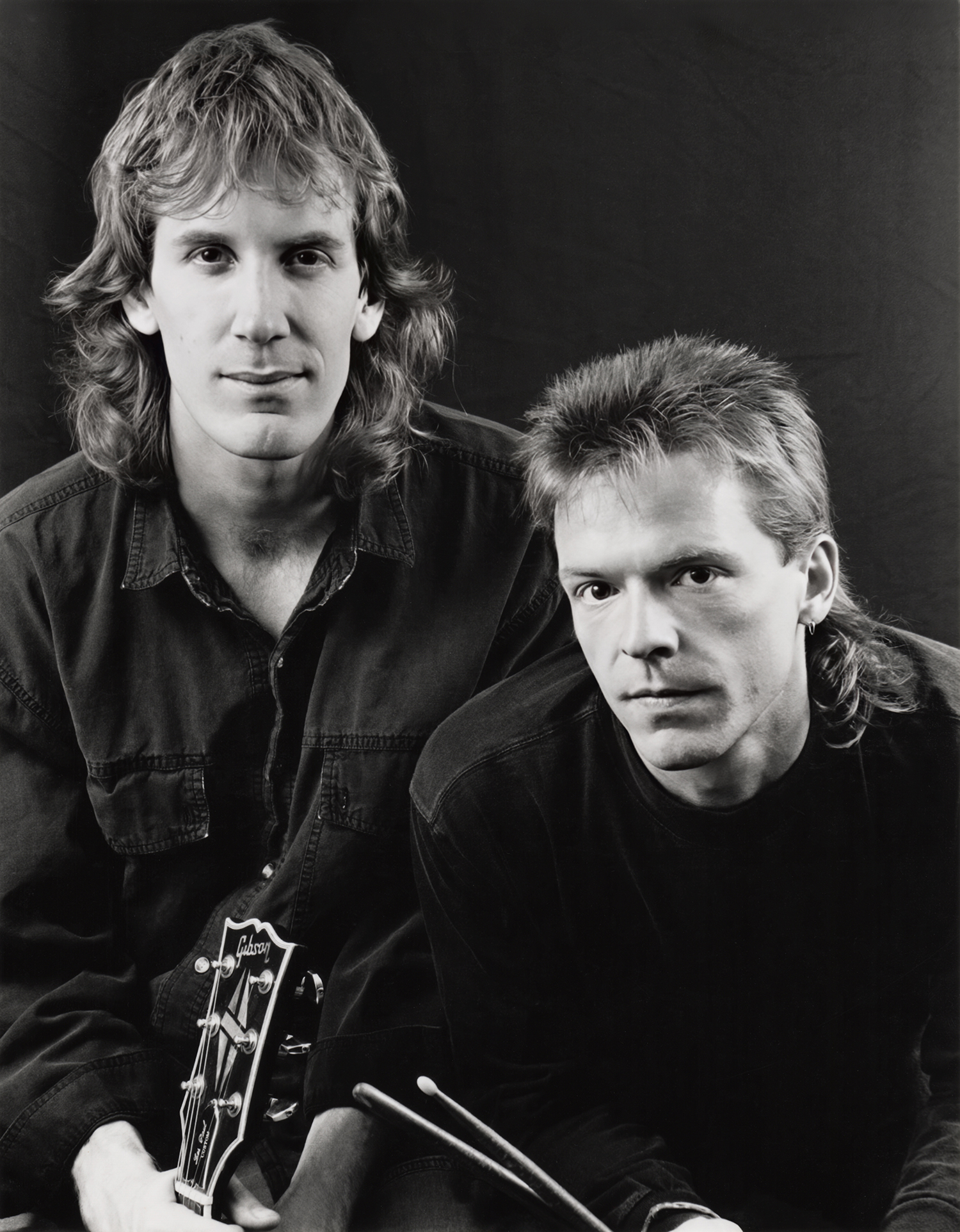 The Willies: Roger Klug and Jeff Karch, 1990 | Photo: Roger Klug Collection
You made two albums with The Willies in the early ‘90s: a self-titled debut LP in 1991 and 1992’s Calm Cool Collected. Reflect on that era.
Before The Willies, I was in a band called The Tritones in the late ‘80s, which was me and two brothers. A word of advice: never get into a band with two brothers. [laughs]
Musically, we were like The Who meets Black Uhuru. It was a garage rock band with three White guys that were really into reggae. We knew the genre deeply. But it imploded after five years, because no-one could burn at that pace that brightly for so long.
After The Tritones, I recorded a set of solo tracks on my own, using a drum machine. I initially tried to shop them to publishers in Nashville. Eventually, Jeff Karch, the drummer from The Tritones, came back into the picture and played on them.
Calm Cool Collected was more intentional and we recorded it together. We had Jeff lay the drum tracks down first, which is the normal way to do things. It was a great experience, and in a way, these are my first solo albums, since I was the one who wrote all the songs.
Both were released regionally on cassette initially, and eventually on CD. We’d play everywhere in the area. We’d do Nashville a lot, but people told us, “You guys are great, but nobody does two-piece bands.” We were ahead of White Stripes and Black Keys.
We were very ambitious. We experimented with using backing tracks at one point. I was also very cognizant of being visual. I’d jump around a lot more than I do now. Jeff was also very visual on the drumkit.
Eventually, we had a couple of bass players, but The Willies fizzled out and I moved on to becoming a proper solo artist.
In 2012, you made global headlines with The Stanley Steemer Variations video project with Mia Gentile. Discuss creating it and the impact it had.
I have a long history with making humorous YouTube videos. The first one that made a splash was my Queen recording session video, in which I’m going back and forth with the band, trying to record "Bohemian Rhapsody.” It really pissed off a lot of Eastern Europeans who didn’t get the joke. Anyone with critical thinking skills will know that the video was made with nothing but love and admiration for Queen.
Next, I did a video called The Amazing Story of Roger von Shredder. It was about a heavy metal guitarist who was in a coma and woke up 25 years later, not knowing the world was now a completely different place. So, I had those two under my belt, but I wasn’t prepared for what was going to happen next.
At this point, I was very heavily involved with commercial music production in Cincinnati. I would always use singers from the CCM (University of Cincinnati College-Conservatory of Music) Musical Theater Program with good pop voices.
One day in 2011, a musical theater major contacted me saying she wanted to record a voice demo, and that was Mia Gentile. Her idea was to sing the Stanley Steemer jingle in a bunch of different genres to show off her versality. It sounded like a lot of fun, so I was hooked right away. We sketched out a roadmap, I arranged and produced the music tracks, and she sang all the vocals.
It turned out to be a genius idea. She went off to Broadway and was back in town the following summer to perform at Cincinnati Ensemble Theater. We reconnected and talked about doing something else, since we liked working together. We were kicking around recording a song or something, and I just blurted out, “Hey, we should make a video for Stanley Steemer!” Once that sank in, we both got really excited about it.
Mia raided Ensemble Theater’s wardrobe closet and got all of these costumes to wear for the different versions. We shot the whole thing in her friend’s bedroom. We filmed it on July 4th and it was insane. I got some lights and a Sony Handycam and from there, it was "boom!"
We recorded the individual sequences all in one day. And we were knackered by the end of it. We didn’t have green screens or anything. There was a lot of post-production to make it all work.
It blew up on Tumblr first, which was a big deal in 2012. Then we started seeing action on YouTube. We thought it would get maybe 30,000 views, like my Queen video. And then it went from 100,000 to 200,000 to 300,000 and eventually passed 2,000,000 views. Which back then, kids, was considered viral.
Mia ended up going on Good Morning America to talk about it. They sent a limo over to pick her up. She was there on set hobnobbing with Jerry Seinfeld. He said to her, “So, this is what you do, huh? You make Stanley Steemer videos?” [laughs] He was so dry. The Daily Mail and Huffington Post also did feature stories on it.
The whole time we thought Stanley Steemer was going to sue us for using their theme. But they were happy about it. They contacted us and asked us if we wanted to have some complimentary carpet cleanings. [laughs] That was their offer. I don’t think they realized what they had here. They could have turned it into a major ad campaign.
And then something like 20-30 other people did tributes to our Stanley Steemer video on YouTube, too. So, it became a big thing.
The Stanley Steemer Variations kicked off another collaboration with Mia called MISSYFIT. We recorded a bunch of original songs, but the only one released was “Mushroom Tea” in April 2020.
We also put out some cover songs during the COVID-19 pandemic by the likes of The Kinks and Zombies on a fake girl-group EP called Bea and the Bees Singing Songs About Rain. I just posted a video for “Rain” to celebrate the five-year April Fools’ anniversary of the EP’s release.
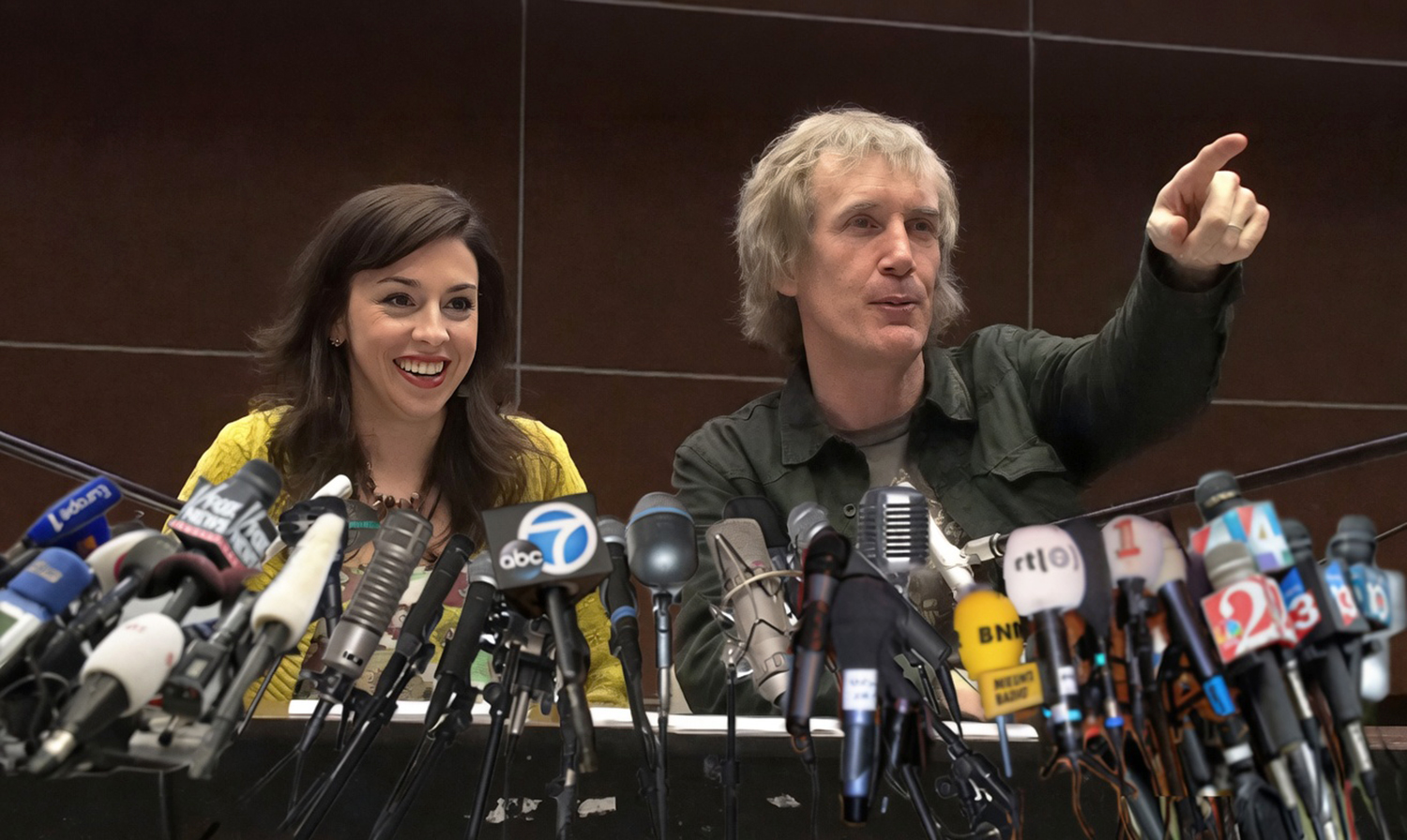 Mia Gentile and Roger Klug hosting a mock press conference for The Stanley Steemer Variations, 2012 | Photo: Roger Klug
You’re part of New Sincerity Works, led by Mike Tittel. Provide some insight into your contributions to that band.
I love being part of a band. I’m a huge fan of groups like Television, which had two interlocking guitarists in it.
When I do New Sincerity Works recordings, I approach it like Robert Fripp walking into a David Bowie session. I’ll think, “What cool little kick-ass guitar part is going to help the song and fit in the right space?”
Mike and I have both done sessions for years. I think we come into things with ideas ahead of time on what might work in a song. We also happily stumble onto things that work. For instance, there’s a song on Wonder Lust called “Just Like Vapor.” I came up with a guitar lick, and then we all decided to put a harmony on it. It’s a very cooperative and symbiotic collaboration.
There’s a significant Who influence on your songs. Describe the impact of the band on your musical psyche and how that transformed into you doing tribute shows for The Who Sell Out in 2018.
I’d say one of my top influences is Pete Townshend. He’s a very articulate, literate adult who took rock music and his role in it very seriously. He's an idea guy who emphasizes concept over technique every time. I was always impressed by his attitude and panache. I particularly love Quadrophenia, A Quick One, and The Who Sell Out. They’re amazing examples of pop art full of power, a sense of humor, and incredible breadth and depth.
Greg Tudor and I came up with the idea of playing The Who Sell Out as a 50th anniversary tribute show at a local pub. It wasn’t too far of a stretch to add Bob Nyswonger and Chris Arduser to the band, who of course were together in Psychodots, The Bears, and The Raisins, and are also massive Who fans. We learned the tunes quickly and all shared vocals.
I was doing a British Invasion show at the pub every fortnight during that period, so we already had a base audience going in, but the show turned into the biggest, most crowded frat party you’ve ever seen in your life. It was packed. We did a second encore show, this time in a proper theater, for which we added a horn section. Those gigs were a lot of fun. They were very special and you couldn’t try to replicate or duplicate them.
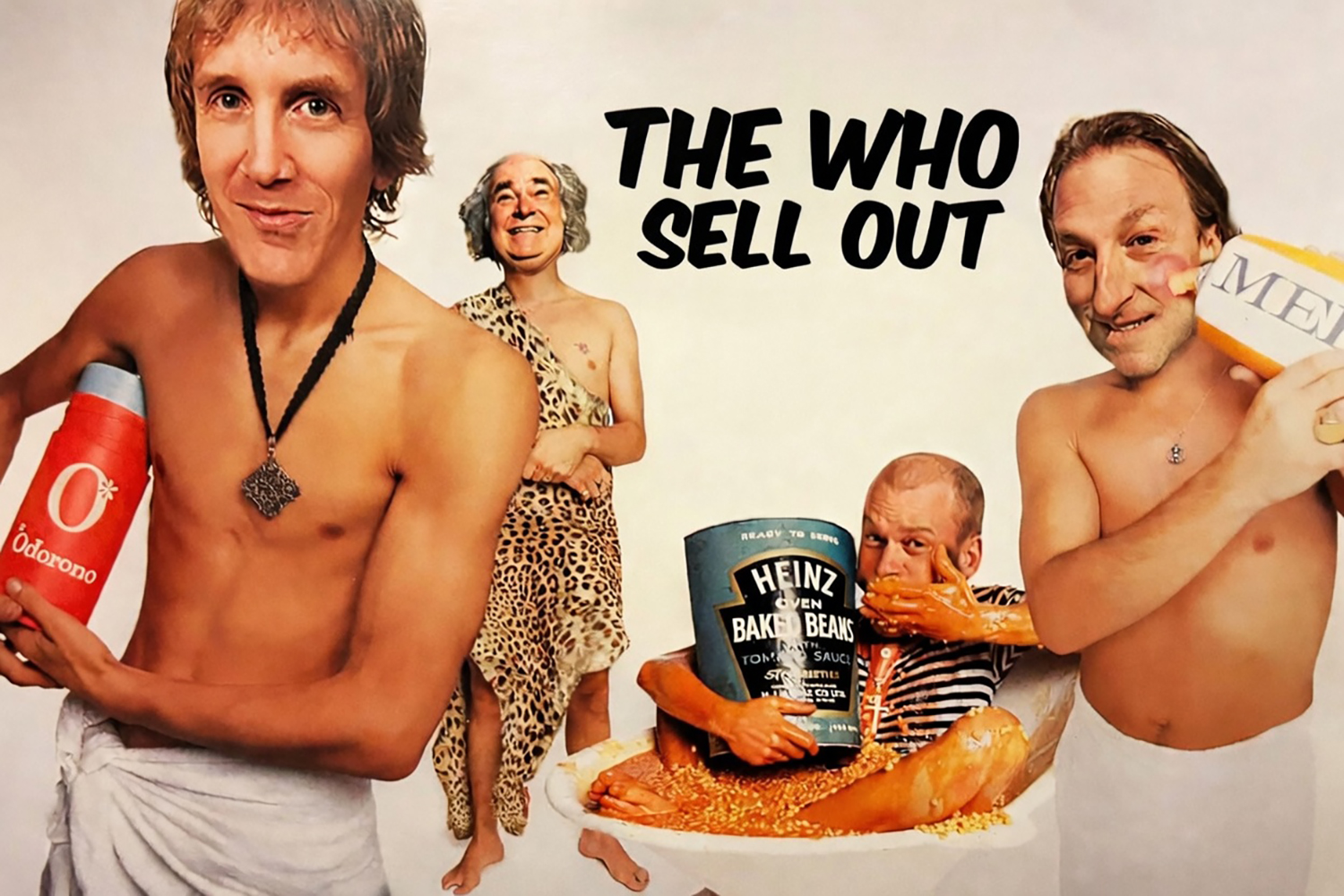 The Who Sell Out gig poster, 2018: Roger Klug, Bob Nyswonger, Greg Tudor, and Chris Arduser | Art: Roger Klug
You’ve done music for major American soap operas. Tell me about some of that work.
I’ve done music for Guiding Light, As the World Turns, and Another World. It started as a kind of cash cow with the commercial music studio I was working at in the ‘90s. At the time, soap operas wanted to incorporate more alternative rock or indie rock sounds into what they did.
I learned all about how different soap operas are done in Los Angeles versus New York City. In Los Angeles, they use huge sound stages, but in New York City, they’re filming them in these crammed brownstones and people barely have any room to move in them. It was wild to work on those shows.
Believe it or not, doing soap opera music is how I first met Mike Tittel. I was working on music for Guiding Light, and they wanted some Nirvana-ish nasty fuzz-guitar. They couriered a videotape of the scene that I had scored, but the studio had moved and they sent it to the older address, which was now occupied by Mike Tittel and his partner Pat O'Callaghan. It had my name on it, so Mike got ahold of me, and the rest is history.
Explore your “rock meets symphony” work, including some of the major shows you’ve done.
Again, it all started with The Beatles. How unique and original to say, I know, but they’re the ones who dragged me into this mess.
The Cincinnati Chamber Orchestra asked me to curate a Beatles string quartet program for their Summermusik series in 2016. It went from me simply providing some backstories between pieces to playing, guitar, singing, and writing the scores. I’d done that in the studio forever, but never for a full concert program. It was sort of daunting.
Now here we are, 10 years later, and I’ve curated an original program for them almost every year since, including one coming up this August.
It’s trickier than it looks to create a successful orchestral program out of pop songs without it losing integrity or vitality, or sounding like Muzak. You want the best of both worlds, not the worst of both worlds. You need a good theme or concept to sink your teeth into. You can’t just say, “Oh, we did an orchestral Beatles program, now let’s do a Rolling Stones one.”
We celebrated the 50th anniversary of the Summer of Love in 2017 and Woodstock in 2019. I have very fond memories of the classical pianist Alon Goldstein playing “Ruby Tuesday” and the organ solo in “Light My Fire,” which I had transcribed for him. I think he was a bit apprehensive at first, but he had an absolute ball. He was grinning ear to ear.
British clarinetist Julian Bliss joined us for the Woodstock program on a medley that glommed Ten Years After, Canned Heat, and Country Joe and the Fish all together. That was a hoot.
Some of my favorite chamber rock arrangements I’ve done include a Left Banke medley. “Pretty Ballerina” is just exquisite to hear a small orchestra play. I added in a rhythmic figure from Stravinsky’s "Rite of Spring," you know, where the dancer dances herself to death. Genius, yes? [laughs]
I’ve also done, Brian Wilson’s “Surf’s Up,” and something I called “The Lark Distance Runaround. That was a mashup of Ralph Vaughan Williams' “The Lark Ascending” and the Yes tune “Long Distance Runaround.” Those paired extremely well together, like peanut butter and chocolate.
Describe your work as an educator and your key priorities with the students in that realm.
Being a professor has become my day gig, as it were. I’ve become more grown-up, mature and responsible. (laughs) I always knew I would wind up back in academia someday, just because I liked the structure of it all. Being an artist or a self-starter all the time can become like being in a white room with no visual reference points, no walls or ceiling, and just infinity everywhere, which for me is quite terrifying.
I started as an adjunct who taught survey-type courses, spreading the gospel of artistic and musical excellence to the masses, which is missionary work, a labor of love, but also quite a challenge. My “Music of The Beatles” course was and still is open to anyone at the university. How do you teach music, quantifiably study and evaluate musical works, not just to music majors but non-majors as well? You need a common vocabulary and toolbox. Luckily, when you have good material, you’re excited that it’s possible, though it takes several semesters to kick you in the ass and show you what works and what doesn’t in a lecture hall.
I was used to being on a stage, but playing music, not lecturing. How do you do that? Well, folks, writing a lecture is just like writing a pop song. You need hooks, repetition, and recurring themes. You need to keep it tight, interesting, and have your audio or video all lined up ready to go. Ten seconds is an eternity in pop music, but fumbling with a YouTube video with ads or whatever is similar. It’s just no good.
A lecture ends up being a performance, really, if I’m being honest. You learn stuff, like pausing for a second and enjoying the silence in the room. That’s when you know people are listening. Well, some of them aren’t. But ultimately I can’t control what’s going on in people’s brains. I can only try.
When I became full-time and got into advising and other collaborative roles within the college, that’s when other magical stuff started happening. Any teacher will tell you they get inspired by their students, and it’s 100% true. You see them making new connections or discovering things, and it reinforces your own beliefs and concepts.
The idea that music and art can still have an impact on people’s lives certainly has a preservation aspect to it. But I’m generally teaching through the lens of a real-world, authentic experience. These aren’t museum pieces. This is stuff to be enjoyed and savored now, and I explain why.
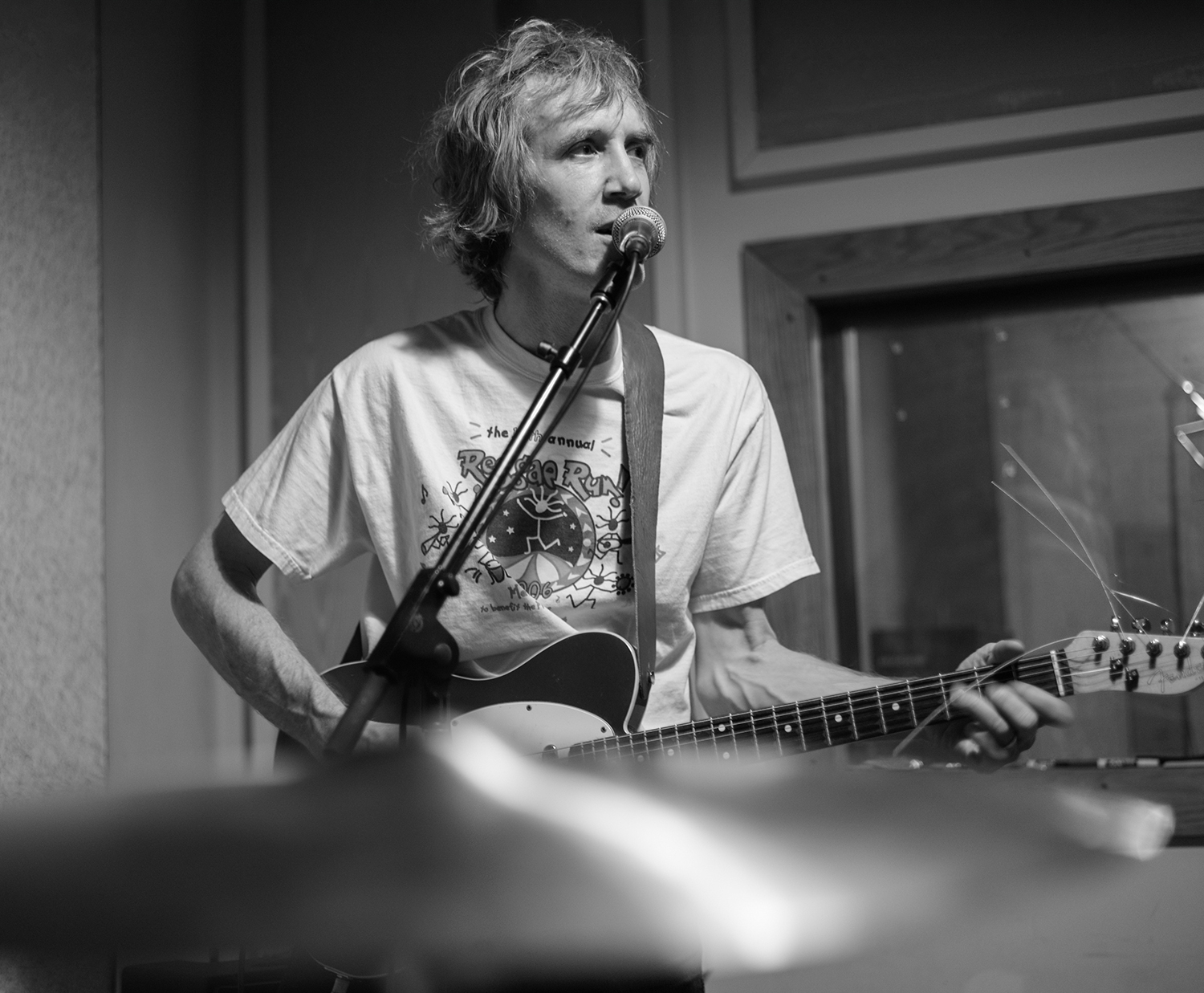 Photo: Mike TIttel
What’s your view on the state of the music industry?
You always think you’re the exception to the rule and will be the one to make it, reality be damned. But I just do what I do and listen to what I want to listen to. As an artist, you can’t be worried about what other people are doing or how you might compete in the marketplace.
Now, as an entrepreneur or businessperson, that’s a different thing. If I was 23 again and worried about how I was going to pay the rent, I’d either look for a practical way to somehow be involved in music, even if that meant, for a time, compromising my standards or putting my original projects on the back burner, or earning my living completely outside of music and keeping music free from any promises it never made to me in the first place. There are pros and cons to both.
Here’s a case for the first scenario: I’m thinking back to my late twenties when I was playing a lot of weddings and corporate things to make money, and having a miserable time, like wanting to throw my guitar on the floor or into a wall. I did that several times, unfortunately. Something changed, and I started to see the positives in it—cue the violin music—in terms of how I could maximize the experience to its potential, and actually have fun with the other musicians and people in the room. A dark situation became a creative experience. So, I would be improvising new guitar parts for songs like ABBA’s “Dancing Queen” that sounded like Andy Summers, and after a while, it was embedded in the song for good. I’d hear the original and go, "Where’s the cool guitar part?"
Jazzers are reading this going, “duh!” but it’s true. You do the same thing when you go into a recording session or a Cincinnati Pops concert. You want to play things that add to the conversation and ensemble that everyone’s going to get off on. Music shouldn’t be pre-planned or set in stone tablets all of the time. I used to think reproducing a record faithfully onstage was the coolest thing anybody could do, and now I’m the total opposite. Most of the time, anyway. I keep a list of one-liners that I love pertaining to this, like “As flexible as a mannequin” and “Even the ad-libs are pre-approved.”
Going back to the industry, I’m going to quote Happy Chichester here: "it’s still the same few fat cats with deep pockets controlling everything, just a different breed." It’s a case of “Meet the new boss; same as the old boss.”
I do feel that people want to own their own music again and have physical copies they can hold in their hands, and still play if there’s no Internet. And they sound better than Spotify, which is the worst. You don’t realize how bad Spotify sounds until you’ve uploaded your own tracks to it and hear the difference.
And as cool as vinyl is, I think CDs are starting to come back, with good reason. They’re more portable, less fragile, have better dynamic range, and can fit more material. If I had put out Live! Off the Board on vinyl, it would’ve been a four- or five-record set. Nothing beats holding 12” square art in your hands, but I’m back to embracing CDs in 2026, for sure.
You’ve been a core part of the Cincinnati music scene for decades. What are your thoughts on why it's so unique?
On a lot of levels, people might look at Cincinnati as an unremarkable city. But when you dig in, you’ll find beautiful, artistic, and surreal things happening here. There’s the symphony, opera, ballet, a great jazz scene, bluegrass, and hip-hop. And for some reason, we have so many great guitar players here.
People love doing their own thing and there’s no pressure here to do anything but that. I think Cincinnati is like Liverpool in a way: off the radar, and yet geographically you’ve got this unique amalgamation of Appalachian and Black influences. That’s what King Records was all about. You’ve also got the river. The architecture of Over-The-Rhine, built by the Germans in the 1800s, is where they film movies when it needs to look like Brooklyn in the 1920s. I’ve heard it often said that Cincinnati is the northernmost Southern city in the U.S. It seems different from the rest of Ohio.
Essentially, it’s like Venn diagrams all over the Cincinnati musician community. Somebody might be a violinist in the symphony, but also run their own indie band during other nights of the week. There are all kinds of cross-pollination like that. I see all these kick-ass, young, fearless musicians in town who are into all kinds of different music.
I also think the city isn’t big enough that you can afford to only do one thing. You need to be out there working in different circles and contexts. But everyone’s really supportive of one another here, which I don’t see so much in larger cities.
Rob Fetters is an important inspiration for you. What makes him a distinctive presence?
Of all The Raisins, he’s the one I know and see the least. Witnessing them for the first time live in the flesh as a 17-year-old college freshman was a "eureka!" moment for me. I wound up writing a ballad about it called “Alexander’s on a Monday Night.”
As far as guitar riffs and things, there are a few descending sliding licks I do that sound Fetters-y, but I actually stole that move from Jan Akkerman on Focus’ “Hocus Pocus," truth be told. So, I don’t think we play that similarly. We’re probably into a lot of the same things musically. The same goes for songwriting. I hear a lot of Bruce Springsteen in Rob’s earlier songs, which wasn’t in my wheelhouse at all.
But as far as aspiring to be in the ring of kickass, original guitar players, not as shredders or virtuoso instrumentalists, but doing it in the realm of pop music in terms of writing songs, singing, and playing, Rob’s a standard of excellence. He ticks off all the boxes for me.
The Raisins' Rock Around the Block 1980 TV broadcast on WCET Cincinnati has a version of “Doctor Robert,” that is just fantastic. And that’s what they did at every gig they played in and around Cincinnati back in the day, of which I probably attended hundreds.
We’ve only jammed together once. What’s up with that? It was at Mike Tittel’s wedding and very casual. Psychodots’ “Mattress” was one of the tunes. I got to play the “Doctor Robert” riff at the end with Rob “in stereo” as the Brits say. That was a lovely moment.
What keeps you motivated as a creative entity today?
That’s easy. I make music because there’s a song I want to hear, but I haven’t heard it yet. So, I go and try to find it. And instead of going outward to find it, I go inward.