
Donate to Innerviews
Since 1994, Innerviews has provided uncompromising, in-depth interviews with musicians across every genre imaginable. And it does that with no trackers, cookies, clickbait, or advertising.
Your donations are welcome to help continue its mission of highlighting incredible music and artists, without any commercial considerations.
Your contributions will be instantly transformed into stories and videos, and cover hosting and web management costs. Importantly, your dollars will help ensure Innerviews remains absolutely free to all visitors, independent of their ability to financially support it.
Please consider making a donation today by using the PayPal QR code below.

Sheila Chandra
The Divine Spark
by Anil Prasad
Copyright © 2026 Anil Prasad.
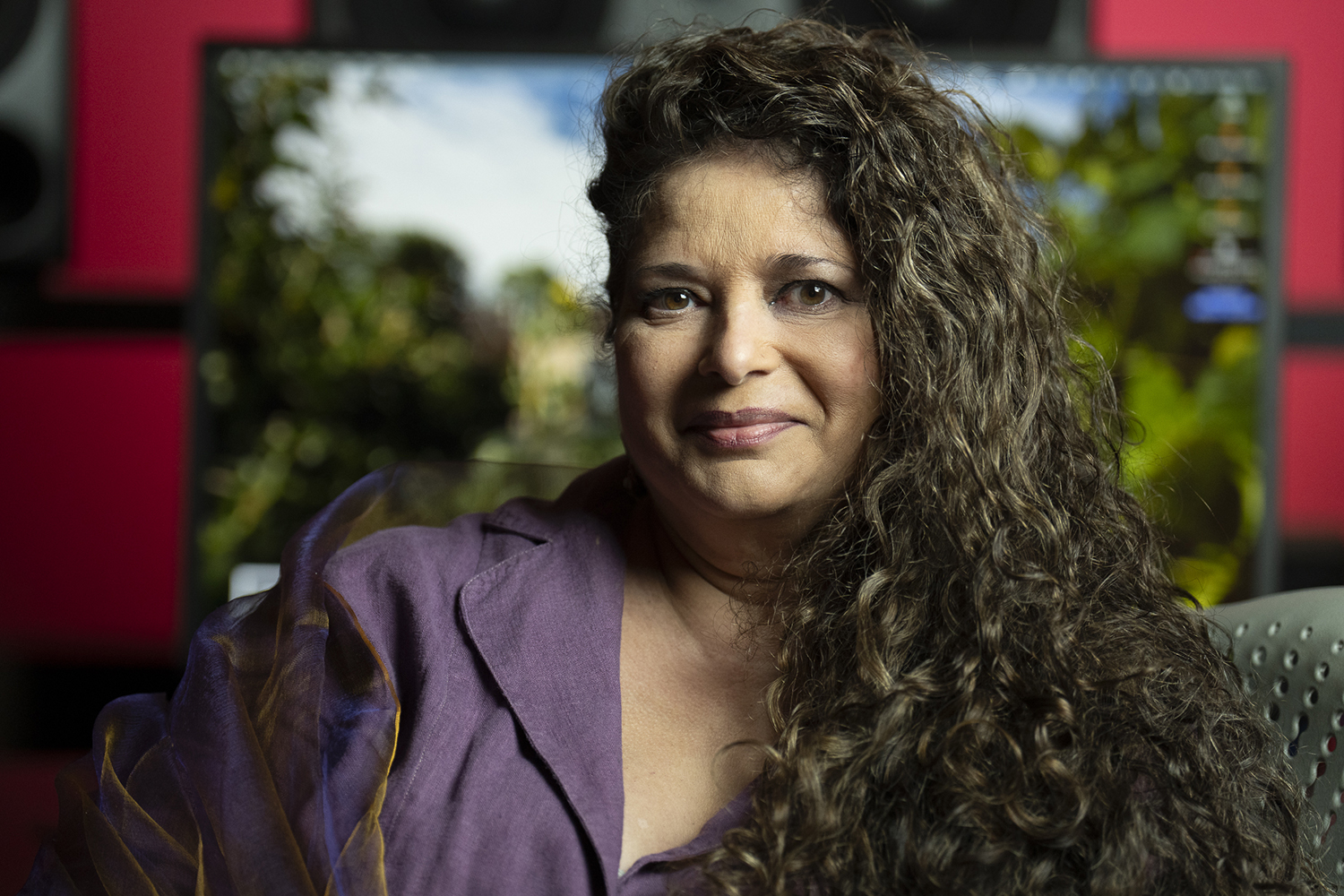 Photo: York Tillyer, 2026A voice can communicate many things. It can carry words and melodies, convey emotion and identity, preserve memory, or reach beyond language altogether. For Sheila Chandra, the voice became an entire musical universe—one capable of sustaining drones, generating rhythms, creating harmonies, and evoking traditions without being bound by them.
Born in London to a South Indian immigrant family, Chandra emerged from the intersection of British pop culture and Indian musical traditions to become one of the most important voices in contemporary cross-cultural music. As the teenage singer of Monsoon, she found international success with 1982’s “Ever So Lonely,” a top-10 hit that threaded Indian musical ideas through the framework of modern pop. But the hit was only the beginning. Chandra soon moved beyond the conventions of the pop single, first through releases on her own Indipop label and later through a landmark trilogy for Real World Records—Weaving My Ancestors’ Voices, The Zen Kiss, and ABoneCroneDrone. Across those solo recordings, her voice became far more than a vehicle for songs. It became a medium unto itself, capable of sustaining intricate musical landscapes over the course of an entire album.
That transformation took on another dimension onstage. Monsoon had largely been a studio creation, while Chandra’s increasingly intricate solo recordings seemed to demand layers of voices and technology difficult for one person to reproduce live. Instead of treating that as a limitation, she made it the basis for a new performance approach. During her concerts in the 1990s and 2000s, Chandra discovered how much music could exist in the spaces between sounds: silence, breath, sustained tones, improvisation, stillness, and the charged exchange between a performer and an audience. Standing alone on stage became another significant element of expression. The less she attempted to fill the room, the more she discovered the power of simply being present within it.
Over time, the physical act that had defined her creative life became unbearably difficult. Chandra had already been coping with throat pain after damage to her vocal cords during an operation in 1992 when, in 2009, she was diagnosed with Burning Mouth Syndrome, a neurological condition that made speaking and singing extraordinarily painful. By 2010, she had been forced to stop singing and recording. For an artist who had spent decades exploring the seemingly infinite possibilities of the voice, its disappearance was not merely the end of a career, it was the loss of an intimate physical experience. Even listening to her own recordings would provoke an involuntary desire to sing along, making her musical past something to be approached with both emotional and physical caution. Yet her voice remained present in another form—in the recordings themselves, including unreleased live material that was waiting to be heard.
That paradox is central to Echo, a new collection that brings together live performances from across decades of Chandra’s career. What began as the process of creating a 2022 40th-anniversary edition of Monsoon’s Third Eye eventually opened the door to an attic filled with tapes including concerts, radio sessions, and WOMAD appearances whose existence had long been forgotten. Working with Real World to locate additional archival material, Chandra undertook the painstaking process of listening, evaluating, comparing, and curating.
Technical perfection was never Chandra’s sole criterion. A flawed recording could survive if the performance possessed a particular emotional charge, and a pristine take could be discarded if something essential was missing. The result is a unique exploration of a live career assembled according to the emotional logic that Chandra herself hears within it.
In the years since she left music, Chandra has continued to find other ways of expressing the creative impulse. Her books, beginning with 2010’s Banish Clutter Forever and followed by 2017’s Organizing Your Creative Career, extend her lifelong fascination with removing impediments and creating space for what matters. Writing also became a practical necessity as speaking grew difficult, transforming decades of journals, observations, and expertise into a new form of communication. Her work as a coach and mentor carries the same imperative: clear away the obstacles, identify what's essential, and give creative work room to exist.
Chandra’s voice, in a broader sense, remains remarkably forceful. She speaks with urgency about disability and ableism, the economic and social structures that determine who can participate in the arts, and the erosion of accessibility in cultural life. She's equally direct about artificial intelligence and the appropriation of artists’ work without consent or compensation, seeing the issue as part of a larger question about creative ownership and who ultimately benefits from human expression.
In this wide-ranging Zoom conversation, Chandra talked about Echo, the alchemy of live performance, the physicality of singing, the strange reality of becoming an audience member to one’s own past, and the many forms a creative life can take when the original instrument is no longer available.
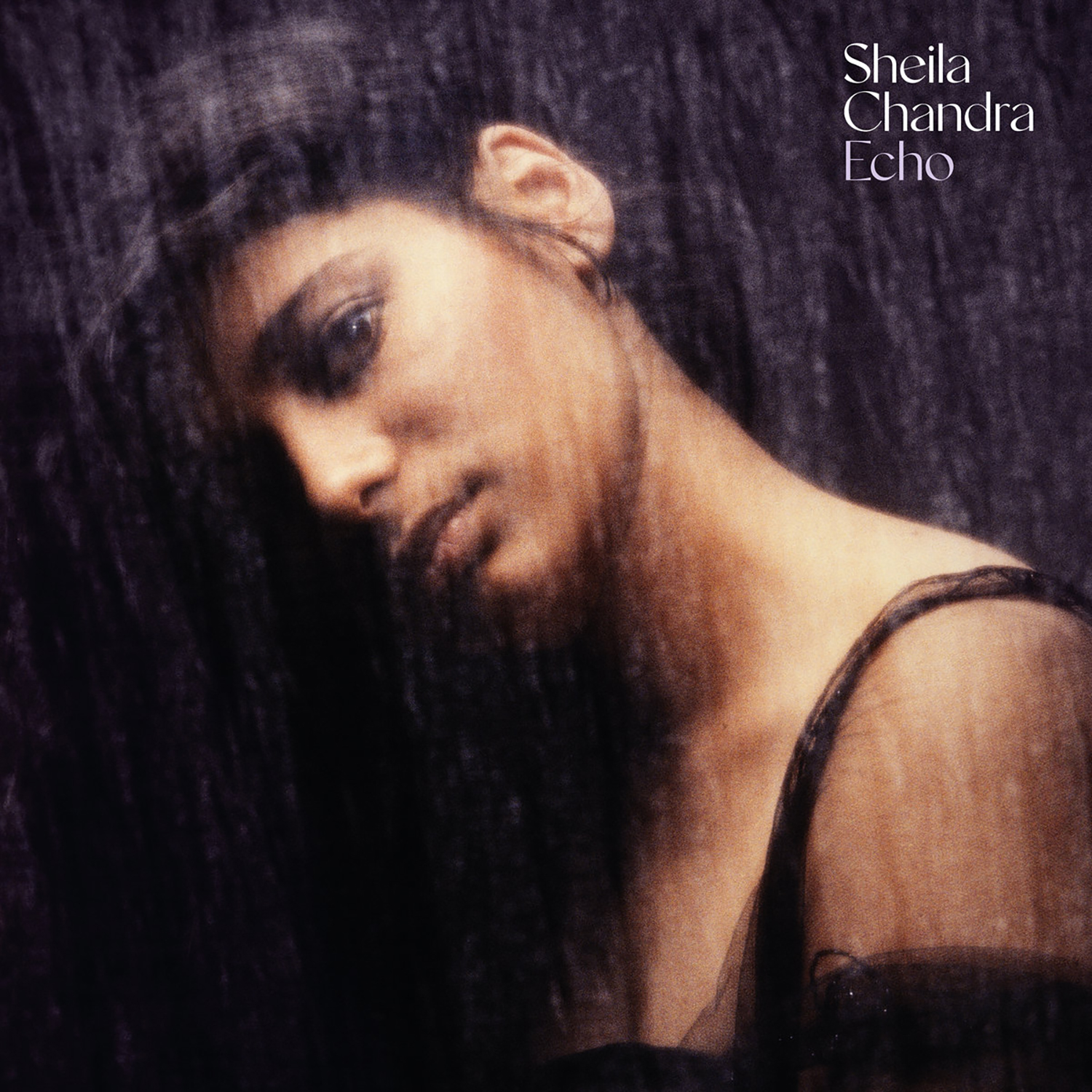 Photo: Sheila Rock, 1994
What spurred the Echo project to life?
I approached Cherry Red about putting out a 40th-anniversary deluxe version of the Monsoon album Third Eye, which hadn't been very available for a long, long time.
While I was chatting with a friend who's a serious music fan and collector, I happened to mention that I'd found two lost songs we'd recorded at the time of Monsoon and hadn't got around to putting on the album. I mentioned all the other tapes that are up in my attic, and he said, "That would make a fantastic album. I bet your fans would love to hear that."
I get so many comments on social media saying, "Oh, I wish I'd seen her live." One guy, who was very sweet, told me he'd got tickets to see me, but broke up with his girlfriend the day before. So, he didn't want to go, and then that was it—there was no other chance.
I thought it would be a good thing to put together while I'm able to make the determinations and create the treatment of the tracks. Echo kind of completes the collection, as it were.
You’ve said it was drawn from an extensive search for performance recordings. Describe what you went through to choose what was included.
The first thing was that Real World were immensely helpful with tracking things down from the British Library, WOMAD recordings, radio sessions, and large radio stations. It's much easier for a label to do that than an individual.
Then I made a massive assessment of everything I had, with charts and everything, looking both at the recording quality and the vocal performance.
An example of how I made decisions is when I found a session in which I'd given a technically beautiful performance of "Lament of McCrimmon." But there was another that was more imperfect, but far more soulful. In the end, I went for the more soulful one.
Also, I can't go into the studio and just sing the odd phrase the way someone who's doing a live album usually can to correct issues. But there are only two autotuned notes on the album, and I invite people to guess which they are.
How did you look back at this material from afar? Do you still feel deeply connected to it or did it feel like archeology?
It puts me straight back into the place where I was when I was making the recording, by and large. Except that, of course, they were all single takes, so I can't remember the note I struggled with or the breath I almost missed.
It's a very different experience for me than for the listener, because I have an internal bodily sense of how well I'm performing a note or how much breath I've got left. It's a little bit more sudden death for me.
Singing isn't possible for me now. But all human beings, when they hear a sound, and particularly when they hear a voice, mimic their vocal cords and make micro-movements. So actually, listening was quite tiring, which is why it took me so long to put Echo together.
It could also be upsetting. If it was a bad performance, obviously that's upsetting. If it was a good performance, then there's that sense of regret that I can't still do it—and wanting to join in and not being able to.
You'd be surprised how instinctive speaking is, and making sound is. If you drop a hammer on your foot, you know how instinctive it is. There's nothing that's going to stop that exclamation coming out of your mouth. So, think about the force it would
take to stop yourself yelling ‘Ow!’ when you hurt yourself. Also, over the course of a whole day, people unconsciously invite you to speak frequently. But consider the constant discipline involved when you want to speak, but can’t, or when speaking is very tiring and you shouldn’t. That's doubled when it comes to listening to old recordings, so I did have to take it very, very slowly.
One thing that strikes me about Echo is the importance of silence and pauses. Tell me how that informed your performances.
I had to become, particularly after I got over stage fright, very comfortable with silence—with the audience. It was a huge lesson in understanding the power of presence.
I think there are two schools of thought with stage presence. One is the sort of person who bursts on stage in the shiny suit and says, "Good evening, ladies and gentlemen. Have we got a show for you tonight!" That big-energy kind of presentation—the big show, the high kicks, the huge hats, the canes, and everything.
I think the other form of performance is about stillness, which can lead, if you're lucky, to a kind of transportation out of the ordinary world.
It's the way in which the audience and the performer become bonded—not just in the emotions they're experiencing, because obviously there's usually an emotion which a particular song will try to evoke, but also in the sense of communion and a stilling of the mind.
I feel that the audience borrows my musical brain, which may affect their understanding of nuance while they're present. But I borrow their hearts, if they're generous enough to lend them.
For that, you need to be comfortable with being silent. It takes a while to be able to walk on stage and just stand there. Not necessarily for a long time, but to not immediately feel you have to jump into something. That took me a long while to learn.
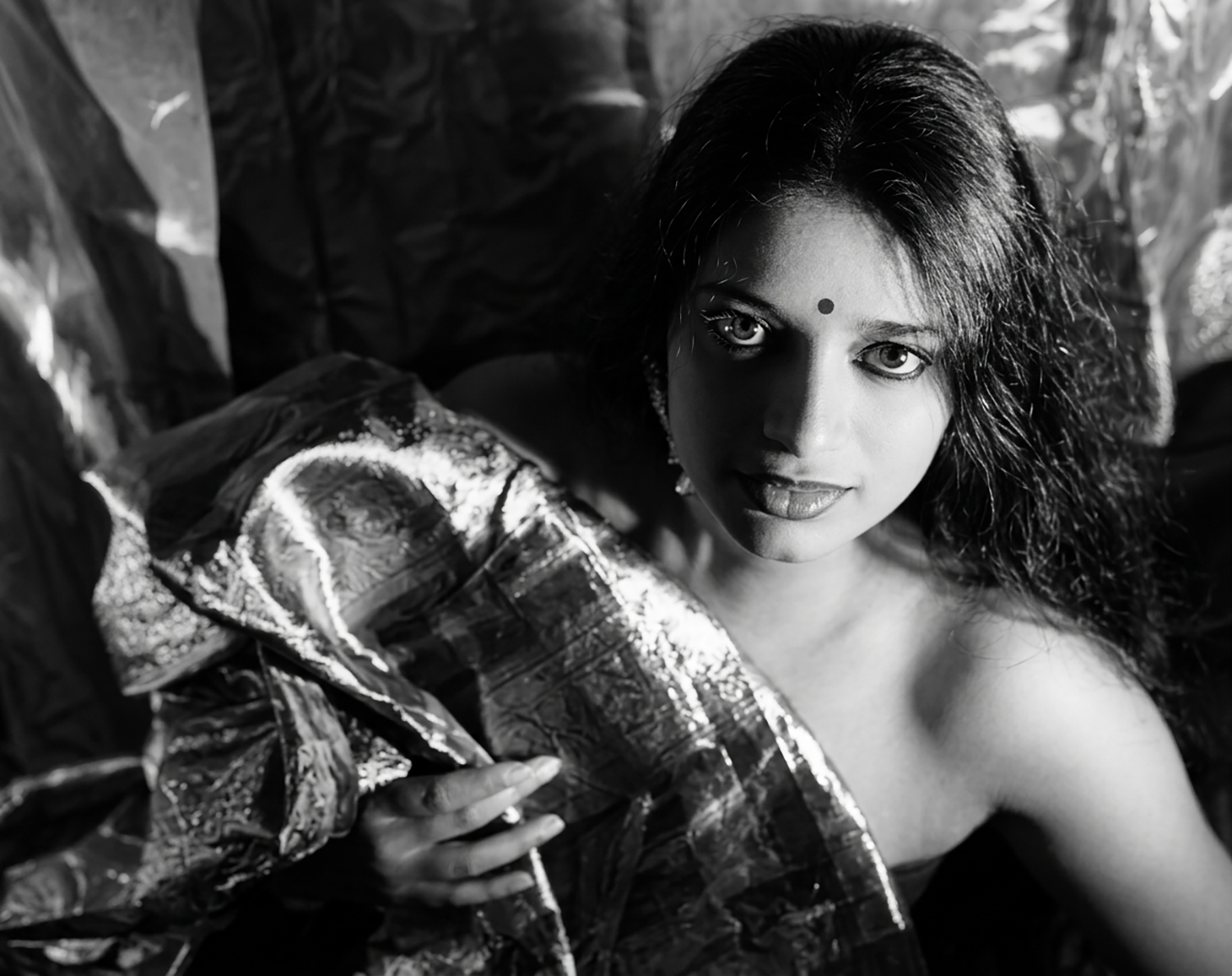 Photo: Jo Swan, 1991
Around 1992, you began experiencing some of the stage-fright issues. What are your thoughts on experiencing and transcending the issue in retrospect?
I didn't have a long performance history. Monsoon was a purely studio band. We gave one performance at the Bharatiya Vidya Bhavan in London, which was really just an excuse to get together and rehearse in order to record the EP that then went out to tempt record companies. We also did one radio station performance.
I had not done any live performing as a solo artist. I'd done lip-syncing on a TV show but hadn't actually gone on stage live. And as my albums got more and more multilayered, it seemed more and more impractical.
For instance, "One" from the album Roots and Wings has 20-22 tracks of vocals going simultaneously in a floating chord, as well as a blues vocal and an Arabic-style vocal weaving in and out of each other over the top, in addition to spoken word. There aren't 22 of me on stage, and I didn't want to bring a big bank of singers with me.
But the rumor began to go around the music business that I couldn't actually sing because nobody had ever seen me sing. So, I performed and toured in '92 and '93, and then I had a break because of the pain in my throat and learning to adjust to what was going on.
When I tried to do a duet with Iarla Ó Lionáird from Afro Celt Sound System in 1999 at WOMAD, I was invited on stage by Simon Emmerson. I was fine at the rehearsal, and then at the gig, stage fright hit me like a wall. I couldn't breathe in or out. I was in danger of falling over. Of course, when you can't breathe, your head starts to swim. So, it was a direct result of my voice, i.e. not being sure what was going to happen if I opened my mouth.
At that point, my voice wasn't in a place where I could have sung for half an hour on stage anyway. I took it as a huge opportunity to go back and learn stagecraft and the things that musicians hadn't been able to consciously explain.
I went and did clowning and fooling for a long while. I did lots and lots of workshops. I did speaking circles. I went and sang in folk clubs where ostensibly nobody knew me, although they usually knew me once I'd sung a song.
I just did the apprenticeship because I went straight from a recording studio for 10 years into WOMAD. I did no warm-up gigs. It wasn't surprising that although I was able to instinctively do it, when a problem came up, I didn't know how to work my way back into the process of sorting it out.
Doing all the workshops really helped. The speaking circles are where I got the ability to just stand there without saying anything and not feel as though people were going to start throwing cabbages.
Echo showcases a fun and playful side to what you did. Yet, many people take you very seriously and miss that element in your music. Why do you feel that’s the case?
I think that's partly my fault. When I played live in '92 and '93, I'd got so sick of all the Indian concerts I'd been to, which were funded by the Arts Council or someone or another.
The dancers were told it was obligatory to stand at a microphone for 10 minutes and explain the mudras, the raga, and the tradition, rather than just dance.
I had this rebellion against that and just sang. I wouldn't say a word, except to thank the promoter or the recording engineer just before the last number. So, there was no playfulness.
I used to wear white because I was sitting down, and I wanted audiences to be able to see me, and for lighting people to be able to put gels on and make the stage different colors—which, for an act where there's not a lot of movement, is a good idea.
I think people projected an awful lot onto me because my music draws partly on some of those religious traditions that use voice and drone and large, reverberant rooms to make everything seem more solemn. That was one of the things I wanted to get away from when I was learning about clowning and fooling.
I think for everyone, when you're on stage, there's a kind of worry about what might come out of your mouth. That was another fear to get through.
By the time I was performing in the mid-2000s, I used to tell stories and deliberately lead the audience one way with one emotion and then turn it around and make them laugh. I didn't want to be the sort of po-faced, sacred-mask singer.
These are human stories. Something like "Lament of McCrimmon," for instance, has the most beautifully tragic story.
 Photo: Jo Swan, 1991
One of many fascinating elements that comes through these recordings is the fact that you successfully infused a recombinant element as a solo vocalist, bridging multiple genres and approaches, even when a piece seemed focused on something Indian, Celtic, or British. Tell me about your approach.
As we discussed earlier, I had this technical problem with going on stage and there not being 22 of me. I decided that I really needed to learn about live performance without any safety net.
I also didn't want the logistics headache of learning how to manage a band and call sheets, catering, and tour buses and all that kind of thing. So, I thought going on stage alone would be the way to achieve that. But it left me with this technical challenge: if you can't put an Arabic vocal track against a blues vocal track, how are you going to convey all this?
The other thing that led towards solo voice, was that when Monsoon first had a hit, I went to India very shortly after the record was in the charts. My family said, "Oh, you're a singer. Sing something." I'd never met most of them before.
Western pop music relies on chords, and if they don't know the song, it just sounds very flat. The experience of standing there singing that, thinking, "Am I nothing without an orchestra? Am I nothing without a guitar behind me?" made me vow to find a way to rock up anywhere with just my voice and sing something that would make sense.
This was really before I knew about British, Irish, and Scottish folk traditions that also used the drone—or an implied drone. That also fed into my decision to break this technical problem and go on stage somehow and make the fusion within my voice.
The thing I'd been finding was that things like turns and trills are common to so many vocal traditions across the world that are completely unconnected. I felt those were gateways in common. They were the point where you could make that narrow turning circle from one tradition to another before the audiences even realized what's going on.
It's not easy to find a place in the music where that sounds natural. You could do it for effect, but I've always tried to do it where it would magnify the emotion appropriately. It's very tricky to write.
You added some minimal effects to inject additional intrigue on some tracks. Describe some of those elements.
Of course, with live recordings, you're bound by the recording itself and the effects that were added at the time.
A lot of these recordings were not clean. They were not made for archival purposes, but as a reference point.
Some of the performances had loads of effects which were very apparent. And some of them less so. One was completely dry, which is very strange. I suppose it was from whatever DAT machine we were plugged into while we pressed record quickly, just for reference.
With the dry tracks—which I think were "Speaking in Tongues III and IV," from a launch at Virgin Records for Zen Kiss—we only got the dry vocals. So, I had to start from scratch. I haven't added all the effects that were on the original recording, but as many as might have been added live. We used to really push the boat out for that one, pushing and pulling effects in and out depending on the rhythm being used.
Elsewhere, we just added enhancements to keep the voice sounding smooth. A lot of these weren't recorded with putting them out in mind, and the effects used are calibrated to the hall, the number of bodies in the hall, and all that kind of stuff.
We did smooth things out. We doubled up some of the vocals so that it fills the spectrum a bit more.
But the main thing is the soul. For me, that's a change. It took me a long, long time to understand the specialness of being in the moment, what happens to the audience, and how they sort of enter a trance state.
Live audiences can be remarkably forgiving of technical mistakes. They don't seem to really hear them, even if they're very accomplished musicians.
You've got to bear in mind that when you transfer from a reference recording for a concert that may have been really great according to the audience, there are going to be things you hear on Echo that the live audience wouldn't have noticed. The recorded medium is for repeated listens. So, we added only enough effects to make it fit for that purpose, really. Not huge amounts.
The eternally-popular “Ever So Lonely” appears in a medley with “Eyes” and “Ocean” on the record. Why do you feel this song has spanned generations and continues to be remixed by modern DJs?
I think there's something about that run of notes. There's something incredibly universal about that raga, although obviously "Ever So Lonely" doesn't stick very closely to the raga or sub-raga. But it's the scale the Beatles used. It was very popular in the '60s.
The first few notes are the same as the blues chords—the I-IV-V—and a lot of British folk tunes use that pentatonic scale as well. There's this universality about it. And then that run of notes down on "Ever So Lonely." It's just incredibly catchy. Then it's repeated 33 times. You just can't get it out of your head, even if you want to. It's an earworm.
I believe songs are like viruses. They're living entities. For a song to survive in an oral tradition, it's got to be that catchy. A song like "Donalogue," which is 900 years old in the Irish tradition and has been covered by everyone, is probably the folk equivalent of "My Way."
Think about it. Nine-hundred years ago, not that many of the common people would have learned to read and write, so it had to travel ear to throat to ear to throat. It has to find a new host to carry it down the next generation. So, it's got to be good.
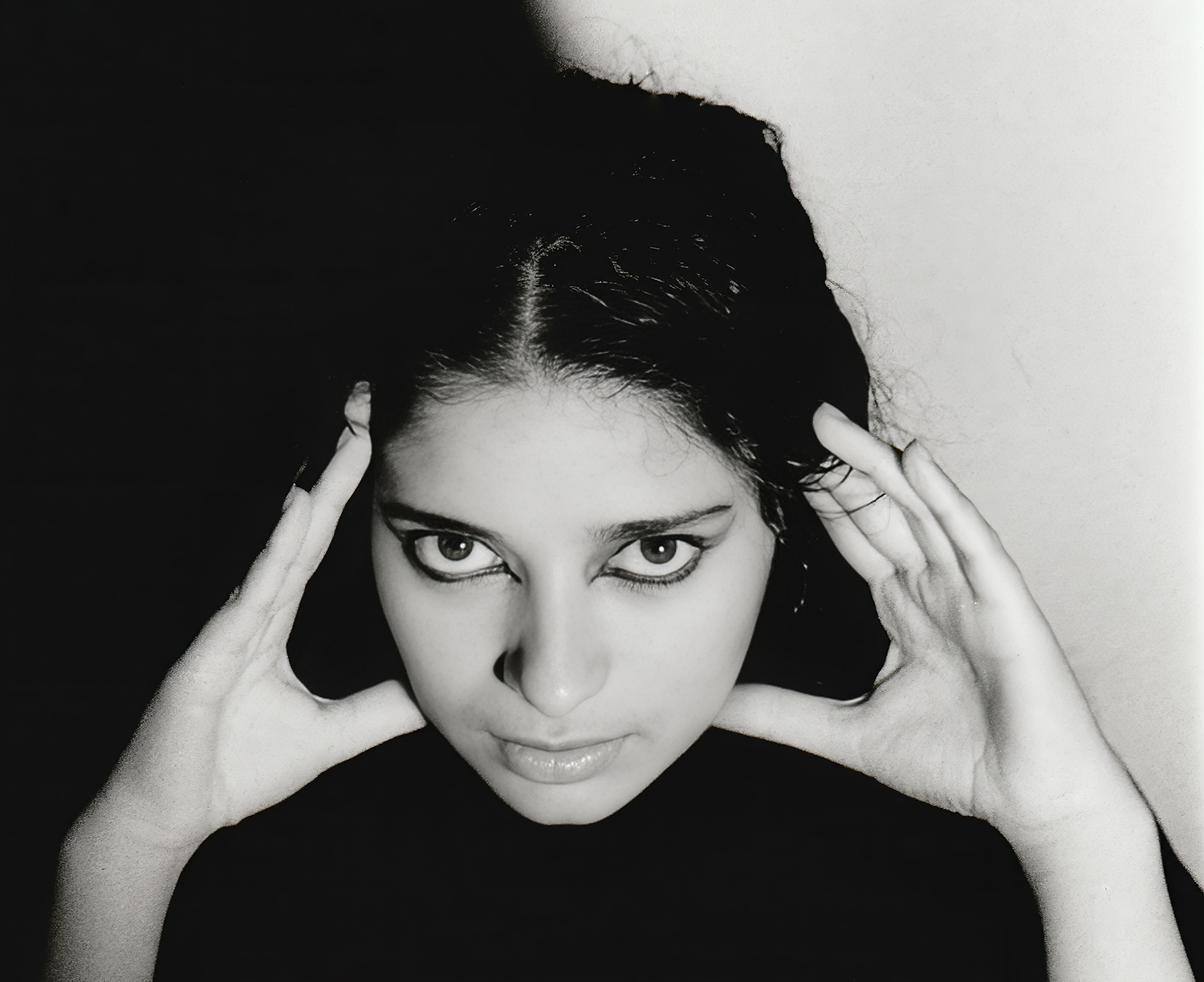 Photo: Jo Swan, 1991
Tell me what the album title Echo communicates.
I wanted to find a way of making performances drawn from a number of different concerts into some kind of narrative. Otherwise, it just feels very bitty and spotty.
We tried to give all of them a cohesive feeling. Stuart Bruce, who was the mix engineer on Echo, under my direction, did that. That's another reason to enhance them, because you don't want to go from a very quiet recording to a loud one.
I was thinking about a title as I was considering a certain running order. I'd been playing around on a separate piece of paper with various words that could describe the album, and they all sounded a bit pretentious.
Then suddenly I put together the emotional journey of Echo. It explores the mountain nymph, who was cursed by the goddess Hera to only utter the last words said to her, which was her story of falling in love with Narcissus and him spurning her because he thinks she's making fun of him. Then, of course, he falls in love with his reflection in a pool and she fades away with grief into the hills. The album follows that emotional journey, so it just felt like the right title. It also felt like a good way to reference the fact that I lost my voice as well, although I'm not cursed by the gods.
Since your musical career concluded, you've become an acclaimed author, with several books to your credit, including Banish Clutter Forever and Organizing Your Creative Career. You're 16 years into that journey. How has writing expanded your horizons, and what satisfaction do you get from being a purveyor of the written word?
When you can't speak, especially for whole summers on end, compared to when you're going from festival to festival performing, you have to develop a different kind of voice.
As we discussed, I was always writing notes to everyone. That's how I became friends with Stick. We were at a gig together. Stick is a very successful street artist, and I met him at a gig in Glastonbury. Most people are put off when you're writing notes because it's not natural to them. He would just draw me stick figures in reply.
He ended up becoming very, very successful and writing the foreword to Organizing Your Creative Career as a testimonial to the way I'd mentored him from where he had been.
It's hugely satisfying. It started to feel like my real voice was mostly in the written word, because of just spending years speaking like that.
I kept a journal as well since 1997. I think I probably had unwittingly done the sort of 10,000 hours that you need of just honing your craft.
When I'm typing into the screen, I feel as if I'm talking to one person, which is a great advantage when you're writing books.
I just like being useful. I think I'd have been a teacher if I hadn't been a singer. I've loved giving workshops, and I like helping people to make art—helping them edit their process or overcome their blocks. That's immensely satisfying for me.
 Photo: Jo Swan, 2001
That carries into your work as a coach, too. Describe what you offer in that realm.
Online coaching via platforms such as Zoom, one-to-one. It involves lots of listening. I offer a kind of disinterested care, because I have nothing to gain either way.
I think the problem with asking peers is that there may be hidden agendas, jealousies, or a lack of perspective. It's very difficult to find someone in a completely different place who's willing to give you the attention to your career process that you might need.
I see it as a way of allowing people access to a work culture, to understandings, to strategies, and to undoing the blocks in themselves.
The arts are taken up these days by upper-class people with connections. I want to help tip the balance back a little.
You've been very vocal on social media about some pertinent topics in society, particularly the treatment of disabled people by governments and able-bodied people. What’s your perspective on what’s playing out across Western civilization?
Capitalism. I know everybody blames it, but it really is at the root of it, and I'll explain how.
Ableism is one of the last acceptable "isms," in the sense that people don't realize when they're doing it. They don't realize how riddled popular culture is with ableism.
It doesn't always happen now, but for decades Hollywood, for instance, would make the villain disabled or scarred, and this was kind of an explanation for why they were the villain. For people with facial scarring or amputees, that is an absolutely disgusting idea to put into people's subconscious minds. We do it from fairy tales onward. Look at Beauty and the Beast.
The reason capitalism is at the root of it is because capitalism leads us, subconsciously, to value people according to their worth. It might be net worth. It might be assets. It might be potential to earn.
If you see a six-foot, long-legged, beautiful woman walking into a room, you think that’s a potential model, influencer, TV presenter, or musician—someone who can get a lot of attention and make capital, to use that phrase loosely, by being so beautiful. The things that make capital are youth, likability, charisma, beautiful teeth and hair, and health.
We're all subconsciously judging people by the value of their clothes, their car, their house, or whatever. It seeps into us in a way that I think we don't realize.
The basis of the wealth of people who aren't born with a silver spoon in their mouths, with investments backing them up for passive income, is basically our bodies. That's what it comes down to.
Are we young? Are we healthy? Are we attractive? Do we have enough energy to sparkle?
People forget that personality is lack of pain and ease of movement. Perhaps you're a great dancer—not at the ballet, but on the dance floor—and you attract a partner. Maybe a rich partner.
We forget that our wealth is our body, and what we sell is our labor, looks, youth, and sexuality. These are all the things that we trade for worth under capitalism. I think capitalism's punishment for people who refuse to make that bargain is sometimes to be destitute.
Almost half the poorest households in the UK contain at least one disabled person. It's a very quick route to poverty.
One of the disability charities here has reckoned that disability costs the disabled person around £1,300 extra per month in costs for equipment, energy that it needs to be charged, wheelchairs or things that will carry you from the bathroom to the bedroom, supplements, physios, and all the extra stuff that the NHS doesn't pay for.
We have free healthcare, but there are some specialist things that you do have to pay for. Disabled people have that tax, as well as reduced employment rates and so on.
I think there's this scapegoating in ableism of disabled people, where capitalism teaches us to look at them as having no worth. That comes out in the form of either believing they haven't done enough to make themselves well, or that they're taking the mickey and just living off the state, or that they've done something very bad and they're being punished. This is because of what I like to call the illusion of control—or the "just-world" theory: you get what you deserve.
We like to believe we're in control of our lives. By doing what we should, we'll get what we deserve. When people don't get what they deserve, and that person is before you—say they're a really wonderful person who volunteered and did a huge amount, and were very busy, and everything that capitalism tells us is great, and then they're in a car accident or something, and they're terribly scarred. Now, they can't move or get around, and it completely shatters that illusion of the people around them.
It’s because the human mind doesn't like to live with cognitive dissonance, it weaves stories, even in the form of just a feeling, that there's something else. That there's a reason God wanted it. Or they should just try harder, or be less cranky, or complain less.
In England, and around the world, particularly when you get conservative or further-right governments who are very capitalist, I think in policy terms that translates as needing to punish the scroungers. There's all this rhetoric about cutting the welfare bill. It's disabled people first, and it's because governments know that they're an easy target.
Lots of able-bodied people who've always taken their health for granted, or counted it as a virtue that they deserve, will very easily be persuaded to look down on disabled people and try to make their lives even more difficult. And then there's the notion that disabled people are supposed to stay at home where they don't bother anybody.
There were "Ugly Laws" in America. Disabled people could be arrested for being out because they were disturbing the peace. So, we're supposed to stay at home and be miserable and not have any hobbies or any joy, because if we're having hobbies and joy, it's because the taxpayer is paying for it. That’s forgetting, of course, that we get taxed, too. We're consumers. We pay sales tax and national insurance and all that. Many of us work and pay tax through the usual system to the government. But no, we're called lazy scroungers sitting on our backsides.
The other expectation is that if we're out, we have to be cheerful or inspirational. And I get very annoyed with that. People don't understand that becoming disabled is a form of bereavement for the future you. All the relationships you would have had, all the partners you would have had, all the experiences and travel you might have had, all the hobbies you might have been able to do, all the work you might have been able to do, all the achievements you might have been able to make—they're gone. And you wake up every morning facing that reality.
I've woken up having been singing in a concert in my dream. I wake up, and I have to face reality.
I think the thing about losing a close family member is that eventually, with time, you build a bigger life. You do things that you like doing, make connections, or whatever, and you enter a place where you don't miss them as much because life goes on. For a disabled person, life may not go on in the same way.
Some disabled people can access a lot of those things. But many can't, particularly the housebound, who you hear the least from. I think they deserve every pleasure they're able to get.
Do you want to be lying in bed, being turned to prevent bedsores, and not have the money to buy a few paints and mess around, or have a glass of wine in the evening if the medication will allow you?
Should we be squeezing these people who are vulnerable even further? Should we put the role on them of always having the banter, always being cheerful, and never talking about their illness, when their illness is a full-time job to manage and that's how half their life is spent?
They may be calculating, "If I wash my hair today, I can't go out and do the garden. I can't go out to the shops." That's a very basic one from someone who's not that disabled. The calculations for "Can I wash? Can I cook? Can I chop some vegetables? What will my joints take?" are taking up huge amounts of mental processing power for me. The mental load of disabled people is incredible.
On top of all that, there's the likelihood of being plunged into poverty. And the whole "you've got to be cheerful or inspirational about it" thing is really the cherry on the cake.
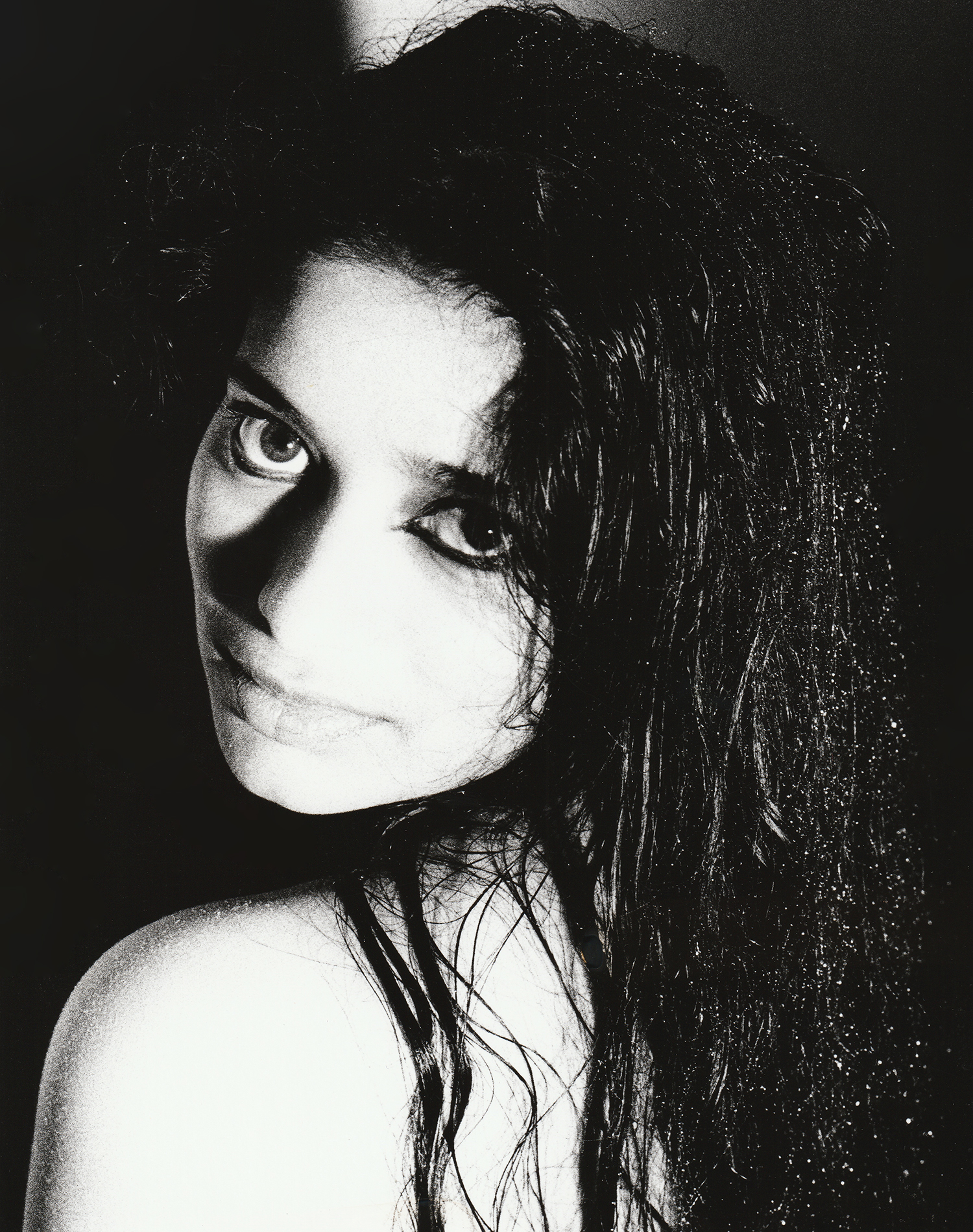 Photo: Jo Swan, 1991
How can we address this lack of empathy?
Not making the male the default.
The big thing that's been stolen from males, culturally, is empathy. That's the thing that makes for fascism and macho culture.
Capitalism also requires it, because you cannot use people as tools in the productive system, and it views them mainly as tools and that being their worth, unless you lack empathy.
I think—and I know this is a radical thing to say—but I think women understand that the important work of the world is connection, compassion, and nurturing. Taking care of the home and hearth has been trivialized, when in fact it is central to life. It is the thing that all our ancestors, of any stamp and type, right back to Neanderthal culture, have done.
In fact, I think it was Margaret Mead who said that when someone asked her how you can tell whether an earlier society or ancient humans were civilized, was a healed thigh bone. The reason she knew that society was civilized was because breaking your thigh bone is a very serious injury, and you need to be taken care of for weeks for it to heal. That indicates that nurturing, caring, and compassion for the vulnerable were there, and for her that was the first mark of civilization.
It's not a trivial thing to say that caring for children, cooking, and keeping house is "worthless." It inverts the world. In fact, I think capitalism inverts everything that is important.
A lot of people are starting to talk about matriarchy, which is not the opposite of patriarchy with hierarchy, but a circle that puts children, the elderly, and the disabled at the center, because if their needs are cared for, everyone else will be catered to.
It's the drop-curb effect. When they mandated drop curbs at every corner in the UK, it didn't just help wheelchair users. It helped people with shopping trolleys, people with kids in pushchairs, people with low mobility who were elderly, and even unsighted people, because they could feel the drop coming up to the edge of the pavement.
That's why when you put the most vulnerable at the center, you're creating a society in which everything moves more easily for everyone.
People talk about class consciousness, and yes, you need to start at the bottom, but actually the bottom isn't the worker. The able-bodied worker isn't the bottom. The bottom is the disabled person.
If your revolution doesn't include disabled people, if it regards them as irrelevant, or something you tack on at the end, or a bit of a pain because you've got to provide for them, you're not starting at the right place.
Another topic that's particularly relevant to you as both an author and musician is the widespread use of artistic output by AI companies without permission or compensation. What's your view on the situation?
I think a backlash is starting, and I hope it builds. I think we're starting to recognize AI slop, and quite rightly.
Art is all about the divine spark. You can't have the divine spark in a machine. It's just another capitalist reaping machine and another colonial extraction machine.
The people who tend to change cultures are often part of street culture. They're, again, right at the bottom, creating with what they have. And limitations, paradoxically, tend to make things more creative.
We all know this. We know the anecdotes of the billionaire who has no taste because they can buy everything and don't curate and don't have discernment.
Culture has generally come from the bottom and is being fed into these machines without permission and extracted. And, as ever, the people who did that hard work are not being remunerated. Or even credited. It's dreadful, this wholesale theft.
Essentially, the arts are like the wealth of India in 1850. It's just being hoovered up.
It seems that corporations get to cry foul on copyright, but when individual creators do it, they get categorized as hysterical or unable to comprehend the inevitable march of technology.
That's the way the law always works. Take the drug problem. At the moment, drugs are illegal unless you have, in the UK, a prescription for cannabis oil for medicinal purposes for people with Parkinson's and epilepsy and things like that.
The people who have the money to party the most and take the most drugs are up in the West End. They're in Kensington. Where do the police do their drug raids? Not Kensington. They don't hang out outside Stringfellows or Annabel's. They hang out in Brixton or one of the poorer London neighorhoods. It's always been the way—one law for one group and one for another. America has just brought it all out in the open. You can be incredibly corrupt if you're president.
Every day, some new element pointing to civilization collapse seems to emerge. Do you feel there’s potential for the species to reverse its downward spiral?
I don't know. I think we might have run out of time unless we get our act together. I'll probably be alive for that, and the prospect is terrifying.
If you're already physically vulnerable, the prospect of climate change is frightening. I'm photosensitive, so you can imagine what the heat waves we’ve experienced in the UK have been like for me.
Patriarchy is a blip. It's only about 5,000 years old. But there's a lot of evidence mounting up now, particularly because we have DNA testing, that a lot of societies were matriarchies, where people were enclosed in that circle of care and nurturing, men included.
It's not about women having all the qualities needed and men not having them. It's about men who are conditioned. And we're all like this. It's very human. Once we've got a little bit of privilege, we don't like giving it up. We really, really don't like it.
Being a singer who flies around the world gives you a certain amount of privilege. I did not like giving that up. I really did not. That's part of the reason why I don't like going back into that mindset most of the time.
I think the 4B movement gives us a clue. I'm not sure how extreme it has to be, but the patriarchy problem and capitalism problem are pretty extreme. So many more women are choosing just to live their own life, have nothing to do with men, and not get caught up in the systemic exploitation of their mental and emotional labor, and physical labor in producing children and taking care of them.
Until men come around—and they don't show that many signs of doing so at the moment—and start recognizing that, actually, the female is the blueprint, we've got everything upside down.
Think about how much money gets put into sports, particularly male sports, and the superstars and highflyers and how much they get paid. The back four pages of every newspaper get devoted to sports. There are 20-30 channels devoted to sports. It's all about domination, aggression, and winning. Even if winning is about a team, it's more like a war. War metaphors are used all the time.
But the arts are shrinking and shrinking. Access for the ones who need to be inspired, such as the young people and the ones with limited resources who are creative is shrinking.
The arts are feminine in the sense that they are circular, because you cannot say, "This fantastic singer is better than this fantastic singer," measurably and objectively. It's more about the heart, and it's more about what you feel. It's more about the empathy of understanding another person's musical, physical, mental world.
When it comes to ableism and fascism, and capitalism and patriarchy—there's no, "Okay, we'll just have a bit more of this." So, I think it's about overturning the order in people's minds, as well as everywhere else, and starting to build those systems which systemically give people, especially disabled people, vulnerable people, children, and the elderly, inalienable rights.
It's not a favor for someone to have access to public buildings, the arts, joy, and hobbies. This is a basic right.
Only when we get that matriarchal-style way of looking at the world can we overcome everything that digs right down into patriarchy and capitalism.
That's my view, anyway. I know some people consider that quite extremist. But hey, so is the weather.
Watch the video podcast version of the interview: