
Donate to Innerviews
Since 1994, Innerviews has provided uncompromising, in-depth interviews with musicians across every genre imaginable. And it does that with no trackers, cookies, clickbait, or advertising.
Your donations are welcome to help continue its mission of highlighting incredible music and artists, without any commercial considerations.
Your contributions will be instantly transformed into stories and videos, and cover hosting and web management costs. Importantly, your dollars will help ensure Innerviews remains absolutely free to all visitors, independent of their ability to financially support it.
Please consider making a donation today by using the PayPal QR code below.

Steven Wilson
Beyond the Map
by Anil Prasad
Copyright © 2026 Anil Prasad.
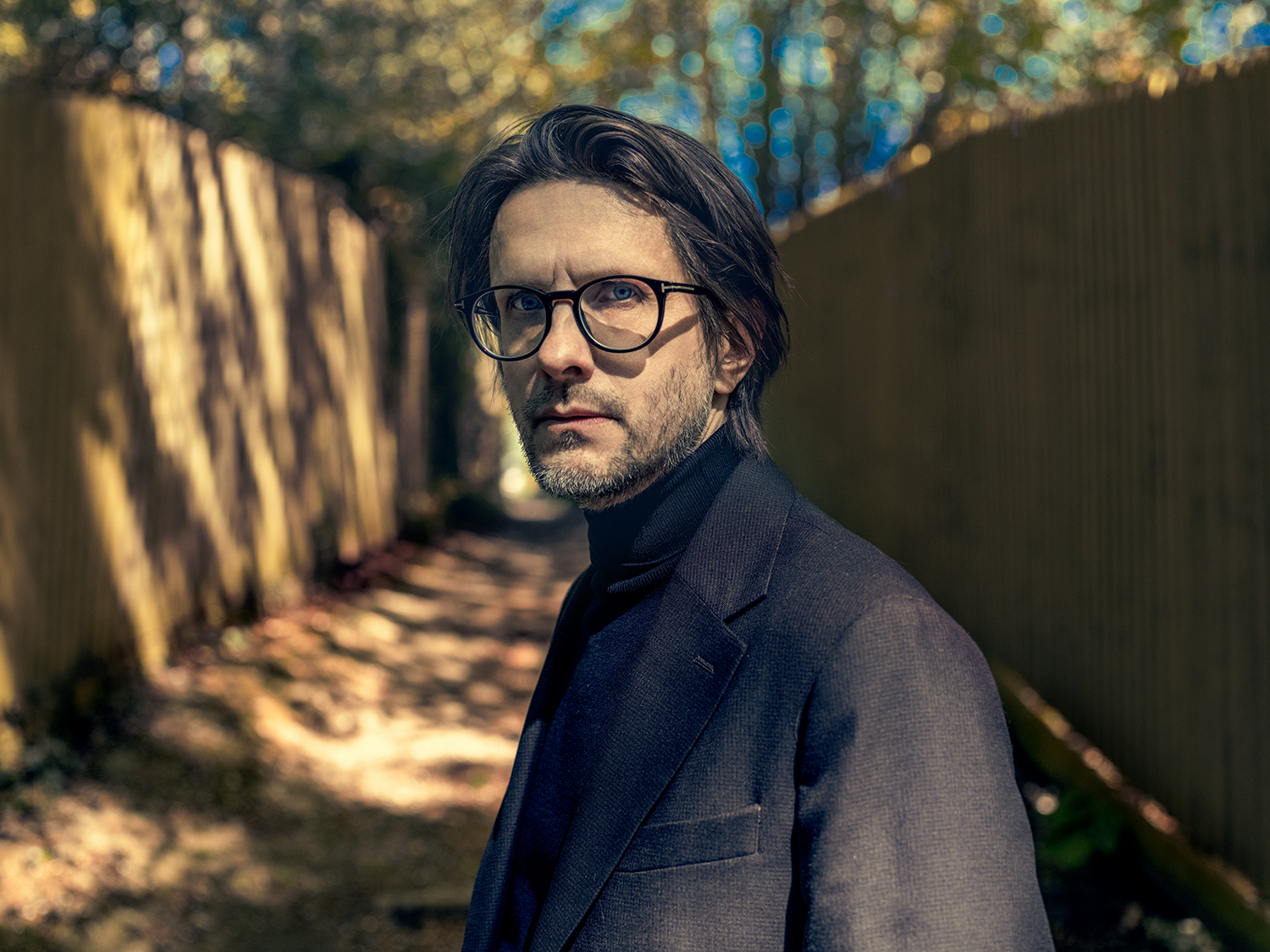 Photo: Kevin WestenbergSteven Wilson has always been drawn to the edges of expression: places where genres blur, where technology meets instinct, and where ideas expand and splinter the further you follow them. His music has repeatedly taken that journey across radically different scales, from the intimate and song-oriented to the abstract and experimental, from the elaborate architecture of Porcupine Tree to the ambient and drone explorations of Bass Communion and the diverse collaborative worlds of No-Man and Storm Corrosion. And within his solo work, Wilson has rarely been content to occupy the territory he previously inhabited.
After 2025’s The Overview looked outward toward the infinite expanse of the cosmos, Wilson decided to go in the opposite direction. Not merely away from outer space, but toward a more intimate human universe: a village. Requiem for a Village takes place in a fictional, unnamed community somewhere in the British Isles. It’s a place that doesn't appear on any map and exists outside the technology-mediated velocity of modern life. Its inhabitants cling to their own rituals and traditions, and the surrounding countryside seems almost sentient.
Beneath the superficial quaintness lurks the peculiar intrigue of British folk horror. It’s a world populated by cultural ghosts from Wilson's childhood—eccentric children's television, traditional folk songs, and spectral rural mythology. And they’re refracted through mercurial compositions that deliberately embrace imperfections, accidents, unexpected stylistic intersections, and unfamiliar instruments.
The album's cast reinforces its sense of being a miniature universe unto itself. Guitarist and multi-instrumentalist Randy McStine is a significant collaborative presence, with drummer Russell Holzman and vocalist Katherine Priddy also contributing to the landscape. Andy Partridge wrote the album's spoken-word narrative, drawing on the eccentric village portraiture of Dylan Thomas' Under Milk Wood, while actor David Tennant provides the voice.
Requiem for a Village reflects Wilson's philosophy of being defiantly unconcerned with genre. For instance, its title track emerged from an unlikely collision between drum-and-bass and progressive rock, built from a loop supplied by Holzman and transformed into a recombinant overture that sets the stage for the anachronistic tale that follows.
The instinct to keep moving forward also defines Wilson's other projects. Bass Communion has reemerged with two 2026 releases, Apparitions and Analysis Reveals Nothing of Substance, while No-Man has begun generating new material following a series of archival releases. Porcupine Tree remains active with the trio periodically reconvening to write and record. And a second Storm Corrosion album is also underway, built around an extensive body of predominantly acoustic elements.
Wilson’s extensive Atmos and surround remix output also continues apace, with recent projects ranging from Phil Collins' Face Value and No Jacket Required to landmark recordings by King Crimson, Pink Floyd, Jeff Buckley, and Tears for Fears. His work in this area, as well as his network of expert surround remixers, propelled him to establish Headphone Dust, a new digital download platform. Its goal is to make high-resolution spatial mixes more accessible, while establishing a carefully curated environment for the format.
More than 30 years after Innerviews first began talking with Wilson, this Zoom conversation finds him reflecting on his restless creative instincts, his resistance to the status quo, and his pursuit of music that transcends its era, and invites reconsideration and reinterpretation deep into the future.
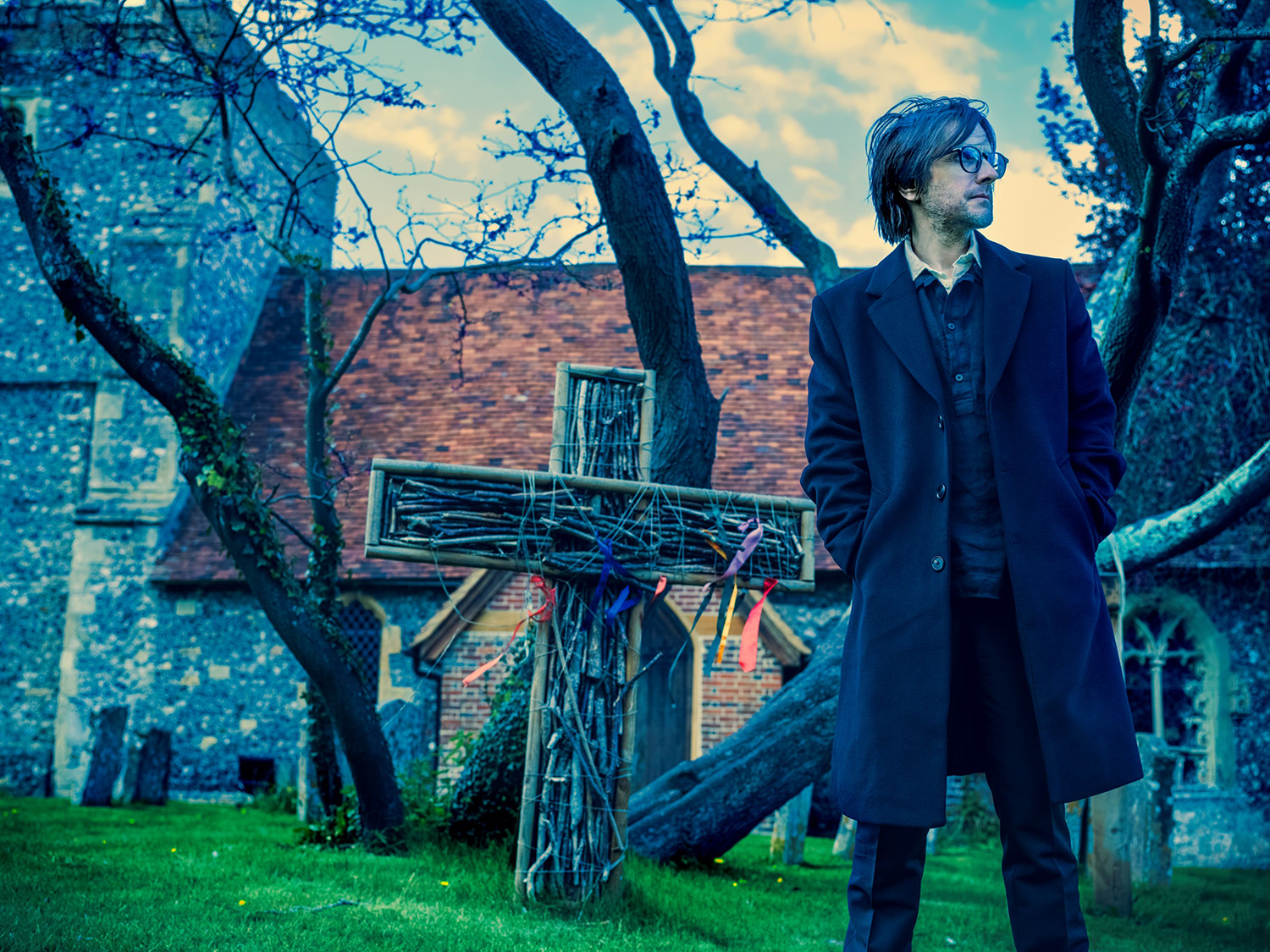 Photo: Kevin Westenberg
Describe the story you’re telling on Requiem for a Village.
The initial idea for it came as a reaction against the previous album The Overview, which was about the universe and the cosmos. It was about the biggest possible landscape. I always like to do something completely different from what I did before. So, this time, the question was, what can I do that would be the complete opposite of an album about the universe? The answer was the smallest possible community, which is a village.
The idea of focusing on a very small part of the universe was appealing. I also wanted to tap into a kind of folk horror aesthetic. I’ve always loved folk horror. I grew up with ‘70s British television, which was really creepy. I think it kind of scarred most people of that era for life. [laughs] So, folk horror is ingrained in the DNA of my generation.
I also wanted something that had an element of a countryside that’s alive, where people don’t die. They almost become parts of the landscape.
The fundamental idea of the album is there’s a village that doesn’t really exist. You won’t find it on a map, but the people are still there.
This idea is very relevant in the age of social media because this community is relatively cut off. It’s not part of the digital highway. These people are very insular. That’s the great thing about folk horror—the idea of going into a community that’s idyllic on the surface, but there’s something very perverse, peculiar, and eccentric underneath. Some might say pagan. The idea of having your own religious beliefs, which have no bearing on the rest of the world, is at the heart of a lot of folk horror.
If you analyze my whole catalog, there are certain themes I’ve come back to time and time again. One is the idea of the Internet and the digital world eroding our personality, uniqueness, and our sense of insular otherness. But I think you can still find it in the US and UK by just driving off the highway and into the countryside. You’ll come across little villages, of which there are thousands in the UK. They’ll have one pub and corner shop, and it’s almost like time has forgotten them and left them behind.
I’m taking a village that is very cut off and examining it from the point of view of people that are not affected by the outside world. And if you visit from the outside, you’re greeted with incredible suspicion and you might feel very uncomfortable, because their experience doesn’t quite tally with your perspective on life and the world.
Some of the late '60s and early '70s British children’s shows that influenced Requiem for a Village include Bagpuss, Catweazle, Trumpton, and Magic Roundabout. What did you find fascinating about them?
They had a sense of otherness, strangeness, and weirdness about them. They almost had a surreal, post-psychedelic dream logic.
They’re very quaint. Nothing much happens in a lot of them. Bagpuss was a show about a toy cat that comes to life and lives in a shop. Every week, the focus would be on an object the little girl who owned a Bagpuss would bring into the shop. All the puppets in the shop would come alive. It had this non-eventful sense of otherness about it.
Magic Roundabout was almost like an acid trip. You can almost imagine that the people who were writing these shows were under the influence of LSD. I don’t see anything like what these did in modern children’s TV shows, that’s for sure. I don’t think you’d ever get away with it any longer.
Another interesting thing is a lot of the children’s TV shows from that era were created by eccentrics working in the shed of their back garden. Oliver Postgate and Peter Firmin created Bagpuss. They used whatever materials they could come across to create their puppets and sets. They also used stop-motion slightly jerky animation, which I’ve always loved.
These shows left a mark on all children of my generation in the UK. They all remember these shows as having a really deep, profound influence on their childhoods, and how they look at life as an adult.
The spoken word narratives were written by Andy Partridge and recited by David Tennant. Tell me about the direction you provided Partridge and why you felt Tennant was the right person to deliver his words.
The reference point was Dylan Thomas’ Under Milk Wood. He wrote this piece that’s set in a village in Wales. It has very eccentric characters, which is exactly what this album’s about. His use of language is so beautiful.
There’s one phrase many will be familiar with: “Starless and Bible black.” That comes from one of the first paragraphs in Under Milk Wood.
I love the idea of using prose and very poetic language that feels like painting with words to try and create feelings. I knew Andy would get that. So, for Andy, Under Milk Wood was a strong reference point. It was one of those things where you know when something works. Andy created a lot of stuff. Not all of it worked, but what we’ve ended up for with David Tennant sounded so good.
Right from the beginning, I had imagined a regional accent reading the text. I kept hearing the late Ivor Cutler’s voice in my head. I also had the idea of a Scottish accent, too.
We tried a few people, including voiceover artists, and none of them were doing it for me. I think it needed someone who was a really good actor that could deliver those words and make them feel convincing. The professional voice artists sounded a bit contrived and fake.
I knew David was familiar with my work. He had some admiration for some stuff I’ve done in the past. So, it was relatively straightforward to approach him through his agent and ask him to do it. He came back straight away with a yes. In fact, the recording was in my inbox the following morning. He was doing it while he was on location for a movie. So he had an incredible work ethic.
As soon I heard David, I realized, “That’s a real actor. That puts me here in the intended environment, now.”
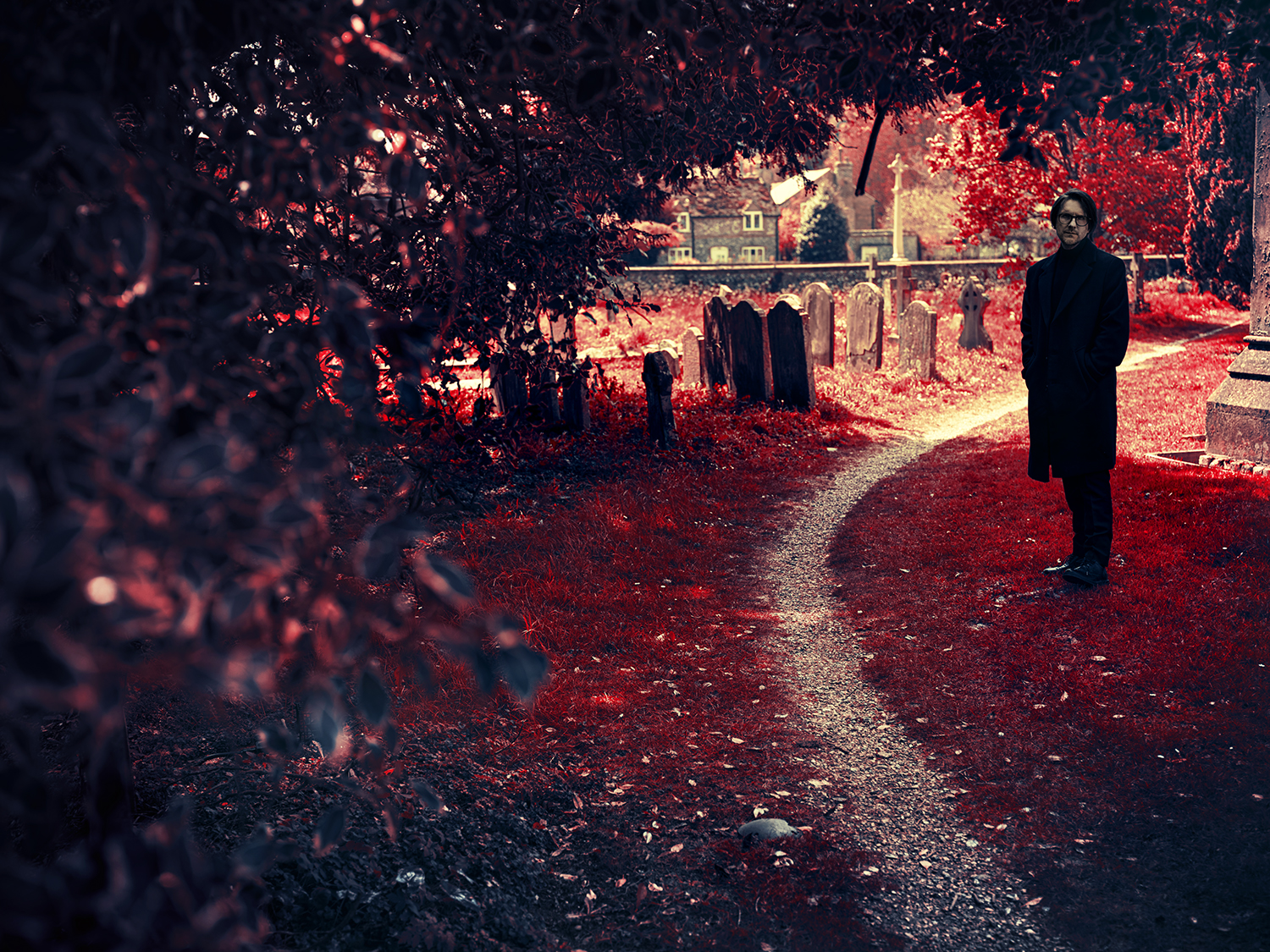 Photo: Kevin Westenberg
The album starts with the tribal percussion opening of “Swirl in a Lark’s Eye” that shifts into children singing, and then into Tennant’s introduction. What tone were you trying to set?
I wanted something that would make the listener a little bit uncomfortable and not quite sure of where they are. There’s quite a lot crammed into the first two-and-a-half minutes. You have the narration, the tribal percussion, the sound design elements, the choir, and the church bells. All of these things are trying to situate the listener in this place.
I talk about my albums a lot as being “movies for the ears.” This is probably the best example in all of my catalog. I’m introducing you to a village you’re going to spend the next hour in. And it’s a place that I want you to feel slightly discombobulated in. I want you to feel like there’s a sinister edge beneath this very idyllic little country village. There’s something bizarre and strange going on beneath the surface and behind the curtains. In this village, the people aren’t who they seem to be.
The acoustic guitar is deliberately playing microtonal intervals as well. This isn’t something I’ve done before. I’m playing the same note on acoustic guitar on two different strings, but I’m allowing one of the strings to go very slightly in and out of tune. So, you get this very dissonant and discordant sense that things are not settled.
This is not beautiful, harmonic music. In fact, one of my mantras right through the album when I was working with Randy McStine was, “Let’s not tune the instruments. Let’s deliberately pick them up, and if they’re a little bit out of tune, let’s embrace that.”
From there, we go into the title track, which features a drum and bass meets prog rock meets experimental metal approach. Tell me about the construction of that piece.
That came out of working with Russell Holzman, who is Adam Holzman’s son. I think he’s one of the best drummers in the world. His milieu is drum and bass. He’s made a name for himself by recreating incredibly complex rhythm tracks that were originally programmed on electronic drums. He can play things you would think are impossible to play by people like Aphex Twin, Venetian Snares, and Squarepusher.
I’ve always loved drum and bass. Russell sent me his loop pack designed for DJs and electronic producers. But I thought, “Wouldn’t it be interesting if I took one of those and tried to write one of my prog rock tracks?” So, the result is “Requiem for a Village.”
One of the things I love about this record is the pieces are really hard to talk about in the sense of what genre does a piece belong to. The title track reflects an idea I’ve been moving towards for many years, which is making music which exists outside of any notion of genre.
That’s not a hard thing for me to do musically, but it’s a hard thing for me to go out and try to sell. We live in a world where things that are beyond genre are incredibly hard to get across to people.
I think there was very briefly an era in pop music from the late ‘60s to the late ‘70s when it was possible to get those records across. But now, and increasingly with every year that passes, I think it gets harder and harder to make music which exists outside a genre. People are very conservative in their tastes. And I understand why. It’s because life comes at us so quickly now. We’re bombarded with so much content all the time that we don’t invest the same amount of time in things.
I think one of the big casualties of that is art that isn’t immediately obvious in terms of what it is and what genre it exists in. So, there you go. The first two tracks on this record are exactly that. I don’t know why that is. I just followed my nose.
I love all of these different kinds of music. I’m not self-consciously thinking, “I’m going to take this and I’m going to take that. I’m going to put it together and won’t that be really clever?”
You seem to have no concerns about the commercial appeal of this uncompromising record. Discuss defying expectations and putting a record like this into the marketplace.
A funny thing about my career is that the more willful I’ve been over the years, the better I seem to do. My attempts at making slightly more accessible, mainstream pop music, such as The Future Bites, didn’t really resonate. I’m still very proud of the work I’ve done in that area. I genuinely love pop music, so it’s not like I do it for ulterior motives.
And yet, when I did The Overview, which is two 20-minute-long tracks, it was a breakthrough for me, commercially. It was also a breakthrough in places it shouldn't have been. It was the first time I was playlisted on German radio. I think I now hold the record for the longest piece of music to ever be playlisted on mainstream German radio.
So, what is that teaching me? It’s teaching me to just follow my instincts. And when I do that, I feel better about myself. It’s more fun.
In a way, I’m contradicting myself when I say this record’s going to be really hard to promote. But you know what? Every record is hard to promote in 2026, particularly if you come from the tradition of rock music. It’s almost impossible to promote a record now. What do you do? You make a video. But what can you do with a video? You can’t get it shown on TV. So, you just stick it on YouTube and hope people will watch it. That’s all videos are these days. They’re very expensive commercials for your music.
All bets are off in terms of the rules about what you do, how you promote yourself, and how you conduct your career as a rock musician in the current era. I believe the best thing you can do is find what’s special about you and home in on that, even if it seems counterintuitive on the surface.
Look at a band like Angine de Poitrine. They’re doing phenomenal business. Who’d have thought a band playing microtonal instrumental music in silly costumes would be resonating so much? And yet it is. I think it’s because they stand out from the pack. So, that’s almost a mandate to focus on the more uncommercial aspects of what one does. That’s fantastic for me. I feel emboldened with the last few records I’ve made to arrive at a point where I could make an album like Requiem for a Village.
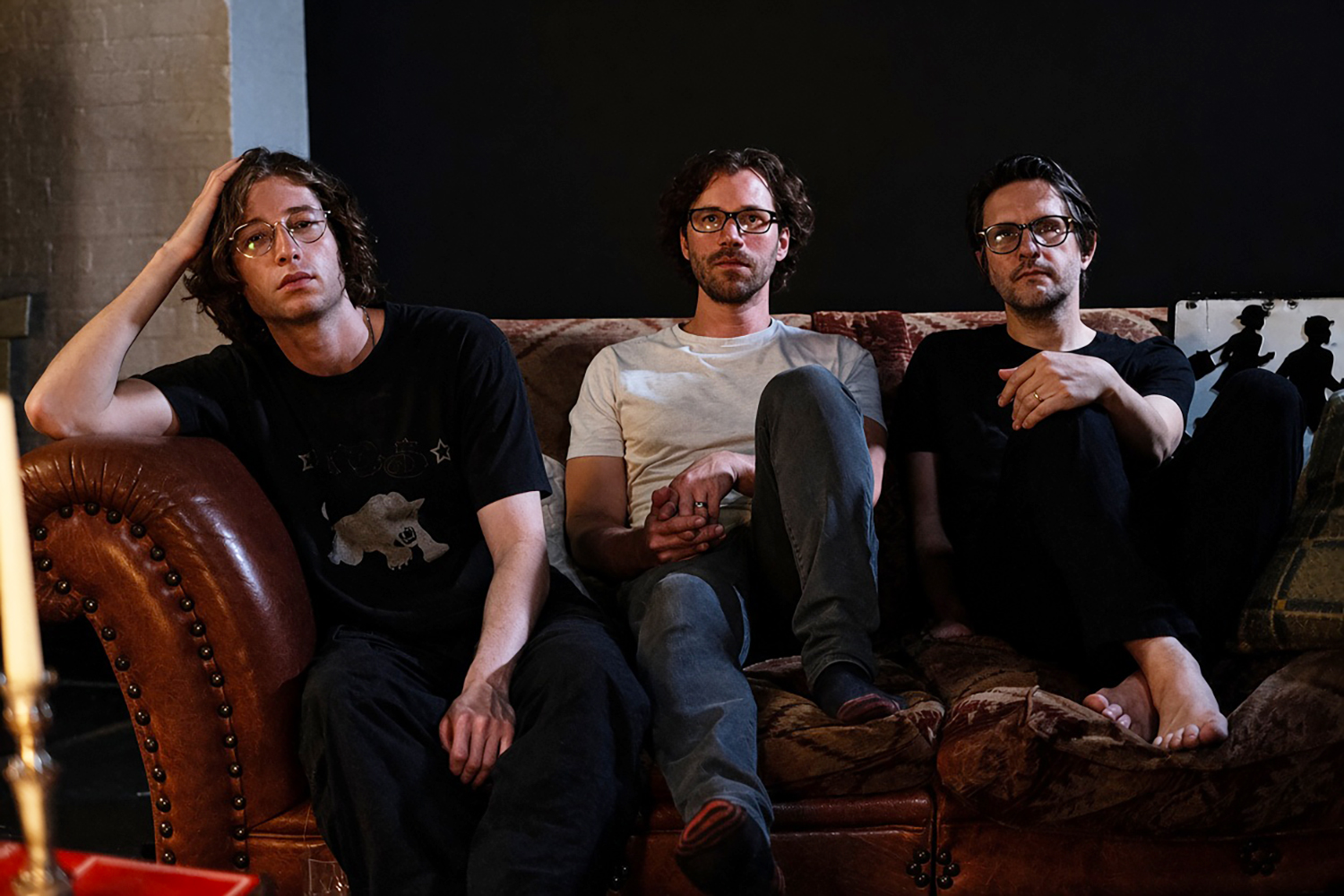 Russell Holzman, Randy McStine, and Steven Wilson | Photo: Miles Skarin
Expand on Randy McStine’s contributions to the record.
They’re very important. He’s my major collaborator on the record. In fact, we ended up writing a few pieces together.
Randy came to stay with me over the new year. We basically finished about half the record while he was here.
What I love about Randy is he gets that the magic of music is in trying to create something unusual and new that will confront expectations. He embraced the idea that we would do something that would challenge us, as well as the audience.
I’d say things to Randy like, “Can you make your guitar sound more out of tune? It sounds too in tune.” Another thing I said was, “Can you play that drum fill, badly? It’s too good. I want you to play it more badly.”
Now, 95% of musicians will never understand questions like that. I’m trying to capture something unexpected, unpolished, and that has a grain to it. It draws people in and makes them respond to the music, because it’s not slick, professional, tidy, or neat.
Randy is very curious about creating new sounds and sonics. That’s something. I’ve had fantastic guitar players in my band over the years, but they’re not the most innovative when it comes to sound design. But Randy absolutely is. You can tell, when listening to the tones he creates that he’s as committed to the idea of getting a really unique tone as he is in getting a unique performance or creating a fantastic solo.
Randy is always searching for sounds. He’s a sonic explorer. He relishes the challenge of surprising me, himself, and the audience.
Tell me about the classic British folk-rock influences on Requiem for a Village.
I love that whole genre. I’m a massive fan of Incredible String Band. They were a very strong reference point. One of the things I love about them goes back to what I was talking about a moment ago—the sense of the savant, and people playing instruments they can’t necessarily play. There’s something about that on this record. I play drums on one track. And I’ve never played drums on any of my records before. I also play violin and oboe. I can’t play any of these things. But as a producer, I can approach an instrument I don’t know how to play and get something out of them that a professional would never get.
So, that idea of approaching music as a wide-eyed savant appeals to me. It’s a case of not knowing what I can do with an instrument but seeing if I can get something interesting out of it.
I remember a lot of that from the Incredible String Band. Mike Heron and Robin Williamson would pick up everything from a sitar to a violin, and you could tell they couldn’t really play them. They were far from accomplished players. But the performances have an almost childlike quality to them.
Comus’ First Utterance and Jan Dukes De Gray’s Mice and Rats in the Loft are also influences. The latter is really dark folk, like the evil twin of Fairport Convention and Steeleye Span.
Early T-Rex, Donovan, and Magna Carta are also important. Side one of Magna Carta’s Seasons is a very important piece of music to me.
Tell me more about picking up instruments like violin and oboe—two of the most difficult instruments imaginable—and trying to create something with them.
Another big reference point on my new record is Third Ear Band. They did a lot of raga-like pieces. One of the tracks by them I like, “Ghetto Raga,” from their first album Alchemy, includes constant violin bowing all the way through. So, when I’m playing violin, I’m basically creating drone and raga-like things. I’m not doing anything particularly melodic. But the point is that it sounded good. It’s a texture and sound I couldn’t have got from any other instrument. It’s indisputably the sound of a violin. It became the basis for “On Chapel Slope.”
I could have easily walked over to a synthesizer and created a drone, but I thought it would be more interesting and more in the spirit of the village to play one on a violin. So, that’s what I did.
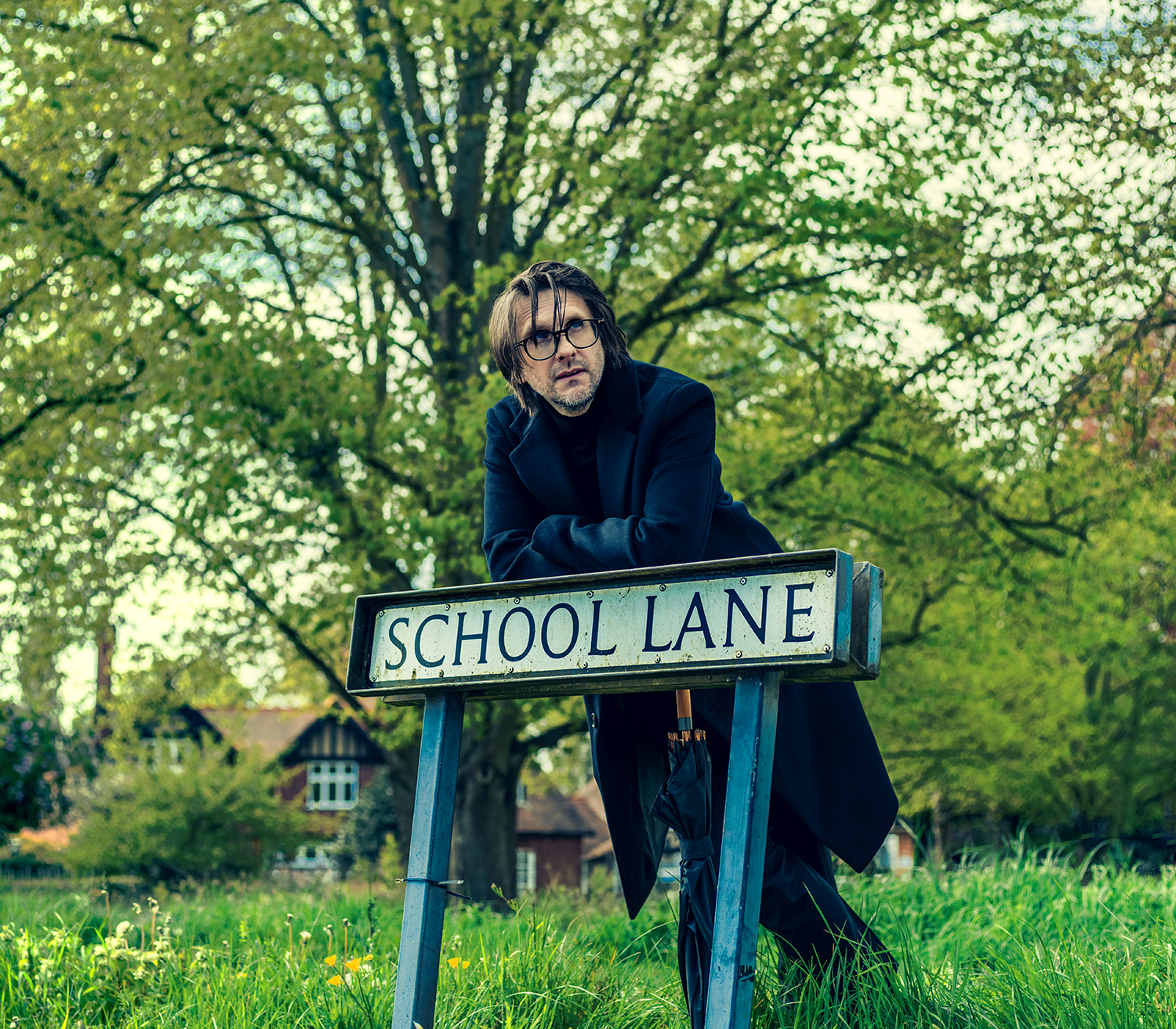 Photo: Kevin Westenberg
The deluxe edition has a 17-minute piece called “Requiem for a Village – The Original Soundtrack” that includes ideas that were initially explored and not used on the final album. Describe what it reveals about the creative process informing the record.
There was so much that went into making the record in terms of creating new sounds and sound design. For example, it has the entirety of the murder ballad “Cruel Sister” sung by Katherine Priddy in it, but we only needed 40-45 seconds of it on the record itself.
I had the idea of taking her voice and electronically processing it and then creating all the musical material around her, generated from her voice. So, I created a four- or five-minute passage, but it was too long to go on the record.
There are other elements like that, where I worked very hard on sound design elements, but that were only really justifiably usable for a few seconds on the record. So, I created this thing called “The Original Soundtrack.” It allowed me to home in and focus a lot more on those sound design elements.
It’s kind of a piece of musique concrète in a way. It’s got all of these sounds you hear on the record but allowed to breathe a lot more. You can hear them in all their glory, including the complete performance of “Cruel Sister.”
What are your thoughts about realizing Requiem for a Village in a live context?
We went into the studio and did a kind of in-session performance with me, Randy McStine, and Russell Holzman. We performed about two-thirds of the record with overdubs. We created it by performing a lot of it and then creating a second layer where we performed over our first performance. We had a lot of fun.
I can definitely see this record working live. The question is, how many musicians would I need? That’s always the dilemma I have with music that’s so sound design-oriented. It’s so complex in terms of all the different colors and instrumentation going on. But I think it could be really exciting live.
We’re going to play some of it at the Royal Albert Hall shows I’m doing at the end of October. Those are essentially about The Overview and the closing of that album cycle. But it’s also the beginning of this album cycle, so I’m going to be playing a couple of new pieces at the concerts.
I’m taking a slightly more pragmatic approach about touring. I toured so much last year. I need a little bit of a break. We’ll see how the record is received. I would love to go and play it live. We’ll see how it goes. Maybe in 2027.
Describe the process of creating orchestral arrangements for The Overview.
They’ve been done by a fantastic arranger called Simon Dobson, who’s worked with a lot of rock bands over the years. My brief to him was, “Take the pieces and expand and extend them.” So, the orchestral version of The Overview is over an hour long.
It takes the more minimalist-influenced sections of the records, like the beginning of “Objects Outlive Us,” where you have a repeating motif. Simon turned that into a complete 10-minute orchestral cadenza, which sounds more like Steve Reich, John Adams, or Philip Glass. It’s absolutely amazing. I love that.
Another brief I gave him was, “Use the band as much or as little as you want.” And he’s used the band quite a lot.
It’s a very different take on the album and I wouldn’t have wanted it any other way. Doing a slavishly faithful performance of the record and trying to bolt on the orchestra somehow would not be of interest to me at all. This version is a complete reimagining of the album and it’s all the better for it.
Do you have plans to record the shows?
No, because it’s really expensive. We have something like 70 people in the orchestra. To record and release it would involve having to pay all of them an enormous amount of money. That’s just the way it works.
I kind of like the idea that you have to be there to experience it on the night, and that’s the only chance you’re going to get.
Look for part two on Wednesday, September 30 in which Wilson discusses recent activity with Porcupine Tree, Storm Corrosion, No-Man, and Bass Communion, as well as remixing Phil Collins’ Face Value, and his new Headphone Dust surround sound platform.
Watch part one of the video podcast version of the interview: