
Donate to Innerviews
Since 1994, Innerviews has provided uncompromising, in-depth interviews with musicians across every genre imaginable. And it does that with no trackers, cookies, clickbait, or advertising.
Your donations are welcome to help continue its mission of highlighting incredible music and artists, without any commercial considerations.
Your contributions will be instantly transformed into stories and videos, and cover hosting and web management costs. Importantly, your dollars will help ensure Innerviews remains absolutely free to all visitors, independent of their ability to financially support it.
Please consider making a donation today by using the PayPal QR code below.

Stick Men
The Thrak Continuum
by Anil Prasad
Copyright © 2026 Anil Prasad.
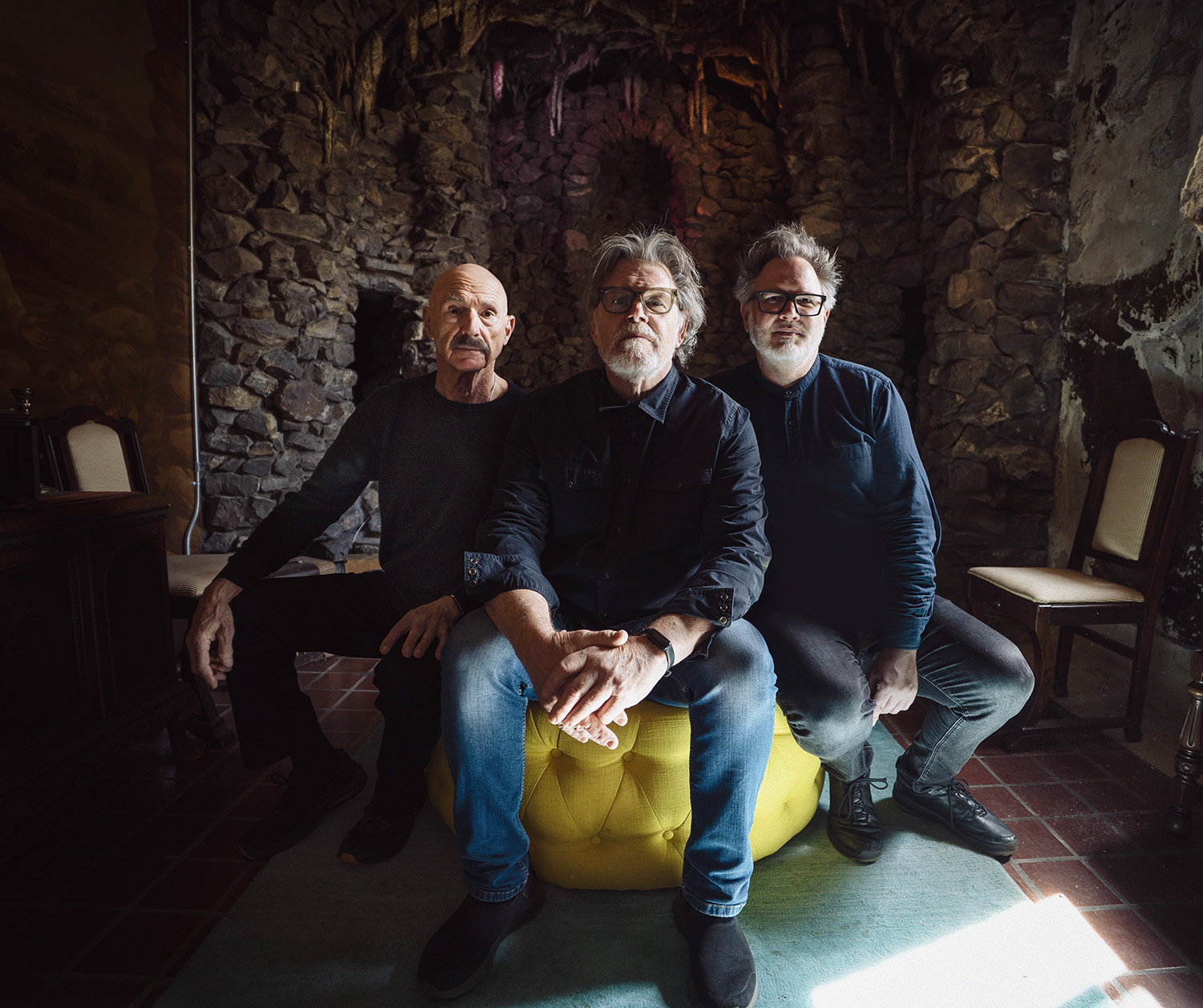 Stick Men: Tony Levin, Pat Mastelotto, and Markus Reuter | Photo: Jeff MyersA rock trio can be a remarkably elastic construct in the right hands. With Stick Men, the space between three players becomes something to be stretched, reconfigured, and continually reimagined. Tony Levin’s Chapman Stick and Markus Reuter’s eight-string Touch Guitar operate across overlapping territories of bass, harmony, melody, and rhythm, while Pat Mastelotto’s drums, percussion, electronics, and samples expand the possibilities around and beyond them. Levin, Mastelotto, and Reuter have spent 16 years exploring those possibilities, harnessing the format to evolve an increasingly expansive musical language.
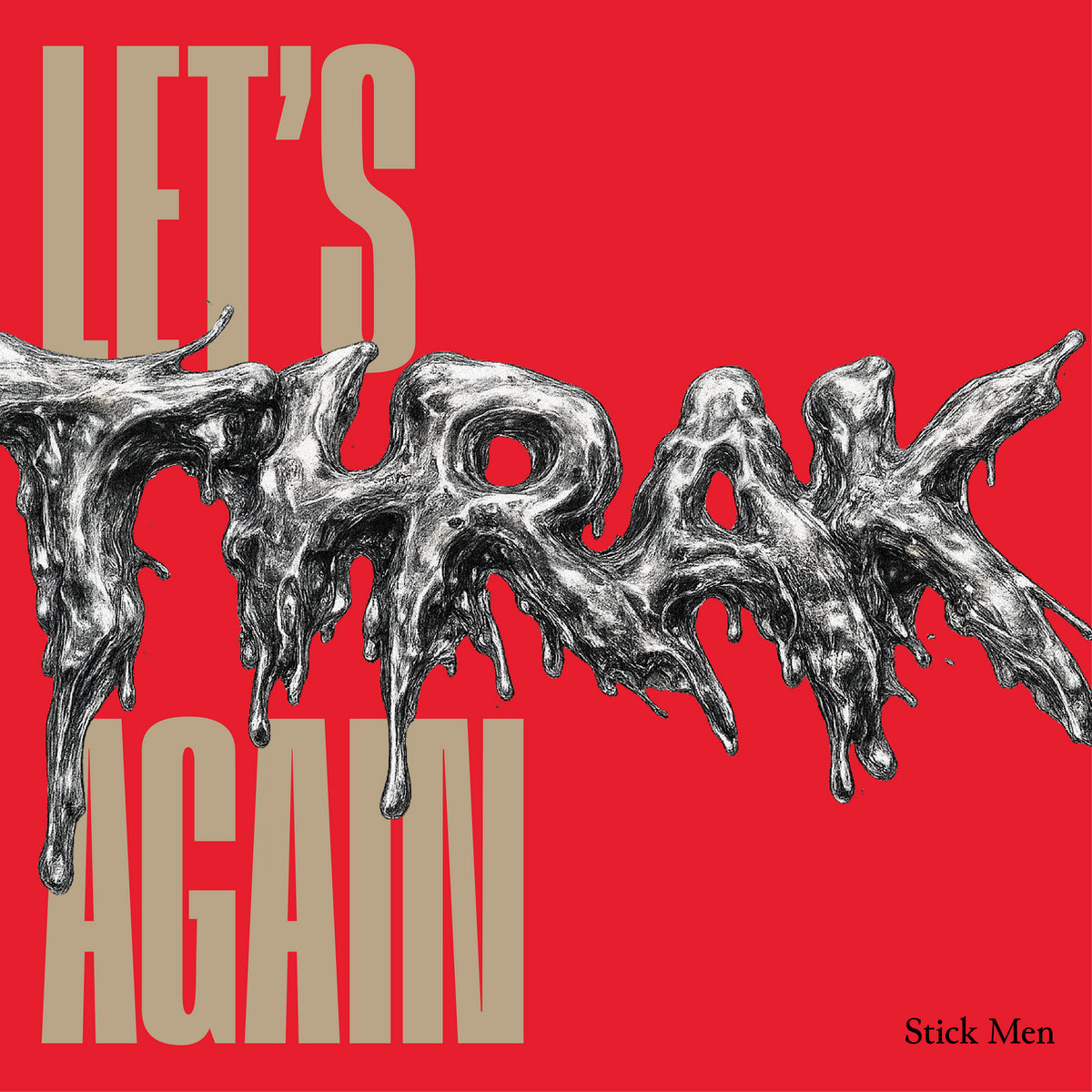
The trio's new album Let's Thrak Again is its first full-length studio effort in a decade, but its relationship to the past is more complex than its title might suggest. It refers to the counterrhythm associated with King Crimson's “Thrak” composition, embodying a 5-against-7 figure that Levin first introduced into the Stick Men context. Yet the album isn't an exercise in recreating an earlier sound. Its compositions range from dense rhythmic constructions to pieces that exploit the considerable space available to a three-person ensemble, with all three members using the recording process itself as a means of discovering new possibilities.
Let's Thrak Again is a rarity in that it doesn't have one definitive form. The album has been assembled as Reel One and Reel Two—two distinct mixes and sequences of the material. Mixers Fabio Trentini and Stefano Castagna approached the recordings differently, resulting in versions that can alter the perceived weight, space, and groove of individual pieces. On the title track, the diverging placements of the “Thrak” counterrhythm fundamentally changes the listening experience.
Stick Men's recorded history follows a similarly unconventional path. Since the trio's formation, its output has encompassed studio albums, EPs, and live recordings, with compositions often moving between those settings rather than existing as fixed entities. Material from the Brutal and Swimming in Tea releases has continued to evolve through those paths, and pieces including both title tracks, “The Well”, “Fandango,” and “Komodo” were played and tested live before being incorporated into the new album. The result is a catalog that documents an ongoing process rather than a series of compartmentalized creative periods.
That process extends well beyond Stick Men. Levin continues his work with Beat, Peter Gabriel, and Levin Brothers. Mastelotto remains active with O.R.k., Tu-Ner, and myriad experimental projects. And Reuter maintains parallel musical lives, also through Tu-Ner, as well as Truce and his solo output. Their common ground isn't simply progressive rock or their shared history with King Crimson and its offshoots. All three have built careers around moving between diverse contexts, embracing shifting approaches and technologies, and allowing collaboration to alter their assumptions about situating their capabilities.
Innerviews brought the band together for a simultaneous three-way Zoom interview, with Levin in Woodstock, Mastelotto in Austin, and Reuter in Berlin. They discussed Let's Thrak Again, the evolution of their chemistry, and why, after 16 years together, Stick Men remains a work in progress.
Tell me about the beginnings of Let’s Thrak Again.
Levin: I’ll start by pointing out that it isn’t the way it seems, which is often the case with this band. We like to surprise ourselves and find different ways of doing things.
I harkened back to a counterrhythm King Crimson played a lot. We called it “Thraking” back in the ‘90s. And it appeared on a number of songs, including, of course, the composition “Thrak.” It’s a 5-against-7 rhythm. Out of the blue, I thought, what if we did that with Stick Men? It would be cool to do a piece in which we begin with that rhythm, and then add another counterrhythm. Why? Because we can. Markus and I are both touch guitarists and we wanted to see where that took us.
So, that’s the beginning of the piece “Let’s Thrak Again.” For those of us old enough to remember, it’s like Chubby Checker's “Let's Twist Again Like We Did Last Summer,” but it couldn’t be a more opposite kind of composition. As it turned out, we couldn’t fit that title onto the CD artwork, so we shortened it.
So, the full story is more complex and interesting than saying, “Hey, this is like King Crimson in the ‘90s.”
Reuter: “Let’s Thrak Again” is actually the newest piece we wrote.
Mastelotto: Naming the album that was a way of being able to corral all the material and put it under one banner. But most of the material goes back years before we came up with it. The second piece on Let’s Thrak Again, Reel One, now titled “Like We Did Last Summer,” actually goes back to COVID-19 times. So, even the making of that track is spread out.
The original King Crimson Thrak album dealt in mass, fragmentation and the interaction of two three-piece ensembles. Stick Men reduces that configuration to three people. What does the trio format allow you to do that the larger ensemble couldn't?
Mastelotto: You can go further as three people, because we have more space to spread out. I wouldn’t say things were restricted in King Crimson, but in my case, there was another drummer, so I had to make space for him. That’s no longer a consideration.
Levin: There’s also the challenge of three musicians making music that’s something like six musicians did, which is fun. We like challenges.
Reuter: The trio format is the most fundamental formation you need to fulfil all the possible parts that are there, in terms of bass, chords, lead, and drums. And with Pat, also using samples and percussion loops. When I’m working on writing music for Stick Men, I’m thinking more in terms of 4-5 people, actually.
I agree with Pat that there’s much more space. We’re relearning a piece called “Vrooom Vrooom” from Thrak to play live. We used to play it 10 years ago or so. I listened back to one of those performances and realized that there was much more space in it. Now that we have 16 years of experience playing together, we’ve found ways to make things sound bigger with fewer people.
There are also pieces like “Bash Machine” and “Dark Birthday” on the record which are really simple and only have two parts plus drums, but they also sound huge because each individual note can extend into the space offered by the band. I think that’s really cool.
One of Robert Fripp’s definitions of the word “thrak” was "A sudden and precise impact moving from direction and commitment in service of an aim." What are your thoughts on how that description applies to the new Stick Men album?
Mastelotto: Fripp also defined “thrak” as “The sound of 117 guitars almost hitting the same chord simultaneously.” That’s not meant to be confused with “thraking,” in which we can put polyrhythms together.
I take Robert’s philosophy in a looser sense. While you might think it’s all precision, there’ s a little slop involved that helps the music have some kind of swing, especially when you’re dividing parts between people. You’re keeping a common pulse, but all moving within that. So, when we played "Thrak" as a six-piece, the toughest part was keeping the building upright while things are jagged and we’re “thraking” at each other.
Reuter: I think historically that the “thrak” rhythm was sort of like an educational tool. Robert introduced the rhythm in 1985 or so for a Guitar Craft course. Robert used the “the sound of 117 guitars almost hitting the same chord simultaneously” description. At my introductory Guitar Craft course in 1991, we had 30 or so people trying to play “Thrak.” I don’t want to say it was chaos, but it was a reference point for things that are not together. And that can be a good or a bad thing. It was an exercise and an educational piece of music.
Eventually, King Crimson released a version of “Thrak” on the 1994 Vrooom EP. The piece got redefined over the years as something that became part of a repertoire. And now there are several bands using these kinds of polyrhythms. So, the idea isn’t really that new anymore.
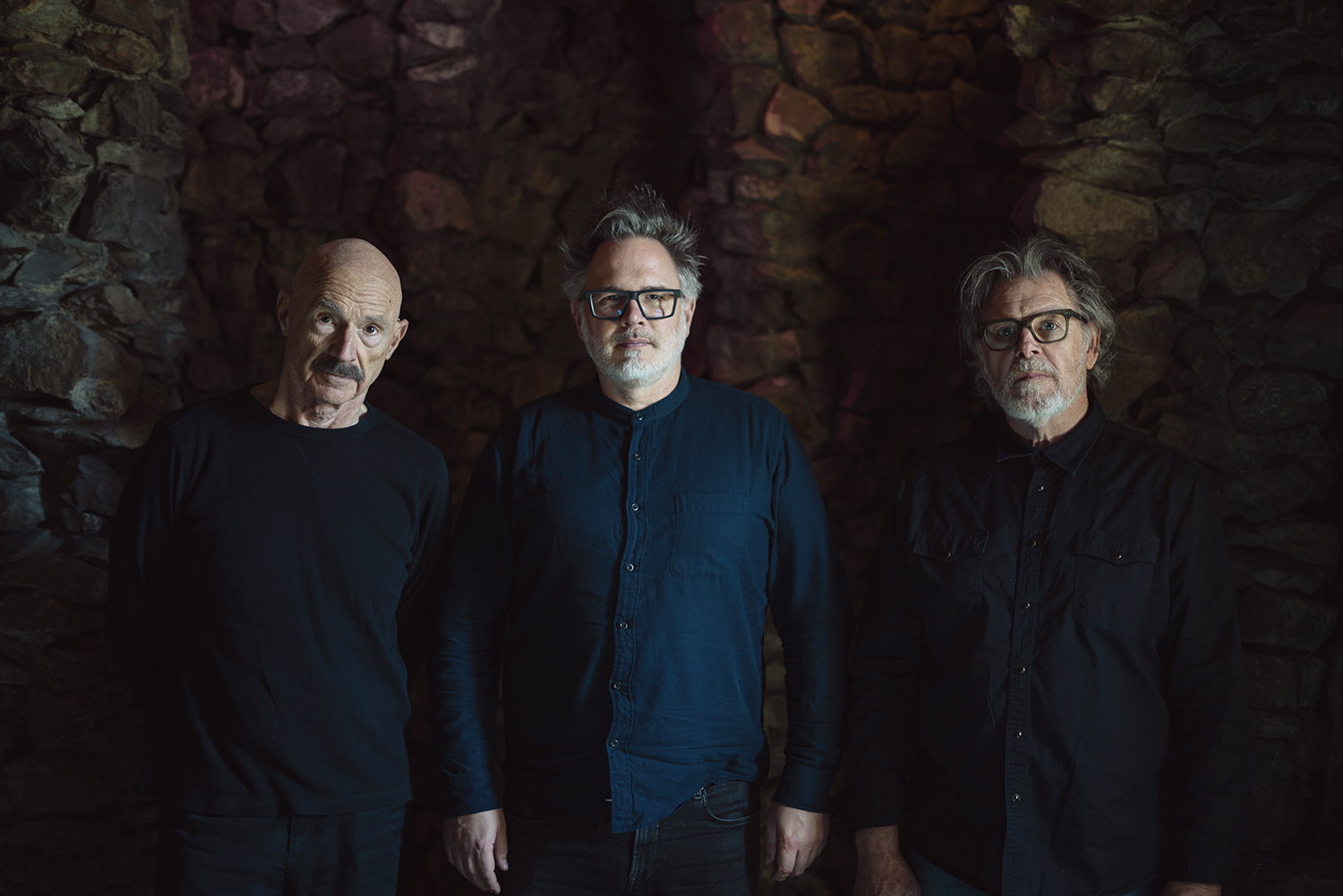 Photo: Jeff Myers
You’ve said you designed an entirely new vocabulary for the album. Explore what that means and how it manifested itself.
Reuter: A lot of it has to do with Pat’s new studio. Most of his drums were recorded in the new place, which is a completely new environment.
What I’d do on my end is grab one or two guitar pedals and make a new sound for each part I’m recording. I was trying to find new combinations of effects I had never used before, as well as the treatments. So, all the spatial and special effects you hear on Let’s Thrak Again were created while recording. It’s an intuitive design process during the original creation, not an afterthought.
By taking this approach, things were always going to be different. There’s no way I could ever repeat or recreate the same treatments I had during the recording process. So, that’s how I created a new sound world, by being experimental during the recording.
Mastelotto: I can make bigger and more dense sounds in my new studio. I have more options sonically, now. It’s a new playground for me to be in and become very experimental.
It’s all research and development. Whenever the guys send me material, it’s like “Oh boy, now I’ve got something fun to play with.” It’s like I’ve got their guinea pig to experiment on.
Reuter: I was also trying out new kinds of rhythms. For instance, “Reading the Future” is a piece that involves a rhythm that is highly complex in a way we haven’t done before. It’s subdivided into groups of 16th notes without a repeating pattern. So, there was intentionality to push things a little further.
What I love about Pat is he always manages to tie things together in a way that makes them sound simpler than they actually are, as is the case in “Reading the Future” and “Thief of the Dice” in particular.
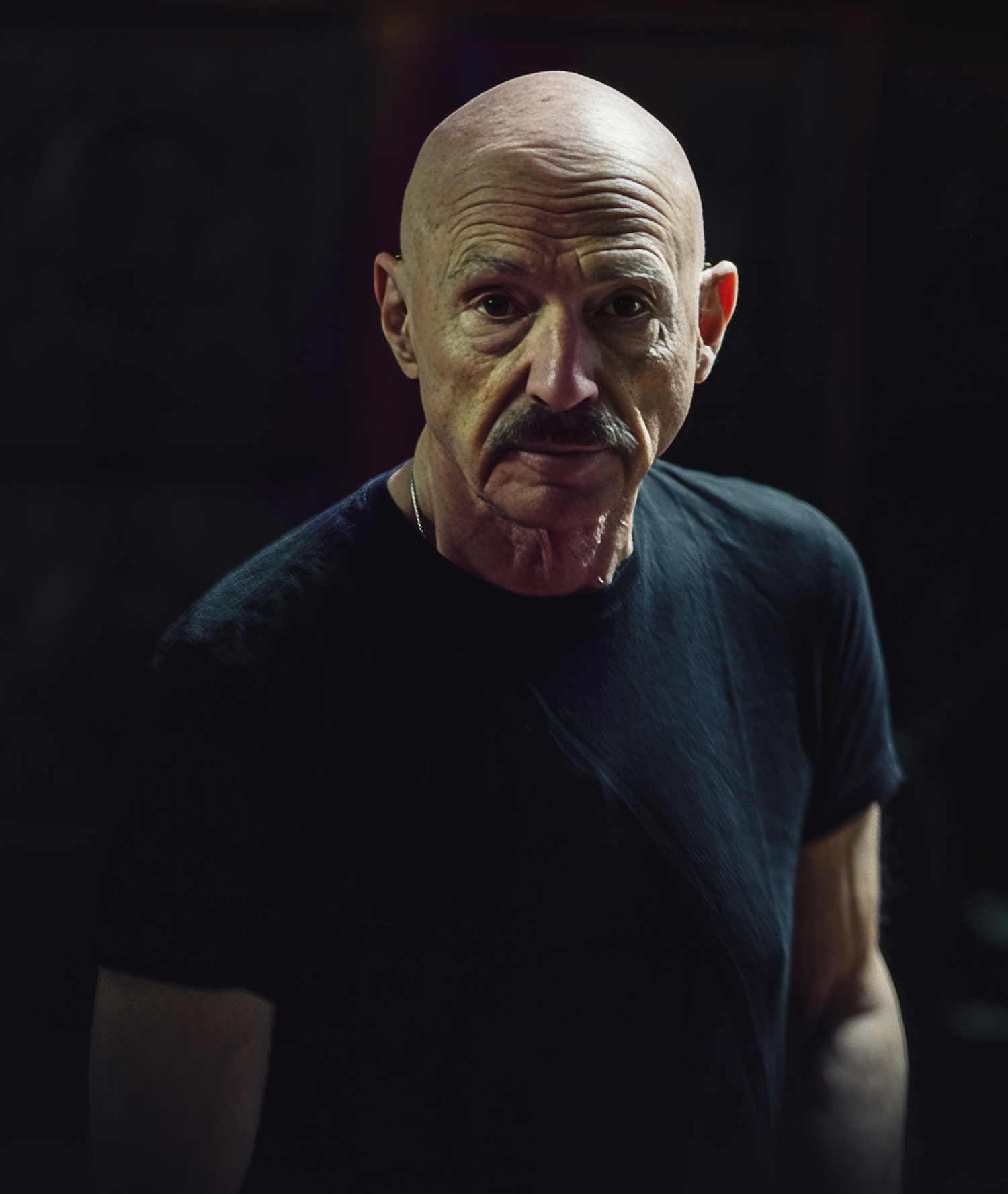 Photo: Jeff Myers
This record was put together remotely, with each of you collaborating from your home studios. What’s the key to making the end result sound cohesive?
Levin: In our case, we keep learning and progressing in our method of composing as a group. We’ve changed how we do that a lot over the years. In other words, there isn’t a single way. Actually, it would be very easy to be tight and very exact. But that’s not what we do.
For instance, when I write a piece, I could give it to the guys, and say, “Here. Play what I suggest.” And then it’s done. But we don’t do that. We really leave room in every way for each of us to contribute to the composition. So, the pieces go in ways that surprise us and are not easily reproduceable. But we do that afterwards. We’re tackling that right now as we prepare to go on the road. We’re playing pieces we’ve never played together in real time, and that’s a process for us.
With Stick Men, I really enjoy the journey. We don’t do things the easiest or simplest way. We keep striving to do things our way.
Mastelotto: We’re expanding our minds.
Reuter: It’s also about the production process. This time, we had two engineers involved to create sonic coherence. That’s what good engineers do. They make all these separate elements work in a mix.
We started by having Fabio Trentini mix the album and then realized we have lots of material and elements involved. So, we thought, “Why not have somebody else mix it as well and see how the cohesion changes?” So, we brought in Stefano Castagna as well to do that. We ended up with two different mixes and track orders for the album which we call Reel One and Reel Two.
The title track sounds very different across the two versions. On one, the counterrhythm is in the middle, and in another it’s off to the side. If you listen to both on headphones, each feels like a completely different experience. People might even perceive each as having a very different groove.
As Tony mentioned, now we have the challenge of actually playing what we did in the studio in a live context. We’ll probably change things around again. For us, music is a living thing.
Mastelotto: Some bands write their material, go into a studio, and record it. But we’re constantly going in and out of the studio and playing live. We’re always talking about and engaging with the music in different contexts. It’s always evolving and feeding back into itself.
Reuter: “Fandango,” “Komodo,” and “Swimming in Tea” we played live and tested before recording them. In the case of “Swimming in Tea,” the new studio version is completely different though. It’s a short song now.
Pat, your playing has increasingly blurred the line between drummer, percussionist, sampler and sound designer. When you hear what Tony and Markus are generating, how do you decide whether the music needs a rhythmic response, a sonic response, or some other kind of response?
Mastelotto: I’m a drummer, so I like to play drums and hit things. This band involves a lot of acoustic drumming. The one exceptional thing about playing with touch guitarists is how everything is so rhythmic. A lot of times, when I listen back to things, I might think I’m listening to a kick drum, but it’s actually Tony, because his sound can be so punchy. So, that puts me in a position where I have to simplify what I do.
Tony was once performing with L’Image, his band with Steve Gadd, a few years ago. Tony said Steve would say, “Let’s not overthink this.” So, I think of that line when these pieces are worked on. You might believe I’m thinking, “We could get something weird over here and I could play off of that.” But actually, it's “Let’s not overthink this. How would Credence Clearwater Revival approach this piece? What’s the simplest part that would move the song along?”
The electronic stuff comes later, in which I do some experimenting, like on “Reading the Future.” That was such an odd piece to try and find my way into. I decided the bridge-type section could really explode and be sort of similar to the fusion music of the early ‘80s. It has another section where I thought, “Man, it’s got to have a groove. It can’t just all be atmospheres.” Markus also encouraged me to go electronic on another part of it.
The other weird thing about working remotely with this band is there’s no direct feedback. I’m either working here by myself or maybe there’s an engineer, or my wife Deborah around. And usually, when you’re in a band and you do something when you’re in the room together, somebody says, “That was great. Do that again.” They might also say, “I’m not digging that, you know?” But we don’t have those conversations while the process is taking place, because we’re working on the music individually.
It’s an oddity. It’s kind of like sending in your homework and thinking, “Oh boy, I don’t know if this is going to go over or not.” But again, there’s usually very little feedback and what I do is just accepted.
Levin: That’s because we like what you did. You always do what Pat Mastelotto would do. And that’s what we want.
Reuter: The way I work with this band’s music is I really just capture my very first performance well enough, so I can keep and use it. There’s not a single exception, including the incidental melodies. Everything is improvised and it’s the first take.
You might think I’m being lazy, but that’s not true. It’s not about being too lazy to go through different takes. It’s about keeping the initial spark and capturing the notes that feel like they’re a little out. You leave them in and they become part of the piece. I love that.
Mastelotto: Everyone provides material that’s of high quality to be considered. I usually try to get a couple of takes done, before I feel I even have any idea what’s going on. I’ll keep playing to get better performances, but I’m still curious to go back and listen to earlier takes and see, “Well, what did I do when I didn’t know what was going on?”
This is a very different process to when you’re doing a session with a lot of people in the room. You don’t want to have the whole session collapse because you’re experimenting and flubbing all the time. But I can flub a lot by myself and eventually get to where I want to go.
 Photo: Jeff Myers
Let’s explore the two different Let’s Thrak Again versions and configurations in more depth.
Reuter: The idea was initially inspired by Tony not being entirely positive about one set of mixes. So, my thought was let’s get somebody else to do a few mixes. And then it really worked out. Tony was very positive right away, so the problem was solved.
At the same time, Tony’s friend Peter Gabriel had put out “Dark Side” and “Bright Side” mixes for his last album i/o and he’s doing the same for the material he’s released from his forthcoming album o/i this year.
We didn’t want to direct the mixers the way Gabriel did by labeling things “dark” or “bright.” I wanted them to be completely free with their approach. Sometimes the differences are subtle. Sometimes they are significant and have a different feel. So, we used Reel One and Reel Two to describe them.
We have a two-disc edition of Let’s Thrak Again that has both versions, with Reel One on one disc and Reel Two on the other. You can also buy them individually as downloads. In addition, there’s a super-deluxe box set that has a Dolby Atmos mix, a 60-minute compilation of early versions of these pieces, demos, and a lot of live material. Lastly, there’s a Japan-only edition that’s different again and which has two more bonus tracks.
Everyone is tired of talking about AI, but I want to say this is real music played by real people. And it has been produced and mixed by real people. It’s also being listened to by real people. Those people can make up their minds and reflect on their emotions about the different versions.
Levin: I think it’s better to have more options and ways to listen to things. Good music can present itself in different ways.
As we’re speaking, the newest Peter Gabriel track “One by One” from o/i came out in its Bright-Side mix. So, I’ve learned a little bit from him that you can have different ways of looking at a piece that will hit the listener in different ways. Markus really took that ball and ran with it.
Mastelotto: We also took the opportunity to recut some previous tracks on Let’s Thrak Again. We made a previous EP called Brutal. For the new album, I decided to take another crack at the title track, as well as “Fandango” from the EP. I felt I had a better grip on what I wanted to do with them after we played them on tour. So, you’ll hear more drastic, different takes on Let’s Thrak Again.
Levin: We could write a little book about our track titles and how they change all the time for no earthly reason. “Fandango” was first called “Van Go” and at another point was named “Vincent” [laughs] We live a lot of our lives in a van.
That all started during our tours of Argentina. Our van driver Richard over there, who’s a very nice guy, looked so much like Vincent Van Gogh, that I was inspired to constantly take his picture. I had to stop myself after taking dozens of pictures every tour of this guy.
Playing live is mostly what we do, and we have a lot of live recordings documenting that. We have so little time and resources to do a full studio album with 12 pieces and variations. So, it took us a lot of years to have the force within us to do that. Now, it’s finally coming out and I’m so excited about it. We don’t get to do this very often.
The Brutal tour earlier this year lived up to its name, with Stick Men getting robbed in Chile, and losing critical gear and unfinished music on hard drives. Describe what you went through.
Reuter: We don’t really know what happened or how it happened, but all of our stuff was stolen after check-in while our luggage was in the custody of the airline. An organized team of thieves knew who we were and used that as an opportunity to empty out our cases and take everything that had some value for them.
It turned out the airline doesn’t allow you to have valuables in your suitcases, so they’re safe from claims. They’ve made it so they’re not legally responsible. You might think you have some rights as a customer, but in this case, there was nothing we could do.
So, we had five days between that leg of the tour and the next one. Tony and Pat reordered the equipment we needed.
Eventually, a few weeks later, the stolen items showed up on Facebook marketplace in Santiago. I got an Instagram message stating, “I may have something that’s yours.” This person tried to extort money from us and was successful. I was able to buy back the hard drives, and Pat bought some of his stuff back too.
Mastelotto: It created a lot of extra steps, but we had just a few days until the next gig, and we had to get new gear, make it workable, and then go play. It’s just something we had to deal with.
 Photo: Jeff Myers
How has the chemistry between the three of you evolved since you began working together in this configuration in 2010?
Levin: It’s great. We have a lot of respect for one another and like each other. We also like joking with each other. These are all good things, because we spend a lot of hours together.
One of the most important ingredients of a successful band to me is having musical respect for each other. When you don’t have that situation, which happens in some bands, you might wish another player was better at something. And then you find yourself, especially if you’re a leader, telling the person how to play. We don’t have that. We have wonderful chemistry and a lot of respect for what each of us does, musically.
Another thing I’ll add is that Stick Men is both unique and makes really good music that’s different from other bands. That’s precious to me.
Give me some insight into some of your activities beyond Stick Men coming up.
Mastelotto: I’ve got a couple of experimental projects that I can’t talk about yet, but there’s a decent surprise coming maybe next year. Also, O.R.k., a band I’m in with Colin Edwin, LEF, and Carmelo Pipitone, is touring in November in Europe. We’re also trying to prepare a live record to support the tour as a merch item.
Levin: Right after the Stick Men tour, I’ll go to California to begin a tour with Beat with our new drummer Terry Bozzio. Next May, I’ll also be touring with my brother Pete Levin in our jazz band called Levin Brothers.
I’m also in the latter stages of finishing my memoirs, which I hope to have published by next year. There’s also the new version of my photo book called The Book of Beat, which includes my 2026 photos of touring with the band. I hope that’ll be out this fall.
Dare I ask if there’s any potential for a Peter Gabriel o/i tour?
Levin: I ask all the time. I’ve asked Peter’s management and while I can’t say it definitively, I know of no plans at this time for him to tour. As a fan, I would love to hear it. As a guy in his band, I would love to do it.
Peter’s monthly o/i tracks are so good. I hope there will be a tour one day. My 2027 is already filling up, so I already don’t have time to do a significant tour with Peter, should he decide to. But I think he probably would have decided by now. So, that’s the complex answer.
What about you, Markus?
Reuter: After all the Let’s Thrak Again release and tour activity, I’ll be releasing my next solo album Bella Musica, which is already finished. It’s Italian for beautiful music. It’s an album of slow, beautiful instrumentals with simple structures, unusual harmonic progressions, cool rhythms, and melodies that feel universal, emotional, and timeless. It was recorded with Chad Wackerman on drums, Janek Gwizdala on bass, and Mitch Foreman on keys. I’m extremely proud of it and it sets the stage for the next phase of my creative life.
An ongoing fun project is my Mike Oldfield Discography podcast in which my journalist friend Tobias Fischer and I dive into long discussions about Oldfield’s albums.
Tony, how do you manage to keep pushing forward on so many fronts at age 80? And does he serve as an inspiration to you Pat and Markus?
Levin: I try not to think about being 80. That helps. But I think 80 is now what used to be 60. In other words, when I was young, I thought 60-year-olds retired. Maybe they keep going until 65. But with changes in society and health, 80 does seem to be the new 60, because I ain’t retiring. Also, we musicians very brilliantly and cleverly arrange our lives so we don’t get to retire. That means we hopefully get to do what we love for our entire life. Pretty smart.
Reuter: Just as Tony, I hope to stay healthy and be able to keep working in many contexts. My touring bands include Stick Men, Tu-Ner, and my European trio called Truce. Tony is a great example of how one can stay an active performer, and I hope I can continue playing for people even beyond Stick Men.
Mastelotto: I take great inspiration from Tony. I turned 70, and boy, the difference between 60 and 70 is a lot. So, I can only imagine 80. So many little health issues are emerging. It’s hard to get a good night’s sleep, and the shoulders, hands, and knees are going.
I’m with Tony so much on tour, and I’ve observed his lifestyle. He eats very little and avoids sugar and processed foods. That works well for him. But I grew up munching on late-night snacks, and I have to stop that. I’m working hard on it. That’s harder than the music sometimes. You have to change your lifestyle to be able to accommodate the physical needs of touring, and sitting in a van, crunched and folded all the time.
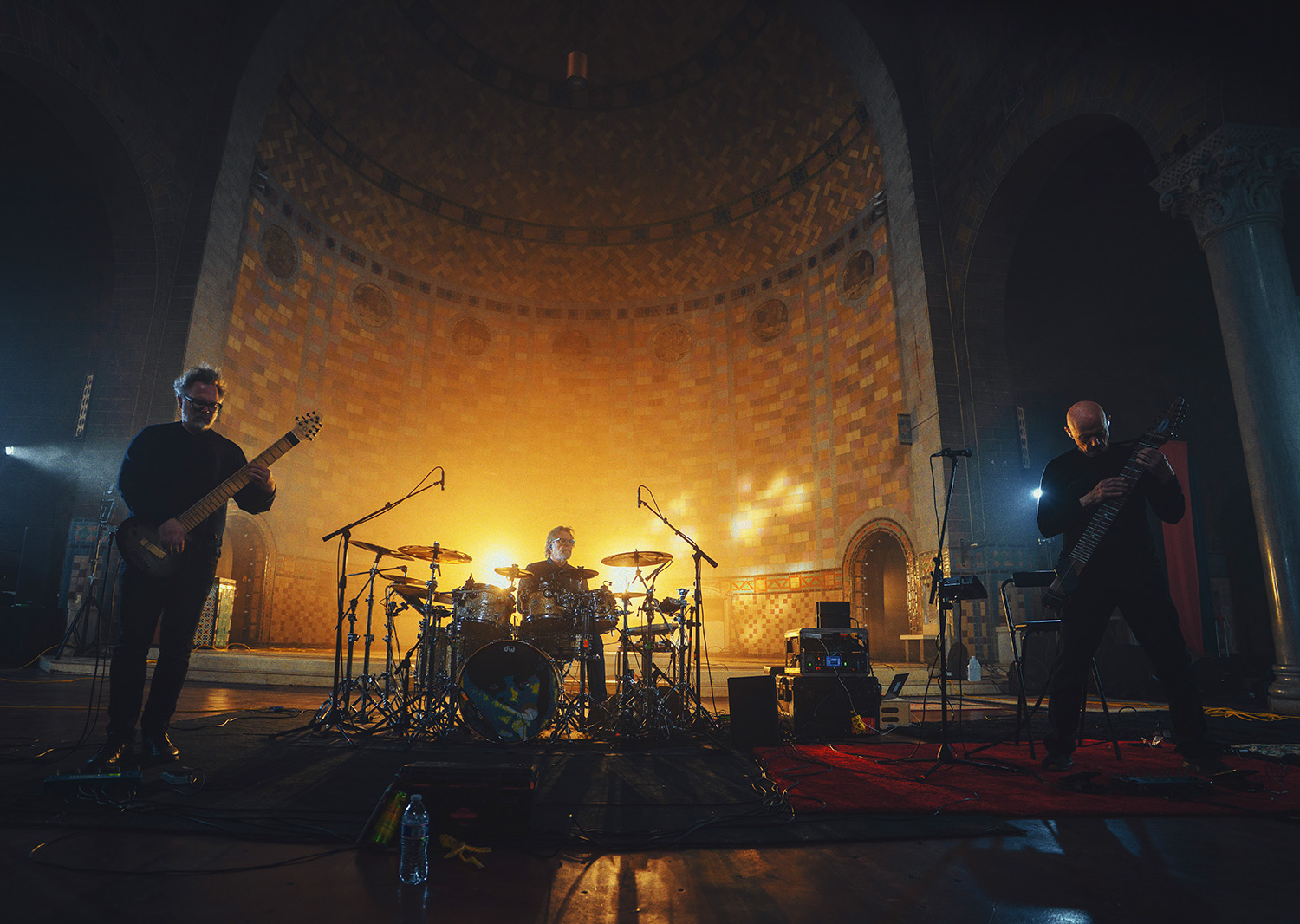 Photo: Jeff Myers
There’s nothing easy about touring at the level Stick Men do. But given the fraught times we’re living in, do you feel an additional sense of purpose in spreading positivity and creating well-needed communal experiences through your performances?
Mastelotto: 100%. The smiles and feedback you get from people makes it worth it.
Reuter: During the spring tour we did this year, I felt a very strong vibe that there was a unifying aspect for the audience about what we were doing. There’s something very special about the idea of having people sitting there together who might never be in the same room without our music. So, that’s a big yes to your question from me, too. There’s something positive in it, for sure.
Levin: I’ve learned that one of the very special things about music is that it connects us. It connects us in the band, but also every person in the audience. The band and the audience, in some magical sense, become like a tribe.
None of us knows what it is about this music that appeals to us, but we share that appreciation. We all understand it and care about it.
Boy, how lucky are we as musicians who get to do this every night? Some nights ain’t so great, and the price you pay for that is difficult. It’s not easy touring. But for all of us, it’s worth it for the magic that might happen on that night.
Watch the video podcast version of the interview: